Pohela Boishakh and the Cultural Soul of Bengali New Year
By Aparna Patni
Celebrating Pohela Boishakh and the Cultural Pride of Bengali New Year
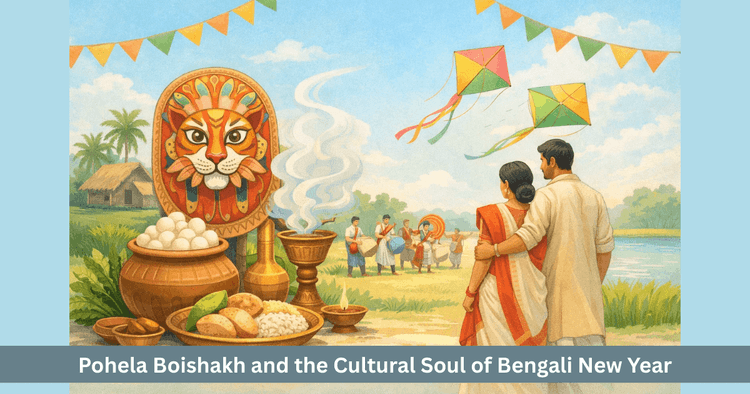
Table of Contents
As the chill of winter slowly fades and the warmth of spring enters the air, Bengali communities across the world prepare to welcome the first day of the Bengali calendar, known as Pohela Boishakh. This day marks the beginning of the Bengali New Year and usually falls around 14 or 15 April. It celebrates renewal, unity and a deep sense of cultural pride that has grown over centuries in Bengali heritage.
On this occasion, geographical distance loses much of its weight as Bengalis everywhere reconnect with their roots. Families and communities join together in a shared emotional and cultural journey, greeting the New Year with hope, gratitude and togetherness.
Date, Season and Core Purpose of Pohela Boishakh
Pohela Boishakh is the very first day of the Bengali year. It coincides with the Sun’s entry into Mesha rashi and the transition from late spring toward the warmer season, when nature itself prepares for a new cycle.
This overview summarises its basic features.
| Aspect | Description |
|---|---|
| What it is | First day of the Bengali calendar, Bengali New Year |
| When it occurs | Usually around 14 or 15 April |
| Where it is celebrated | Bangladesh, West Bengal, parts of Assam and Bengali diaspora worldwide |
| Core themes | Fresh beginning, settlement of dues, wish for prosperity, cultural self respect |
| Key signals | Seasonal change, start of a new social and economic cycle |
Originally this festival was strongly tied to an agrarian way of life. Farmers used it as a natural point to begin fresh accounts and seek blessings for the coming harvest. With time Pohela Boishakh developed into a broader cultural celebration for the entire community.
Historical Background and Agrarian Roots
In earlier times, when the economy was mainly agricultural, Pohela Boishakh was a crucial day for the farming community. It provided a time to clear old debts and start anew for the upcoming cycle.
Historically, in 1584, the Mughal emperor Akbar gave structured recognition to the Bengali calendar by introducing the Bengali Era. His intention was to align tax collection with the local harvest cycle so that revenue demands matched the actual agricultural output. This step gave Pohela Boishakh not only cultural but also economic and administrative importance.
For agrarian society the day became associated with
- Settlement of loans and outstanding dues
- Beginning fresh ledgers for the new year
- Prayers for abundant harvest and well being in the months ahead
Even today, this tradition lives on in the form of hal khata, where merchants ceremonially open new account books for the year.
Cultural Heritage and Living Traditions of Pohela Boishakh
From early morning on Pohela Boishakh, streets and neighbourhoods take on a festive character. Decorations appear on homes and public spaces. Fairs, cultural programmes and folk art exhibitions add to the colour of the day.
In clothing, men often wear light coloured or white panjabi, while women favour saris in shades of red and white. This colour pairing is viewed as symbolising purity, energy and auspicious beginnings. Homes and community halls come alive with the aroma of traditional dishes that carry both taste and family memories.
The festive menu frequently includes
- Panta bhat, lightly fermented rice
- Different varieties of fish curry
- Traditional items such as puli pithe
- And sweets including roshogolla and other favourites
Food thus becomes a vehicle for culture, evoking both nostalgia and shared joy.
Mangal Shobhajatra and Artistic Expression
In recent decades, Pohela Boishakh has become strongly associated with the grand procession known as Mangal Shobhajatra. This event, which grew from a movement linked to Dhaka University, has come to symbolise the cultural consciousness of Bengali society.
The procession features
- Large, colourful floats
- Masks and figures inspired by folklore and traditional symbols
- Rhythms of folk instruments
- And performances of song and dance
More than just a parade, it stands as a sign of unity and resilience, where people rise above differences of religion, politics and social class to express a shared cultural identity.
Is Pohela Boishakh a Religious or Cultural Festival
One of the most distinctive features of Pohela Boishakh is that it is essentially a cultural and social observance rather than the festival of any single religion.
- People from different faiths
- Families across economic levels
- And individuals with varied points of view
all participate freely in the celebrations.
On this day, feelings of brotherhood, inclusion and cooperation are highlighted. The festival quietly teaches the younger generation that cultural identity is not confined to one group but belongs to the entire community.
Family, Tradition and Learning for the Younger Generation
Beyond outward celebration, Pohela Boishakh offers a meaningful space for memory and learning within the family. Elders often share
- Stories from their own childhood
- Accounts of old customs and village life
- And narratives of struggle, change and progress
Through these conversations, children develop a natural respect and sense of responsibility toward their ancestors, language and arts. They come to see that culture is not preserved only in books but lives in everyday choices, habits and values.
Pohela Boishakh in a Modern and Global Context
With time Pohela Boishakh has adapted to the modern age. Social media and digital platforms allow Bengalis living far from home to greet each other organise online events and introduce their children to Bengali songs, dances and poetry.
New generation artists and musicians often blend traditional melodies with contemporary styles. Experimental theatre and dance present age old themes in a language that speaks to today’s youth.
Despite these changes, the central values of Pohela Boishakh
- Renewal
- Unity
- And cultural dignity
remain steady. Each new generation adds its own creativity yet continues to honour the original spirit of the festival.
Inner Guidance from Pohela Boishakh
Pohela Boishakh is far more than a formal New Year marker. It provides a valuable moment for reflection, connection and resolve.
- People can quietly review the experiences and lessons of the year gone by
- They have a chance to heal distances in relationships
- And they can set clear, positive intentions for the coming year
When communities gather for music, food, art and conversation, there is a deep sense that strong cultural roots support balance and emotional stability in the face of change.
Common Questions
What is Pohela Boishakh and where is it celebrated?
Pohela Boishakh is the first day of the Bengali calendar and is observed as the Bengali New Year. It is celebrated mainly in Bangladesh, West Bengal and parts of Assam, as well as by Bengali communities around the world.
How is Pohela Boishakh usually celebrated?
The day is marked by cultural programmes with music and dance, fairs, traditional food festivals, wearing new clothes and visiting friends and family. Many people also join processions and attend events that showcase folk art and local heritage.
Which traditional foods are especially prepared on Pohela Boishakh?
Popular dishes include panta bhat or fermented rice, different fish curries, traditional items like puli pithe and sweets such as roshogolla. Seasonal fruits also hold a special place on the festive menu.
What is hal khata and why is it important?
Hal khata is the custom where shopkeepers and business people close old accounts and ceremonially open new ledgers for the year. It symbolises an orderly and auspicious start to the financial cycle.
How do Bengali communities abroad celebrate Pohela Boishakh today?
Diaspora communities organise gatherings through local cultural associations and clubs. They hold events featuring Bengali songs, dances, plays, traditional foods and competitions for children. Online meetings and social media also help them stay connected to their roots.
Get your accurate Kundali
Generate KundaliDid you like it?
Author

Aparna Patni (63)
Experience: 20
Consults About: Family Planning, Career
Clients In: Punjab, Haryana, Delhi
Share this article with friends and family
About ZODIAQ
ZODIAQ is an online Vedic Astrology platform. It connects clients seeking astrological advice to experienced astrologers with deep knowledge. Our users also generate kundali and perform kundali milan for free. ZODIAQ also offers services to the Astrologers. Astrologers utilize various offerings by ZODIAQ to serve their clients effectively.
If you are a User
Consult with experienced astrologers and seek their guidance. You can also order handwritten Janm Patrika report with life prediction prepared by experienced astrologers. Generate accurate Kundali, perform Kundali Matching and check horoscope and muhurat. Utilize our online library for all the necessary astrological and spiritual information.
If you are an Astrologer
Create accurate kundali for your clients and perform Kundali Matching for up to 5 people at a time. Write comprehensive Janm Patrika report for your clients with ZODIAQ. Check client details anytime by saving it in client directory. Become more productive by tracking how many clients you guide every day.
WELCOME TO
ZODIAQ
Right Decisions at the right time with ZODIAQ
