Sheetla Mata Basoda Vrat Katha and the Depth of the Mother’s Grace
By Pt. Suvrat Sharma
The Journey of Devotion and Purity Through the Vrat Story
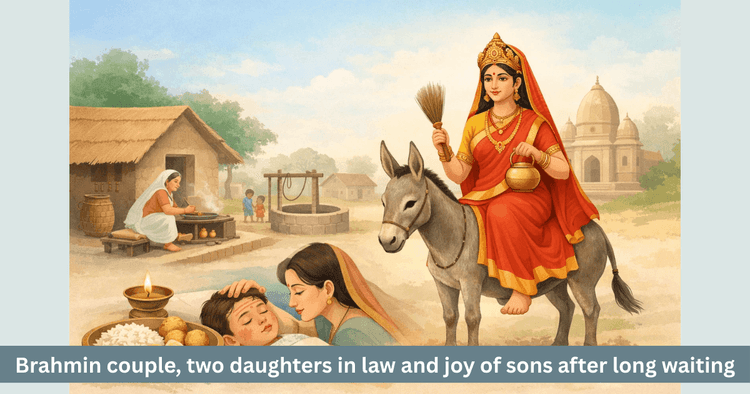
Table of Contents
The story of Sheetla Mata is not only about protection from disease. It is a deep journey of devotion, discipline and sincere repentance. In village courtyards with shared homes, mud walls and the warmth of the cooking hearth, this story has been passed down through generations. Mothers stroke their children’s foreheads and pray to Sheetla Mata for the health of every member of the family.
In earlier times, when medicines were not widely available, people turned to Sheetla Mata for relief from fever, skin eruptions and infectious illnesses. They believed that if there was purity in the mind, cleanliness in the home and faithfulness in the observance of the vrat, then the grace of the Mother could avert great suffering. It is in this background that the well known Basoda vrat katha of the Brahmin family is told.
The Brahmin couple, two daughters in law and the joy of sons after long waiting
The story begins in a village where a Brahmin couple lived. They had two sons and both were married. The daughters in law shared the responsibilities of the household but there was one emptiness in their lives. For a long time they had no children. Every festival reminded them of the absence of children’s laughter in the house.
Eventually, time turned in their favour. After a long period of waiting, both daughters in law were blessed with baby boys. The house was filled with the joy of celebration. The grandparents’ faces shone, the fathers felt proud and the mothers’ hearts overflowed with affection. The daughters in law remained absorbed in caring for their babies and constantly worried about their protection.
In this atmosphere of happiness, the Basoda vrat in honour of Sheetla Mata approached. Elder women of the house had already begun preparations, planning to worship Sheetla Mata, offer cold food, recite the story and pray for health for the entire family.
Cold food, rules and the anxiety in the daughters in law
According to the rules of the Basoda vrat, the stove is not to be lit and only previously cooked cold food is to be eaten. When the daughters in law heard this, a conflict arose in their minds. They thought that their bodies were still weak after childbirth. They feared that eating only cold food might make them fall ill and affect their small babies as well.
Outwardly they respected the vrat of the Mother, yet inwardly they were struggling with fear. At this point their inner conflict led them in the wrong direction. Their concern was understandable but the path they chose was not guided by wise counsel.
The hidden baatis and going to worship with the mother in law
Amid this inner struggle, the daughters in law made a plan. They secretly prepared hot baatis for themselves and hid them in a large trough used for feeding animals. From the outside it looked like an ordinary feeding vessel but for the daughters in law it became the symbol of their hidden decision.
On the day of the vrat, both daughters in law went with their mother in law to worship Sheetla Mata. On the way, the elder woman spoke about the power of the Goddess, the rules of the vrat and old stories connected with her. At the temple or place of worship, they offered prayers to Mata Sheetla, placed flowers, offered food and then sat to listen to the vrat katha. They also prayed for a long, healthy life for their children.
When the worship ended, the mother in law remained in the temple, singing devotional songs in praise of the Mother. The atmosphere was peaceful and full of devotion, yet the hidden plan in the daughters in law’s minds did not allow them to stay. They mentioned that their babies might be crying and, with her permission, quickly returned home.
Secretly eating hot food and outward observance of the vrat
Reaching home, the daughters in law immediately went to the place where they had hidden the baatis. They took out the hot baatis, arranged them and ate comfortably. At that moment they felt they had acted wisely for the sake of their own health and their babies’ safety. In reality, however they had compromised both the rules of the vrat and their trust in the Mother.
Some time later, the mother in law returned home. She lovingly called them and said it was time for everyone to eat together. She served cold food as required by the vrat and ate it herself. The daughters in law also sat with her and ate the same cold food, so that no one would suspect their earlier act. On the outside they appeared to follow the rule but inside they felt secure in their deception.
After the meal, the mother in law resumed her tasks and after a while asked the daughters in law to wake the children, feed them milk and put them to sleep again.
The wrath of Sheetla Mata and the children not waking up
When the daughters in law reached their babies, they saw a strange stillness. They tried to wake them, called their names, shook them gently but the children were lifeless. Realising the truth, they cried out in despair. The very children for whom they had acted so cleverly now lay dead before their eyes.
Hearing their cries, the mother in law came running. Her heart broke at the sight but she also sensed that this was not an ordinary event. The strict rules of the vrat, the daughters in law’s state of mind and this sudden disaster together pointed to the wrath of Sheetla Mata.
She told them in strong words that they had disrespected Sheetla Mata. They had outwardly taken part in the vrat and listened to the story while inwardly deciding to break the rule. She asked them to leave the house and declared that they would not be allowed to return until they brought their children back alive and healthy.
The painful journey of the daughters in law with their dead sons
With tears in their eyes and their dead children in their arms, the daughters in law left the house. Along the way they repented their actions. At times they blamed each other, at times they blamed themselves and at times they cried out to Sheetla Mata, begging for mercy.
They walked beyond the village into a quieter path where the air seemed still. At some distance they saw an old khejri tree. Under it sat two women. Their faces were radiant but their clothes were simple. In the story they are named Ori and Sheetla.
The daughters in law were exhausted, yet they moved closer, holding their children tightly. They noticed that both women had many lice in their hair. A natural feeling of service arose in their hearts. For a while they forgot their own sorrow and sat down near them, gently removing the lice from their heads.
Removal of lice, coolness of the head and the first blessing
For a long time the daughters in law quietly continued to clean Ori and Sheetla’s hair. When the lice were finally removed, the two women felt great coolness and relief on their heads. They blessed the daughters in law, saying that just as their heads had been cooled, the women themselves would receive peace in their bodies and minds.
This was the first blessing but the daughters in law still carried their unspoken wish. They said that they had been wandering with the burden of their fate, yet had not been able to have darshan of Sheetla Mata. They knew that only her grace could return life to their children.
Recognition of Sheetla Mata, harsh words and humble repentance
On hearing this, one of the women spoke firmly and said that they had committed a sin. On the day when everyone was supposed to observe the vrat with cold food, they had secretly eaten hot food. They had broken the rule and behaved deceitfully and, therefore were not worthy of being seen.
At these words the daughters in law realised that the woman speaking to them was none other than Sheetla Mata. They immediately fell at her feet, crying and admitting that they had acted wrongly out of ignorance and fear.
They confessed that they had not understood the full significance of her power, rules and grace. They admitted that they had chosen the wrong path and now fully recognised their mistake. With humility, they promised never to break the vrat rules again and begged for forgiveness.
Compassion of Sheetla Mata and the revival of the boys
Seeing their deep repentance and genuine humility, Sheetla Mata’s heart softened. Her stern tone turned compassionate. She looked at the dead children and returned life to them. The boys opened their eyes as though waking from sleep.
The daughters in law held their sons close, crying not from grief but from gratitude and relief. They thanked Sheetla Mata again and again, bowed at her feet and silently resolved that from that day forward they would treat the vrat as a discipline of life, not a hollow ritual.
Return to the village, building a temple and the dignity of Basoda
Carrying their children, the daughters in law returned to their village. When the villagers saw children who were thought to be dead now alive and healthy, they were astonished. As the full story spread and people learned how Sheetla Mata had restored the children to life, both faith and devotion grew in the community.
The elders and families of the village decided to build a temple for Sheetla Mata, so that her worship, the offering of cold food and recitation of the katha could be performed every year with reverence. Slowly the story spread to nearby villages as well and people began to understand that it is not outward show but sincere discipline and real faith that lead to the grace of the Mother.
At the end of the story, devotees pray that just as Sheetla Mata kept her compassionate gaze on the two daughters in law and filled their empty arms again, she may also maintain health, coolness and peace in every devoted home.
Deeper messages from the Sheetla Mata Basoda story
The story of Sheetla Mata is not only about avoiding disease. It is a powerful guide for living.
- When there is fear in the mind, one may seek solutions but not by breaking sacred rules.
- Vrat and worship bear fruit only when outer actions and inner intentions remain honest and aligned.
- When a mistake occurs, hiding it only deepens suffering, whereas admitting it and walking the path of repentance and change becomes a strong spiritual practice.
- The grace of Sheetla Mata also reminds us to maintain cleanliness and balance in our homes, kitchens and thoughts.
Common questions about the Sheetla Mata Basoda story
Was the fear of the daughters in law completely wrong
Their fear was natural because they were worried about their newborn children. The mistake lay in choosing to break the rule without seeking guidance and then hiding their act instead of trusting the vrat and the Mother.
What does removing lice from Ori and Sheetla’s hair symbolise
Removing the lice is an act of service and also a symbol that when we help reduce others’ suffering, our own karmic burden becomes lighter and the path to grace opens.
How should one understand the harsh words of Sheetla Mata
Her strong words show that spiritual rules are not for empty display. When a rule is designed for the welfare of many, treating it lightly can harm both oneself and the wider community.
Is keeping the vrat alone enough to please the Mother
The story makes it clear that rituals alone are not enough. Without sincere intention, clean behaviour and humility, even the strictest observance does not bring full benefit. The Mother responds most to purity of heart.
How can this story be applied in the present time
The story reminds us that cleanliness, simple and balanced food, disciplined living and honest observance of beneficial guidelines keep both the body and society healthy. When these values are taken to heart, the grace of Sheetla Mata can be felt as balance, health and peace in daily life.
Get your accurate Kundali
Generate KundaliDid you like it?
Author

Pt. Suvrat Sharma (63)
Experience: 20
Consults About: Family Planning, Career
Clients In: Punjab, Haryana, Delhi
Share this article with friends and family
About ZODIAQ
ZODIAQ is an online Vedic Astrology platform. It connects clients seeking astrological advice to experienced astrologers with deep knowledge. Our users also generate kundali and perform kundali milan for free. ZODIAQ also offers services to the Astrologers. Astrologers utilize various offerings by ZODIAQ to serve their clients effectively.
If you are a User
Consult with experienced astrologers and seek their guidance. You can also order handwritten Janm Patrika report with life prediction prepared by experienced astrologers. Generate accurate Kundali, perform Kundali Matching and check horoscope and muhurat. Utilize our online library for all the necessary astrological and spiritual information.
If you are an Astrologer
Create accurate kundali for your clients and perform Kundali Matching for up to 5 people at a time. Write comprehensive Janm Patrika report for your clients with ZODIAQ. Check client details anytime by saving it in client directory. Become more productive by tracking how many clients you guide every day.
WELCOME TO
ZODIAQ
Right Decisions at the right time with ZODIAQ
