Varuthini Ekadashi Vrat Katha and the Special Power of Vaishakha Krishna Ekadashi
By Pt. Narendra Sharma
Varuthini Ekadashi Fast Provides Protection, Sin Relief, and Spiritual Support
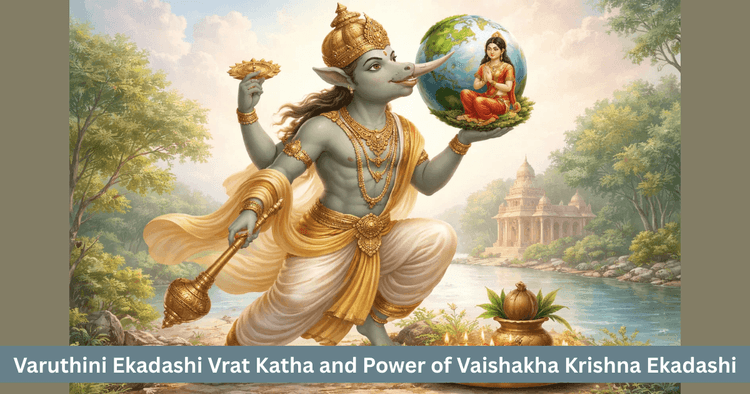
Table of Contents
In the Vedic tradition, Ekadashi days are considered deeply sacred. Each Ekadashi has its own name, observance and spiritual fruits. Among these, the Krishna Paksha Ekadashi of Vaishakha month is known as Varuthini Ekadashi. This date is revered as a powerful vrata for protection from fear, release from sin and relief from difficult situations in life.
After the bright fortnight of Chaitra, with its Kamada Ekadashi, the dark fortnight of Vaishakha begins. The Ekadashi of this fortnight is named Varuthini. On this day devotees worship Lord Vishnu, especially in the form of his Varaha avatara and observe a disciplined fast. The belief is that through this vrata, people suffering from fear or the heavy results of past actions gradually find support and upliftment.
Name, Date and Core Meaning of Varuthini Ekadashi
When Dharmaraja Yudhishthira asked Lord Krishna about the Ekadashi of Vaishakha Krishna Paksha, he inquired about its name, procedure and greatness. In response, Krishna revealed that this Ekadashi is called Varuthini Ekadashi. The word Varuthini carries the sense of that which offers protection, shelter and covering from misfortune.
This Ekadashi is described as
- Enhancing auspicious fortune
- Destroying accumulated sins
- And guiding the devotee toward liberation at the end of life
The main aspects of this observance may be seen in the table below.
| Aspect | Description |
|---|---|
| Tithi | Vaishakha month, Krishna Paksha Ekadashi |
| Name | Varuthini Ekadashi |
| Deity worshipped | Lord Vishnu, with focus on the Varaha incarnation |
| Key fruits | Removal of sins, relief from fear, restoration of strength and fortune, support on the path of liberation |
| Special relevance | Helpful for those troubled by fear, suffering and the results of past wrongs |
Dialogue of Yudhishthira and Sri Krishna
In the Mahabharata period, Dharmaraja Yudhishthira asked Lord Sri Krishna many questions about the various Ekadashis. Having heard the account of Kamada Ekadashi of Chaitra Shukla Paksha, he respectfully requested to learn about the name, method and glory of the Ekadashi that falls in Vaishakha Krishna Paksha.
Lord Krishna replied affectionately that the Ekadashi of Vaishakha Krishna Paksha is known as Varuthini Ekadashi. He described it as an Ekadashi that bestows good fortune, destroys all sins and grants liberation. He then narrated the sacred story linked with this vrata, centred around King Mandhata.
Where Does the Story of King Mandhata Begin
In very ancient times, on the banks of the river Narmada, there ruled a noble king named Mandhata. He was known for generosity, austerity and righteous conduct. Even while holding royal responsibilities, his mind remained inclined toward tapas and spiritual practice.
Once, King Mandhata went into the forest and sat in a secluded place for tapasya. Immersed in deep meditation, he did not concern himself with bodily discomfort or external disturbances. At that moment, a wild bear wandered into that part of the forest.
The Bear’s Attack and the King’s Great Test
The wild bear suddenly attacked the king and began to chew his leg. From an ordinary viewpoint this was a terrifying and extremely painful situation. Yet King Mandhata, following the principles of the ascetic’s dharma, did not give in to anger, violence or a desire for revenge.
The bear kept tearing at his leg and then slowly dragged him into the dense part of the forest. It was a severe test for the king’s faith and endurance. Even in that condition, he tried to keep his mind steady and chose remembrance of Lord Vishnu instead of reacting with hatred or aggression. When the pain became unbearable, he called upon Lord Sri Hari Vishnu with a deeply sorrowful yet surrendered heart.
Appearance of Vishnu and Destruction of the Bear
The earnest prayer arising from the king’s heart did not remain unheard. Lord Vishnu appeared before him. With his Sudarshana chakra he destroyed the bear that had attacked and wounded the king. The bear was slain but by then the king’s leg had already been eaten away.
Because of the loss of his leg, King Mandhata became filled with grief. He wondered how he would now fulfil his duties and continue his life of service and tapasya with an incomplete body. Seeing his pain and confusion, Lord Vishnu was moved with compassion.
Vishnu’s Teaching and the Instruction of Varuthini Ekadashi
Lord Vishnu gently addressed the king. He said
Dear child, do not grieve. Go to Mathura and observe the Varuthini Ekadashi fast with devotion. On that day worship my Varaha avatara form. By the power of this fast and worship your limbs will again become strong and beautiful.
He further explained that the attack by the bear had its root in the sins of a previous birth. Even though the king now walked the path of righteousness and austerity, some remnants of past misdeeds were still awaiting their result and this painful event was a manifestation of that unseen karma.
Through this guidance, the king understood that not only present actions but also the deeds of previous lifetimes bear fruit and that sincere spiritual practice can help to soften and cleanse their effects.
Varuthini Ekadashi in Mathura and the Transforming Result
Obeying the Lord’s instruction, King Mandhata travelled to Mathura. There he took a vow to observe Varuthini Ekadashi with full faith. On the day of Ekadashi he fasted in a disciplined manner, worshipped the deity of Lord Vishnu in the Varaha form and spent the day in remembrance and prayer.
After completing the vrata, remarkable changes began to appear in his body. The leg that had been eaten by the bear became whole and strong again. His body returned to its original completeness and beauty. This powerful experience established in him a deep and unshakable faith in the greatness of Varuthini Ekadashi.
Scriptural narrations add that through the merit of this Ekadashi, King Mandhata later attained heavenly realms after the end of his earthly life.
A Path for Those Afflicted by Fear and Sin
Lord Sri Krishna told Yudhishthira that anyone who is tormented by fear or is heavily burdened by the results of sinful actions should resolve to observe Varuthini Ekadashi.
Through this vrata
- The pathway for the destruction of sins is opened
- A fearful mind gradually gains courage and steadiness
- And the journey toward liberation becomes smoother and more supported
The observance is not only an outer ritual but also an inner practice of self purification, repentance and surrender to the Lord.
Inner Guidance of Varuthini Ekadashi for the Seeker
The story of King Mandhata conveys that
- Difficulties in the present life may at times be the fruits of past life actions
- The highest austerity is to choose remembrance of the Lord and restraint, even in situations of sharp pain
- The Lord never ignores the heartfelt cry of a devotee but provides a path towards healing and upliftment
Varuthini Ekadashi, therefore inspires seekers to trust that even in the presence of fear, karmic burden and physical or mental suffering, it is still possible to turn toward God, accept guidance and perform sincere spiritual effort.
Common Questions
In which month and fortnight does Varuthini Ekadashi fall?
Varuthini Ekadashi falls in the Krishna Paksha of the month of Vaishakha. It is described as an Ekadashi that grants good fortune, destroys sins and supports liberation.
Why is this Ekadashi called Varuthini?
The name Varuthini suggests protection and shelter. This Ekadashi is considered to shield the devotee from fear, misfortune and the weight of wrongdoing, hence it is given this name.
What does the episode of the bear attacking King Mandhata signify?
The attack symbolises how the karma of previous births can appear as suffering in the present life. It also shows that even the devout must learn through such events and deepen their practice.
What remedy did Lord Vishnu prescribe for King Mandhata?
Lord Vishnu told the king to go to Mathura, observe the Varuthini Ekadashi fast and worship his Varaha incarnation. By the power of this vrata the king’s lost limb was restored.
How does this vrata help those suffering from fear and sin?
According to the scriptural teaching, a person troubled by fear or guilt who observes Varuthini Ekadashi and remembers Lord Vishnu gains relief from sins and strength on the path toward peace and liberation.
Get your accurate Kundali
Generate KundaliDid you like it?
Author
Pt. Narendra Sharma (63)
Experience: 20
Consults About: Family Planning, Career
Clients In: Punjab, Haryana, Delhi
Share this article with friends and family
About ZODIAQ
ZODIAQ is an online Vedic Astrology platform. It connects clients seeking astrological advice to experienced astrologers with deep knowledge. Our users also generate kundali and perform kundali milan for free. ZODIAQ also offers services to the Astrologers. Astrologers utilize various offerings by ZODIAQ to serve their clients effectively.
If you are a User
Consult with experienced astrologers and seek their guidance. You can also order handwritten Janm Patrika report with life prediction prepared by experienced astrologers. Generate accurate Kundali, perform Kundali Matching and check horoscope and muhurat. Utilize our online library for all the necessary astrological and spiritual information.
If you are an Astrologer
Create accurate kundali for your clients and perform Kundali Matching for up to 5 people at a time. Write comprehensive Janm Patrika report for your clients with ZODIAQ. Check client details anytime by saving it in client directory. Become more productive by tracking how many clients you guide every day.
WELCOME TO
ZODIAQ
Right Decisions at the right time with ZODIAQ
