Anvadhan 2027: What Is This Vedic Ritual?
By Pt. Narendra Sharma
The ancient Vedic tradition of rekindling the sacred fires before the Ishti yajna, its vidhi and spiritual significance.
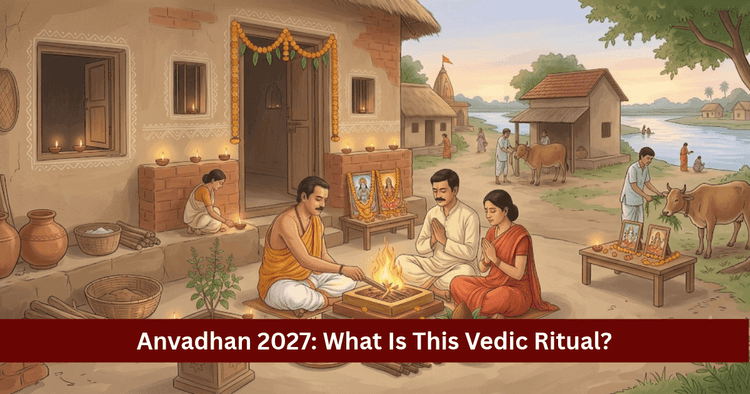
Table of Contents
When Is Anvadhan 2027 and What Is the Auspicious Time?
Anvadhan 2027 falls on Friday, 22 January, on Paush Shukla Chaturdashi. It is a ritual performed a day before the Vedic Ishti yajna, in which fresh fuel is added to the sacred fires to keep them burning. The related Ishti will take place the next day, 23 January 2027.
Anvadhan is the Vedic ritual in which, a day before the Ishti yajna, the yajamana (sponsor of the sacrifice) adds fuel to his sacred fires, rekindles them and takes the vow of the observance.
"Anvadhan" comes from the Sanskrit words "Anu" and "Adhana". Adhana means placing or establishing in the fire and Anu means after or again. So Anvadhan means rekindling the fire by placing fresh samidha (sacred firewood) in it again. This ritual is performed around every full moon and new moon, that is, twice a month.
| Panchang Element | Details |
|---|---|
| Name of the Ritual | Anvadhan |
| Date | 22 January 2027, Friday |
| Hindu Month | Paush, Shukla Paksha (waxing fortnight) |
| Tithi | Chaturdashi, after which Purnima begins |
| Related Ishti | 23 January 2027, Saturday |
| Type of Ishti | Paurnamasa Ishti (full moon sacrifice) |
| Sunrise in Delhi | Approximately 7:14 AM |
| Sunset in Delhi | Approximately 5:53 PM |
| Rahu Kaal (Delhi) | Approximately 11:10 AM to 12:30 PM |
| Position of the Moon | Cancer, Pushya Nakshatra |
| Presiding Deities | Agni Dev, Soma and other Vedic deities |
| Other Observances on the Same Day | Pausha Purnima, Shakambhari Purnima, Thaipusam |
The dates of Anvadhan and Ishti are fixed by the Parva Sandhi, that is, the start and end times of the full moon or new moon. That is why Anvadhan sometimes falls on Chaturdashi and sometimes on Purnima. Vedic families follow the exact timing according to their family priest and the Shrauta Panchang.
What Is the Relationship Between Anvadhan and Ishti?
Anvadhan and Ishti are two stages of the same Vedic yajna. Anvadhan is the day of preparation, when the fire is kindled and the yajamana takes the vow. On the next day, in the Ishti, purodasha (sacred rice cakes), ghee and other havi (offerings) are offered to the gods.
Ishti is the Vedic yajna in which havi, the sacred offering, is made to the gods through the fire.
In the Vedic Shrauta tradition, the yajna performed on the full moon and the new moon is called the Darsha Paurnamasa Ishti. The new moon Ishti is called Darsha Ishti and the full moon Ishti is called Paurnamasa Ishti. The Shrauta Sutras regard it as the model for all Ishtis, because the procedure of many other yajnas is built upon it.
| Stage | Day | Main Activity |
|---|---|---|
| Anvadhan | 22 January 2027 | Fuel added to the fires, vow taken, rules of Upavasatha followed |
| Ishti | 23 January 2027 | Offering of purodasha and ghee to the gods |
The day of Anvadhan is also called Upavasatha. Upavasatha means dwelling near the gods. It is believed that on this night the gods come to the yajamana's home for the yajna, so the yajamana lives with restraint and purity.
What Are the Three Sacred Fires in the Vedic Tradition?
In the Shrauta tradition, an Agnihotri householder keeps three sacred fires burning permanently. These are Garhapatya, Ahavaniya and Dakshinagni. On the day of Anvadhan, fresh fuel is added to these fires to prepare them for the Ishti.
An Agnihotri is a householder who has ritually established the sacred fires and performs the Agnihotra every morning and evening.
| Name of the Fire | Shape of the Altar | Direction | Role |
|---|---|---|---|
| Garhapatya | Round | West | The householder's root fire, from which the others are kindled |
| Ahavaniya | Square | East | The fire for offerings to the gods |
| Dakshinagni | Half moon | South | The fire for rites linked to the ancestors and protection |
The shapes of these three fires are also regarded as symbolic. The round altar stands for the earth, the square altar for the directions of heaven and the half moon altar for the space between. In this way the fire altar is itself a small form of the whole universe.
What Is the Vidhi of Anvadhan?
On the day of Anvadhan, the yajamana bathes, adds fuel to the three sacred fires, invokes the gods and takes the vow of the Ishti. On this day the yajamana and his wife observe fasting, restraint and truthfulness. A Shrauta yajna is performed only under the guidance of qualified ritvij (officiating) Brahmins.
- The yajamana bathes in the morning and wears clean clothes
- Fresh samidha is added to the Garhapatya, Ahavaniya and Dakshinagni according to the rules
- The gods who will receive offerings in the Ishti are chosen in the mind
- The yajamana takes the sankalpa (vow) for the next day's Ishti
- The materials needed for the yajna, such as rice, barley, ghee and kusha grass, are gathered
- The yajamana and his wife eat only one light sattvic meal during the day
- At night they sleep on the ground and observe celibacy
- The day is spent in truthful speech, a calm mind and remembrance of the gods
- The next day after sunrise, the Ishti yajna is performed
How Can an Ordinary Householder Adopt the Spirit of Anvadhan?
Today very few families keep the Shrauta fires permanently. Yet any householder can adopt the spirit of this day in a simple form.
- After the morning bath, light a ghee lamp at the home shrine
- If possible, perform a small havan and make 11 offerings with the Gayatri Mantra
- Eat one sattvic meal during the day and keep restraint
- Offer ghee to the fire saying "Om Agnaye Svaha, Idam Agnaye Na Mama"
- Give charity or support to a Vedic scholar or a yajna tradition
"Idam Agnaye Na Mama" means this offering is for Agni, not mine. This short sentence holds within it the whole Vedic teaching of renunciation and action without ego.
What Are the Main Mantras of Anvadhan?
Many mantras from the Rigveda, the Yajurveda and the Shrauta Sutras are used in Anvadhan and Ishti. Some simple and well known mantras linked to Agni Dev are given below for the ordinary seeker.
| Mantra | Meaning | Use |
|---|---|---|
| Agnimile Purohitam Yajnasya Devamritvijam, Hotaram Ratnadhatamam | I praise Agni, the priest of the yajna, the divine officiant, the invoker and the greatest bestower of treasures | The first mantra of the Rigveda, praise of Agni |
| Om Agnaye Svaha, Idam Agnaye Na Mama | This offering is for Agni, not mine | Offering of ghee |
| Om Bhur Bhuvah Svah Tat Savitur Varenyam Bhargo Devasya Dhimahi Dhiyo Yo Nah Prachodayat | We meditate on the supreme radiance of Savitar, may he inspire our intellect | The Gayatri Mantra, offering in the havan |
The very first mantra of the Rigveda is dedicated to Agni. This shows how central Agni was to Vedic life. Agni is regarded as the messenger between human beings and the gods.
What Is the Astrological Influence of Anvadhan?
On 22 January 2027 the Moon will be in Pushya Nakshatra in Cancer, whose deity is Brihaspati, regarded as the priest of the gods. The Sun is in Capricorn and the day is Friday. For a ritual linked to the yajna, the presence of the nakshatra of the priest of the gods is a deeply meaningful alignment.
In astrology the fire element is linked with the Sun and Mars and the presiding deity of Krittika Nakshatra is Agni Dev himself. Worship of fire strengthens the radiance of the Sun, awakens confidence and removes inertia of the mind. The Rigveda also calls Agni the purohit (priest) and Brihaspati, the deity of Pushya Nakshatra, is the priest of the gods.
| Planet | Possible Problem | Remedy on Anvadhan |
|---|---|---|
| Sun | Lack of confidence and laziness | Offer arghya to the Sun in the morning and light a ghee lamp |
| Mars | Low energy or excessive anger | Make offerings in a havan with the Gayatri Mantra |
| Jupiter | Obstacles in wisdom and the guru's grace | Honour a Vedic scholar and donate yellow items |
| Moon | Mental instability | Offer water mixed with milk to the full Moon at night |
| Saturn | Obstacles in work | Make offerings of black sesame in a havan and donate sesame |
What Should and Should Not Be Done on Anvadhan?
Restraint, truth and purity matter most on the day of Anvadhan. One sattvic meal, worship of fire, sleeping on the ground and celibacy are auspicious on this day. Tamasic food, harsh words, falsehood and disrespect towards fire are regarded as forbidden.
- After the morning bath, worship the fire or a lamp
- Eat only one sattvic meal during the day
- Speak the truth and keep the mind calm
- Light and extinguish the sacred fire or lamp with respect
- Do not put waste, plastic or impure items into the fire
- Do not consume meat, alcohol or tamasic food
- Stay away from arguments and anger on this day
- Do not begin the ritual during Rahu Kaal
When the Vedic Tradition Lives On in the Flame
Anvadhan reminds us that the Vedic tradition lives not only in the texts but in homes where the sacred fire has burned for generations. The samidha placed in the fire on every full moon and new moon is a symbol of that unbroken faith.
On 22 January 2027, a single ghee lamp lit at home and a single offering made in the spirit of "Idam Agnaye Na Mama" can connect any seeker to the ancient wisdom that says the true yajna lies in renunciation.
FAQ
When is Anvadhan 2027?
Anvadhan falls on Friday, 22 January 2027, on Paush Shukla Chaturdashi. The related Paurnamasa Ishti will take place the next day, 23 January.
What is the meaning of Anvadhan?
Anvadhan means rekindling the sacred fire by placing fresh samidha in it again. It is the preparatory ritual performed a day before the Ishti yajna.
What is the difference between Anvadhan and Ishti?
Anvadhan is the day of preparation, when the fire is kindled and the vow is taken. The Ishti takes place the next day, when purodasha and ghee are offered to the gods.
What are the three sacred fires of the Vedic yajna?
The three sacred fires of the Vedic yajna are Garhapatya, Ahavaniya and Dakshinagni. Fresh fuel is added to these fires on the day of Anvadhan.
Can an ordinary householder observe Anvadhan?
The full Shrauta Anvadhan is performed only by Agnihotri families with qualified priests. An ordinary householder can adopt its spirit on this day by lighting a lamp, performing a small havan and keeping restraint.
Get your accurate Kundali
Generate KundaliDid you like it?
Author
Pt. Narendra Sharma (63)
Experience: 20
Consults About: Family Planning, Career
Clients In: Punjab, Haryana, Delhi
Share this article with friends and family
About ZODIAQ
ZODIAQ is an online Vedic Astrology platform. It connects clients seeking astrological advice to experienced astrologers with deep knowledge. Our users also generate kundali and perform kundali milan for free. ZODIAQ also offers services to the Astrologers. Astrologers utilize various offerings by ZODIAQ to serve their clients effectively.
If you are a User
Consult with experienced astrologers and seek their guidance. You can also order handwritten Janm Patrika report with life prediction prepared by experienced astrologers. Generate accurate Kundali, perform Kundali Matching and check horoscope and muhurat. Utilize our online library for all the necessary astrological and spiritual information.
If you are an Astrologer
Create accurate kundali for your clients and perform Kundali Matching for up to 5 people at a time. Write comprehensive Janm Patrika report for your clients with ZODIAQ. Check client details anytime by saving it in client directory. Become more productive by tracking how many clients you guide every day.
WELCOME TO
ZODIAQ
Right Decisions at the right time with ZODIAQ
