What Are Anvadhan Vedic Astrology Secrets?
By Pt. Suvrat Sharma
Complete Vedic method of fire worship and planetary peace on Pausha Anvadhan 7 January 2027.
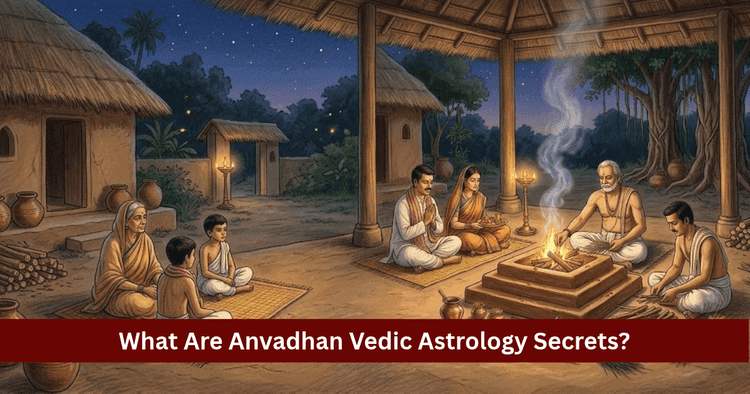
Table of Contents
In the Vedic almanac and the ancient sacrificial tradition of Sanatana Dharma an extremely profound and scientific foundation has been established for every single lunar day and constellation. When the movements of the Sun and the Moon in the cosmos arrive at a specific angle the flow of subtle Prana (life force energy) intensifies within the atmosphere of the earth. To accumulate this spiritual energy for human welfare and spiritual upliftment the Vedic sages established the divine tradition of Yajna (sacred fire sacrifice) and Agnihotra. An extremely important and foundational pillar of this great tradition is the festival of Anvadhan. This sacred occasion is not merely an external ritualistic procedure but rather it is a holy medium to connect the digestive fire and spiritual fire burning within a human being directly with the cosmic fire. Seekers who worship Agni Deva (the fire god) and Lord Vishnu with complete faith and Vedic rules on this day have all their inauspicious karmic bonds burned to ashes and experience the rise of divine wisdom within their inner conscience.
The primary almanac details and accurate description of the rituals associated with this extremely sacred Vedic festival are presented below through a structured table and clear points:
| Primary Almanac Components | Detailed Astrological And Vedic Description |
|---|---|
| Name Of Sacred Vedic Festival | Anvadhan |
| Gregorian Calendar Date | 7 January 2027 |
| Day And Ruling Planet | Thursday (Deva Guru Brihaspati or Jupiter) |
| Vedic Lunar Month | Pausha Month |
| Fortnight And Lunar Day | Chaturdashi of Krishna Paksha and Amavasya juncture |
| Presiding Deities And Forces | Agni Deva (Fire God), Lord Lakshmi Narayana and Pitru Devatas |
| Major Vedic Rituals | Garhapatya fire establishment, Samidha offering, fasting and silence |
The primary rules and essential duties to be followed by spiritual seekers on this sacred lunar day are as follows:
- Wake up during the Brahma Muhurta (pre dawn auspicious hours) before sunrise, take a bath with purified water and wear a clean unstitched cloth or light colored washed garments.
- Purify the sacrificial altar or fire pit completely by smearing it with cow dung and holy Ganges water and formally invoke the sacred fire.
- Give up regular grains on this day and take a firm vow of Ekabhukta (eating only once) or complete fasting while consuming only fruits, milk or pure water.
- Strictly observe complete celibacy through mind, words and actions throughout the entire day and sleep on the floor by spreading a mat of Kusha grass.
- Sit before the sacred fire during the evening hours to recite Vedic hymns and prepare the sacred materials for the Ishti Yajna to be performed the next day.
What Is The Literal Meaning Of Anvadhan And The Science Of Vedic Yajna Tradition?
According to Sanskrit grammar and the Vedic Samhitas the term Anvadhan originates from the combination of the prefix Anu and the root word Adhana. Anu means after or in sequence and Adhana means to establish, to adopt or to place sacred wood into the holy fire. Since the Vedic period observing the Pancha Mahayajnas (five great daily sacrifices) and Agnihotra has been considered mandatory for every individual living in the Grihastha Ashrama (householder stage of life). In those households where the unbroken fire of daily Agnihotra remains constantly lit there is a scriptural rule to perform special fire sacrifices on the occasion of Amavasya (new moon) and Purnima (full moon) of every month which are called Darshapurnamasa Ishti.
Exactly one day prior to the commencement of this great sacrifice meaning during the juncture of Chaturdashi (fourteenth lunar day) or Pratipada (first lunar day) the three sacred fires namely Garhapatya, Ahavaniya and Dakshinagni are reawakened and nourished by placing sacred Samidha (sacrificial twigs) into them with special mantras. This exact scriptural process of establishing the fire and adopting the sacred vow is called Anvadhan. In reality this is a day of physical, mental and spiritual preparation performed by the host and his wife prior to the main sacrifice. Without completing the process of Anvadhan the Ishti sacrifice performed on the following day is considered incomplete and fruitless.
From a spiritual perspective this festival teaches us that prior preparation and firm determination are required to achieve success in any great goal or divine spiritual practice. When a seeker offers twigs of Palasha, Peepal or Shami into the sacred fire on this day they symbolically take a vow to surrender their inner lust, anger, greed and ego into the fire. The fire burning in the external fire pit becomes a scientific instrument to awaken the dormant spiritual energy located within the Muladhara (root) and Manipura (solar plexus) chakras of the seeker.
Astrological Significance Of The Conjunction Of Pausha Krishna Chaturdashi And Thursday
This Anvadhan festival falling on 7 January in the year 2027 is arriving on the Chaturdashi Tithi of the Krishna Paksha (dark fortnight) of the Pausha month and on a Thursday. In Vedic astrology this threefold alignment of lunar day, weekday and month is considered extremely rare and capable of bestowing profound spiritual accomplishments. During the Pausha month the Sun god transits through the Dhanu Rashi (Sagittarius zodiac sign) which belongs to his friend Deva Guru Brihaspati (Jupiter). Sagittarius is a fiery element sign that has a direct connection with sacrifice, righteousness, higher philosophy and spiritual goals. When the Sun is situated in Sagittarius the influence of Sattvic (pure) fire increases in the cosmos which is highly helpful in making any kind of Vedic ritual immediately successful.
From the perspective of the lunar day Lord Shiva himself is the ruling deity of the Chaturdashi of the dark fortnight and immediately after this the Amavasya Tithi begins whose ruling lords are the Pitru Devatas (ancestors). The Chaturdashi Tithi is placed in the category of Rikta Tithi which literally means emptiness or void. Even though it may be considered ordinary for material actions this lunar day is supreme for spiritual practice, mantra perfection and the dissolution of ego. Only when a human being empties worldly desires from within does the descent of divine grace become possible.
Furthermore the day of Thursday multiplies the auspiciousness of this festival manifold. In the science of astrology Jupiter is called the significator of the living soul and supreme wisdom. The direct control of sacrificial rituals and fire offerings lies with the planet Jupiter. Through the fire worship performed on a Thursday the planet Jupiter in the birth chart becomes extremely strong. When the fire element festival of Anvadhan meets the weekday of Jupiter who is the lord of the ether element the higher intellect of the seeker is awakened. This alignment protects the individual from wandering and leads them directly onto the path of liberation and self realization.
The Three Forms Of Vedic Fire And Their Deep Connection With The Human Body
The fire whose worship is prescribed on the day of Anvadhan in the Vedic scriptures is not merely physical fire burning from wood. Our ancient sages divided the fire energy operating within the universe and the human body into three major parts which have a direct connection with the rituals of this day:
| Name Of Vedic Fire | Shape Of Altar | Cosmic And Physical Connection | Spiritual Benefits |
|---|---|---|---|
| Garhapatya Agni | Circular (Symbol of Earth) | Muladhara Chakra and Jatharagni (Digestive fire) | Attainment of health, lineage growth and material comforts |
| Ahavaniya Agni | Square (Symbol of Sky) | Anahata and Sahasrara Chakras and Prana Agni | Grace of deities, deep mental peace and self realization |
| Dakshinagni | Semicircular (Symbol of Air) | Swadhisthana Chakra and mental emotions | Freedom from ancestral afflictions and destruction of negativity |
When a seeker sits before their household fire on the day of Anvadhan and performs Pranayama (breath control) and mantra chanting a balance of energy is established in all three subtle channels of their body namely Ida, Pingala and Sushumna. With the purification of the digestive fire all physical diseases of the body are destroyed and with the strengthening of the mental fire an amazing increase occurs in memory power and concentration.
What Is The Role Of Anvadhan In Pacifying The Nine Planets And Purifying Karma?
According to Indian astrology all the happiness and sorrow that come into the life of a human being are the direct result of the transits and planetary periods of the nine planets located in their birth chart. To pacify the inauspicious effects of planets along with wearing gemstones, charity and mantra chanting Havoc or fire worship is considered the most superior and quickly fruitful remedy. It is clearly stated in the Vedas that Agni Deva is the mouth of all deities and planets. Any pure oblation offered into the fire transforms into subtle vapor and fragrant air to reach the respective planetary deity directly.
On the day of Anvadhan when the sacred fire is established with twigs of various trees and medicinal herbs a special type of chemical and spiritual energy spreads throughout the atmosphere. This energy immediately cleanses the negative planetary afflictions attached to the aura of the seeker:
- Pacification Of Sun And Mars Afflictions: Both the Sun and Mars are fiery element planets. Worshiping the fire on this day and offering twigs of Palasha and Khadira strengthens a weak Sun in the birth chart. This increases self confidence and provides a permanent solution to anger, blood disorders and marital obstacles generated due to Mangal Dosh (Mars affliction).
- Removal Of Guru Chandal And Rahu Afflictions: When there is a conjunction of Jupiter with Rahu or Ketu in the birth chart the decision making capacity of a person is destroyed and they turn away from righteousness. By offering oblations of Peepal twigs and Durva grass on this Pausha Anvadhan falling on a Thursday the web of illusion created by Rahu breaks and the pure energy of Jupiter becomes active again.
- Freedom From Poisonous Conjunction Of Saturn And Moon: During the juncture of Pausha Krishna Chaturdashi and Amavasya the Moon is in an extremely weak state due to which there is a possibility of mental depression. By nourishing the fire with Shami twigs and pure cow clarified butter on this day the suffering of Shani Sade Sati is reduced and the mind attains boundless peace.
- Mitigation Of Ancestral Debt And Family Afflictions: Offering black sesame seeds and barley into the Dakshinagni grants peace to the unsatisfied souls of ancestors. This removes obstacles coming in the way of lineage growth and establishes happiness and prosperity in the family.
What Is The Ancient Mythological Story Associated With This Sacred Vedic Festival?
In the Shatapatha Brahmana and the Shanti Parva of the Mahabharata an extremely profound and inspiring story illustrating the greatness of fire worship and the Anvadhan vow is described. In ancient times an extremely learned but poor Brahmin named Satyavrata lived on the sacred banks of the Saraswati river. He had deeply studied the Vedas and scriptures yet a deep anxiety always remained in his mind regarding the lack of wealth and worldly sufferings. Due to mental unrest he was unable to properly follow his daily Agnihotra and Vedic rules.
Without prior preparation and without following the rule of Anvadhan he would hastily complete the sacrifices of Amavasya and Purnima. As a result he was not receiving any auspicious fruit of the sacrifices performed by him and poverty as well as disease kept increasing in his house. One day on the Chaturdashi of the dark fortnight of the Pausha month when he was sitting extremely disappointed on the riverbank the great sage Angira arrived there. A divine radiance like fire was shining on the face of Maharshi Angira.
Satyavrata bowed down at the feet of the great sage and asked the reason for the failure and poverty of his life. Capable of seeing the three periods of time Maharshi Angira meditated for a moment and said with a smile that O child, you wish to obtain the fruits of the tree of sacrifice but you have forgotten the rule of watering its roots. Without observing the vow of Anvadhan and without purifying your mind and the sacred fire you sit down directly to perform the Ishti sacrifice. Just as a seed sown in the ground without plowing and preparing the soil never sprouts similarly a sacrifice performed without the spiritual practice of Anvadhan is never accepted by the deities.
The great sage explained to Satyavrata that today is the auspicious alignment of the sacred Chaturdashi of the Pausha month and Thursday. Today go to your house and first of all give up greed and despair from your inner heart. Together with your wife purify the sacrificial hall and take a vow of Anvadhan by faithfully establishing sacrificial twigs in all three Vedic fires. Observe a fast tonight, chant only the mantras of Lord Vishnu and Agni Deva and sleep on the floor.
Satyavrata followed the order of Maharshi Angira to the letter. Together with his wife he performed the ritual of Anvadhan with complete procedure and completed the Darsha Ishti sacrifice on the next day during Amavasya. Pleased with this spiritual practice performed with discipline and faith Agni Deva himself appeared and blessed him. By the grace of the fire god all the planetary combinations of poverty from the past births of Satyavrata were burned to ashes. The storehouses of his home were filled with wealth and grains and he became famous as a great self realized sage.
The Complete And Authentic Vedic Worship Method Of Anvadhan Festival
In the present time not every householder has the arrangement to keep the three Vedic fires lit daily. However this rule is given in the scriptures that a general seeker can also follow the rules of Anvadhan by lighting a lamp in the temple of their house or through a small fire pit and can obtain full spiritual benefits.
The step by step worship method to be performed from morning until night on this sacred day is as follows:
- Morning Bath And Purification: Wake up during the Brahma Muhurta before sunrise and take a bath by adding a little holy Ganges water and Kusha grass into the bathing water. After this wear pure cotton or silk clothes.
- Consecration Of Worship Place And Fire Pit: Clean the worship place located in the northeast or east direction of the house with pure water. Establish a copper or earthen fire pit and draw the auspicious symbol of Swastika on it with red vermilion and sandalwood paste.
- Vow And Worship Of Lord Vishnu: Sit on a mat of Kusha grass facing the east direction. Take water, whole rice grains, yellow flowers and a betel nut in your right hand and take a formal vow for the Anvadhan fast of the Pausha month. Perform Abhisheka of the idol of Lord Lakshmi Narayana with Panchamrita and offer yellow clothes, Tulsi leaves and a saffron Tilak to him.
- Fire Establishment And Samidha Offering: Light the fire in the fire pit with the help of a dried cow dung cake and camphor. If you cannot perform a fire sacrifice then fill a large brass lamp with pure cow clarified butter and light an unbroken flame. Meditating on Agni Deva dip three twigs of Palasha or mango wood into clarified butter and establish them in the fire while reciting sacred mantras.
- Vedic Mantra Chanting And Oblations: On this day chant the mantras Om Agnaye Swaha and Om Namo Bhagavate Vasudevaya at least 108 times. Offer at least 21 or 108 oblations with pure cow clarified butter, black sesame seeds, barley and sacred fire herbs.
- Consuming Havishyanna And Evening Rules: Observing a complete fast on the day of Anvadhan is considered supreme. If this is not possible from a health perspective then consume a pure vegetarian meal without salt such as rice or sago cooked in cow milk only once during the afternoon which is called Havishyanna (sacrificial food).
- Night Vigil And Sleeping On The Floor: In the evening sit before the fire or lamp again and recite the Vishnu Sahasranama and the Agni Sukta. At night give up the bed, sleep on the floor by spreading a mat or blanket and keep your mind engaged in divine contemplation.
Dos And Donts On The Day Of Anvadhan
In Vedic fasts more importance is given to mental and physical discipline than external worship. A structured list of major actions to be performed and prohibited actions for this day is given below:
| Dos (Essential Rules) | Donts (Prohibited Actions) |
|---|---|
| Wake up in Brahma Muhurta and practice keeping silence | Do not sleep late and do not waste time in useless arguments or criticism |
| Use only fruits, milk or Havishyanna in your diet | Do not even touch impure food, garlic, onions, meat and alcohol |
| Maintain complete respect and protection for fire, water and grain | Do not extinguish fire with feet and do not touch worship items with unwashed hands |
| Donate to Brahmins, cows and the poor according to your capacity | Do not insult or drive away any beggar, animal or bird from your door |
| Strictly follow complete celibacy and pure thoughts | Do not bring thoughts of anger, ego, greed and immoral relations into the mind |
Special Benevolent Remedies For Anvadhan Festival According To Twelve Zodiac Signs
On 7 January 2027 during this grand alignment of Thursday and Pausha Krishna Chaturdashi if an individual performs special Vedic remedies according to their Moon sign they attain planetary favorability and desired fruits:
- Aries (Mesha): Being a fiery element sign this day is extremely auspicious for you. Offer oblations of red sandalwood and jaggery in the fire sacrifice and donate red lentils to the poor.
- Taurus (Vrishabha): For the favorability of Venus and wealth attainment offer oblations of pure cow clarified butter and sweet rice pudding in the fire and gift camphor as well as white clothes in a temple.
- Gemini (Mithuna): For intellectual development and progress in business perform a fire sacrifice with Durva grass and Apamarga twigs and feed green grass to cows in a cow shelter.
- Cancer (Karka): To get freedom from mental stress offer oblations of Palasha twigs and rice mixed with raw milk and perform water Abhisheka of Lord Shiva.
- Leo (Simha): For the attainment of honor and high position nourish the fire with Madar twigs and donate wheat filled in a copper vessel.
- Virgo (Kanya): For health benefits and family peace perform a fire sacrifice with whole green gram and clarified butter and take blessings after feeding young girls.
- Libra (Tula): For happiness and peace in married life offer oblations with Gular twigs and rock sugar and light an unbroken lamp of pure clarified butter in a temple.
- Scorpio (Vrishchika): For victory over enemies and freedom from debt use Khadira twigs and light a jasmine oil lamp before Lord Hanuman.
- Sagittarius (Dhanu): The Sun is transiting in your own sign. Perform a fire sacrifice with Peepal twigs and yellow mustard seeds and donate yellow clothes to your teacher or a Brahmin.
- Capricorn (Makara): To pacify the sufferings of Saturn offer oblations in the fire with Shami twigs and black sesame seeds and gift a blanket to a helpless person.
- Aquarius (Kumbha): To remove obstacles coming in livelihood light a mustard oil lamp under a Peepal tree and scatter seven types of grains for birds.
- Pisces (Meena): For spiritual accomplishment and excellent health perform a fire sacrifice with clarified butter mixed with saffron and turmeric and faithfully recite the Shri Vishnu Sahasranama.
The Flame Of The Inner Soul And The Eternal Message Of Sanatana Tradition
The festival of Anvadhan celebrated on this sacred Chaturdashi of the Pausha month is a holy bridge to connect us with our roots and the great scientific tradition of the ancient sages. When we place sacrificial twigs into the external fire in reality we are making an effort to awaken the consciousness sleeping within ourselves. This day teaches us to pause, introspect and fill the light of wisdom within ourselves to face the deep darkness of the Amavasya of the following day. For the human being who surrenders their life energy at the feet of the supreme divine with discipline, restraint and faith on this day no obstacle in the world remains invincible.
FAQ
Question 1: On which day will the Anvadhan festival of the Pausha month be celebrated in the year 2027?
Answer: According to the Vedic almanac this sacred festival will be celebrated on 7 January 2027 on a Thursday during the Chaturdashi Tithi of the dark fortnight of the Pausha month.
Question 2: What is the main purpose of Anvadhan in the Vedic religion?
Answer: The main purpose of Anvadhan is to awaken the sacred fires by placing sacrificial twigs in them one day prior to the main Ishti sacrifice occurring on Amavasya or Purnima and for the host to take a formal vow of fasting.
Question 3: Can householders observe the fast of Anvadhan even without a sacrificial fire pit?
Answer: Yes, in those homes where there is no arrangement for a daily fire pit seekers can obtain the full merit of this fast by lighting a lamp of pure cow clarified butter in their worship room, observing a fast and chanting the mantras of Lord Vishnu.
Question 4: What special astrological benefit is obtained when Anvadhan falls on a Thursday?
Answer: The ruler of Thursday Deva Guru Brihaspati himself is the significator of sacrifice and righteousness therefore performing the spiritual practice of Anvadhan on this day strengthens the planet Jupiter in the birth chart and the person attains immense wisdom as well as prosperity.
Question 5: What kind of food is scripturally permitted to be consumed on the day of Anvadhan?
Answer: Observing a complete fast on this day is supreme but if unable due to weakness a pure vegetarian meal without salt such as milk, fruits or sweet rice pudding cooked in cow milk called Havishyanna can be consumed only once during the day.
Get your accurate Kundali
Generate KundaliDid you like it?
Author
Pt. Suvrat Sharma (63)
Experience: 20
Consults About: Family Planning, Career
Clients In: Punjab, Haryana, Delhi
Share this article with friends and family
About ZODIAQ
ZODIAQ is an online Vedic Astrology platform. It connects clients seeking astrological advice to experienced astrologers with deep knowledge. Our users also generate kundali and perform kundali milan for free. ZODIAQ also offers services to the Astrologers. Astrologers utilize various offerings by ZODIAQ to serve their clients effectively.
If you are a User
Consult with experienced astrologers and seek their guidance. You can also order handwritten Janm Patrika report with life prediction prepared by experienced astrologers. Generate accurate Kundali, perform Kundali Matching and check horoscope and muhurat. Utilize our online library for all the necessary astrological and spiritual information.
If you are an Astrologer
Create accurate kundali for your clients and perform Kundali Matching for up to 5 people at a time. Write comprehensive Janm Patrika report for your clients with ZODIAQ. Check client details anytime by saving it in client directory. Become more productive by tracking how many clients you guide every day.
WELCOME TO
ZODIAQ
Right Decisions at the right time with ZODIAQ
