Kundalini Shakti and Naga Secret
By Pt. Suvrat Sharma
The profound meaning of serpent energy and awakening of consciousness in yoga
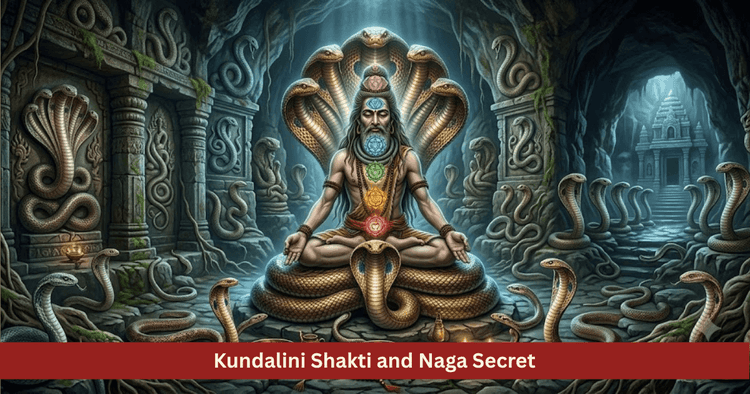
Table of Contents
The Sleeping Serpent Power in Muladhara
In yogic scriptures, the dormant power of consciousness residing in the Muladhara chakra of the human body is called Kundalini and it is depicted as a serpent coiled three and a half times. When a practitioner performs pranayama and meditation, this serpent like power awakens and rises upward through Sushumna Nadi, the subtle channel within the spine, moving toward the Sahasrara chakra. Nag Panchami is not merely a festival of worshipping outer serpents but also an extremely sacred spiritual occasion for awakening one's inner Kundalini power and attaining higher consciousness.
| Subject | Details |
|---|---|
| Name of power | Kundalini |
| Location | Muladhara chakra |
| Form | Serpent coiled three and a half times |
| Pathway | Sushumna Nadi |
| Final goal | Sahasrara chakra |
| Method of practice | Pranayama and meditation |
| Best day | Nag Panchami |
This symbol is not mere imagination. It is a profound scientific and spiritual description of the subtle energy system of the human body. When this power awakens, the consciousness of the practitioner rises above the limited sense of the body and begins moving toward an expanded experience.
Meaning of Kundalini Shakti
The word Kundalini means the power that sits coiled upon itself. This power is believed to exist in the Muladhara chakra in a serpent like form. It is not simply a physical imagination but the very root source of life energy, which remains dormant in the ordinary state of existence.
| Element | Meaning |
|---|---|
| Kundalini | Dormant power of consciousness |
| Serpent form | Coiled three and a half times |
| Muladhara | Dwelling place of the power |
| Dormant state | Inactivity in ordinary life |
| Awakening | Activation through practice |
Just as a serpent sits coiled in a calm state, this energy also remains still and silent within an ordinary human being, until practice awakens it.
Symbolic Relation Between Naga and Kundalini
Considering Nagas only as mythological creatures is not sufficient. In yoga and Tantra Shastra, the Naga is a symbol of subtle energy and consciousness. That is why the power residing in Muladhara is also depicted in the form of a serpent.
| Naga symbol | Kundalini meaning |
|---|---|
| Sleeping serpent | Dormancy of energy |
| Rising serpent | Awakening of energy |
| Movement of serpent | Rising through the chakras |
| Serpent's hood | Indication of higher consciousness |
| Serpent's poison | Danger of uncontrolled energy |
This symbolism suggests that Nag Panchami is not limited to the worship of outer serpents alone. This festival is also an occasion for a human being to become aware of the subtle power within.
Sushumna Nadi and the Journey Through Chakras
Sushumna Nadi passes through the middle of the spine toward the brain. When Kundalini power awakens, it moves upward through this very nadi, piercing through each chakra one after another.
-
Beginning from Muladhara chakra.
-
Piercing through Swadhisthana chakra.
-
Awakening of energy at Manipura chakra.
-
Expansion of heartfelt feeling at Anahata chakra.
-
Purification of speech and expression at Vishuddha chakra.
-
Awakening of inner insight at Ajna chakra.
-
Experience of complete consciousness at Sahasrara chakra.
| Chakra | Symbolic quality |
|---|---|
| Muladhara | Stability and root energy |
| Swadhisthana | Emotional balance |
| Manipura | Willpower |
| Anahata | Love and compassion |
| Vishuddha | Communication |
| Ajna | Inner insight |
| Sahasrara | Divine consciousness |
Understanding this journey is extremely necessary, because each chakra is connected to a distinct level of a person's personality. As the energy passes through every chakra, the related quality within the practitioner also becomes refined.
Sahasrara Chakra and the Final Goal
The Sahasrara chakra is believed to be located at the top of the head. This chakra symbolises supreme knowledge and complete consciousness. When Kundalini power reaches this chakra, the practitioner attains a deep spiritual experience.
| Sahasrara chakra | Meaning |
|---|---|
| Location | Crown of the head |
| Symbol | Complete consciousness |
| Experience | Supreme knowledge |
| Result | Dissolution of ego |
| Fruit | Self realisation |
In this state, the ego of the practitioner gradually begins to dissolve and he becomes established purely in the experience of consciousness. This is regarded as the ultimate purpose of yogic practice.
Relation Between Nag Panchami and Inner Practice
Considering Nag Panchami merely as a day for worshipping outer serpents limits the depth of this festival. This day is also regarded as extremely suitable for the awakening of inner Kundalini power.
| Aspect of festival | Meaning |
|---|---|
| Outer worship | Adoration of Naga deity |
| Inner practice | Kundalini awakening |
| Symbolic message | Rising above fear |
| Spiritual goal | Attainment of higher consciousness |
| Balance | Union of outer and inner worship |
Practising meditation, pranayama and mantra chanting on this day makes the practitioner more aware of the dormant power within.
A Simple Method of Practice
The practice for Kundalini awakening should be extremely subtle and disciplined. Some simple steps can be helpful for an ordinary practitioner.
-
Meditate at a calm and clean place in the early morning.
-
Practise pranayama regularly.
-
Focus the mind upon the Muladhara chakra.
-
Observe the breath while keeping its movement natural.
-
Do not apply any kind of force upon the mind.
| Step of practice | Purpose |
|---|---|
| Meditation | Stability of mind |
| Pranayama | Balance of energy |
| Focusing | Awakening of chakra |
| Observation | Awareness |
| Patience | Safe progress |
This practice should be carried out gradually. Any kind of haste or pressure can create imbalance in this subtle process.
Precautions and Necessary Guidance
Kundalini is an extremely powerful energy. If it awakens without disciplined practice and an experienced guide, mental and physical imbalance can also occur. therefore it should be attained only through practice under the guidance of a qualified teacher.
| Precaution | Reason |
|---|---|
| Guidance of qualified teacher | Safe practice |
| Gradual practice | Balanced awakening |
| Avoiding force | Mental stability |
| Regularity | Long term benefit |
| Self observation | Aware progress |
It is necessary to keep in mind that this path is profound and requires a balance of patience, discipline and faith together.
Meaning of Naga Power from a Divine View
From a Puranic perspective too, Naga power is connected to divinity. Lord Vishnu resting upon Sheshanaga and Lord Shiva wearing a serpent around his neck show that this energy, once controlled, becomes the very foundation of stability in creation.
| Divine reference | Symbol |
|---|---|
| Vishnu resting on Sheshanaga | Foundation of stability |
| Serpent around Shiva's neck | Controlled power |
| Serpent at Manipura | Centre of energy |
| Journey to Sahasrara | Attainment of divinity |
This shows that the Naga is not only a symbol of fear but also of disciplined power and divine balance.
Importance of Kundalini Awakening in Life
The goal of Kundalini awakening is not merely to attain spiritual experience. It also provides the practitioner with mental clarity, self confidence and inner stability.
-
Clarity develops within the mind.
-
Fear and anxiety are reduced.
-
Inner strength and confidence increase.
-
The outlook toward life becomes broader.
-
Spiritual experiences become deeper.
| Benefit | Effect |
|---|---|
| Mental clarity | Decision making ability |
| Removal of fear | Inner strength |
| Confidence | Stability |
| Broad outlook | Compassion |
| Spiritual experience | Higher consciousness |
In this way, this inner dimension of Nag Panchami reminds every practitioner that true worship is not only an outer ritual but also awareness of the dormant power within.
FAQ
What is Kundalini Shakti?
Kundalini is the dormant power of consciousness residing in the Muladhara chakra, depicted in serpent form, which awakens through practice.
Through which path does Kundalini rise?
This power rises through Sushumna Nadi, the subtle channel within the spine, moving toward the Sahasrara chakra.
What is the relation between Nag Panchami and Kundalini?
Nag Panchami is regarded as a sacred occasion for both outer serpent worship and the awakening of inner Kundalini power.
What precaution is necessary for Kundalini awakening?
Kundalini awakening without disciplined practice and the guidance of a qualified teacher can create imbalance, so precaution is necessary.
What is the final goal of Kundalini awakening?
The final goal is the attainment of complete consciousness and self realisation at the Sahasrara chakra.
Get your accurate Kundali
Generate KundaliDid you like it?
Author
Pt. Suvrat Sharma (63)
Experience: 20
Consults About: Family Planning, Career
Clients In: Punjab, Haryana, Delhi
Share this article with friends and family
About ZODIAQ
ZODIAQ is an online Vedic Astrology platform. It connects clients seeking astrological advice to experienced astrologers with deep knowledge. Our users also generate kundali and perform kundali milan for free. ZODIAQ also offers services to the Astrologers. Astrologers utilize various offerings by ZODIAQ to serve their clients effectively.
If you are a User
Consult with experienced astrologers and seek their guidance. You can also order handwritten Janm Patrika report with life prediction prepared by experienced astrologers. Generate accurate Kundali, perform Kundali Matching and check horoscope and muhurat. Utilize our online library for all the necessary astrological and spiritual information.
If you are an Astrologer
Create accurate kundali for your clients and perform Kundali Matching for up to 5 people at a time. Write comprehensive Janm Patrika report for your clients with ZODIAQ. Check client details anytime by saving it in client directory. Become more productive by tracking how many clients you guide every day.
WELCOME TO
ZODIAQ
Right Decisions at the right time with ZODIAQ
