The Mystery of Nagmani
By Pt. Nilesh Sharma
Scriptural descriptions, symbolic meaning and the reality of Nagmani
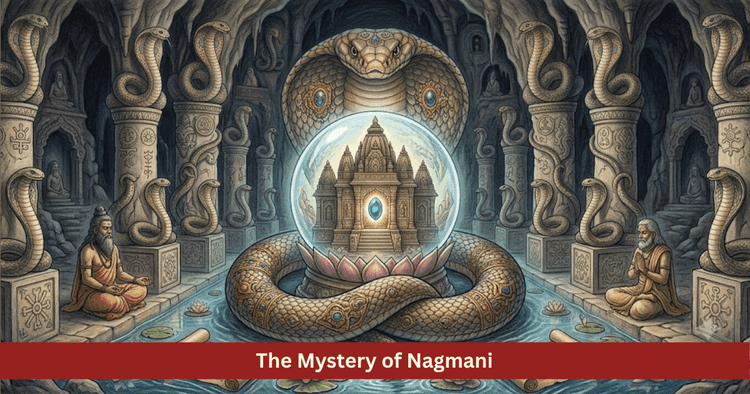
Table of Contents
Faith and Truth
Nagmani is described in Indian Puranic traditions, folk stories and astrological beliefs in a deeply mysterious way. It is not viewed as an ordinary gem. Nagmani is regarded as a symbol of the tapas power, divine radiance and subtle consciousness of Nagas. Yet it is important to understand that firm evidence of a miraculous jewel on the hood of a living serpent is not available. Therefore it is more appropriate to understand Nagmani at the level of faith, symbolism and scriptural indication.
| Subject | Details |
|---|---|
| Names | Nagmani, Sarpamani, Nagamukta |
| Scriptural references | Brihat Samhita and some Puranic traditions |
| Traditional appearance | A jewel spreading blue, green or fire like light |
| Naga connection | Belief connected with special jewel bearing Nagas |
| Spiritual meaning | Tapas, radiance, restraint and subtle wisdom |
| Practical teaching | Protection of life, freedom from greed and self development |
In interpretations connected with Varahamihira's Brihat Samhita, Nagmani is also called Sarpamani. Some descriptions portray it as having the hue of a peacock's throat and radiance like fire. Tradition also says that such a jewel is exceedingly rare and related not to an ordinary snake but to special Naga power.
The most important point about Nagmani is that it should not be seen as an object to acquire but as a symbol to understand. The idea of killing a serpent to take a jewel is not aligned with dharma. Causing harm to Nagas goes against the foundational values of Naga worship, non violence and protection of nature.
Nagmani in Brihat Samhita
Brihat Samhita is counted among the important Indian texts related to astrology and natural signs. Traditional interpretations about Nagmani state that the existence of a jewel bearing Naga is considered extremely rare. It is described as being connected with the serpent's head or hood and its radiance is said to be extraordinary.
In traditional accounts, Nagmani is not regarded as a jewel of beauty alone. It is also seen as a sign of royal authority, protection, reputation and prosperity. Stories say that its possessor may receive victory over enemies, well being in the kingdom and protection from poison. These ideas are more balanced when understood not as literal miracles but as symbols of tapas, discernment and the power to protect.
| Traditional description | Symbolic meaning |
|---|---|
| Intense light | Consciousness and discernment |
| Peacock throat color | Depth and divine attraction |
| Protection from poison | Protection from negativity |
| Victory over enemies | Courage and correct decisions |
| Prosperous kingdom | Balanced leadership and public welfare |
Here Nagmani appears less as a physical object and more as a question. Does a person have such inner radiance that can remove the darkness of fear, confusion and greed? This question keeps the story of Nagmani alive even today.
Swati Nakshatra and the Jewel
A popular belief says that Nagmani is formed through the influence of raindrops falling during Swati Nakshatra. Some traditions also say that special Nagas remain in solitude, tapas and meditation for a long time, after which a luminous jewel appears upon their hood. This belief is linked with rainwater under Swati Nakshatra.
This description is deeply poetic and spiritual. The raindrop here is not only water. It is a sign of grace descending from the sky. The solitude of the Naga is not only solitude in a forest. It symbolizes control over the senses and silent spiritual practice. The jewel is born when inner poison transforms into radiance through tapas.
| Element | Inner meaning |
|---|---|
| Raindrop of Swati Nakshatra | Divine grace |
| Solitude of the Naga | Discipline of the mind |
| Tapas and meditation | Purification of energy |
| Jewel upon the hood | Awakened consciousness |
| Light | Experience of truth |
In this way, the story of Nagmani teaches that the real jewel is not found by searching outside. It reveals itself within through patience, restraint and continuous self reflection.
Does Nagmani Truly Exist?
This question is natural and the answer should be understood within the dignity of both faith and evidence. Nagmani is described in scriptural and folk traditions. Many stories call it a divine jewel resting on the hood of jewel bearing Nagas. Yet confirmed scientific evidence for a miraculous gem in living serpents is not available.
Therefore it is not appropriate to pursue Nagmani as a definite physical object. Any claim of selling, displaying or demanding money for Nagmani may involve deception or confusion. Even in spiritual tradition, the jewel is connected with practice rather than greed.
The balanced way to understand Nagmani is to respect its Puranic importance and maintain compassion toward living beings. No object obtained by causing suffering to a serpent can become an instrument of dharma.
The Significance of Sheshnag and Takshak
In Indian tradition, both Sheshnag and Takshak Naga hold special places. Sheshnag represents sustaining power, stability and cosmic balance. Takshak is associated with intense power, tapas and the mysterious consciousness of the Naga tradition.
Mentioning these lineages in relation to Nagmani suggests that the jewel is not merely outer brilliance. It is linked with responsibility, control over power and deep spiritual practice. Just as Sheshnag sustains, a seeker must learn to hold inner desire, fear and anger with steadiness.
| Naga symbol | Inner meaning |
|---|---|
| Sheshnag | Stability and sustaining power |
| Takshak | Intensity and tapas |
| Serpent hood | Awareness and protection |
| Jewel | Purified intelligence |
| Light | Self knowledge |
Here, the jewel bearing Naga represents the consciousness that does not leave its energy uncontrolled. It transforms energy into compassion, dharma and discernment.
Nagmani and Wealth
In astrological and Tantric traditions, Nagmani is described as a jewel that grants wealth, attraction and siddhi or spiritual accomplishment. Stories say that its possessor gains reputation, victory and prosperity. Yet this requires a deeper interpretation.
Wealth does not mean currency alone. Patience is wealth. Clear intelligence is wealth. Reputation is wealth. Freedom from fear is wealth. When Nagmani is understood as a symbol of these qualities, its meaning becomes far wider.
| Traditional benefit | Inner meaning |
|---|---|
| Vast wealth | Wise use of resources |
| Immortality | Enduring memory of noble actions |
| Complete siddhi | Capacity gained through self discipline |
| Attraction | Balanced radiance of personality |
| Victory | Decisions guided by discernment |
True prosperity is that which makes a person humble. If wealth increases pride, it may lead toward the confusion of Rahu. If wealth joins service and dharma, it becomes the benevolent form of Lakshmi.
Nagmani and Intellectual Appeal
On Nag Panchami, some places follow the tradition of wearing a symbolic gem or meditating on the radiance of Nagmani. The purpose should not be the craving to gain supernatural power. Its purpose should be to develop concentration, self confidence and intellectual appeal.
Intellectual appeal does not only mean speaking impressively. It means clarity of thought, dignity of speech, steadiness in decisions and humility in conduct. When a person is inwardly peaceful, the personality becomes naturally attractive.
A Simple Nagmani Meditation
-
After bathing in the morning, sit in a clean place.
-
Remember Shiva and the Naga deities with reverence.
-
Imagine a calm green or blue light.
-
Feel that light spreading through the intelligence, speech and heart.
-
Resolve inwardly that knowledge will not be used to harm anyone.
-
Remain silent for a few moments and steady the breath.
This meditation should not be done in expectation of a miracle. Its purpose is to reduce instability of the mind and recognize the light within.
The Discipline of Tantra and Practice
Tantra Shastra contains many symbols related to jewels, Nagas and subtle powers. Yet the true foundation of Tantra is discipline, guidance from a teacher, pure conduct and public welfare. The desire to obtain power alone is not Tantra. The capacity to hold power responsibly is the mark of spiritual practice.
The statement that Nagmani grants all siddhis should also be understood in this context. Siddhi does not mean displaying miracles. Siddhi means control of the mind, restraint of the senses and the ability to remain balanced in circumstances.
| Aspect of practice | Right feeling |
|---|---|
| Meditation on the jewel | Purification of consciousness |
| Naga worship | Respect for nature and living beings |
| Mantra chanting | Purification of speech and mind |
| Wearing a gem | Symbol of reverence |
| Desire for siddhi | Self development and service |
Discussion of Nagmani becomes beneficial only when it contains no greed and instead carries the feeling of inner development.
What to Do on Nag Panchami?
On Nag Panchami, one may worship the Naga deities while remembering the mystery of Nagmani. This day is a festival of protection of living beings, respect for nature and self restraint. Capturing a living serpent for worship or causing it suffering is not appropriate.
-
Remember Lord Shiva and the Naga deities.
-
Offer water to the Shiva lingam with reverence.
-
Take a resolve of non violence toward Nagas.
-
Meditate on green or blue light.
-
Take a vow to stay away from greed, fear and falsehood.
-
Maintain the feeling of protecting nature, water sources and living beings.
| Feeling in worship | Effect in life |
|---|---|
| Remembrance of Shiva | Peace of mind |
| Respect for Nagas | Compassion toward beings |
| Meditation on light | Intellectual clarity |
| Restraint | Control over desires |
| Resolve for truth | Radiance in personality |
The true remembrance of Nagmani on Nag Panchami is to light the flame of wisdom within and keep it on the path of dharma.
The True Meaning of Light
The most important element in the story of Nagmani is its light. This light is more than the shine of an object. It indicates human insight. An outer gem may be rare but inner discernment is possible for every person.
The person in whom the light of truth, compassion and restraint awakens becomes a jewel bearer in the real sense. His influence does not remain limited to wealth or attraction. He becomes a source of peace in family, society and the field of action.
The deeper mystery of Nagmani lies in this. It stops a person from running after outer objects and calls him back toward the priceless light within.
FAQ
What is Nagmani?
Nagmani is regarded in scriptural and folk traditions as a divine jewel connected with jewel bearing Nagas. It is also understood as a symbol of tapas, radiance and subtle consciousness.
Do snakes truly possess Nagmani?
Nagmani is mentioned in scriptural and Puranic traditions but confirmed evidence of a miraculous jewel in living serpents is not available.
What color is Nagmani described to be?
Traditional descriptions call Nagmani blue, green, like a peacock's throat or radiant like fire.
How can Nagmani meditation be done on Nag Panchami?
On Nag Panchami, one may remember Shiva and the Naga deities and meditate on green or blue light. The intention should be purity of intelligence, speech and mind.
Is it right to harm a serpent to obtain Nagmani?
No. Harming a serpent goes against both dharma and Naga worship. Nagmani should be understood as a spiritual symbol, not an object of greed.
Get your accurate Kundali
Generate KundaliDid you like it?
Author

Pt. Nilesh Sharma (63)
Experience: 20
Consults About: Family Planning, Career
Clients In: Punjab, Haryana, Delhi
Share this article with friends and family
About ZODIAQ
ZODIAQ is an online Vedic Astrology platform. It connects clients seeking astrological advice to experienced astrologers with deep knowledge. Our users also generate kundali and perform kundali milan for free. ZODIAQ also offers services to the Astrologers. Astrologers utilize various offerings by ZODIAQ to serve their clients effectively.
If you are a User
Consult with experienced astrologers and seek their guidance. You can also order handwritten Janm Patrika report with life prediction prepared by experienced astrologers. Generate accurate Kundali, perform Kundali Matching and check horoscope and muhurat. Utilize our online library for all the necessary astrological and spiritual information.
If you are an Astrologer
Create accurate kundali for your clients and perform Kundali Matching for up to 5 people at a time. Write comprehensive Janm Patrika report for your clients with ZODIAQ. Check client details anytime by saving it in client directory. Become more productive by tracking how many clients you guide every day.
WELCOME TO
ZODIAQ
Right Decisions at the right time with ZODIAQ
