Navchandi and Shatchandi Maha Yagya
By Pt. Abhishek Sharma
Essential details about recitation, Havan, duration and purpose
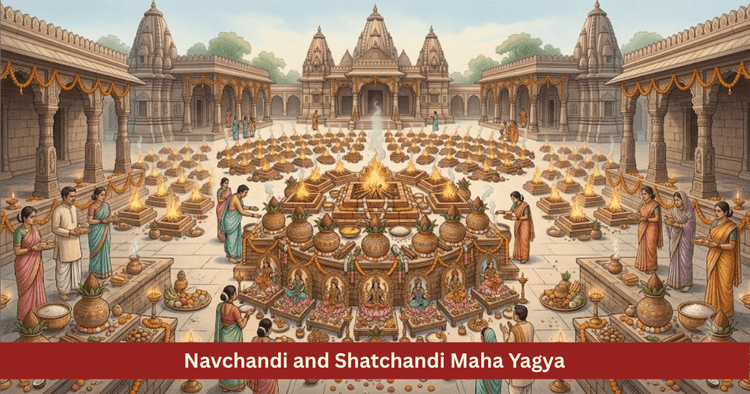
Table of Contents
Know the Main Details First
Navchandi Path and Shatchandi Maha Yagya are special rituals connected with the worship of Chandi, the fierce and protective form of Goddess Durga. Their purpose is not limited to gaining worldly success. These practices are regarded as ways to develop mental strength, righteous resolve, inner courage and the capacity to face difficulties in life.
Navchandi and Shatchandi are more extensive than ordinary household worship. They may include the recitation of Durga Saptashati, resolve, Kalash Sthapana, Goddess worship, Navarna Mantra chanting, Havan, Kanya Puja, feeding learned priests and Dakshina. The number of recitations, Mantra additions, offerings and duration may change according to family tradition and the method followed by the Acharya.
Primary Information on Navchandi and Shatchandi
- General meaning of Navchandi: 9 recitations of Durga Saptashati with related Havan
- General meaning of Shatchandi: 100 recitations of Durga Saptashati with an extended Chandi procedure
- Main Goddess: Chandi or the protective and powerful form of Goddess Durga
- Main scripture: Devi Mahatmya, also known as Durga Saptashati
- Main Mantras: Navarna Mantra, Durga Mantras and the Mantras of the text
- General duration: one day to nine days according to the method and number of recitations
- Shatchandi duration: an extended event performed over several days
- Suitable occasions: Navratri, special resolve, difficult periods and family tradition
- Essential guidance: supervision by an experienced Acharya or qualified priest
- Main caution: do not arrange it as a display of Tantra, fear or instant miracles
| Ritual | General Number of Recitations | Main Purpose | General Duration |
|---|---|---|---|
| Chandi Path | One recitation of Durga Saptashati | Regular Goddess worship | A few hours |
| Navchandi | 9 recitations or an extended traditional method | Relief from obstacles and a resolve for strength | One to nine days |
| Shatchandi | 100 recitations and a special procedure | Major resolves and extensive spiritual practice | Several days |
| Chandi Havan | Offerings after the recitation | Offering Mantra power into sacred fire | According to the method |
| Navchandi Maha Yagya | Combined recitation, worship, chanting and Havan | Family, community or special purpose | According to the Acharya |
What Is Navchandi Path?
Navchandi Path is a special ritual dedicated to the Chandi power of Goddess Durga. The 13 chapters of Durga Saptashati are recited according to the prescribed method. In many traditions, the text is recited nine times, the nine forms of the Goddess are worshipped and the ritual is completed through Havan.
The number 9 has special importance in Navchandi. It indicates the nine forms of Navratri, the nine powers and the gradual movement toward completeness. A devotee may understand the nine forms of the Goddess not only as different names but also as nine essential powers of life.
- Stability
- Penance
- Courage
- Creative power
- Motherly care
- Protection of Dharma
- Victory over fear
- Purity
- Accomplishment and completion
When Navchandi is performed for a serious purpose, the resolve should be clear. The ritual may be undertaken for financial progress, relief from illness, family peace, obstacles in work, marriage concerns, the wish for children or spiritual development. Even so, no result should be treated as an automatic certainty.
What Is Shatchandi Maha Yagya?
Shatchandi is regarded as a more extensive and demanding ritual than Navchandi. In the general tradition, 100 recitations of Durga Saptashati are performed. In some methods, the Navarna Mantra is added at the beginning, middle and end of the recitations. The arrangement of the texts, number of Acharyas, amount of Havan and duration may differ according to family tradition.
Shatchandi Maha Yagya should not be arranged as a small household program. It may require many recitations, Mantra chanting, offerings, rules and several priests. The sponsoring family should arrange the time, place, food, materials, Dakshina and resolve in advance.
Difference Between Navchandi and Shatchandi
- Navchandi generally follows the tradition of 9 recitations.
- Shatchandi generally follows the method of 100 recitations.
- Navchandi may be more practical for a limited family or personal resolve.
- Shatchandi may be arranged for a major resolve, collective event or special family tradition.
- Shatchandi requires more priests, materials and time.
- Both may include Havan, chanting and Goddess worship at different levels.
- Correct pronunciation, resolve and completion of the method are more important than the number alone.
When Should Navchandi Path Be Performed?
Navratri is considered the most popular period for Navchandi Path. Both Chaitra and Sharad Navratri hold special importance for Goddess worship. Ashtami, Navami, Purnima, Gupta Navratri and special days connected with family tradition may also be selected.
Some traditions arrange Navchandi Path during an auspicious Yoga, at a Goddess temple, at a Shakti Peetha or in a pure home worship area. While selecting the Tithi, it is possible to consider not only the general Panchang but also the place, Lagna, Nakshatra, birth chart of the sponsor and purpose of the ritual.
Suitable Occasions for the Ritual
- Special Shakti worship during Navratri
- Continuous obstacles in the family
- Beginning of a new home, business or institution
- Long lasting mental stress
- Repeated interruption in work
- Fear of enemies or a dispute
- A difficult period related to health
- Spiritual resolve and worship of the family deity
- Collective peace and welfare
- A resolve for inner courage before a major life change
It is improper to arrange Navchandi by frightening a person. If a priest pressures someone by claiming certain destruction or an immediate miracle, caution should be exercised.
Main Method of Navchandi Path
The method of Navchandi Path may change according to the Acharya and tradition. Its general order can be understood as follows.
Opening Preparation
- Clean the Yagya area or worship place.
- Arrange the Mandap, altar and Havan Kund.
- Begin with Ganapati worship.
- Perform purification of the place and sacred declaration.
- Establish the Kalash.
- Remember the Navagrahas, Matrikas, guardians of the directions and family deity.
- The sponsor should take the resolve.
- Establish the image, Yantra or picture of the Goddess.
- Light an uninterrupted lamp or a regular worship lamp.
- Arrange the reading materials and Havan materials.
Recitation and Chanting
- Recite the 13 chapters of Devi Mahatmya.
- Recite Kavach, Argala Stotra and Keelaka Stotra according to tradition.
- Chant the Navarna Mantra.
- Perform Aarti and prayer after every recitation.
- Maintain care in pronunciation, sequence and quantity.
- Avoid unnecessary conversation and disorder during the recitation.
- Complete the prescribed number of recitations.
- Prepare for Havan in the final stage.
The popular form of the Navarna Mantra is
Om Aim Hreem Kleem Chamundayai Vicche
Chanting this Mantra under the guidance of a qualified Acharya is considered more appropriate. Pronunciation, count and the addition of the Mantra may differ according to tradition.
Havan and Purnahuti
Havan is considered an important part of the ritual after the recitation. Ghee, Havan mixture, barley, sesame, rice and sacred wood are offered with the verses of Durga Saptashati, the Navarna Mantra or the prescribed offering Mantra.
Main Steps of Havan
- Establish the sacred fire.
- Invoke Agni Devata.
- Offer the first Ahuti of ghee.
- Give offerings with the prescribed Mantra.
- Speak Swaha at the end of every offering.
- Place Havan mixture and sacred wood in limited quantities.
- Offer special Ahutis connected with the Navagrahas and the Goddess.
- Offer coconut, ghee, jaggery and other materials during Purnahuti.
- Perform the forgiveness prayer and Aarti.
- Distribute Prasad and food.
Plastic, chemical fragrance, coloured paper or unknown materials should not be used in the Havan. Water, sand and fire safety arrangements are essential at the Havan place.
How Much Time Does Navchandi Take?
It is not appropriate to state one fixed duration for Navchandi. A simple method may be completed in one day. When an extended recitation, several Acharyas, chanting, Havan and Kanya Puja are included, it may take one to three days or longer. Some traditions perform Navchandi for nine days.
Shatchandi requires several days because the number of recitations is greater. Its duration depends on the number of Acharyas, daily recitations, Havan, rest periods and the complete method. Taking a written schedule before the event is useful.
Questions to Ask About Duration
- How many total recitations will be performed?
- How many chapters will be read each day?
- How many Acharyas or readers will be present?
- On which day will Havan take place and how many offerings will be made?
- When will Kanya Puja and feeding of priests take place?
- Which rules must the sponsor follow?
- Is the ritual for one day or several days?
- Who will arrange the materials and Dakshina?
Traditional Belief About Navchandi and Rajyoga
Religious tradition associates Navchandi with strength, victory, recognition and Rajyoga. Rajyoga does not mean only royal authority or wealth. In a wider sense, it may mean leadership, respect, appropriate opportunities, decision making ability and an influential position in life.
Even when Rajyoga is present in a birth chart, action, timing and decisions remain important. Navchandi may strengthen confidence and resolve in the devotee. It may help the mind move from fear toward action. Yet it is not appropriate to treat the ritual as a way to gain position, wealth or power without effort.
Spiritual Attitude Toward Rajyoga
- Reduce ego in leadership.
- Use strength for the welfare of others.
- Develop courage to decide when an opportunity arrives.
- Practise discipline and punctuality.
- Respect the rights of others.
- Accept the results of action.
- Remain humble during success.
Spiritual Effects of Navchandi Path
The effect of Navchandi and Shatchandi should not be measured only through outer benefits. The recitation of Devi Mahatmya directs the devotee toward Dharma, courage, compassion and self observation.
Possible Spiritual Benefits
- Development of steadiness and hope
- Inner courage to face difficulty
- Distance from negative thoughts
- A collective atmosphere of prayer in the family
- Growth in resolve and discipline
- Inspiration toward righteous action
- Capacity to work with fear and self doubt
- Feeling of service and charity
- Reflection on the purpose of life
- Deeper devotion and surrender toward the Goddess
Different astrological views exist regarding planetary afflictions, ancestral concerns, Vastu obstacles and opposition from others. It is not appropriate to treat Navchandi as the only solution to every problem. The chart, circumstances, health, financial condition and actual difficulty should be understood before choosing a remedy.
Rules and Precautions for the Sponsor
The conduct of the sponsor is also considered important in an extensive ritual. Merely sitting at the worship place is not enough. Restraint should be brought into life according to the resolve.
- Take Sattvic food.
- Avoid intoxicants and Tamasic food.
- Maintain restraint in speech.
- Stay away from unnecessary disputes.
- Follow family rules related to celibacy or marital restraint.
- Respect the chanting and worship sequence given by the Acharya.
- Do not turn the ritual into a display or competition.
- Clarify Dakshina and food arrangements in advance.
- Include a person in need through service.
- Follow Havan and fire safety rules.
How to Choose a Qualified Acharya
An Acharya for Navchandi or Shatchandi should not be selected only because of a low fee or grand claims. The tradition followed, correct pronunciation, understanding of Havan and clear conduct toward the sponsor are more important.
Questions to Ask the Acharya First
- According to which tradition will the recitation be performed?
- How many total recitations will be completed?
- Are Havan and Purnahuti included?
- How many Acharyas will perform the ritual?
- What will be the total duration?
- Which rules must the sponsor follow?
- Who will provide the materials?
- How will food, Dakshina and service arrangements be handled?
- Can a written sequence of the ritual be provided?
- How will health and fire safety be managed?
True spiritual guidance does not increase fear. It leads the devotee toward discipline, wisdom, service and inner strength.
The Quiet Light of Shakti Practice
Navchandi Path and Shatchandi Maha Yagya are serious rituals connected with the fierce power of Chandi. Their purpose is to give the devotee righteous strength in the face of life's difficulties. Through recitation, chanting and Havan, a person offers fear, confusion, laziness and imbalance at the feet of the Goddess.
Navchandi may be regarded as a spiritual support during a major difficulty but it should not be presented through commercial language of miracles. In an extensive ritual such as Shatchandi, a qualified Acharya, a clear resolve, sufficient preparation and safety arrangements are essential.
When a person becomes more disciplined, courageous, compassionate and aware of personal actions after the ritual, the real effect of Goddess worship becomes visible. Strength may be requested from outside but its lasting light appears only through conduct within.
FAQ
What is Navchandi Path?
Navchandi Path is a special ritual dedicated to Chandi in which 9 recitations of Durga Saptashati, Goddess worship, Mantra chanting and Havan are generally included.
What is the difference between Shatchandi Maha Yagya and Navchandi?
Navchandi generally follows the tradition of 9 recitations, while Shatchandi may include 100 recitations with more extensive Mantra, chanting and Havan procedures.
When should Navchandi Path be performed?
Navchandi may be performed during Navratri, Ashtami, Navami, Purnima, Gupta Navratri or a special period of difficulty and resolve. The final date should be decided through the Panchang and the Acharya.
How long does Navchandi Path take?
According to the method, it may take from one day to nine days. Shatchandi may require several days because of the larger number of recitations.
Does Navchandi Path give Rajyoga?
Religious belief connects Navchandi with strength, victory and recognition. Even so, the birth chart, karma, timing and continuous effort remain important for Rajyoga.
Get your accurate Kundali
Generate KundaliDid you like it?
Author

Pt. Abhishek Sharma (63)
Experience: 20
Consults About: Family Planning, Career
Clients In: Punjab, Haryana, Delhi
Share this article with friends and family
About ZODIAQ
ZODIAQ is an online Vedic Astrology platform. It connects clients seeking astrological advice to experienced astrologers with deep knowledge. Our users also generate kundali and perform kundali milan for free. ZODIAQ also offers services to the Astrologers. Astrologers utilize various offerings by ZODIAQ to serve their clients effectively.
If you are a User
Consult with experienced astrologers and seek their guidance. You can also order handwritten Janm Patrika report with life prediction prepared by experienced astrologers. Generate accurate Kundali, perform Kundali Matching and check horoscope and muhurat. Utilize our online library for all the necessary astrological and spiritual information.
If you are an Astrologer
Create accurate kundali for your clients and perform Kundali Matching for up to 5 people at a time. Write comprehensive Janm Patrika report for your clients with ZODIAQ. Check client details anytime by saving it in client directory. Become more productive by tracking how many clients you guide every day.
WELCOME TO
ZODIAQ
Right Decisions at the right time with ZODIAQ
