Clove Batasha Offering During Navratri
By Pt. Amitabh Sharma
Simple method to offer cloves and batasha for heartfelt wishes
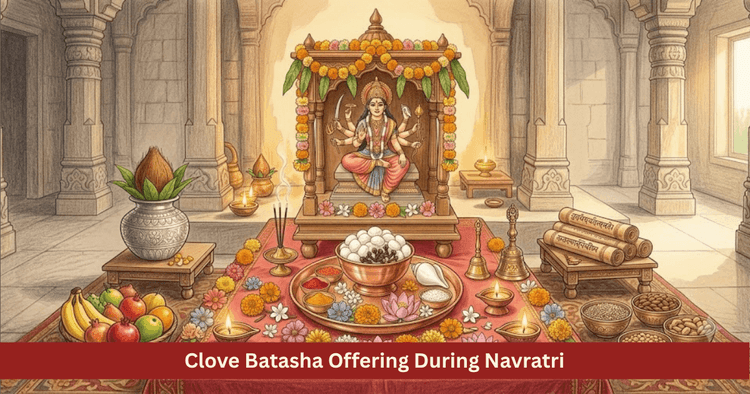
Table of Contents
Know the Method and Rules First
During Navratri, many families offer a pair of cloves and batasha to Goddess Durga with deep devotion. The clove is regarded as a symbol of sharp fragrance, purity and intensity of spiritual practice. Batasha is understood as a sign of simplicity, sweetness and auspicious feeling. This offering becomes meaningful only when devotion, cleanliness, a clear intention and restrained conduct remain together.
This practice is not a fixed guarantee of miracles. It is a devotional method of placing a heartfelt wish at the feet of the Goddess. Along with worship, the devotee should also follow effort, patience, health discipline and good family conduct.
Primary Information for Offering Cloves and Batasha
- Suitable time: after the morning bath or during evening Aarti
- Special days: Saptami, Ashtami and Navami
- General offering: 1 pair of cloves, meaning 2 whole cloves
- Accompanying offering: clean batasha, red flowers and Akshat
- Vessel: a clean plate, red cloth or worship leaf
- Feeling: offer with only one clear wish in the mind
- Rule: do not offer broken, dirty or stale materials
- After Aarti: distribute the Prasad with respect
- Health: batasha is a sweet, so keep the quantity moderate
- Caution: do not join the practice with fear, hatred or a wish to harm others
| Intention | Number of Cloves | Batasha | Suitable Day |
|---|---|---|---|
| General auspicious wish | 1 pair of 2 cloves | 5 or 11 pieces | Any auspicious day |
| Mental peace | 5 cloves | 5 pieces | Daily or Friday |
| Resolve for freedom from debt | 11 cloves | 11 pieces | Saptami or Ashtami |
| Job or work fulfilment | 21 cloves | 11 pieces | An auspicious Wednesday or Saptami |
| Prayer for better health | 9 cloves | 9 pieces | Navami or regular Aarti |
| Harmony in the family | 7 cloves | 7 pieces | Friday or Ashtami |
| Special power oriented worship | 108 cloves | 27 or 51 pieces | Ashtami or Navami |
This numerical outline is based on folk tradition and devotional practice. The method may differ across regions. Respecting family tradition and the guidance of a teacher is appropriate.
Why Cloves Are Considered Dear to Goddess Durga
A clove is a small object, yet its fragrance is strong and lasting. From a devotional view, the clove represents a form of practice that appears simple but remains deep in effect. Goddess Durga is remembered as strength, radiance and the remover of obstacles. The sharpness of the clove reminds the devotee that the struggles of life should be faced with firmness joined to gentleness.
In several traditions, the clove is also associated with Budha, Mercury. Budha is regarded as a factor of intelligence, speech, transactions and practical understanding. therefore clove offering is especially adopted for wishes related to employment, studies, debt management and fulfilment of work. This connection is symbolic. It does not mean that results will appear without effort only by offering cloves.
Batasha carries sweetness. Sweetness indicates softness in speech, behaviour and the mind. When a devotee offers batasha with cloves, the message becomes clear. Strength should not turn into harshness and success should not turn into ego. The balance of power and sweetness keeps household life stable.
Simple Method of Offering a Pair of Cloves
The most common practice during Navratri is to offer a pair of cloves. A pair is regarded as a symbol of completeness. It reflects the meeting of devotee and Goddess, intention and surrender, desire and action.
Step by Step Offering Method
- Bathe and wear clean clothes.
- Clean the worship area and light a lamp.
- Sit before the image or idol of Goddess Durga.
- Place 2 whole cloves and some batasha on a plate.
- Sanctify them with water, Akshat and flowers.
- Keep only one clear wish in the mind.
- Offer the pair of cloves at the feet of the Goddess.
- Place the batasha as Naivedya before the deity.
- Recite a Durga Mantra, Durga Chalisa or a simple prayer.
- After Aarti, share the Prasad with the family.
If the devotee wishes, the pair of cloves may be tied in a small red cloth and placed at the feet of the Goddess. The cloth should be clean and new. After the wish is fulfilled, the cloth and materials should be immersed or arranged respectfully at the worship place with a feeling of gratitude.
How Should the Practice Be Done for Different Wishes
One method does not give the same result to everyone. The number, day and supporting attitude may change according to the wish. Practical guidance is given below.
For Freedom from Debt
In a wish for freedom from debt, worship alone is not enough. A record of income and expenses, reduction of unnecessary spending and a resolve for regular repayment are necessary. In worship, 11 cloves and 11 pieces of batasha may be offered at the feet of the Mother. The prayer should carry the feeling that the intellect may take right decisions, paths of income may open and discipline in repaying debt may remain firm.
This offering may be done with special devotion on Saptami or Ashtami. Offering food, fruit or a small Dakshina to a person in need on the same day strengthens the resolve.
For Job and Fulfilment of Work
For a wish related to employment or business, some families offer 21 cloves and 11 pieces of batasha. Along with this, a prayer is made for clarity in speech, sincerity in work and the arrival of a worthy opportunity.
It is not enough to offer the materials and remain inactive. Applications, skill development, punctuality and practical preparation should continue. The grace of the Goddess is experienced more clearly by a mind that keeps making effort.
For Prayer Toward Relief from Illness
In a health related prayer, 9 cloves and 9 pieces of batasha may be offered. The feeling should be that strength may return to the body, the mind may remain steady and the right path of treatment may be found. This practice should not be treated as a substitute for medical care, diet and rest.
If the illness is serious, the advice of a physician is essential. Worship may support mental strength and the hopeful feeling of the family.
For Family Conflict and Mental Burden
When bitterness, unrest or heaviness is felt at home, 7 cloves and 7 pieces of batasha may be offered with a prayer for sweetness in the family. The sharpness of the clove becomes a reminder to recognise old bitterness and batasha becomes a message to bring softness into behaviour.
Harsh speech should also be reduced. Forgiveness, the practice of listening and small acts of cooperation help change the atmosphere of the home.
108 Cloves for a Special Wish
Some devotees offer 108 cloves on the Ashtami or Navami of Navratri. The number 108 is linked with completeness, chanting tradition and total surrender. This offering should be done with patience and concentration. Completing the count in haste is not enough.
While offering 108 cloves, the devotee may remember Goddess Durga with each name or each small count. At the end, batasha and a Sattvic food offering should certainly be presented.
Spiritual Feeling Behind Offering Batasha
Batasha is a light and simple sweet. Its secret lies in this very quality. In devotion, pure feeling holds greater value than expensive materials. Batasha teaches the devotee that complex display is not needed before the Divine. Simple surrender is enough.
After offering batasha as Naivedya, it should be distributed as Prasad. While receiving Prasad, keep gratitude in the mind. If there is diabetes or any health limitation, do not eat batasha in large quantity. Distribution to others and purity of feeling remain central.
Simple Forms of Batasha Offering
- 5 pieces in regular daily worship
- 11 pieces for a special wish
- 21 pieces during Ashtami or Navami Aarti
- Batasha with a little food offering or fruit
- Distribution of Prasad among children and married women of the family
The Feeling of Offering According to Each Day
Each day of Navratri is linked with a different form of the Goddess. Cloves and batasha may be offered on any day, yet the feeling may be joined with the quality of that day.
- Pratipada: 2 cloves for stability and a new resolve
- Dwitiya: 5 cloves for restraint and discipline
- Tritiya: 7 cloves for energy and enthusiasm
- Chaturthi: 9 cloves with a prayer to remove obstacles
- Panchami: 7 cloves for affection and protective love
- Shashthi: 11 cloves for courage and protection
- Saptami: 21 cloves for fulfilment of work and clarity
- Ashtami: 27 or 108 cloves for strength and relief from distress
- Navami: 9 or 108 cloves for completeness and gratitude
This division is not a rigid rule. It is a gentle framework for organising spiritual practice. A devotee may reduce or increase the number according to personal circumstances and family tradition.
Astrological and Psychological Perspective
In Vedic astrology, the root purpose of any remedy is to steady the mind, purify action and balance planetary tendencies. The fragrance of cloves brings attention into the present moment. The sweet taste of batasha awakens the feeling of Prasad. Together they turn worship into a practice of feeling rather than a ritual limited only to the senses.
Related Planetary Indications
- Budha, Mercury: intellect, employment, calculation and communication
- Shukra, Venus: comfort, sweetness, family harmony and the feeling of prosperity
- Guru, Jupiter: auspicious intention, dharma and right guidance
- Chandra, the Moon: peace of mind and emotional stability
- Surya, the Sun: inner strength, leadership and clear decisions
- Shani, Saturn: debt, karma and long discipline
- Mangala, Mars: courage, energy and facing difficulty
If a devotee is under financial pressure, offering cloves alone is not enough. Preparing a budget, controlling expenses and taking necessary counsel are also part of spiritual discipline. If the mind is deeply disturbed, rest, honest conversation and qualified support should be taken along with chanting when needed.
What Mistakes Should Be Avoided During the Offering
Feeling is central in devotion, yet some practical purity remains necessary.
- Do not offer broken or insect affected cloves
- Do not fill the house with smoke by burning too many cloves
- Do not hold many confused wishes at the same time
- Do not offer with a wish to harm others
- Do not depend only on the remedy without effort to repay debt
- Do not abandon medical care during illness through blind belief
- Do not force children or weak persons into fasting or rituals
- Do not throw worship materials carelessly. Immerse or settle them with respect
- Avoid market display and comparison
- After the practice, do not forget gratitude and good conduct
The Sweet Discipline of Surrender
The secret of offering a pair of cloves and batasha during Navratri does not lie in the price of the objects. It lies in the feeling of the devotee. The clove reminds the devotee that the problems of life may be sharp. Batasha teaches that the response may also come through sweetness, patience and faith. Their combination is the balance of strength and compassion.
The devotee who offers cloves and batasha at the feet of Goddess Durga should not ask only for the fulfilment of a wish. The devotee should also ask for the strength to perform right action, the power to stop wrong craving and the wisdom to use every gain for the welfare of family and society. This is what lifts the offering from an ordinary custom into a living spiritual practice.
FAQ
How many cloves should be offered to Goddess Durga during Navratri?
In general, 1 pair of cloves, meaning 2 whole cloves, may be offered. For special wishes, the traditions of 5, 7, 9, 11, 21 or 108 cloves are also common.
Why is batasha offered with cloves?
Batasha is regarded as a symbol of simplicity, auspiciousness and a sweet disposition. Offering batasha with the sharpness of cloves expresses the balance of strength and gentleness.
How should cloves be offered for freedom from debt?
On Saptami or Ashtami, 11 cloves and 11 pieces of batasha may be offered at the feet of the Mother with a resolve for freedom from debt. Expense control and regular repayment are also necessary.
Can the clove and batasha remedy be done for a job?
Yes. 21 cloves and 11 pieces of batasha may be offered with a prayer for fulfilment of work. Continuing applications, skill and hard work is also necessary.
How is offering 108 cloves on Ashtami or Navami regarded?
Offering 108 cloves on Ashtami and Navami is regarded as a symbol of special surrender. It should be done with cleanliness, concentration and gratitude.
Get your accurate Kundali
Generate KundaliDid you like it?
Author

Pt. Amitabh Sharma (56 Years)
Experience: 20
Consults About: Family Planning, Career
Clients In: Punjab, Haryana, Delhi
Share this article with friends and family
About ZODIAQ
ZODIAQ is an online Vedic Astrology platform. It connects clients seeking astrological advice to experienced astrologers with deep knowledge. Our users also generate kundali and perform kundali milan for free. ZODIAQ also offers services to the Astrologers. Astrologers utilize various offerings by ZODIAQ to serve their clients effectively.
If you are a User
Consult with experienced astrologers and seek their guidance. You can also order handwritten Janm Patrika report with life prediction prepared by experienced astrologers. Generate accurate Kundali, perform Kundali Matching and check horoscope and muhurat. Utilize our online library for all the necessary astrological and spiritual information.
If you are an Astrologer
Create accurate kundali for your clients and perform Kundali Matching for up to 5 people at a time. Write comprehensive Janm Patrika report for your clients with ZODIAQ. Check client details anytime by saving it in client directory. Become more productive by tracking how many clients you guide every day.
WELCOME TO
ZODIAQ
Right Decisions at the right time with ZODIAQ
