Hair and Nail Rules During Navratri
By Pt. Suvrat Sharma
Understand the tradition behind avoiding hair and nail grooming
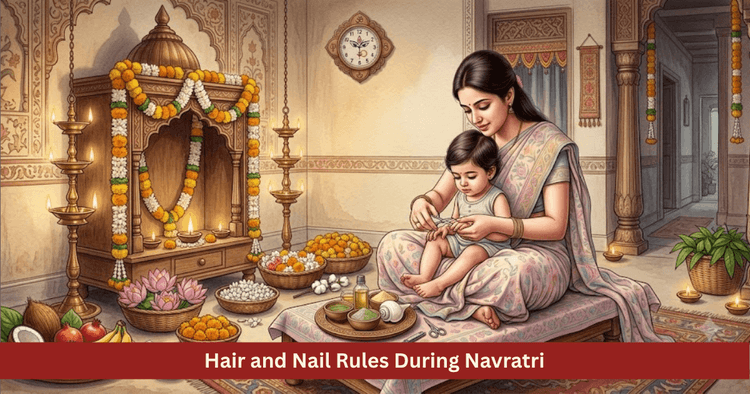
Table of Contents
Know the Rules and Timing First
Many families follow the tradition of avoiding haircuts, nail trimming and shaving during the nine days of Navratri. This rule is associated with Goddess worship, fasting, celibacy, self control and a Sattvic lifestyle. During this period, the devotee tries to move attention away from outer appearance and personal display toward chanting, meditation, worship and self reflection.
This tradition does not need to apply equally to every person. People who need to cut their hair, trim their nails or shave for health, work, cleanliness, school, military service or medical reasons may maintain necessary hygiene without guilt. The foundation of Goddess worship is compassion, wisdom and pure conduct.
Primary Navratri Rules
- Avoid haircuts from the first day of Navratri until Navami or Dashami.
- If possible, avoid shaving and beard grooming during these days.
- Complete nail trimming before Navratri begins.
- Keep hair and nails clean while avoiding unnecessary display and decoration.
- Devotees observing a fast should practise restraint in body and mind.
- Do not hesitate to follow necessary hygiene practices.
- Do not force children, patients, elderly people or working persons to follow the rule.
- Do not become frightened if hair or nails are cut by mistake.
- Give greater importance to worship, Mantra, service and good conduct than to external rules.
- Respect family tradition and the guidance of a spiritual teacher.
The purpose of avoiding hair and nail cutting during Navratri is not to remain unclean. The purpose is to step away from outer attraction, comfort and decoration for a few days and recognise inner strength.
Why Hair and Nail Cutting Is Traditionally Avoided
Navratri is regarded as a period of inner purification and spiritual practice. During these days, families perform Ghatasthapana, maintain an Akhand Jyoti, recite Durga texts, observe fasting and chant Mantras. The devotee tries to move daily life away from pleasure centred habits and toward discipline and worship.
Hair and nails are external parts of the body, yet religious symbolism regards them as extensions of personal identity and bodily energy. Avoiding their removal becomes a symbol of preventing energy from becoming scattered. This is a religious and cultural discipline rather than a scientifically established rule.
In earlier times, barber shops, tool sanitation and modern hygiene facilities were not available everywhere. Crowds increased during festivals and the possibility of infection may also have increased. therefore avoiding hair and nail cutting may have also served as a practical precaution.
Spiritual Practice and Energy Conservation
During Navratri, the devotee tries to concentrate the mind through fasting, Mantra recitation, meditation and worship. When daily life becomes limited and disciplined, a special sense of order develops in the mind. Not cutting hair and nails becomes a visible expression of this discipline.
Some Tantric and folk traditions associate hair and nails with Tamasic or gross energy. From this perspective, avoiding their removal is regarded as a symbol of conserving energy during spiritual practice. This belief should be understood as a way to increase concentration and not as a method of creating fear.
Symbolic Meaning of Energy Conservation
- Keep the senses away from unnecessary attraction.
- Pause an appearance centred approach to the body for some time.
- Focus more on inner qualities than outer form.
- Maintain regularity in fasting and worship.
- Practise restraint over personal desires.
- Continue the spiritual resolve throughout the nine days.
Energy conservation does not mean neglecting basic bodily needs. Adequate food, water, sleep, cleanliness and health protection are also part of spiritual practice.
Is Shaving Also Prohibited
Many families also avoid shaving and beard grooming during Navratri. The feeling is similar to the one associated with avoiding hair and nail cutting. The devotee reduces bodily decoration and gives more attention to fasting, worship and self control.
Even so, the rule about shaving depends on personal circumstances. A clean face may be required at work. A person may need to remove hair because of a skin condition, infection or medical treatment. In such circumstances, health and responsibility should receive priority.
Practical Rules Related to Shaving
- If there is a family tradition, shave before Navratri begins.
- Take a personal resolve to avoid shaving only if circumstances allow it.
- If work or service requires it, remain clean and well groomed.
- Follow medical advice in the case of a skin condition or treatment.
- Do not stop worship because the tradition could not be followed.
- Give greater importance to cleanliness and devotion than outer appearance.
The Goddess does not measure devotion only by the length of a person's hair or beard. The value of spiritual practice is determined by purity of mind, action and conduct.
Meaning Behind Avoiding Nail Trimming
The tradition of avoiding nail trimming is an extension of the belief connected with avoiding haircuts. Nails are regarded as dead or outward growing parts of the body. In earlier times, safely disposing of nail clippings was not always possible. Avoiding such acts during the sacred days of fasting and worship was considered useful for cleanliness and ritual purity.
Keeping long and dirty nails is not a religious rule. If dirt is accumulating, there is a risk of infection or work becomes difficult, trimming the nails is necessary. Religious discipline never encourages uncleanliness.
A Balanced View of Nails
- Trimming nails before Navratri is convenient.
- Keep the nails clean every day.
- Clean them properly if there is dirt or risk of infection.
- Trim children's nails on time.
- Give priority to the health of patients and elderly people.
- Do not consider accidental nail trimming an inauspicious sign.
Does Hair or Nail Cutting Cause Misfortune
Folk belief says that cutting hair, nails or a beard during Navratri may displease the Goddess, disturb spiritual practice or increase unrest in the home. These ideas should be understood as religious beliefs and not as fixed predictions or punishments.
If a person makes a mistake, there is no need to stop worship, become frightened or blame the self. The person may bathe, clean the worship area, pray to the Goddess for forgiveness and continue the practice.
What to Do After a Mistake
- Remain calm.
- Light a lamp before the Goddess.
- Offer a simple prayer.
- Recite a Durga Mantra or remember the name of the Goddess.
- Maintain a disciplined routine for the remaining days.
- Offer food or fruit to a person in need.
- Replace guilt with the feeling of improvement.
The purpose of Dharma is not to keep a person in fear. It is to make the person more aware, compassionate and disciplined.
How to Follow This Rule in Modern Life
Modern life is different from older social arrangements. People are connected with work, education, travel, healthcare and public responsibilities. therefore Navratri rules should be followed with wisdom.
A clean and well groomed appearance may be essential in an office. Hair and beard rules may differ for athletes or soldiers. A student may need regular personal care because of an examination or competition. In such situations, necessary grooming should not be treated as opposition to Dharma or as an offence against the Goddess.
Balanced Practice for Modern Life
- Complete hair and nail trimming before Navratri begins.
- If this is not possible, focus more strongly on worship and meditation according to the personal resolve.
- Never abandon personal hygiene.
- Do not treat work requirements as opposition to religion.
- Give priority to treatment and cleanliness during health concerns.
- Do not pressure children to fast or follow external rules.
- If the rule cannot be followed, continue spiritual practice through charity, chanting and service.
True devotion understands circumstances. Rules that make a person humble and focused are useful. Rules that create unnecessary fear, guilt or uncleanliness should be understood with wisdom.
Astrological View of Hair and Nails
In Vedic astrology, the body, mind and daily routine are connected with planetary tendencies. The Sun represents inner strength, the Moon represents the mind, Mars represents bodily energy, Venus represents beauty and Saturn represents discipline.
During Navratri, worship, restraint and regularity are adopted to balance these planetary qualities. Avoiding hair and nail cutting may become a symbolic practice of Saturn like discipline and Moon like mental stability. It is not a fixed remedy for a planetary defect in a birth chart.
Symbolic Planetary Feelings
- Surya, the Sun: self respect and inner radiance.
- Chandra, the Moon: peace of mind and emotional balance.
- Mangala, Mars: energy and restrained courage.
- Budha, Mercury: wisdom and an organised routine.
- Shukra, Venus: understanding beauty beyond outer attraction.
- Guru, Jupiter: Dharma, knowledge and good conduct.
- Shani, Saturn: rules, patience and responsibility for action.
If a person experiences mental stress, health problems or difficulty with routine, depending only on one religious rule is not enough. Proper healthcare, counselling and lifestyle improvement are also necessary.
What Should Receive Greater Attention During Navratri
Avoiding hair and nail cutting is only one of many Navratri practices. The quality of spiritual practice is determined by the food a person eats, the way the person speaks and the conduct shown toward others during these nine days.
- Eat clean and Sattvic food.
- Avoid anger, lies and harsh speech.
- Remember the Goddess every day.
- Keep the worship area clean.
- Help a person in need.
- Stay away from intoxicants and Tamasic tendencies.
- Take enough water and rest.
- Respect family members.
- Avoid unnecessary disputes.
- Express gratitude on Navami or Dashami.
If a person avoids haircuts but remains involved in lies, anger and violence, external observance remains incomplete. If another person cuts hair for health reasons but follows truth, service and restraint, the spiritual feeling may be deeper.
Rules for Children and Patients
Strict Navratri rules should not be forced upon children, pregnant women, elderly people or patients. Bodily needs and health protection are supreme. If dirt is collecting under a child's nails, trimming them for hygiene is necessary.
Patients should follow medicines, bathing, hair care and medical instructions. Pregnant women should consult a physician before fasting or following a strict discipline. Spiritual practice does not mean causing suffering to the body.
The Real Purpose of Spiritual Practice
The tradition of avoiding hair and nail cutting during Navratri gives the devotee an opportunity to step away from outer attraction and recognise inner strength. It can support the atmosphere of fasting, self control and devotion.
Even so, this rule should not become a method of fear, blind belief or social pressure. Goddess Durga presides over compassion and wisdom along with strength. A person who worships while maintaining cleanliness and responsibility according to personal circumstances does not become less devoted.
The greatest result of Navratri practice is improvement in thought, speech and action. Avoiding hair and nail cutting may be a supporting discipline but control over anger, truthfulness, service, restraint and good conduct are the true spirit of the rule.
FAQ
Is cutting hair during Navratri truly prohibited?
Many families and traditions advise avoiding haircuts during the nine days of Navratri. It is a religious discipline and not a universal rule of punishment.
Can nails be trimmed during Navratri?
Tradition advises trimming nails before Navratri. If hygiene, health or work requires nail trimming, it should not be considered wrong.
Is shaving prohibited during Navratri?
Many devotees avoid shaving during Navratri but shaving may be done when work, health or personal hygiene requires it.
What should be done if hair or nails are cut by mistake?
There is no need to become frightened. Light a lamp before the Goddess, pray, continue worship and maintain a disciplined routine for the remaining days.
What is the main reason for avoiding hair and nail cutting during Navratri?
The main reasons are connected with spiritual practice, self control, distance from outer decoration, energy conservation and ritual purity. It should not be treated as a scientifically established compulsory rule.
Get your accurate Kundali
Generate KundaliDid you like it?
Author
Pt. Suvrat Sharma (63)
Experience: 20
Consults About: Family Planning, Career
Clients In: Punjab, Haryana, Delhi
Share this article with friends and family
About ZODIAQ
ZODIAQ is an online Vedic Astrology platform. It connects clients seeking astrological advice to experienced astrologers with deep knowledge. Our users also generate kundali and perform kundali milan for free. ZODIAQ also offers services to the Astrologers. Astrologers utilize various offerings by ZODIAQ to serve their clients effectively.
If you are a User
Consult with experienced astrologers and seek their guidance. You can also order handwritten Janm Patrika report with life prediction prepared by experienced astrologers. Generate accurate Kundali, perform Kundali Matching and check horoscope and muhurat. Utilize our online library for all the necessary astrological and spiritual information.
If you are an Astrologer
Create accurate kundali for your clients and perform Kundali Matching for up to 5 people at a time. Write comprehensive Janm Patrika report for your clients with ZODIAQ. Check client details anytime by saving it in client directory. Become more productive by tracking how many clients you guide every day.
WELCOME TO
ZODIAQ
Right Decisions at the right time with ZODIAQ
