Importance of Neem Worship During Navratri
By Pt. Amitabh Sharma
Beliefs connected with Durga, Sheetala and planetary remedies
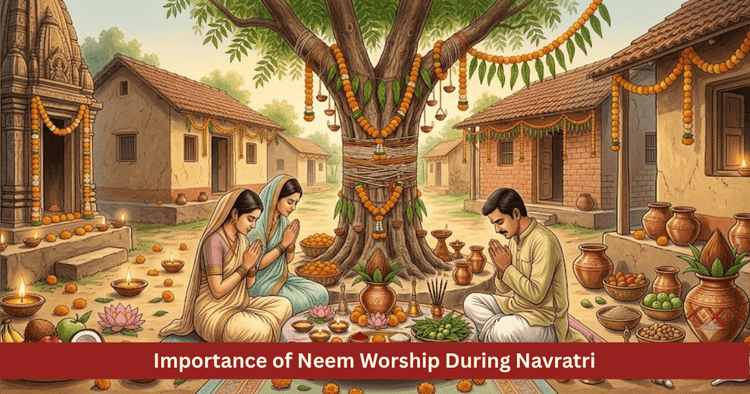
Table of Contents
Know the Method and Rules First
Neem tree worship during Navratri is connected with the worship of Goddess Durga and Goddess Sheetala. According to folk belief, divine Shakti is present in the neem tree and its worship during Chaitra Navratri is considered especially auspicious. The religious importance of neem becomes deeper when it is understood together with its traditional medicinal and environmental value.
Neem worship is not a guaranteed treatment for any illness. Medical advice remains essential for every health concern. From a spiritual view, neem worship symbolises purity, prayer for protection from illness, respect for nature and mental balance.
Primary Information for Navratri Neem Worship
- Suitable time: after bathing in the morning or during the evening
- Special days: Saptami, Ashtami and Navami of Chaitra Navratri
- Other traditional days: Tuesday and Friday
- Main materials: water, Roli, turmeric, Akshat, flowers, lamp and Naivedya
- Optional materials: milk, coconut, jaggery and red or yellow cloth
- Main Mantra: Om Sheetala Matre Namah
- Goddess remembrance: Durga Mantra or Durga Chalisa
- Circumambulation: 3, 5 or 7 times according to tradition
- Caution: do not injure the tree or remove excessive leaves
- Health rule: do not consume neem leaves as medicine without advice
| Worship Stage | Materials | Main Feeling |
|---|---|---|
| Offering water | Clean water | Purification and respect for life |
| Roli and Akshat | Roli and rice | Auspiciousness and stability |
| Lamp | Ghee or sesame oil | Awareness and protection |
| Offering flowers | Fresh flowers | Devotion and beauty |
| Mantra chanting | Sheetala or Durga Mantra | Prayer for health and strength |
| Circumambulation | Devotion and restraint | Connection with nature |
| Prasad | Jaggery, fruit or coconut | Gratitude and service |
Connection of Neem with Durga and Sheetala
Hindu tradition regards many trees as symbols of divine powers. Neem is especially connected with Goddess Durga and Goddess Sheetala. Goddess Durga represents strength, protection and the removal of difficulties. In folk tradition, Goddess Sheetala is regarded as the presiding power of protection from illness, cooling and health.
The bitter taste of neem may be understood as a symbol of difficult truths and purification. It is sharp in taste, yet Indian society has respected it for generations. This contrast holds a spiritual message. Everything useful does not need to be sweet and every difficult experience does not become harmful.
Chaitra Navratri occurs during a change of season. The body, food and daily routine also change during this period. The neem tree reminds people of nature, health and restraint during this transition. Religious worship gives this natural connection a feeling of devotion and discipline.
Simple Method of Neem Tree Worship
Neem worship does not require a complex ritual. Cleanliness, devotion and respect for the tree remain most important.
Step by Step Worship Method
- Bathe in the morning and wear clean clothes.
- Clean the ground near the neem tree.
- Ensure that there is no waste or plastic near the roots.
- Offer clean water.
- If desired, offer a very small quantity of milk.
- Apply a light mark of turmeric and Roli to the trunk.
- Offer Akshat and fresh flowers.
- Light a ghee or sesame oil lamp near the tree.
- Chant the Mantra Om Sheetala Matre Namah.
- Remember Goddess Durga and recite a Durga Mantra or Durga Chalisa.
- Perform 3, 5 or 7 circumambulations according to tradition.
- Offer jaggery, fruit, coconut or Sattvic Prasad.
- Resolve to protect and care for the tree.
- Distribute Prasad among family members and people in need.
Offering milk is followed in some regions but it is not compulsory. Pouring a large amount of milk at the roots may harm the soil and tree. Clean water and the feeling of protecting the tree are more important.
Religious Use of Neem Leaves
During Navratri, neem leaves are used in the worship area, at the main entrance or in a Toran, the traditional decorative doorway garland. A Toran made of neem leaves is regarded as a symbol of auspiciousness, protection and a pure atmosphere in the home.
Simple Arrangement of a Neem Toran
- Choose fresh and healthy neem leaves.
- Clean the leaves gently with clean water.
- They may be strung with mango leaves or flowers.
- Hang them safely at the main entrance.
- Keep the Toran clean and arranged after worship.
- When the leaves dry, place them in soil instead of throwing them into general waste.
A Toran is not only decoration. The main entrance symbolises the boundary between the outside and inside atmosphere of the home. The neem Toran reminds the devotee that speech, thoughts and behaviour entering the home should also remain pure.
Neem Worship and Health Related Beliefs
Folk tradition connects neem with Goddess Sheetala and protection from illness. Neem has been known for traditional medicinal uses in Ayurveda and household practices. Even so, it is not appropriate to depend only on neem worship or home remedies for treating skin disease, infection, allergy or fever.
Balanced View Regarding Health
- Worship may bring mental peace and hope.
- Spending time near a tree may strengthen connection with nature.
- Consume neem or apply it to the skin only with medical advice.
- Maintain special care for children, pregnant women and people with sensitive skin.
- Do not apply neem oil to the eyes, mouth or open wounds without advice.
- Seek medical support immediately when symptoms are serious.
- Treat worship as spiritual support and not as a replacement for treatment.
When wisdom is joined with religious belief, tradition remains safe and meaningful. Blind belief may put health at risk, while devotion and medical care together can support a better lifestyle.
Neem Worship and Planetary Influences
Some astrological traditions associate neem with Shani, Saturn and Ketu. Saturn represents karma, patience, delay, labour and discipline. Ketu is associated with detachment, spiritual inquiry, freedom from confusion and sudden change.
It is not appropriate to say that neem worship will certainly remove every affliction of these planets. It may still become a symbolic way for a devotee to develop Saturn like discipline and Ketu like detachment.
Practical Form of Planetary Practice
- Light a lamp near a neem tree on Saturday.
- Offer clean water at the roots.
- Help a working person or someone in need.
- Resolve to reduce falsehood, laziness and lack of discipline.
- Remember Hanuman on Tuesday and pray for courage and health.
- Make an effort to protect and water the tree regularly.
- Seek qualified astrological guidance for a special remedy according to the birth chart.
The strongest foundation of planetary balance is improvement in action. If a person worries about Saturn but avoids punctuality and responsibility, no outer remedy can be considered complete.
Feeling Behind Neem Wood Havan
Some traditions use dry neem wood in the Havan of Navratri. This is regarded as a practice of purification, Goddess worship and the creation of a Sattvic atmosphere. Neem wood should be used only according to regional tradition and the guidance of the Acharya.
Precautions for Havan with Neem Wood
- Use only dry and clean wood.
- Do not cut branches from a living tree.
- Do not use plastic, chemicals or painted wood.
- Do not create heavy smoke in a closed room.
- Keep people with breathing problems away from the smoke.
- Keep water and sand near the Havan Kund.
- Store the ash respectfully after the fire has completely cooled.
The importance of Havan lies not in the quantity of wood but in the Mantra, resolve and safe method. A calm Havan with limited material may be more appropriate than a large event that creates excessive smoke.
Which Mantras Should Be Recited During Neem Worship?
The Mantra may be selected according to family tradition and the devotion of the worshipper. Simple Mantras are sufficient for regular worship.
Simple Mantra Sequence
- Om Sheetala Matre Namah
- Om Durgayai Namah
- Om Aim Hreem Kleem Chamundayai Vicche
- Recitation of Durga Chalisa
- Prayer to Goddess Sheetala and Goddess Durga for health and peace
Reciting a Mantra after understanding its meaning is considered more effective. The Sheetala Mantra expresses salutation to the Goddess and a feeling of protection for health. The Durga Mantra carries the feeling of strength and protection. Chant in a peaceful voice and do not rush only to complete a number.
Conduct Rules Connected with Neem Worship
Neem worship is not limited to lighting a lamp before the tree. It also includes responsibility toward nature and living beings.
- Do not hammer nails into the trunk.
- Do not tie plastic or synthetic cloth to the tree.
- Do not pour soap, oil or chemicals near the roots.
- Do not allow waste to gather below the tree.
- Do not remove more leaves than necessary.
- Do not leave worship materials behind.
- Keep the surroundings safe for birds and small living beings.
- Respect the shade and soil around the tree.
- Do not treat neem only as a means for a remedy.
- Make regular tree care part of worship.
Psychological and Spiritual Perspective
Neem worship gives a person an opportunity to pause, observe nature and think about daily routine. When a devotee sits quietly near the tree, recites a Mantra and offers water, the mind may move away from worry and return to the present moment.
The bitterness of neem also teaches that difficult experiences are not always enemies. Discipline, restraint and the process of treatment may feel difficult at times, yet they can strengthen inner power.
Spiritual Messages of Neem Worship
- Gratitude toward nature
- Resolve for purity of body and mind
- Prayer for protection from illness and fear
- Development of Saturn like patience
- Feeling of Ketu like detachment and self reflection
- Surrender toward divine Shakti
- Compassion toward trees and living beings
Importance of Neem at Home
If there is enough space, planting a neem tree may be useful for both the environment and tradition. Before planting, consider climate, soil, space and local regulations. In an apartment, caring for suitable plants in a pot or community area can also become a form of service to nature.
Do not plant neem so close to the house that its roots affect the foundation or drainage. Practical planning should remain joined with religious feeling.
From Bitterness to Compassion
The importance of neem worship during Navratri does not rest only on the belief that the Goddess lives in the tree. Its larger message is that nature, health, discipline and devotion are not separate. Goddess Durga represents strength and Goddess Sheetala represents peace and prayer for protection from illness. Neem joins both feelings in a living tree.
While offering water, the devotee should not ask only for freedom from illness. The devotee should also resolve not to neglect the body, not to harm nature, to reduce unhealthy habits and to help people in need. When conduct improves after worship, the true spiritual meaning of neem worship becomes visible.
FAQ
Why is the neem tree worshipped during Navratri?
Folk belief connects neem with Goddess Durga and Goddess Sheetala. Its worship symbolises purity, prayer for health, respect for nature and the blessings of the Goddess.
Which Mantra should be recited during neem worship?
Om Sheetala Matre Namah and Om Durgayai Namah may be recited simply. A Durga Mantra or Durga Chalisa may also be used according to family tradition.
Can neem worship cure skin diseases?
Neem worship offers spiritual support and a prayer for health. Medical examination and advice from a doctor are necessary for treating skin diseases.
Which planets are associated with neem?
Some astrological traditions associate neem with Saturn and Ketu. This connection is symbolic and remedies may change according to the birth chart.
Is it auspicious to remove neem leaves during Navratri?
A limited number of healthy leaves may be taken respectfully but damaging the tree or removing excessive leaves is not appropriate.
Get your accurate Kundali
Generate KundaliDid you like it?
Author

Pt. Amitabh Sharma (56 Years)
Experience: 20
Consults About: Family Planning, Career
Clients In: Punjab, Haryana, Delhi
Share this article with friends and family
About ZODIAQ
ZODIAQ is an online Vedic Astrology platform. It connects clients seeking astrological advice to experienced astrologers with deep knowledge. Our users also generate kundali and perform kundali milan for free. ZODIAQ also offers services to the Astrologers. Astrologers utilize various offerings by ZODIAQ to serve their clients effectively.
If you are a User
Consult with experienced astrologers and seek their guidance. You can also order handwritten Janm Patrika report with life prediction prepared by experienced astrologers. Generate accurate Kundali, perform Kundali Matching and check horoscope and muhurat. Utilize our online library for all the necessary astrological and spiritual information.
If you are an Astrologer
Create accurate kundali for your clients and perform Kundali Matching for up to 5 people at a time. Write comprehensive Janm Patrika report for your clients with ZODIAQ. Check client details anytime by saving it in client directory. Become more productive by tracking how many clients you guide every day.
WELCOME TO
ZODIAQ
Right Decisions at the right time with ZODIAQ
