Why Avoid Onion and Garlic
By Aparna Patni
Puranic tradition and Ayurvedic explanation
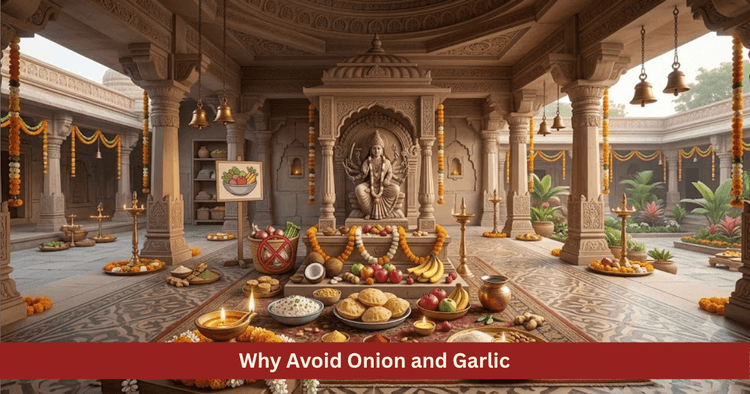
Table of Contents
Basic Navratri Food Rules
Avoiding onion and garlic during Navratri is not only a food rule. It is connected with a sattvic lifestyle, mental calmness, concentration in spiritual practice and digestive balance during seasonal change.
In the Indian food tradition food is not viewed only as nourishment for the body. It is also believed to influence the mind, thoughts, behaviour and inner energy. Therefore foods that may increase heat, sharpness or stimulation are often avoided during Navratri.
Key Information
| Aspect | Details |
|---|---|
| Festival | Navratri |
| Foods avoided | Onion and garlic |
| Traditional view | Rajasic or tamasic influence |
| Main purpose | Mental peace and spiritual focus |
| Ayurvedic view | Digestion and dosha balance |
| Practical view | Control of digestion, smell and quantity |
Basic Food Rules
- Avoid onion and garlic
- Eat fresh and sattvic food
- Limit excessive spices
- Avoid stale food
- Prefer fruits, milk, nuts and light vegetables
- Treat food as part of worship and sadhana
Navratri fasting is not a method of punishing the body. Its purpose is to simplify food and prepare the mind for Goddess worship.
Why Are Onion and Garlic Considered Tamasic
In Sankhya and Ayurvedic traditions food is associated with sattvic, rajasic and tamasic tendencies. Sattvic food is believed to support calmness and clarity. Rajasic food may increase activity, stimulation and desire. Tamasic food is linked with heaviness, laziness and dullness.
Different traditions classify onion and garlic as rajasic or tamasic. Their sharp taste, strong smell and warming quality are often given as reasons for avoiding them during spiritual practice.
Three Food Qualities
| Quality | Effect |
|---|---|
| Sattvic | Peace and clarity |
| Rajasic | Movement and stimulation |
| Tamasic | Heaviness and dullness |
During Navratri a seeker tries to increase the sattvic quality. For this reason onion and garlic are avoided in many households.
Puranic Connection
Several traditional stories are connected with onion and garlic. One popular tradition relates them to the churning of the ocean, nectar and demonic forces. Some versions say that substances connected with that event were not considered suitable for divine worship.
Other folk traditions describe their origin through a story connected with Rahu and Ketu. The details vary by region and lineage. The deeper purpose of these stories is not to provide historical explanation but to show which foods are avoided during spiritual discipline.
Puranic Indications
- Purity in worship
- Restraint in food
- Control of the senses
- Preparation of the mind for devotion
The meaning of these stories changes according to tradition. They should therefore be understood with reverence and symbolism.
Why Are They Avoided During Navratri Practice
During Navratri devotees chant, meditate, fast, worship and recite sacred texts. The aim is to make the mind focused and reduce inner restlessness.
Onion and garlic have strong smells. Some people may experience heat or digestive changes after eating them. Simple and light food may place less burden on the body and reduce laziness during worship.
Ayurvedic View
Ayurveda does not reject onion and garlic in every situation. Both may also be used for medicinal purposes. Medicinal use and dietary use during spiritual practice are different matters.
Garlic is traditionally described as warming and sharp. Onion also has a strong smell and sharp quality. In some people excessive intake may increase acidity, burning or digestive discomfort.
Possible Bodily Effects
| Effect | Possibility |
|---|---|
| Warmth | Feeling of heat |
| Sharpness | Effect on digestion |
| Smell | Breath and body odour |
| Excess quantity | Acidity or heaviness |
Every constitution is different. The use of these foods as medicine or food should depend on personal need.
What Does the Scientific View Say
Science does not consider onion and garlic naturally harmful for everyone. They contain useful nutrients and active compounds. The concern usually depends on quantity, personal sensitivity and the way they are prepared.
Some people may experience gas, burning, bloating or strong breath after eating them. People with acidity, sensitive digestion or food intolerance should observe their response carefully.
Practical Scientific Points
- Gas may increase in some people
- Excess intake may cause burning
- Strong smell may remain for some time
- Raw forms may be difficult to digest
- The effect varies by personal sensitivity
Therefore avoiding them during Navratri can serve as both a religious discipline and a way to keep digestion comfortable.
Are Onion and Garlic Harmful for Everyone
No. It is not correct to call onion and garlic harmful for every person. Many people consume them comfortably in ordinary meals. Their avoidance during Navratri is mainly a matter of spiritual practice, tradition and sattvic diet.
Anyone who needs them for health reasons should make the decision according to medical or nutritional guidance.
What Can Replace Them During Navratri
Food can remain flavourful and nourishing without onion and garlic. Cumin, coriander, a small amount of ginger, black pepper, rock salt, lemon and fresh herbs can add taste.
Useful Alternatives
| For taste | Alternative |
|---|---|
| Fragrance | Cumin and coriander |
| Mild warmth | Limited ginger |
| Sharpness | Black pepper |
| Sour taste | Lemon |
| Salt | Rock salt |
| Freshness | Mint and coriander |
Spices should also remain moderate during fasting. Avoiding onion and garlic while eating excessive chilli and oil cannot be called a sattvic diet.
Effect of Food on the Mind
The state of mind is important in Navratri sadhana. The smell, taste, quantity and digestion of food can influence meditation and chanting.
Fresh, light and simple food may keep the body comfortable. When heaviness reduces the mind may remain focused during worship for a longer time.
Mental Benefits
- Concentration
- Gentle speech
- Lower stimulation
- Stability in meditation
- Greater seriousness in sadhana
How to Follow This Rule at Home
Not everyone in a household observes the fast. Food should therefore be arranged with sensitivity. Separate sattvic food can be prepared for family members who avoid onion and garlic.
Simple Household Arrangement
- Use separate utensils if needed
- Prepare ingredients in advance
- Use fresh spices
- Avoid stale food
- Do not force the rule on anyone
Religious practice should arise from devotion rather than pressure.
What to Do After Navratri
Onion and garlic should not be consumed in very large quantities immediately after Navratri. After several days of light food the body should be given time to return gradually to its regular diet.
Returning to Regular Food
- Begin with light food
- Start with a small quantity
- Avoid heavy fried food immediately
- Observe the body response
- Take enough water
Is Avoiding Onion and Garlic the Main Navratri Rule
No. The centre of Navratri is not food alone. Truthful speech, controlled conduct, regular worship, service, compassion and distance from anger are equally important.
If a person avoids onion and garlic but speaks harshly to others sattvic practice remains incomplete. A true fast disciplines both body and mind.
Spiritual and Scientific Balance
Puranic tradition connects avoiding these foods with purity in spiritual practice. Ayurveda considers their warming and sharp qualities. Modern understanding gives importance to quantity, digestion and personal sensitivity.
The balanced conclusion is that avoiding onion and garlic during Navratri can be a religious and personal discipline. It is not appropriate to call them naturally harmful for everyone.
Calm Closing Note
Avoiding onion and garlic during Navratri is a tradition that aims to simplify food, body and spiritual practice. Puranic stories connect it with purity, Ayurveda considers its warming and sharp qualities and modern understanding observes quantity and personal digestion.
The real purpose is not to create fear around food. It is to guide the seeker toward restraint, purity and awareness. When food, conduct and thoughts become sattvic together Navratri sadhana receives its deeper meaning.
FAQ
Why are onion and garlic avoided during Navratri
They are considered rajasic or tamasic during spiritual practice. Avoiding them supports mental calmness and a sattvic diet.
Are onion and garlic scientifically harmful
No, they can be safe for many people in normal quantities. The effect depends on digestion and personal sensitivity.
How can food taste good without onion and garlic
Cumin, coriander, lemon, black pepper, limited ginger and rock salt can be used.
Should they be eaten immediately after Navratri
It is better to return gradually to regular food and begin with a small quantity.
Is avoiding onion and garlic the complete Navratri fast
No, worship, restraint, truthful speech, service and purity of mind are also important parts of Navratri practice.
Get your accurate Kundali
Generate KundaliDid you like it?
Author

Aparna Patni (63)
Experience: 20
Consults About: Family Planning, Career
Clients In: Punjab, Haryana, Delhi
Share this article with friends and family
About ZODIAQ
ZODIAQ is an online Vedic Astrology platform. It connects clients seeking astrological advice to experienced astrologers with deep knowledge. Our users also generate kundali and perform kundali milan for free. ZODIAQ also offers services to the Astrologers. Astrologers utilize various offerings by ZODIAQ to serve their clients effectively.
If you are a User
Consult with experienced astrologers and seek their guidance. You can also order handwritten Janm Patrika report with life prediction prepared by experienced astrologers. Generate accurate Kundali, perform Kundali Matching and check horoscope and muhurat. Utilize our online library for all the necessary astrological and spiritual information.
If you are an Astrologer
Create accurate kundali for your clients and perform Kundali Matching for up to 5 people at a time. Write comprehensive Janm Patrika report for your clients with ZODIAQ. Check client details anytime by saving it in client directory. Become more productive by tracking how many clients you guide every day.
WELCOME TO
ZODIAQ
Right Decisions at the right time with ZODIAQ
