Complete Navratri Puja Materials Guide
By Pt. Sanjeev Sharma
A clear checklist of materials from Kalash Sthapana to Havan
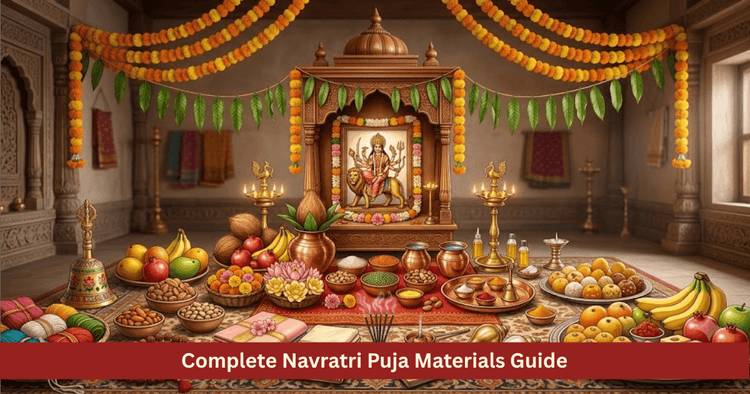
Table of Contents
Essential Details Before Puja
In Navratri worship, the purity, completeness and timely preparation of materials hold special importance. Different items may be needed for Kalash Sthapana, daily worship, Kanya Puja and Havan. therefore it is wise to arrange everything in one place before the worship begins.
The Navratri date, Kalash Sthapana Muhurat and worship time may change every year according to the Panchang, the traditional Hindu almanac. Along with preparing the materials, the correct time for worship should also be checked in advance.
Primary Navratri Puja Checklist
- Check the worship day and Tithi, the lunar date, through the Panchang.
- Note the auspicious Kalash Sthapana Muhurat in advance.
- Clean the worship area and place the wooden platform.
- Arrange the Kalash, water, mango leaves and coconut.
- Prepare soil and a container for sowing barley.
- Place the image or idol of the Goddess on a clean seat.
- Keep Roli, Akshat, Kalava, flowers, incense and the lamp in a separate plate.
- Cover the Naivedya, fruits, sweets and Prasad.
- Arrange the food items for Kanya Puja on Ashtami or Navami in advance.
- If Havan is planned, keep the Havan Kund, sacred wood and Havan mixture separately.
Materials for Kalash Sthapana
Kalash Sthapana is the principal opening ritual of Navratri worship. The Kalash represents creation, life force, prosperity and the divine presence of the Goddess. The water placed inside it represents the source of life, while the coconut placed above it represents consciousness and completeness.
Kalash Sthapana Materials
- Earthen or copper Kalash
- Clean water or Gangajal, sacred water associated with the Ganga
- Mango leaves
- One whole coconut
- Red or yellow cloth
- Mauli or Kalava, the sacred thread
- Roli and Akshat
- Betel nut
- Coin
- Cloves and cardamom
- Turmeric root
- Durva grass
- Flowers
- Rice or wheat
- Earthen container
- Clean soil
- Barley seeds
- Small wooden platform
- Red cloth
- Image or idol of the Goddess
The earthen container placed below the Kalash should have sufficient depth. Clean soil is filled into it and barley seeds are sown. The sprouting of barley represents growth, life, fertility and spiritual awakening. As the barley grows during Navratri, it reminds the devotee of inner discipline and gradual self development.
Main Materials for Goddess Worship
The materials used in Goddess worship are not merely decorative objects. Each item carries a spiritual meaning. Flowers represent devotion, the lamp represents knowledge, incense represents the purification of the atmosphere and Akshat represents wholeness.
Goddess Worship Materials
- Image or idol of the Goddess
- Wooden worship platform
- Red, yellow or white seat
- Red Chunari, the sacred scarf offered to the Goddess
- Adornment materials
- Sindoor
- Kumkum
- Turmeric
- Sandalwood paste
- Roli
- Akshat
- Mauli or Kalava
- Flowers and garlands
- Durva grass
- Bel leaves, if required by the worship tradition
- Incense sticks
- Natural incense
- Camphor
- Lamp
- Ghee or sesame oil
- Cotton wicks
- Panchapatra, the small vessel used for sacred water
- Achamani, the small spoon used during rituals
- Worship bell
- Conch
- Water vessel
- Worship plate
- Cloth for the seat
- Clean vessel for Prasad
The Chunari offered to the Goddess should be clean and undamaged. Red represents power, courage and active consciousness. Yellow represents knowledge and auspiciousness. The colour may be selected according to family tradition and the devotee's faith.
Materials for Panchopachara and Shodashopachara
During Navratri, some families follow Panchopachara Puja and others follow Shodashopachara Puja. Panchopachara generally includes fragrance, flowers, incense, lamp and Naivedya. Shodashopachara may include invocation, seat, water for washing the feet, offering water, sipping water, sacred bath, clothing ornaments, fragrance, flowers, incense, lamp, food offering, betel offering, donation, Aarti and prayer.
Useful Items for Ritual Offerings
- Fragrance or sandalwood paste
- Flowers
- Incense
- Lamp
- Naivedya
- Water
- Panchamrit
- Clean cloth
- Ornaments or symbolic adornment
- Betel leaf offering
- Betel nut
- Dakshina, the respectful offering
- Fruits
- Sweets
- Fragrant substances
Panchamrit is prepared with milk, curd, ghee, honey and sugar. If a person cannot use one of these ingredients because of health, fasting or family tradition, a simple suitable alternative may be adopted according to the worship practice. The central foundation of worship is devotion, discipline and pure conduct.
Naivedya and Prasad Materials
The food tradition during the Navratri fast differs according to family and region. Some devotees take only fruits, some eat permitted fasting foods and others follow a simple Sattvic diet. While preparing Prasad, attention should be given to cleanliness, purity and moderation.
Materials for Prasad
- Fruits
- Coconut
- Fox nuts
- Water chestnut flour
- Buckwheat flour
- Tapioca pearls
- Milk
- Curd
- Ghee
- Honey
- Sugar or rock sugar
- Jaggery
- Dry fruits
- Bananas
- Apples
- Pomegranates
- Seasonal fruits
- Sweets
- Ingredients for Panchamrit
- Clean vessel for offering food
Excessively Tamasic, stale or impure food should not be used for the offering. The food presented to the Goddess should be fresh, clean and prepared with devotion. It is considered appropriate to offer the food to the Goddess first and then distribute it among family members and devotees.
Materials for Akhand Jyoti
Many families light an Akhand Jyoti, an uninterrupted sacred lamp, during Navratri. The continuous lamp represents regular spiritual practice, inner strength and divine light. It should be placed where strong wind cannot reach it and where there is no risk of fire.
Lamp and Flame Materials
- Earthen or metal lamp
- Pure ghee or sesame oil
- Sufficient cotton wicks
- Plate for the lamp
- Matches or a safe means of lighting the flame
- Metal or earthen base for the lamp
- Extra ghee or oil
- Water vessel for fire safety
Cloth, paper and other flammable decorative items should not be kept near the Akhand Jyoti. The lamp should be placed away from children and pets. Observing safety along with religious discipline is also part of responsible worship.
Essential Materials for Havan
Many families perform Havan at the end of Navratri. Havan is regarded as an act of purifying the surroundings, completing the sacred intention and expressing gratitude to the Goddess. The Havan materials may differ according to local tradition, family practice and the guidance of the priest.
Detailed Havan Materials
- Havan Kund, the sacred fire altar
- Mango or Palash wood
- Dry firewood
- Camphor
- Ghee
- Havan mixture
- Barley
- Sesame seeds
- Rice
- Nine grains
- Guggul resin
- Loban, fragrant resin
- Small sandalwood pieces
- Dry coconut
- Lotus seeds
- Betel nut
- Cloves
- Cardamom
- Raisins
- Dry fruits
- Mango leaves
- Water vessel
- Achamani
- Vessel for keeping sacred wood
- Purnahuti materials for the final offering
- Red cloth
- Mauli
- Flowers
- Akshat
Havan materials should be offered into the fire in limited quantities. Adding too much material can increase smoke and cause discomfort during worship. Mantra recitation should be clear, calm and devotional. If a priest is present, following the priest's instructions is the most appropriate approach.
Preparing for Kanya Puja
The tradition of Kanya Puja is observed by many families on Ashtami or Navami. Young girls are respected as symbolic forms of the Goddess. This practice is not limited to serving food. It also offers an opportunity to develop respect, protection and compassion toward girls.
Kanya Puja Materials
- Clean seats for the girls
- Arrangement for washing their feet
- Roli
- Akshat
- Flowers
- Mauli
- Halwa
- Black chickpeas
- Poori
- Fruits
- Sweets
- Dakshina
- Small useful gifts
- Clean towel
- Vessel for Prasad
The food prepared for Kanya Puja should be fresh and Sattvic, meaning pure and balanced. The girls should be welcomed respectfully and offered Dakshina or a useful gift according to the family's capacity. No child should be forced to participate in a religious practice.
A Simple Way to Arrange the Materials
Searching for materials during worship can disturb concentration. It is more useful to divide the materials into separate groups and keep them ready.
- Keep Kalash Sthapana materials in one plate.
- Place Goddess adornment materials separately.
- Keep lamps and fire related materials in a safe place.
- Cover the Naivedya and fruits.
- Store the Havan mixture in a dry container.
- Prepare Kanya Puja materials one day in advance.
- Keep extra cotton, ghee, water and flowers available.
- Wrap the worship book or Mantra materials in a clean cloth.
- Set aside a separate place for unused materials.
- Respectfully immerse or reuse the remaining materials after worship.
Dividing the materials in advance makes the worship easier. It also allows every family member to participate naturally and reduces the possibility of forgetting an important item.
What Precautions Should Be Followed?
Purity in Navratri worship does not mean only cleaning the objects. It includes thoughts, speech, food, conduct and surroundings. Unnecessary disorder, anger and carelessness should be avoided in the worship area.
- Do not offer stale flowers or stale Naivedya.
- Do not use a broken Kalash, lamp or worship vessel.
- Do not fill the Kalash with dirty or foul smelling water.
- Use clean soil for sowing barley.
- Do not leave the lamp without supervision.
- Do not place plastic or chemical materials into the Havan fire.
- Avoid intoxicants and Tamasic food during worship.
- Recite the Mantras with correct pronunciation and devotion whenever possible.
- Respect local tradition and family practice.
- Do not consider another devotee's method of worship inferior or incorrect.
Astrological and Spiritual Perspective
Navratri is regarded as a special period for worshipping Shakti, the divine feminine power. The different forms of the Goddess represent different strengths in life. Durga represents courage and protection, Lakshmi represents prosperity, Saraswati represents knowledge and Kali represents the destruction of negativity.
Through Kalash Sthapana, the devotee makes a resolve to cultivate stability within. The growth of barley shows that the results of regular spiritual practice appear gradually. The lamp awakens the light of discernment within the mind and Havan strengthens the intention of purifying both the inner and outer atmosphere.
From the perspective of Vedic astrology, the purpose of worship should not remain limited to the desire for external results. Balancing mental tendencies associated with planetary influences, increasing self control and bringing purity into action are also important purposes of Navratri practice.
The Quiet Discipline of Final Preparation
The success of Navratri worship does not depend on collecting an excessive number of materials. Cleanliness, proper arrangement and devotional use of the necessary items are more important. If one item is unavailable, worship does not need to stop. A clean and Sattvic alternative may be used according to the situation.
Navratri teaches inner order along with outer preparation. When the worship area is clean, the materials are arranged properly and the mind remains peaceful, the feeling of spiritual practice becomes deeper. The true fruit of Goddess worship appears through awareness, compassion, courage and self discipline.
FAQ
What are the most essential materials for Navratri Puja?
The most essential materials include a Kalash, water, mango leaves, coconut, Roli, Akshat, Mauli, flowers, incense, lamp, Naivedya and an image or idol of the Goddess.
What materials are needed for Kalash Sthapana?
Kalash Sthapana requires a Kalash, water, mango leaves, coconut, Mauli, Roli, Akshat, betel nut, coin, soil, an earthen container and barley seeds.
What materials should be kept for Navratri Havan?
A Havan Kund, sacred wood, ghee, camphor, Havan mixture, barley, sesame seeds, rice, Guggul, Loban, dry coconut and Purnahuti materials should be kept ready.
What is needed for Kanya Puja?
Kanya Puja requires Roli, Akshat, flowers, Mauli, Halwa, black chickpeas, Poori, fruits, sweets, Dakshina and small useful gifts.
Are all Navratri Puja materials compulsory?
All materials are not compulsory. Cleanliness, devotion, purity and a sincere resolve are the foundation of worship. Simple and pure alternatives may be used according to availability.
Get your accurate Kundali
Generate KundaliDid you like it?
Author

Pt. Sanjeev Sharma (63)
Experience: 20
Consults About: Family Planning, Career
Clients In: Punjab, Haryana, Delhi
Share this article with friends and family
About ZODIAQ
ZODIAQ is an online Vedic Astrology platform. It connects clients seeking astrological advice to experienced astrologers with deep knowledge. Our users also generate kundali and perform kundali milan for free. ZODIAQ also offers services to the Astrologers. Astrologers utilize various offerings by ZODIAQ to serve their clients effectively.
If you are a User
Consult with experienced astrologers and seek their guidance. You can also order handwritten Janm Patrika report with life prediction prepared by experienced astrologers. Generate accurate Kundali, perform Kundali Matching and check horoscope and muhurat. Utilize our online library for all the necessary astrological and spiritual information.
If you are an Astrologer
Create accurate kundali for your clients and perform Kundali Matching for up to 5 people at a time. Write comprehensive Janm Patrika report for your clients with ZODIAQ. Check client details anytime by saving it in client directory. Become more productive by tracking how many clients you guide every day.
WELCOME TO
ZODIAQ
Right Decisions at the right time with ZODIAQ
