Devotthan Ekadashi and the Divine Awakening
By Aparna Patni
Tithi and main fruit
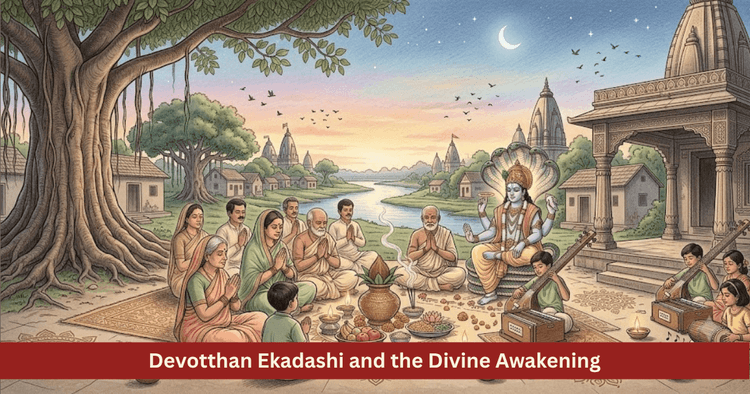
Table of Contents
Tithi and Main Fruit
Devotthan Ekadashi is observed on the Ekadashi tithi of Shukla Paksha in the Kartik month. On this day, Lord Vishnu, who had been in yoganidra since the month of Ashadha, awakens after four months. From this day, Chaturmas ends and Tulsi Vivah is also performed. The main fruit of this fast is said to be the restart of all auspicious and ceremonial activities and the merit equal to one thousand Ashvamedha yajnas.
| Subject | Details |
|---|---|
| Month | Kartik |
| Paksha | Shukla Paksha |
| Tithi | Ekadashi |
| Fast name | Devotthan Ekadashi |
| Special event | Awakening of Lord Vishnu |
| Chaturmas state | Ends |
| Other major tradition | Tulsi Vivah |
| Main benefits | Restart of auspicious works, great merit |
Devotthan Ekadashi is not only a festival. It is a luminous turning point in the yearly cycle of dharma. When Lord Vishnu awakens, it feels as if a new consciousness enters the rhythm of creation. Works that had been paused for months begin to move forward again with auspicious strength.
Why Devotthan Ekadashi Is Observed
Lord Vishnu, who had been in yoganidra since the month of Ashadha, awakens after four months on this day. That is why it is called Devotthan or Prabodhini Ekadashi. Here awakening does not only mean rising from sleep. It symbolises the reactivation of the divine order.
| Event | Meaning |
|---|---|
| Yoganidra in Ashadha | Divine rest |
| Four months | Duration of Chaturmas |
| Awakening | Beginning of auspicious motion |
| Prabodhini | Opening of consciousness |
The deeper spirit of this tithi is that rest must be followed by awakening. Just as nature changes with the seasons, dharma also has periods of stillness and activity. Devotthan Ekadashi is the tithi of that balance.
The End Of Chaturmas
On this day, Chaturmas comes to an end. The period of Chaturmas is one of sadhana, restraint and inward focus. With its completion, life once again becomes ready for outward auspicious beginnings. It is a kind of spiritual change of season.
| Aspect of Chaturmas | Meaning |
|---|---|
| Beginning | Devshayani Ekadashi |
| Duration | Four months |
| Nature | Restraint and sadhana |
| Completion | Devotthan Ekadashi |
After Chaturmas, marriage, housewarming and other auspicious actions are once again regarded as appropriate. This is not only a social custom. It is an extension of the belief that when the deities awaken, the door of auspiciousness opens in human life as well.
The Importance Of Tulsi Vivah
Tulsi Vivah is also performed on this very day. Tulsi Vivah is connected with devotion, surrender and marital purity. This tradition makes the home spiritually alive and reminds one of the divine union of Tulsi and Lord Vishnu.
| Tradition | Meaning |
|---|---|
| Tulsi | Purity and devotion |
| Vishnu | Protection and stability |
| Vivah | Divine union |
| Faith | The soul of the tradition |
The performance of Tulsi Vivah is not only a ritual. It also establishes purity, dignity and resolve in household life. Where Tulsi is honoured, an atmosphere of purity and gentleness arises.
The Restart Of Auspicious And Ceremonial Activities
From this day, all auspicious and ceremonial activities begin again. Marriage, housewarming and other sacred rites are once again regarded as suitable. This change makes Devotthan Ekadashi highly important from a social point of view as well.
| Activity | Status |
|---|---|
| Marriage | Restarted |
| Housewarming | Regarded as auspicious |
| Sacraments | Begin again |
| Celebrations | Dharmic movement |
The message of this day is that a pause is not permanent. When divine awakening occurs, the closed doors of life open again. That is why this tithi is regarded as highly auspicious for new beginnings.
Merit Equal To One Thousand Ashvamedha Yajnas
The merit of this fast is said to be equal to one thousand Ashvamedha yajnas. This statement lifts the glory of Devotthan Ekadashi to a very high level. Ashvamedha yajna is regarded as extremely great in the Vedic tradition. To compare this Ekadashi fast with it shows the extraordinary power of this tithi.
| Fast | Fruit |
|---|---|
| Devotthan Ekadashi | Great merit |
| Tulsi Vivah | Expansion of devotion |
| Faithful awakening | Auspicious energy |
| Observance of Ekadashi | High spiritual fruit |
This fruit does not come only from the number of outer rituals. It comes from the force of faith, discipline and inner purity. When the seeker observes this fast with full feeling, the merit is considered extremely vast.
What To Do On The Fast
On this day, worshipping Lord Vishnu, fasting, listening to the sacred story and following the customs connected with Tulsi Vivah are especially important. The fast should be observed with a calm mind and faith.
| Practice | Benefit |
|---|---|
| Worship of Vishnu | Divine grace |
| Ekadashi fast | Restraint and purification |
| Tulsi Vivah | Completeness of devotion |
| Listening to the story | Growth of faith |
| Charity | Accumulation of merit |
Some devotees observe a complete fast. Some take fruit only. The main thing is that the awakening should not be only for the Lord. The consciousness within the seeker should also awaken. When the mind awakens, the fast becomes deep in effect.
For Whom This Ekadashi Is Especially Important
Devotthan Ekadashi is especially important for those who want to begin auspicious works, take part in Tulsi Vivah or deepen their path of devotion.
- Those who want to begin marriage or auspicious works.
- Those who seek the auspiciousness of housewarming.
- Those who honour the end of Chaturmas.
- Those who desire the merit of Tulsi Vivah.
- Those who fast for the grace of Vishnu.
This tithi reminds one that after every pause comes an awakening. That awakening becomes the foundation of new dharma, new resolve and new auspicious beginnings.
The Deeper Message Of Devotthan Ekadashi
The deeper message of this tithi is very beautiful. The awakening of Lord Vishnu is not only a divine event. It is a sign of the return of consciousness, motion and auspiciousness in the life of the seeker. When the Lord rises, the human being should also rise from inner laziness and inertia.
| Deeper sign | Meaning |
|---|---|
| Divine awakening | Reawakening of consciousness |
| End of Chaturmas | Beginning of a new period |
| Tulsi Vivah | Divine union of devotion |
| Merit of Ashvamedha | Immense spiritual fruit |
Devotthan Ekadashi teaches that after every pause, a new act of dharma begins. The seeker who understands the seriousness of this day makes life more auspicious, more disciplined and more pure.
FAQ
When is Devotthan Ekadashi observed?
Devotthan Ekadashi is observed on the Ekadashi tithi of Shukla Paksha in the Kartik month.
Why is Devotthan Ekadashi observed?
Lord Vishnu, who had been in yoganidra since the month of Ashadha, awakens after four months on this day. That is why it is called Devotthan Ekadashi.
What happens to Chaturmas on this day?
On this day, Chaturmas ends and auspicious works are regarded as beginning again.
What is the importance of Tulsi Vivah?
Tulsi Vivah is also performed on this day and it symbolises devotion, purity and divine surrender.
What is the main benefit of Devotthan Ekadashi fast?
Observing this fast gives merit equal to one thousand Ashvamedha yajnas and allows all auspicious and ceremonial activities to begin again.
Get your accurate Kundali
Generate KundaliDid you like it?
Author

Aparna Patni (63)
Experience: 20
Consults About: Family Planning, Career
Clients In: Punjab, Haryana, Delhi
Share this article with friends and family
About ZODIAQ
ZODIAQ is an online Vedic Astrology platform. It connects clients seeking astrological advice to experienced astrologers with deep knowledge. Our users also generate kundali and perform kundali milan for free. ZODIAQ also offers services to the Astrologers. Astrologers utilize various offerings by ZODIAQ to serve their clients effectively.
If you are a User
Consult with experienced astrologers and seek their guidance. You can also order handwritten Janm Patrika report with life prediction prepared by experienced astrologers. Generate accurate Kundali, perform Kundali Matching and check horoscope and muhurat. Utilize our online library for all the necessary astrological and spiritual information.
If you are an Astrologer
Create accurate kundali for your clients and perform Kundali Matching for up to 5 people at a time. Write comprehensive Janm Patrika report for your clients with ZODIAQ. Check client details anytime by saving it in client directory. Become more productive by tracking how many clients you guide every day.
WELCOME TO
ZODIAQ
Right Decisions at the right time with ZODIAQ
