Compassion for the Villains: Childhood, Trauma and Empathy in Krishna’s Lore
By Pt. Nilesh Sharma
Action, Anguish and Redemption, The Incomplete Quest of Villains in Krishna’s Vision
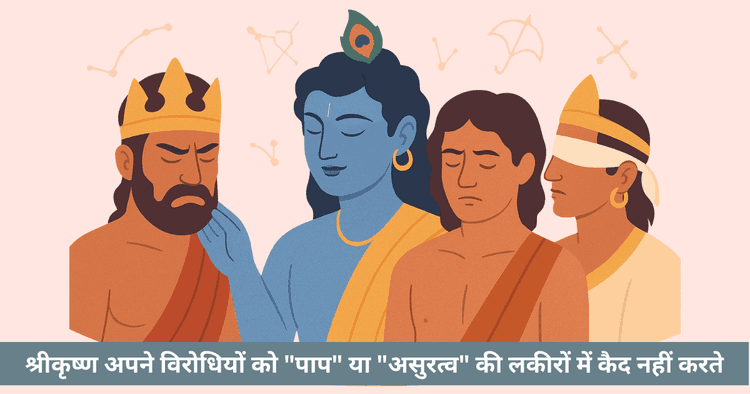
Table of Contents
Are villains mere darkness or the sorrowful cry of a broken heart?
A singular strength of Krishna’s mythology, including epic, Purana, folk, lies in refusing to reduce the villain to “sin” or “evil.” Across these layered traditions, even Krishna’s most fearsome foes are shown as wounded souls, cast out, traumatized or shaped by personal and social injury. Their “evil” often has roots in longing, loss, fear or unhealed pain. This thread of empathy, running through Krishna’s lore, resonates not only with spiritual teaching but with modern psychology, justice and education.
Kamsa: Alienation, Fear and the Cycle of Rejection
Kamsa’s Origins: Did Love Ever Touch Him?
- Bleak beginning: Born from Padmavati’s rape by Damaghosha, abandoned at birth, Kamsa knows neither mother’s warmth nor family embrace.
- Complete estrangement: Marked as impure, socially scorned; never at home, he is a perpetual outsider.
- Adolescent emptiness: Deprived of affection, guidance, positive modeling, becomes cold, distrustful and defensive.
The Making of a Tyrant: Fear’s Bitter Fruit
- Fate’s warning: The prophecy that Devaki’s child will cause his death triggers paranoia, sleepless worry and obsession.
- Family destruction: Driven by dread, Kamsa imprisons Devaki and Vasudeva, kills their children, terrible choices rooted in fear, not malevolence.
Death and the Grace of Release
- Liberation beyond death: Krishna, even in conquest, offers Kamsa knowledge, inner clarity at his passing, a union of justice and healing.
Jarasandha: Fractured Birth, Empire of the Incomplete
From Two Halves to Lifelong Longing for Wholeness
- Fragmented beginning: Born in two halves, thrown away, only to be joined and restored by Jara, a forest woman.
- Outsider’s loneliness: Always shadowed by original incompleteness; wholeness comes, not from kin but outside love.
- Perpetual struggle: His life, an endless demonstration of dominance, compulsive unity and the ache for belonging.
Ending as Begun: Trauma’s Inevitable Echo
- Fitting death: Bhima splits Jarasandha in two, recapitulating primordial trauma.
- Respect amid defeat: After death, he receives the rites due a great king, his pain recognized, if not healed.
Duryodhana: The Unseen Son and the Hunger for Affirmation
Did Duryodhana’s Parents Blind Him to Love?
- A mother’s veiling: Gandhari’s lifelong blindfold, a badge of loyalty, deprives her son of nurturing gaze and affection.
- A father’s incapacity: Dhritarashtra’s blindness leaves Duryodhana with no visual pride, model or guidance.
Ambition Born of Emotional Famine
- Desperate striving: Duryodhana’s fixation on approval and status compensates for inner emptiness, seeking love in power, friendships and control.
- Anger as armor: Cruelty, assertiveness, domination, shields for a child wounded and desperate to mean something.
Mahabharata’s Nuanced Portrait: A Villain Who Feels
- Moments of grace: Duryodhana weeps for Karna, seeks Krishna’s blessing, exposes longing and confusion.
- Ending in compassion: Krishna mourns his end, not gloating but recognizing the cost of unloved living.
Philosophy: Behind Evil, Do We Always Find the Wound?
Not Demon but Damaged
Kamsa, Jarasandha, Duryodhana are no pure monsters, they are scarred, hungry, misshapen by suffering, deprivation and neglect.
Cruelty as Unhealed Pain
- Psychic armor: Childhood anguish, exclusion and lack of safety give rise to adults who harden against all feeling, striking first for fear of being hurt again.
- Origin before blame: Krishna’s stories identify misdeeds’ biographical roots, evil as the scar of humanity, not an essence.
Krishna’s Compassionate Defeat: Healing as the Last Word
- Victory means redemption: Krishna, in vanquishing his foes, offers moksha, healing and the wisdom to rise after the fall, both for the soul and the world.
Modern Resonance: From Empathic Justice to Social Healing
- Look before you punish: Krishna’s tales urge us to search for wounds behind transgression, to temper judgment with insight.
- Society’s duty: Violence is not “natural”, it reflects failures in love, guidance and belonging.
- Relevance today: Modern psychology affirms childhood hurt breeds alienation and violence; security, compassion, rehabilitation matter as much as protection.
Conclusion: Empathy Before Blame, Healing Over Hatred
Stories of Kamsa, Jarasandha, Duryodhana invite compassion before condemnation, restoration as justice and wholeness as the divine cure.
Krishna’s lore lights a path from offense to understanding, from dehumanization to care, offering every broken heart a chance to heal.
Frequently Asked Questions
Q1: Why does Krishna’s lore focus so much on villains’ childhood and hurt?
A: To portray evil as suffering’s product, not essential corruption; inspiring empathy-based justice, not retributive cruelty.
Q2: How are Kamsa and Jarasandha’s deaths portrayed as healing, not just defeat?
A: Krishna gives them wisdom, peace and ritual honor, liberating souls while righting wrongs.
Q3: What message does Duryodhana’s tragic story hold for us?
A: Power and cruelty often mask a desperate need to be loved, seen and valued, a warning against ignoring human longing.
Q4: How do these stories apply in modern psychology, law or society?
A: They inspire trauma-informed justice, education with compassion and rehabilitation over vengeance.
Q5: What ultimate lesson does Krishna’s compassion for his antagonists give?
A: Evil is healed by understanding, not punishment alone; wholeness arises from seeing, caring and helping the wounded soul restore itself.
What does Lagna Sign reveal about me?
My Lagna SignDid you like it?
Author

Pt. Nilesh Sharma (63)
Experience: 20
Consults About: Family Planning, Career
Clients In: Punjab, Haryana, Delhi
Share this article with friends and family
About ZODIAQ
ZODIAQ is an online Vedic Astrology platform. It connects clients seeking astrological advice to experienced astrologers with deep knowledge. Our users also generate kundali and perform kundali milan for free. ZODIAQ also offers services to the Astrologers. Astrologers utilize various offerings by ZODIAQ to serve their clients effectively.
If you are a User
Consult with experienced astrologers and seek their guidance. You can also order handwritten Janm Patrika report with life prediction prepared by experienced astrologers. Generate accurate Kundali, perform Kundali Matching and check horoscope and muhurat. Utilize our online library for all the necessary astrological and spiritual information.
If you are an Astrologer
Create accurate kundali for your clients and perform Kundali Matching for up to 5 people at a time. Write comprehensive Janm Patrika report for your clients with ZODIAQ. Check client details anytime by saving it in client directory. Become more productive by tracking how many clients you guide every day.
WELCOME TO
ZODIAQ
Right Decisions at the right time with ZODIAQ
