Krishna in Dwaraka: The Divine Householder and the Enigma of 16,108 Wives
By Pt. Narendra Sharma
City, Palace, Householder’s Life, Krishna’s Depth and Embracing Love
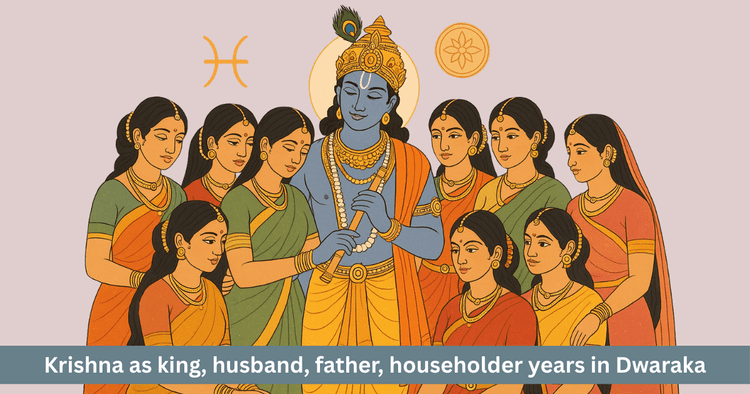
Table of Contents
What Do the ‘Silent Years’ of Krishna’s Life Reveal?
Krishna’s story, Gokul’s childhood, Vrindavan’s romance, Kurukshetra’s guidance, captivates imaginations worldwide. Yet, Krishna as king, husband, father, the householder years in Dwaraka, are less explored, richer in mystery. What was daily life behind palace walls? What deeper truths lie in domesticity and multiplicity?
Dwaraka: What Did Krishna’s Sea-Borne Kingdom Symbolize?
After defeating Kansa, Krishna sensed continuing threat from Jarasandha. The Yadavas migrated west; Dwaraka rose, a shimmering city built by divine architects, blending politics, family, devotion. Krishna ruled as king but also as a householder, both human and divine, in a living tapestry.
Who Were Krishna’s Principal Queens and What Do Their Stories Mean?
Despite tales of 16,108 marriages, eight chief queens (Ashtabharya) stand out, each symbolizing unique forms of love, alliance and spiritual bonding.
- Rukmini: Chief queen, Vidarbha princess, epic devotion and surrender, epitomized in her secret plea and daring abduction; a calm, wise stabilizer.
- Satyabhama: Bold daughter of Satrajit, pride, debate, jealousy, reconciliation, her love is playful and intense; the Parijata tree saga is her hallmark.
- Jambavati: Daughter of Jambavan (from Ramayana), patience and perseverance; famed for her role in the Syamantaka jewel quest.
- Kalindi: Yamuna river’s personification, spiritual purity, exclusive desire for Krishna.
- Mitravinda: Princess choosing Krishna against rivals, free will in love and dharma.
- Nagnajiti (Satya): Princess of Kosala, won in bull-taming contest, symbolizing sense mastery.
- Bhadra: Cousin, married by arrangement, kinship, loyalty, family.
- Lakshmana: Madra princess, prize in royal svayamvara, exemplifies divine superiority.
Together, the queens reflect eros, devotion, choice, kinship, longing, ways humans reach for the divine.
Why Did Krishna Marry 16,100 Women, The Narakasura Episode and Its Message?
Narakasura imprisoned 16,100 women; Krishna vanquished him, rescuing and marrying them.
- Compassion and Social Inclusion: Krishna’s act reclaimed social outcasts, restoring dignity; he married for honor, not desire.
- Spiritual Unity: Each is a longing soul, Krishna the infinite husband, his embrace is for all, no one too lost.
How Does Krishna’s Multiplicity Reflect His Divinity?
Krishna was present with every wife, stories say he multiplied himself, living as a complete husband and deity.
- Ideal Householder, Divine Presence: He was fully with each, a cosmic example for relationships.
- Mythic Omnipresence: Each soul feels God as personal and complete; the wives are metaphors for undivided divine love.
What Lessons Arise in Krishna’s Domestic Scenes and Dialogues?
- Satyabhama’s Jealousy and the Parijata Saga: Her possessiveness over Krishna’s gift to Rukmini leads to Krishna bringing the whole tree home; reconciliation is playful and loving.
- The Tulabharam Scene: Satyabhama’s effort to outweigh Krishna fails; Rukmini’s single tulsi leaf, offered in pure love, succeeds, devotion outweighs riches.
- Rukmini’s Patience: Amid rivalries, Rukmini’s wisdom and forbearance embody spiritual strength.
- Diplomat at Home: Krishna harmonizes palace relationships, mirroring cosmic order, attentive to every concern.
Dwaraka Life: Krishna as Father, Statesman, Teacher, How Did He Balance Worlds?
- Fatherhood: Sons like Pradyumna, Samba, Krishna plays many roles, guiding rituals, marriages, crises.
- The Samba Affair: Samba’s missteps lead to dynastic decline, divine households also endure conflict and loss.
Why Is Dwaraka’s Story Less Sung Than Vrindavan or Kurukshetra?
- Complex, Subtle Harmony: Household balancing, nuanced relationships are harder to mythologize than heroic feats or playful childhood.
- Shift in Devotional Focus: More celebration centers on early (romantic, idealized) periods, leaving Dwaraka’s legacy in rituals, dramas and temple lore.
What Spiritual Lessons Does Krishna’s Householder Life Offer?
- Compassion for Outcasts: Welcoming Narakasura’s captives, social inclusion and dignified acceptance.
- Equanimity and Presence: Krishna was “all things to all people”, teaching presence and impartial love.
- Balance in Complexity: Mature spirituality means loving engagement with life’s intricate relations.
Conclusion: Krishna’s Home as Model for Inner and Outer Harmony
The silence of scriptures on Dwaraka years is an invitation, the highest spirituality shines not only in heroism or romance but in sustaining day-to-day relationships, peace and limitless love. Krishna’s house is a universe; each wife, each event, a reflection, all are included, all are loved.
His multiplicity symbolizes divine fullness, in every home, every heart, wherever devotion leads.
Frequently Asked Questions
Q1: Who were Krishna’s eight chief queens and what do they symbolize?
A: Rukmini (devotion), Satyabhama (pride), Jambavati (patience), Kalindi (purity), Mitravinda (choice), Nagnajiti (self-control), Bhadra (family), Lakshmana (contest), different forms of love and connection.
Q2: How did Krishna display compassion in the Narakasura episode?
A: By marrying and restoring honor to the captive women, teaching inclusion and compassion.
Q3: How was Krishna present with all his wives at once?
A: He multiplied himself, being fully present, mythic symbol of divine omnipresence and undivided love.
Q4: How did Krishna act as a diplomat and harmonizer at home?
A: By resolving disputes, soothing egos, embodying patience and loving care, mirroring cosmic balance.
Q5: What deeper message comes from the “silent years” in Dwaraka?
A: True spirituality is lived in everyday harmony, compassion and balancing relationships, Krishna in every act, every presence.
Get your accurate Kundali
Generate KundaliDid you like it?
Author

Pt. Narendra Sharma (63)
Experience: 20
Consults About: Family Planning, Career
Clients In: Punjab, Haryana, Delhi
Share this article with friends and family
About ZODIAQ
ZODIAQ is an online Vedic Astrology platform. It connects clients seeking astrological advice to experienced astrologers with deep knowledge. Our users also generate kundali and perform kundali milan for free. ZODIAQ also offers services to the Astrologers. Astrologers utilize various offerings by ZODIAQ to serve their clients effectively.
If you are a User
Consult with experienced astrologers and seek their guidance. You can also order handwritten Janm Patrika report with life prediction prepared by experienced astrologers. Generate accurate Kundali, perform Kundali Matching and check horoscope and muhurat. Utilize our online library for all the necessary astrological and spiritual information.
If you are an Astrologer
Create accurate kundali for your clients and perform Kundali Matching for up to 5 people at a time. Write comprehensive Janm Patrika report for your clients with ZODIAQ. Check client details anytime by saving it in client directory. Become more productive by tracking how many clients you guide every day.
WELCOME TO
ZODIAQ
Right Decisions at the right time with ZODIAQ
