Ashvina Month: Sacred Vows and Religious Observances
By Aparna Patni
Spiritual Significance Through Navaratri, Vijayadashami, and Pitru Paksha in Ashvina
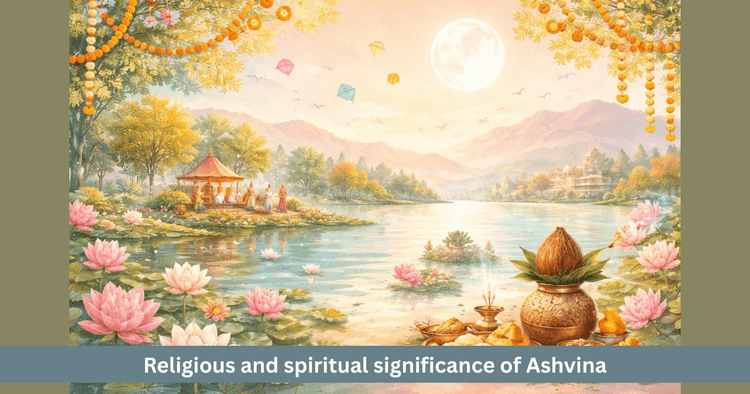
Table of Contents
In the Hindu calendar Ashvina month holds a very special and auspicious place. It is the third stage of the Chaturmasya period and usually falls between September and October. During this time the sun remains in the southern course, the sky turns clear, lotuses and other flowers of the autumn season begin to bloom and the atmosphere feels calm yet filled with a gentle festive energy.
Ashvina is known by several names such as Ashvina, Ashwayuja and Ashwayujaa. This is the month that carries the great cluster of Sharadiya Navaratri, Vijayadashami, Sharad Purnima and the closing of Pitru Paksha. In the lunar reckoning Ashvina often begins from the new moon following the autumn equinox and within this month both worship of the Goddess and offerings to ancestors stand side by side.
Name Ashvina and its link with Ashvini nakshatra
The name Ashvina is connected with the Ashvini nakshatra seen in the evening sky. In the Hindu lunisolar system Ashvini is regarded as the first among the twenty seven nakshatras and is often the first bright asterism visible after sunset.
The deities of Ashvini nakshatra are the Ashvini Kumaras, the divine twin gods, known as givers of vision and as deities of healing and ayurvedic medicine. Ashvini is also taken as a symbol of the glow of sunrise and sunset, of radiance, health and protection from disease. The name and spirit of Ashvina month echo this same divine light, healing force and the power that turns away misfortune.
In some traditions Ashvina is also associated with a protective warrior like energy, a reminder of the guardian of dharma who stands against adversity when needed.
Religious and spiritual significance of Ashvina
Ashvina month enjoys a prominent place in Hindu life because it is believed that in this period the grace of ancestors and the blessings of deities touch the life of the devotee together.
- During Pitru Paksha it is believed that the spirits of ancestors come close to earth and receive the offerings of their descendants.
- From the side of Goddess worship this is the month of Sharadiya Navaratri, considered highly powerful for shakti sadhana.
- For devotees of Vishnu there are important Ekadashi fasts in Ashvina that support liberation and purification from sins.
Through this union of devotion to ancestors, Goddess and Vishnu, Ashvina becomes one of the most balanced and fruitful months of the year.
Why are Pitru Paksha and Shraddha central in Ashvina
The beginning of Ashvina is usually associated with Pitru Paksha. This is the period when Hindu families express gratitude to their ancestors through specific rites.
Pitru Paksha
- From the first day of Pitru Paksha Shraddha ceremonies begin.
- On particular tithis offerings of pinda, tarpan and food charity are made in the name of departed forefathers.
- Simple sattvic food is cooked and with respect it is offered to brahmins, guests or the poor, with the resolve that the Pitrs will be satisfied and bless the family line.
Sarvapitru Amavasya
The most important day of Pitru Paksha is the final new moon known as Sarvapitru Amavasya, Mahalaya Amavasya or Sarvapitri Amavasya.
On this day Shraddha is performed for all ancestors whose exact dates are not known or for whom individual Shraddha has not been done. It is regarded as a day of gratitude to all Pitrs together.
Main fasts and festivals in Ashvina month
An easy way to recognise Ashvina in practice is to see whether Sharadiya Navaratri, Durga Puja and Dussehra fall in the same lunar month. If they do, that month is very likely to be Ashvina.
Major observances of Ashvina
Indira Ekadashi
This Ekadashi is one among the twenty four Ekadashi vratas in the year. It falls during Pitru Paksha and is often treated as a special Ekadashi for ancestors. Devotees fast, worship Lord Vishnu and pray for the peace of their forefathers.
Jivitputrika Vrat
Commonly known as Jitiya Vrat, this day is centred on mothers who observe a nirjala fast, without water, for an entire day and night. Through this they pray intensely for the long life and welfare of their children.
Sharadiya Navaratri
Beginning from the bright fortnight’s first tithi, this Navaratri is considered the most important among all Navaratris and is also called Maha Navaratri. For nine days devotees worship the nine forms of Goddess Durga through fasting, kirtan, homa and meditation, struggling against inner negativity and seeking strength.
Saraswati Avahana
In the middle of Navaratri there is a special day known as Saraswati Avahan, literally the invocation of Goddess Saraswati. On this day the presence of the Goddess of knowledge, speech and arts is invited in a formal way and seekers pray for clarity and learning.
Saraswati Puja
The following day is treated as the main day of Saraswati Puja. Students, artists, writers and scholars place their books, instruments and tools before the Goddess, asking for her blessings.
Durga Ashtami
The eighth day of the bright fortnight is known as Durga Ashtami or Maha Ashtami. On this day the fierce and protective form of the Goddess is worshipped, symbolic offerings are made and in many traditions Kanya Puja, the worship of young girls as forms of the Goddess, is performed around this time.
Maha Navami
The ninth day, Maha Navami, stands close to the completion of Durga Puja. In several traditions the main Navami worship is conducted after the important Sandhi Puja, marking the transition from Ashtami to Navami.
Dussehra or Vijayadashami
After nine days of Navaratri and Durga Puja the tenth day, Vijayadashami or Dussehra, is celebrated in Ashvina Shukla Dashami. On this day devotees recall the victory of Rama over Ravana and of Durga over the buffalo demon Mahishasura. It stands as a symbol of victory of dharma over adharma.
Papankusha Ekadashi
This Ekadashi is another of the twenty four in the year. The Ashvina observance is known as an Ekadashi that destroys sins. Fasting, Vishnu worship and acts of charity on this day are directed towards reducing inner faults and moving towards freedom.
Sharad Purnima
The full moon of the bright half of Ashvina is called Sharad Purnima. Devotees believe that on this night the moon shines with all sixteen kalas or complete powers. Many prepare kheer and other sattvic dishes, place them in the moonlight and eat them later, considering this practice supportive for health and calmness.
Lalita Panchami
During Navaratri a particular fifth day is observed as Lalita Panchami, dedicated to Goddess Lalita Tripura Sundari and taken as an Upanga Lalita Vrat in many regions.
Kojagara Puja
The night of Sharad Purnima is celebrated as Kojagara Puja or Kojagari Lakshmi Puja in several parts of India. On this occasion devotees worship Mahalakshmi with lamps, offerings and prayers. In Bengal and nearby areas the same observance is also known as Bengal Lakshmi Puja.
Summary table of timing and features of Ashvina month
| Topic | Details |
|---|---|
| Names of the month | Ashvina, Ashwayuja, Ashwayujaa |
| Link with nakshatra | Connected with Ashvini nakshatra and Ashvini Kumaras |
| Season and environment | Autumn, clear skies, lotuses and autumn flowers |
| Place in Chaturmasya | Third month of the four month period |
| Ancestor related rites | Pitru Paksha, Indira Ekadashi, Sarvapitru Amavasya |
| Goddess worship | Sharadiya Navaratri, Durga Ashtami, Maha Navami, Dussehra |
| Vishnu devotion | Indira Ekadashi, Papankusha Ekadashi |
| Knowledge and arts | Saraswati Avahana and Saraswati Puja |
| Special full moon | Sharad Purnima, Kojagara Lakshmi Puja |
| Central themes | Gratitude to ancestors, Goddess worship, removal of sins, health and peace |
Life guidance contained in Ashvina month
Ashvina month holds within itself three streams. Through Pitru Paksha it nurtures gratitude towards forefathers, through Navaratri and Durga Puja it deepens the path of shakti and through Sharad Purnima and Lakshmi worship it opens a door to peace and prosperity.
The month teaches that when reverence for ancestors, deities and the Goddess is held in balance, life gains stability, courage and joy together. Anyone who uses Ashvina to take up Shraddha for ancestors, some Navaratri vows, truthfulness, moderation, charity and daily practice, will find that this period becomes not only a time of festivals but also an opportunity to become inwardly filled with light.
Frequently asked questions about Ashvina month
How is the name Ashvina connected with Ashvini nakshatra?
Ashvini nakshatra is the first among the twenty seven and appears early in the evening sky. Its deities, the Ashvini Kumaras, represent healing and radiance. The month is named Ashvina to reflect this brightness and medicinal, protective quality.
Why are Pitru Paksha and Sarvapitru Amavasya observed in Ashvina?
The dark fortnight of Ashvina is known as Pitru Paksha. Tradition holds that in this time ancestors come to receive offerings. The final new moon, Sarvapitru Amavasya, is dedicated to all ancestors, especially those without a specific Shraddha date.
Why is Sharadiya Navaratri called Maha Navaratri?
The Navaratri of Ashvina Shukla Paksha is the most widely celebrated of the year. Because of the intense worship of Durga’s nine forms, yajnas, fasting and devotion, it is honoured as Maha Navaratri, the great period of shakti sadhana.
What makes the night of Sharad Purnima so special for devotees?
Devotees believe that on Sharad Purnima the moon expresses all sixteen kalas or complete fullness. Food kept in its light and consumed later is thought to support health and coolness of mind.
How is Kojagara Lakshmi Puja related to Ashvina month?
On the night of Sharad Purnima many regions celebrate Kojagara or Kojagari Lakshmi Puja. Through worship of Mahalakshmi with lamps and offerings, families pray for prosperity, contentment and good fortune in harmony with the calm, bright mood of Ashvina.
Get your accurate Kundali
Generate KundaliDid you like it?
Author

Aparna Patni (63)
Experience: 20
Consults About: Family Planning, Career
Clients In: Punjab, Haryana, Delhi
Share this article with friends and family
WELCOME TO
ZODIAQ
Right Decisions at the right time with ZODIAQ
