Significance of Chaitra Month and Its Auspicious Practices
By Pt. Abhishek Sharma
Chaitra Month Highlights: New Year Beginnings and Spring Season Practices
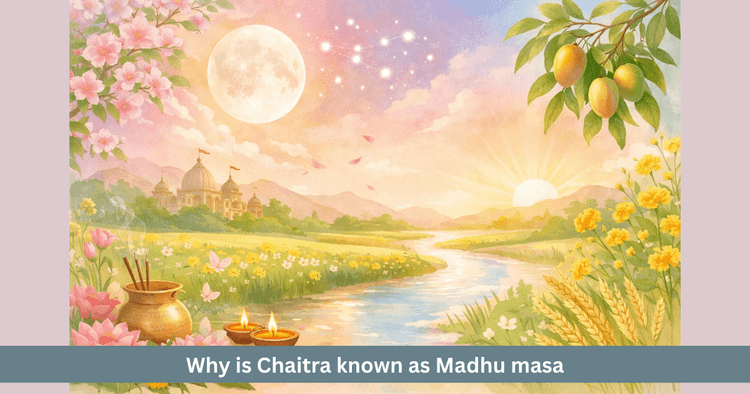
Table of Contents
In the Hindu panchang the Chaitra month is regarded as the first month of the year. Chaitra begins immediately after the festival of Holi, so emotionally it is also seen as a sign of a new beginning. According to the Purnimanta tradition followed in North India Chaitra in the year 2025 is taken to start around 13 March 2025. From this month the auspicious Hindu New Year begins and the spiritual journey of the year also moves forward.
The naming of Chaitra too is full of meaning. On the full moon day when the moon is placed in the Chitra nakshatra that full moon is called chitra nakshatrayukta paurnamasi and the month containing that full moon is named Chaitra. In the Vedic tradition Chaitra is also known as Madhu masa. During this time the Vasanta ritu, the spring season, is in its youthful state and the earth is filled with greenery blossoms and gentle breezes that offer fresh energy to both body and mind.
Why is Chaitra known as Madhu masa
The name Madhu given to the month of Chaitra is deeply suggestive. In this season trees and plants are covered with tender new shoots and nature shows a sweet and pleasant face. The fragrance of flowers, the moderate temperature and the movement away from winter together make this month a period of new creation.
The Vedas and Puranas view Chaitra as a time when creation awakens. For this reason many religious observances, resolutions connected with the New Year and the start of important work are traditionally linked with this month.
Zero nakshatras and inauspicious dates during Chaitra
In astrological practice certain nakshatras and tithis within Chaitra are regarded as shunya or empty, meaning that they are not suitable for starting major undertakings.
- In the month of Chaitra the nakshatras Rohini and Ashvini are counted as shunya nakshatras. Performing important tasks or major financial decisions under these nakshatras is believed to bring the risk of loss.
- Likewise in Chaitra the ashtami and navami tithis of both fortnights are considered masa shunya tithis, empty days of the month.
On these tithis and in these nakshatras activities such as griha pravesha, the first entry into a new house, the start of big projects or key life decisions are traditionally avoided. It is believed that performing house entry during these periods can invite illness and sorrow into the home, so it is considered wiser to postpone auspicious work and choose another suitable muhurta.
Spiritual merit of the one meal vow in Chaitra
In the Anushasana Parva of the Mahabharata chapter 106 there is a description of a special vow connected with the month of Chaitra. It states that a person who spends the entire Chaitra month eating one meal a day in a disciplined way attains a very elevated result.
The verse conveys that the one who passes the month of Chaitra with the rule of single daily meal is born in a great family endowed with gold, gems and pearls. Here the one meal discipline is not only austerity but a way of training the senses and developing awareness regarding food.
Dietary guidelines valued in Chaitra
From the standpoint of health Chaitra is also treated as a very important month. During seasonal transition the body becomes naturally more sensitive, so the scriptures advise certain specific dietary rules.
- It is said that during the month of Chaitra one should avoid eating jaggery and by doing so many types of ailments begin to calm down.
- In this month eating neem leaves is believed to purify the blood and protect against diseases such as malaria.
- Religious texts also mention the alona vrata, a vow of food taken without salt, which is recommended during Chaitra. This form of vrata is said to strengthen immunity and to help in conditions related to the skin, the heart, high blood pressure and kidney disorders.
The purpose of these rules is to keep the body light, purified and balanced at the time of seasonal change so that health remains better throughout the year.
Teachings of Shiva Purana and the tradition of charity
The Shiva Purana describes the month of Chaitra as highly fruitful for charity and merit. Especially the gift of a cow, gau dana, in this month is praised. It is believed that donating a cow in Chaitra helps in the removal of physical, verbal and mental impurities.
Similarly in this month feeding Brahmins, offering dakshina and giving them tambula are said to be particularly beneficial. The Vamana Purana mentions that to gain the grace of Lord Vishnu one should offer garments, beds and seats to Brahmins during the month of Chaitra. Such gifts are viewed as an expression of respect and devotion towards Vishnu.
Deity installation and vows on Chaitra Shukla Pratipada
In religious practice the month of Chaitra is considered auspicious for the installation of deities, although a specific muhurta is required for each ceremony.
From Chaitra Shukla Pratipada the prapadana vrata is said to begin. The word prapadana means donation of water. According to this vow one takes a resolve from Chaitra Shukla Pratipada to offer water every day for four continuous months to all beings as far as possible, whether humans animals or birds. This vow is not only a ritual act but also a deeply humane and environment friendly practice.
New Year and creation beginning from Chaitra Shukla Pratipada
The auspicious Hindu New Year is also counted from Chaitra Shukla Pratipada. According to a traditional belief Lord Brahma began the creation of the universe on this very tithi so that the first day of creation would be joined with light and the rising sun.
The Brahma Purana states that on Chaitra month’s Shukla Pratipada at sunrise the first act of creation took place. The Narada Purana also records that Brahma created the entire world on the first day of the bright half of Chaitra at sunrise. Thus Chaitra Shukla Pratipada is honoured not only as the beginning of the year but also as the day of universal creation.
Avatara and special tithis related to Chaitra Shukla Pratipada
Chaitra Shukla Pratipada is not only important from the viewpoint of the New Year, it is also associated with several significant events. One traditional account says that in Revati nakshatra and Vishkumbha yoga, during the day, Lord Vishnu took the Matsya avatara, the incarnation as the fish. In this way Chaitra Shukla Pratipada is remembered as an avatara day as well.
The tithis of Chaitra Shukla Tritiya and Purnima are regarded as Manvadi tithis, times which mark the beginning of certain Manus and are seen as especially suitable for charity and meritorious actions. The Bhavishya Purana describes a special Sarasvati vrata starting from the bright fortnight of Chaitra.
During this month from Chaitra Shukla Pratipada the Navaratri observance is also begun and continues till the Navami. In these Navaratri days fasting is undertaken and there is a special form of worship of Maa Jagatjanani, the Mother of the universe. On Chaitra Purnima the festival of Hanuman Jayanti is celebrated with deep devotion.
Relation of Chaitra Shukla Pratipada with yugas and eras
According to religious tradition the beginning of the Satya Yuga is also tied to Chaitra Shukla Pratipada. On this very tithi the coronation of Lord Sri Rama, Maryada Purushottama, is said to have taken place.
The same tithi is considered the starting point of Yugabda, the era of Yudhishthira. The famous Vikrama Samvat established by the king Vikramaditya of Ujjain is also believed to commence from Chaitra Shukla Pratipada. Thus this date is joined with many important eras, yugas and royal coronations.
Ayurvedic view of health in Chaitra
During Chaitra a shift of season takes place. As the climate moves from cold towards spring and summer the body experiences special stress. Ayurveda teachers regard this month as very significant for health and have given many specific guidelines.
One description states that a powder and juice prepared from neem, spices and certain medicinal substances taken in Chaitra can support health for the whole year.
Tender neem leaves and blossoms are taken and mixed with black pepper, common salt, hing, jeera, sugar candy and ajwain to prepare a medicinal powder. This mixture is taken in proper measure for the purpose of calming diseases.
The tender leaves of neem are ground with water to make a paste. A little salt and some black pepper are added to render it palatable. This paste is then wrapped in a cloth and strained so that a concentrated juice is obtained. This juice is taken in the morning on an empty stomach from about one cup up to a glass. In traditional understanding it is considered to possess antiseptic, antibacterial, antiviral, anti worm and anti allergic qualities.
Those who chew fresh neem leaves daily are also believed to benefit greatly. It is especially mentioned that in persons with diabetes regular use of neem can help in balancing the level of blood sugar. Thus Chaitra is treated as a time set aside for cleansing the body and preparing for good health throughout the coming year.
Key points of Chaitra month in brief
| Topic | Details |
|---|---|
| Beginning of Chaitra | After Holi, first month of Hindu year |
| Basis of the name | Full moon in Chitra nakshatra |
| Vedic name | Madhu masa |
| Main season | Youthful phase of Vasanta ritu |
| Shunya nakshatras | Rohini and Ashvini |
| Shunya tithis | Ashtami and Navami of both fortnights |
| Important vows | One meal vow, alona vrata, prapadana water vow |
| Main charities | Gau dana, feeding Brahmins, cloth and seat gifts |
| Key tithis | Chaitra Shukla Pratipada, Tritiya, Purnima |
| Major observances | Navaratri, Hanuman Jayanti, New Year beginning |
| Health emphasis | Neem based remedies and seasonal purification |
Life guidance offered by the month of Chaitra
The month of Chaitra is not merely the first page of a calendar. It is a sign of new energy, renewed health and fresh spiritual effort. The vows, charity and dietary disciplines of this month encourage beginning the year with a lighter body and a clearer mind.
Anyone who understands Chaitra and adopts even a few of its disciplines learns to move in step with the rhythm of nature. Auspicious resolutions for the New Year, pure food, charitable acts and observances such as Navaratri together give a meaningful direction to the entire year ahead.
Frequently asked questions about Chaitra month
When does Chaitra begin and why is it counted as the first month of the year?
Chaitra begins soon after Holi and is counted as the first month of the Hindu year. According to traditional belief creation itself began on Chaitra Shukla Pratipada, so the New Year is also started from this month.
Which nakshatras and tithis are considered shunya in Chaitra?
In the month of Chaitra the nakshatras Rohini and Ashvini are treated as shunya. The ashtami and navami of both fortnights are counted as masa shunya tithis during which acts like house entry are avoided.
Which vows and dietary rules are regarded as especially fruitful in Chaitra?
The one meal vow described in the Mahabharata and the alona vrata of salt free food are given special place in Chaitra. Avoiding jaggery and using neem leaves and medicinal powder are seen as supportive for health throughout the year.
Why is Chaitra important for charity and deity installation?
Texts such as the Shiva Purana and Vamana Purana praise gau dana, Brahmin feeding and the gifting of garments, beds and seats in Chaitra. The month is also considered favourable for deity installation, though a specific muhurta is always required.
How is Chaitra Shukla Pratipada linked with yugas and eras?
Chaitra Shukla Pratipada marks the beginning of the Hindu New Year and is also associated with the start of Satya Yuga, the coronation of Sri Rama, the Yugabda era and the Vikrama Samvat, which greatly enhances its importance.
Get your accurate Kundali
Generate KundaliDid you like it?
Author

Pt. Abhishek Sharma (63)
Experience: 20
Consults About: Family Planning, Career
Clients In: Punjab, Haryana, Delhi
Share this article with friends and family
WELCOME TO
ZODIAQ
Right Decisions at the right time with ZODIAQ
