Kartik Month: Vows, Worship, and Inner Discipline
By Pt. Abhishek Sharma
Spiritual Benefits Through Worship of Vishnu, Krishna, and Shiva in Kartik
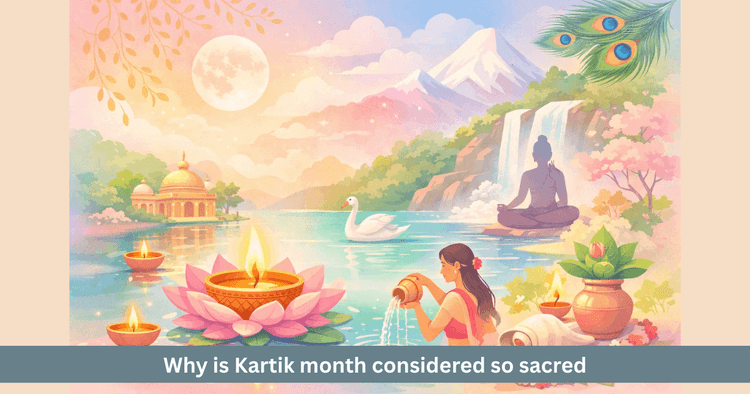
Table of Contents
In the Hindu calendar Kartik month or Kartik Maas is counted among the holiest periods of the year. It generally falls between October and November, following the month of Ashvina. After Sharad Purnima as the lunar cycle moves forward, the air turns cooler and more peaceful and a distinct spiritual mood begins to spread which is recognised as the arrival of Kartik.
This month is especially revered in both Vaishnava and Shaiva traditions. Kartik is regarded as a favourable time for the worship of Lord Vishnu, Lord Krishna and Lord Shiva. It is believed that even small acts of devotion done in Kartik can bear very large fruits, so seekers have chosen this month for ages for japa, fasting, sacred baths and lamp offerings.
When does Kartik month occur
There are some differences in calculation between North and South Indian calendars but the underlying spirit of Kartik remains the same.
- Kartik is considered to begin after Sharad Purnima and continues until Kartik Purnima.
- In North Indian Purnimanta reckoning Kartik usually runs from mid October to mid November.
- In South Indian Amanta tradition lunar months run from new moon to new moon, so the dates differ slightly but the spiritual importance of Kartik is unchanged.
Throughout this period observances on Pradosha, Ekadashi, Amavasya, Purnima and other key dates are held to be especially fruitful.
Why is Kartik month considered so sacred
Scriptures describe Kartik Maas as a time that multiplies merit.
Some of the main reasons for its sacredness are as follows.
- During this period Lord Vishnu is believed to awaken from Yoga Nidra, so it is looked upon as the time of divine awakening.
- The sacred ceremony of Tulsi Vivah is performed in Kartik, marking the union of Tulsi and Sri Hari.
- The festival of Dev Deepawali is celebrated on Kartik Purnima.
- The entire month is taken as highly supportive for discipline, spiritual effort and devotion.
Texts state that even small acts such as lighting a single lamp, brief japa, simple bathing and charity during Kartik can give many times the result compared to ordinary days. For this reason even those who cannot maintain rigorous practices throughout the year try to adopt modest but steady disciplines in Kartik.
Daily disciplines and practices during Kartik
Many devotees choose to follow some special rules for the whole month of Kartik. These practices aim to align body, mind and soul with restraint and devotion.
1. Pre sunrise bathing
In Kartik a bath before sunrise is regarded as highly meritorious.
- Where possible one bathes in the Ganga or another sacred river.
- Otherwise one can bathe at home in warm water after adding a few drops of Ganga water as a symbol.
- After bathing, clean clothes, lamp lighting, japa and worship are recommended.
2. Daily lamp lighting
There is a close link between deities and lamps during Kartik.
- Every evening it is auspicious to light a ghee or oil lamp in the home, temple or place of worship.
- A lamp lit near the Tulsi plant is a classic Kartik observance.
- Some devotees also light lamps in the courtyard or terrace to sanctify the environment.
3. Worship of Tulsi
In Kartik the importance of Tulsi worship becomes even more pronounced.
- Devotees offer water to Tulsi every day, light a lamp near the plant and circumambulate it.
- In the bright fortnight of Kartik the ceremony of Tulsi Vivah is held, symbolically marrying Tulsi to Lord Vishnu or Shaligrama.
4. Chanting and scriptural reading
Kartik is regarded as an excellent time for name remembrance and scriptural listening.
- Many recite the Vishnu Sahasranama daily.
- Others devote time to reading or hearing chapters from the Bhagavad Gita.
- For devotees of Shiva, repetition of the Mahamrityunjaya mantra or Shiva’s names during Kartik is also valued highly.
Major festivals and vratas in Kartik month
Kartik often feels like a garland of festivals, with almost the entire month linked to one observance or another.
Key festivals of Kartik
Karwa Chauth
A fast mainly observed by married women for the long life and well being of their husbands. They keep a day long nirjala fast and break it after seeing the moon.
Ahoi Ashtami
On this day mothers fast for the safety and longevity of their children. The fast is usually broken at night after seeing stars or the form of Ahoi Mata.
Dhanteras
Coming just before Diwali, this day is connected with Dhanvantari Jayanti and the worship of prosperity. Lamp lighting and the purchase of some auspicious metal items are common.
Narak Chaturdashi
Known as Chhoti Diwali, this day recalls the victory over Narakasura and includes special baths and lamps that symbolise the cleansing of body and mind.
Diwali
On Kartik Amavasya the great festival of Diwali is celebrated across India as a time of light, prosperity and divine worship. Devotees worship Mahalakshmi, Sri Ganesha and Kubera.
Govardhan Puja
The day after Diwali is devoted to Govardhan Puja, remembering how Krishna lifted Govardhan hill and sheltered his devotees. Offerings of Annakuta and circumambulation of the Govardhan form are central practices.
Bhai Dooj
On the bright fortnight’s second day sisters honour their brothers with a tilak and pray for their health and long life.
Dev Uthani Ekadashi
Kartik Shukla Ekadashi is called Dev Utthani or Dev Uthani Ekadashi. It is believed that on this day Lord Vishnu wakes from Yoga Nidra. From this point onward, marriages and other major auspicious ceremonies resume.
Tulsi Vivah
After Dev Uthani Ekadashi, on Kartik Shukla Dvadashi or another suitable date, devotees celebrate Tulsi Vivah. This symbolic marriage marks the entry of purity, love and Lakshmi’s grace into household life.
Kartik Purnima
The full moon of Kartik is regarded as the peak of the month. On this day people observe Dev Deepawali, Tripurari Purnima, river bathing, charity and abundant lamp lighting.
Spiritual meaning of Kartik month
Kartik month brings a clear set of inner teachings.
Its central themes can be seen as follows.
Devotion over ego
The month encourages turning from self centredness toward surrender. Each lamp lit in devotion softens pride.
Light over darkness
Through Diwali, Dev Deepawali and daily lamps the focus lies on dispelling outer and inner ignorance together.
Discipline over indulgence
Fasts, regulated eating and regular worship demonstrate that joy can arise from discipline, not just from indulgence.
Gratitude over attachment
When one expresses thankfulness to God, deities and nature, attachment begins to loosen and simplicity grows.
Kartik is believed to gradually lighten obstructive karmas when devotion is sincere and steady.
Astrological importance of Kartik
From an astrological viewpoint Kartik usually comes as the sun moves from Libra to Scorpio. This supports a shift from outer activity toward inner depth.
- The transition from Libra to Scorpio is associated with self inquiry, emotional depth and transformation.
- The lunar phases during Kartik, especially Amavasya, Purnima and Ekadashi, are considered especially conducive to meditation and vows.
Seekers who use this period for reflection, resolve and releasing old patterns often find that Kartik becomes a base for inner change.
Benefits of observing Kartik disciplines
The observances of Kartik are not designed for display but for inner reorientation.
Possible benefits can be understood as follows.
Stronger spiritual awareness
Regular lamp lighting, japa and worship keep the mind turning towards the divine, sharpening awareness.
Emotional steadiness
Fasting and restraint often reduce anger, agitation and restlessness over time.
Prosperity and peace
Lakshmi worship, Tulsi Vivah and charity strengthen harmony in the home and support a balanced attitude towards wealth.
Removal of obstacles
Prayers on Dev Uthani Ekadashi and Kartik Purnima are held to ease many forms of obstruction in life.
Deepening of devotion
A month of simple, consistent practices allows devotional tendencies to become a lasting habit of the heart.
Kartik Purnima and the height of the month
The full moon of Kartik is treated as the culminating point of the entire month.
Some key features of this day are.
Dev Deepawali
Tradition speaks of the gods themselves celebrating with lights on this night. In places such as Kashi innumerable lamps are lit along the river.
Tripurari Purnima
The day is remembered as the time when Lord Shiva destroyed Tripurasura, making it especially significant for Shaiva devotees.
Holy river bathing and charity
Bathing in sacred rivers, observing restraint in food and offering charity according to means are seen as highly auspicious.
Night time lamp offerings
Lamps are lit in homes, temples, ghats and along river banks, symbolising welcome for the divine presence.
For those who have maintained Kartik practices throughout the month this day often feels like a natural completion of their observance.
Summary table of key aspects of Kartik month
| Topic | Details |
|---|---|
| Place in the year | Follows Ashvina as the sacred Kartik month |
| Usual time span | Roughly mid October to mid November |
| Principal deities | Lord Vishnu, Lord Krishna, Lord Shiva |
| Beginning and end | Starts after Sharad Purnima, completes on Kartik Purnima |
| Main practices | Pre dawn bath, lamp lighting, Tulsi worship, japa, scriptural reading |
| Major festivals | Karwa Chauth, Ahoi Ashtami, Dhanteras, Diwali, Govardhan Puja, Bhai Dooj, Dev Uthani Ekadashi, Tulsi Vivah, Kartik Purnima |
| Astrological indications | Sun’s shift from Libra to Scorpio, inward focused time |
| Spiritual themes | Devotion, light, discipline, gratitude, easing of karma |
| Key benefits | Spiritual alertness, emotional balance, prosperity, removal of obstacles |
Inner guidance offered by Kartik month
Each year Kartik quietly reminds that not only great vows but also simple daily lamps, brief temple visits, gentle chanting and humble charity can reshape life.
Anyone who, according to capacity, tries in this month to rise earlier, eat a little more sattvic food, light a lamp daily, offer water to Tulsi and remember the divine name will find that Kartik truly becomes a time that kindles inner light.
Frequently asked questions about Kartik month
Why is Kartik Maas regarded as especially holy?
Because it includes Vishnu’s awakening, Tulsi Vivah, Dev Deepawali and Kartik Purnima. Scriptures say that small acts of devotion in this month yield many times the merit of other periods.
Is it necessary to light lamps every single day of Kartik?
Ideally daily lamps are best but if that is not possible then lighting lamps on Amavasya, Purnima, Ekadashi, Dhanteras, Diwali and Kartik Purnima is still considered very beneficial.
Why is Tulsi Vivah specifically performed in Kartik?
Tradition holds that the divine union of Tulsi and Sri Hari is honoured at this time. Celebrating Tulsi Vivah in Kartik is believed to invite purity, harmony and Lakshmi’s grace into family life.
What should one especially do on Kartik Purnima?
On Kartik Purnima one may bathe early, ideally in a river, observe restraint in food, worship Vishnu or Shiva, light lamps generously and offer charity according to means.
How can someone benefit from Kartik if strict fasting is not possible?
Even without strong fasting, one can gain from Kartik by lighting at least one lamp regularly, doing some japa, offering water to Tulsi and giving small amounts in charity on key days. In Kartik steady sincerity matters more than the hardness of the vow.
Get your accurate Kundali
Generate KundaliDid you like it?
Author
Pt. Abhishek Sharma (63)
Experience: 20
Consults About: Family Planning, Career
Clients In: Punjab, Haryana, Delhi
Share this article with friends and family
WELCOME TO
ZODIAQ
Right Decisions at the right time with ZODIAQ
