Margashirsha Month: Vows, Donations, and Religious Significance
By Pt. Amitabh Sharma
Importance of Faith, Charity, and Sacred Rituals in Margashirsha
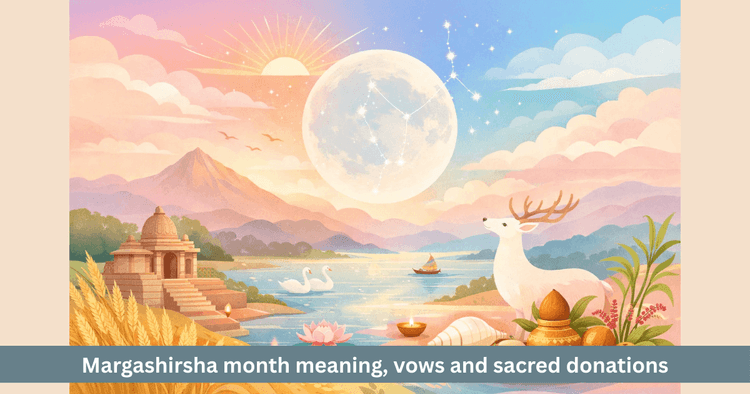
Table of Contents
In the Hindu lunar year Margashirsha month holds a very elevated and auspicious position. It is counted as the ninth month and has enjoyed special honour since Vedic times. In the North Indian Purnimanta system Margashirsha will begin on 06 November 2025, when, after the month of Ashvina, the new month known as Agrahayana or Agahan starts.
This month is also called Agrahayana, a name connected with the Agrahayani nakshatra. That nakshatra is another name for Mrigashira or Mrigashirsha. The developed spoken form of Agrahayana is Agahan, which became widely used in common language. In ancient times the new year was considered to begin from Margashirsha itself, so this month was not just a segment of the calendar but a symbol of year change and new beginning.
Divine marriages associated with Margashirsha
Margashirsha is regarded as especially sacred in Sanatana tradition because two highly significant divine marriages are placed in this month.
- On Margashirsha Shukla Panchami the marriage of Lord Rama and Mata Sita is celebrated. The remembrance of this Rama Vivaha is deeply cherished throughout India.
- According to Shiva Purana, Rudra Samhita, Parvati Khanda, after the guidance of the Saptarshis, Himavan fixed the marriage of his daughter Parvati with Lord Shiva in the month of Margashirsha.
Thus Margashirsha is seen as the witness to Rama Vivaha and Shiva Vivaha both. From the point of view of marriage, auspiciousness and harmony in married life this month carries very bright indications.
Glory of Margashirsha in the Bhagavad Gita
The greatness of Margashirsha is not only found in the Puranas. It is also clearly honoured in the Shrimad Bhagavad Gita.
Lord Krishna states
“Māsānām mārgaśīrṣo ’ham nakṣatrāṇām tathābhijit”
Meaning
“Among months I am Margashirsha and among nakshatras I am Abhijit.”
This statement directly links Margashirsha with the Lord’s own special expression. When Shri Krishna openly identifies this month with himself, it becomes clear that the vows, worship and charity of this time can leave a deep imprint on the life of the devotee.
Margashirsha as beloved month in Skanda Purana
In the Skanda Purana, Vaishnava Khanda the importance of Margashirsha is described in very affectionate terms.
There Lord Narayana declares that Margashirsha is always dear to him. A human being who rises early at dawn in this month and performs a proper bath according to simple rules receives such contentment from the Lord that he says he is ready to offer even his very self to that devotee.
In essence it can be understood that
- In Margashirsha a bath at daybreak is not seen as a routine act but as a deep spiritual practice.
- Through this simple discipline the devotee can strengthen a sense of surrender and closeness to the Lord.
Zero nakshatras and zero tithis in Margashirsha
From an astrological perspective some specific nakshatras and tithis in Margashirsha are regarded as unsuitable for auspicious works.
-
During this month Chitra and Vishakha are described as shunya nakshatras, zero nakshatras.
Initiating important tasks under them is believed to carry a risk of loss of wealth. -
In Margashirsha the tithis Saptami and Ashtami are recognised as mashunya tithis, zero dates of the month.
Performing mangal karya, major auspicious ceremonies, on these days is said to invite harm to both lineage and prosperity.
The practical teaching is that even in this holy month one should choose dates and nakshatras carefully for marriages, house entries or large agreements, while worship, discipline and charity can continue on any day.
Fruits of one meal vow during Margashirsha
In Mahabharata, Anushasana Parva, chapter 106 the vows of Margashirsha are explained in detail. There it is stated that
- A person who spends the entire month of Margashirsha taking only one meal a day,
- And according to ability offers food to brahmins,
becomes free from many kinds of diseases and sinful reactions.
Such a person
- Gains access to all auspicious means of well being.
- Remains well supplied with food, fruits and healing substances.
- In this life or the next is described as free of disease, strong and prosperous.
- Enjoys favourable conditions for agriculture, land and abundant grain and wealth.
The same spirit appears again in Skanda Purana, Vaishnava Khanda. One who passes the whole of Margashirsha by eating only once a day and who feeds brahmins with devotion is said to be freed from illness and sinful deeds.
Importance of charity in Margashirsha
In the realm of charity Margashirsha is held to be particularly fruitful, especially regarding gifts of food and gifts of silver.
Gift of silver according to Shiva Purana
In the Shiva Purana it is mentioned that a devotee who offers silver in charity during Margashirsha gains an increase in virya shakti, that is, strength of vitality, courage and inner steadiness. It is best understood not as a narrow physical trait but as an overall enhancement of life force.
Annadana in Vishveshvara Samhita
In the Shiva Purana, Vishveshvara Samhita we read that
- In Margashirsha the act of annadana, giving food, is counted as supreme.
- A person who gives only food as charity in this month is said to receive all desired fruits.
- Such annadana destroys sins, supports the success of endeavours, fosters health and strengthens the path of dharma.
In short, although every form of charity is praised, in this month feeding others is taken as the highest form of offering.
Why residence in Mathura during Margashirsha is praised
A very beautiful and distinct feature of Margashirsha is its connection with residence in Mathurapuri.
In the Skanda Purana Lord Krishna tells Brahma that
- Whatever merit a person gains by residing in the holy confluence of Prayaga, the king of pilgrimage places, for one thousand years,
- The same merit can be obtained by living in Mathurapuri for just one month of Margashirsha.
This shows that during this time Mathura is treated as a concentrated centre of tapas and bhakti.
Anyone who spends Margashirsha in Mathura, Vrindavan or closely related Krishna kshetras, engaged in remembrance, japa and service, is described as receiving very high spiritual results.
Importance of Vishnu abhisheka in Margashirsha
There is also a long standing tradition of offering abhisheka to Lord Vishnu during Margashirsha.
- In this period devotees bathe the deity or Shaligrama with panchamrita or clean sacred water.
- During abhisheka they recite mantras, especially the names and hymns of Vishnu, which deepen the impact of the worship.
It is believed that Vishnu abhisheka in Margashirsha
- Eases the weight of past karmic bonds,
- And opens pathways for peace, prosperity and clear understanding in the life of the worshipper.
Worship of Vishvadevas and prayer for wandering souls
Another deep aspect of Margashirsha concerns the welfare of departed and wandering souls.
- During this month devotees perform worship of the Vishvadevas, the universal deities.
- This worship is offered as a prayer for all those who have left this world yet did not easily find inner rest or peace.
- Many people could not taste calmness during their life and searched for peace in external things, only to remain unsatisfied. For them, during Margashirsha, devotees pray through Vishvadeva worship for release and upliftment.
This attitude teaches that prayer is not limited to one’s own family or lineage. It extends to all beings who wander without direction and thus Margashirsha nourishes compassion and a broader spiritual vision.
Vishnu installation and the grace of Shripanchami
Installing or consecrating idols of Lord Vishnu is also considered very auspicious in Margashirsha.
- If a temple, home shrine or organisation is planning to install or re consecrate a form of Vishnu,
- Choosing Margashirsha is regarded as especially supportive.
In the Bhavishya Purana, Uttara Parva Lord Krishna refers to Margashirsha Shukla Panchami as Shripanchami.
On this tithi
- The special grace of Lakshmi is believed to flow.
- Acts of worship and charity aimed at wealth, well being and auspiciousness are considered particularly effective.
Key spiritual and astrological points of Margashirsha in one table
| Aspect | Details |
|---|---|
| Place in the year | Ninth month of the Hindu lunar year |
| Other traditional names | Agrahayana, Agahan, linked with Mrigashirsha |
| Start in year 2025 | Begins on 06 November 2025 in North Indian Purnimanta system |
| Main associated marriages | Marriage of Rama and Sita, marriage of Shiva and Parvati |
| Gita reference | Identified by Krishna as “Māsānām mārgaśīrṣo ’ham” |
| Special nakshatras and tithis | Chitra and Vishakha as shunya nakshatras, Saptami and Ashtami as mashunya tithis |
| Central vow | One meal per day for the month, feeding brahmins |
| Chief forms of charity | Gift of silver, with special emphasis on annadana |
| Important sacred places | Residence in Mathurapuri during Margashirsha |
| Other key practices | Vishnu abhisheka, worship of Vishvadevas, Vishnu installation, Shripanchami Lakshmi worship |
Path offered to seekers in Margashirsha
Margashirsha gently shows that
- A little discipline,
- Moderate sattvic food,
- A mindful bath at dawn,
- Some daily chanting,
- And charity according to capacity
can reshape life from within.
Even those who cannot follow strict vows can still
- Take one meal a day on some days,
- Offer annadana when possible,
- Or adopt early morning baths and simple remembrance of Vishnu a few times a week.
In this way they also touch the special strength of Margashirsha that gradually leads towards purified actions, peace and prosperity.
Frequently asked questions about Margashirsha month
Why is Margashirsha also called Agrahayana or Agahan?
Because the name is linked with Agrahayani, a form of Mrigashira nakshatra. Over time Agrahayana became the spoken form Agahan in many regions and both refer to the same Margashirsha month.
Is it necessary to observe a full month vow or is a one meal rule enough in Margashirsha?
Scriptures praise a full month of one meal per day, yet each person may follow according to strength. The key idea is disciplined eating, simple fare and feeding brahmins or the needy which are considered especially meritorious in this month.
Which kind of charity is regarded as best in Margashirsha?
According to Shiva Purana, annadana stands highest in Margashirsha. Giving silver is said to support vitality, yet for most householders the most powerful practice is offering food to others with devotion.
Why is residence in Mathurapuri during Margashirsha so highly valued?
Skanda Purana states that living in Prayaga for a thousand years equals the fruit of living in Mathura for just the month of Margashirsha. This underlines that Krishna related places during this time carry exceptional spiritual potency for those engaged in remembrance and service.
Why is worship of Vishvadevas performed in Margashirsha?
Because this month is used to pray for peace for all departed souls who could not find rest easily. Worship of Vishvadevas in Margashirsha is a collective prayer for their upliftment and also cultivates compassion and universality in the heart of the devotee.
Get your accurate Kundali
Generate KundaliDid you like it?
Author
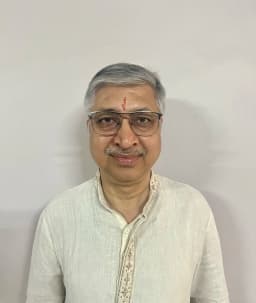
Pt. Amitabh Sharma (56 Years)
Experience: 20
Consults About: Family Planning, Career
Clients In: Punjab, Haryana, Delhi
Share this article with friends and family
WELCOME TO
ZODIAQ
Right Decisions at the right time with ZODIAQ
