Shravan Month: Vows and Spiritual Practices
By Pt. Sanjeev Sharma
Importance of Dharma, Satsang, and Guru’s Teachings During Monsoon
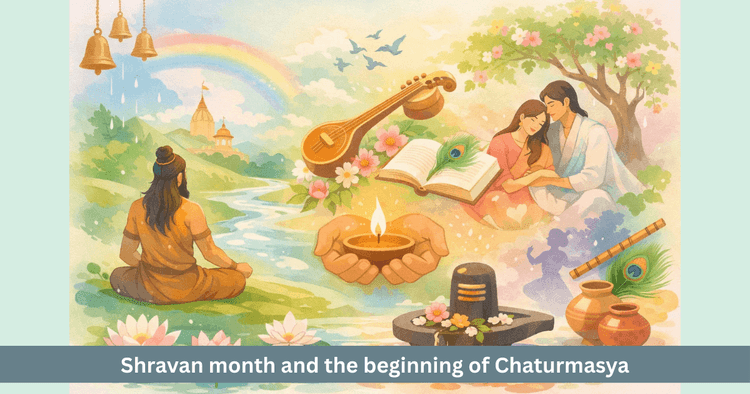
Table of Contents
In the Hindu calendar Shravan month is regarded as the first and very sacred month of the Chaturmasa period. In the heart of the rainy season this month offers a special chance to listen within, understand dharma and absorb spiritual teachings. Shravan usually falls in the middle of the year when rain is strong, nature is renewed and new resolutions start to arise in the human mind as well.
The word Shravan comes from Shravan, meaning “to listen”. The Vedas are called Shruti, that is knowledge heard directly from God by the sages and then transmitted to people. In this sense Shravan month is treated as a time for hearing dharma, satsang, katha, kirtan and absorbing the words of the guru. One may worship any chosen deity during this period, yet special fruit is associated with the worship of Lord Shiva, Mother Parvati and Lord Krishna in this month.
Shravan month and the beginning of Chaturmasya
In the Hindu tradition there are many fasts, such as on Chaturthi, Ekadashi, Trayodashi, Amavasya and Purnima. Even so, the most important season for observances is the four month period known as Chaturmasya.
The main features of Chaturmasya can be described as follows.
- Its duration is four months.
- It begins from Ashadha Shukla Ekadashi, known as Devashayani Ekadashi.
- It ends on Kartik Shukla Ekadashi, called Devuthani Ekadashi.
- The four months in between are Shravan, Bhadrapada, Ashwin and Kartik.
Shravan is the first stage of Chaturmasya. Those who start vows, japa, study and restraint from this month find that the remaining three months allow them to deepen the same line of practice.
Origin of the Shravan Monday fast
Shravan month is especially dear to Lord Shiva. According to a Puranic account when the Sanat Kumars asked Mahadeva why he favoured the month of Sawan he narrated the story of Sati and Parvati.
Before giving up her body through yogic power in her father Daksha’s sacrifice Goddess Sati took a vow that she would marry Shiva in every birth. In her next life she was born as Parvati, daughter of Himachal and Queen Maina. During her youth Parvati performed very austere fasting in the month of Shravan, remaining without food and praying deeply to Lord Shiva. Pleased with her devotion he accepted her as his consort.
From that time the month of Shravan became especially sacred to Mahadev. The Shravan Monday fasts are seen as a symbolic continuation of that same love, surrender and unshakable resolve that Parvati expressed.
Is it necessary to fast only on Mondays
Over time many people began to identify Shravan mainly with Shravan Mondays, which led to the common belief that one should fast only on Mondays in this month. In scriptural understanding however Shravan is the starting point for the vows of the entire Chaturmasya.
For ordinary devotees fasting on Mondays is a simple and accessible form of practice.
- According to the Shiva Purana the wish with which one observes Monday fasts in Shravan is believed to be fulfilled quickly.
- Those who undertake the Solah Somvar vrata, the sixteen Monday vow, often begin from the first Monday of Shravan.
- Worship of Lord Shiva with bilva leaves, Ganga water, raw milk and abhisheka is considered especially auspicious in this time.
Forms of observance can differ but the essence remains that the more days of Shravan are spent in restraint and devotion, the deeper the influence on mind and life.
Is it appropriate to fast for the whole month
In Hindu practice Shravan is regarded as a month particularly suitable for sustained fasting and discipline.
Those who wish to fast for the full month may choose among different patterns.
- Some remain almost nirahara, without solid food, taking only water or very light fruit juice.
- Many give up grains for the whole month and live on fruits, milk or simple fruit based food.
- Others take one simple sattvic meal and keep fruits or very light items at another time.
The essential requirement is that the fast should be in accordance with scripture, not based purely on personal whim. When vows are followed in an orderly and reverent way the spiritual benefit is stronger during Shravan.
Which are the sacred days of Shravan
Almost every day of Shravan has some spiritual value. Still certain dates and observances are treated as especially important.
Key sacred days of Shravan can be outlined as follows.
- Mondays, for Shiva worship, fasting and Rudrabhisheka.
- Ganesh Chaturthi, special worship of Sri Ganesh.
- Mangala Gauri vrat, worship of Goddess Gauri on Tuesdays.
- Mauna Panchami, valued for the vow of silence.
- The first Saturday of Shravan, associated with local observances.
- Kamika Ekadashi.
- The sixth tithi of the bright fortnight, remembered in relation to Kalki avatara.
- Rishi Panchami.
- Hindola vrat on the twelfth day.
- Hariyali Amavasya, linked with greenery and nature worship.
- Vinayaka Chaturthi.
- Nag Panchami.
- Putrada Ekadashi.
- Special vows on Trayodashi.
- Vara Lakshmi vrat.
- Govatsa and Bahula vrat.
- Pithori and Pola.
- Narali Purnima.
- Shravani Purnima, including Raksha Bandhan, Pavitropana and Shravani Upakarma.
- Shiv Chaturdashi.
Though the expressions differ, the underlying tone in all these observances is devotion, restraint and collective festivity.
How to observe a full month fast in Shravan
Those who take up a complete month long vow are given certain guidelines for both body and mind.
- It is considered auspicious to sleep on the floor and rise before sunrise.
- After waking one should bathe, wear clean clothes and keep as much silence as possible during the day.
- Light fruit may be taken in the day and only water at night if strength allows.
Certain foods are specifically given up in such a vrata.
- Avoid milk, sugar and curd.
- Stay away from oils, eggplant, leafy vegetables and very salty or spicy food.
- Refrain from sweets, betel nut, meat and alcohol.
- During Shravan people generally leave spinach and other leafy greens.
- It is advised not to shave, cut hair or nails in this month.
The Agni Purana states that a person observing a fast should bathe daily, eat in limited quantity and remain in control of the senses. The Vishnu Dharmottara Purana advises that those who practice fasting should engage in silent repetition of the deity’s mantra, meditation, listening to stories of the chosen deity and regular worship.
What is Shravani Upakarma and how is it done
A very significant practice of Shravan is Shravani Upakarma. It is especially important for those connected with the Vedic tradition and the study of sacred texts.
Shravani Upakarma is usually understood in the following way.
- It is considered best when performed near a river bank, in a quiet place, ashram or forest area.
- The idea is that the practitioner steps aside for some time from the busyness of household life and lives in a simple, monk like manner.
Three main aspects are associated with this Upakarma.
- Prayaschitta sankalpa, a resolve for atonement and inner cleansing.
- Samskara, including the Upakarma rites, renewal of the sacred thread and associated Vedic rituals.
- Swadhyaya, focused study and contemplation of scriptures, mantras and Vedic literature.
On the Shravan Shukla Purnima day this Upakarma is recommended as a powerful practice for every follower of the Vedic path. Through different types of sacred bathing, offerings for ancestors, japa and homa, one works to purify body, mind and senses. From Vedic times this festival has been honoured as a day of self purification.
Wrong ways of fasting during Shravan
A real fast is not simply a change of menu or an excuse for special dishes.
Today many people eat large quantities of vrata food twice a day in the name of fasting. Some eat only one formal meal but make it very heavy. Others give up only footwear but do not restrain speech, anger or harsh words.
From a scriptural point of view a fast should avoid the following.
- Unnecessary travel and indulgent outings.
- Conjugal relations, fruitless gossip and slander.
- Heavy eating with the idea that anything eaten on a fast day remains free of effect.
True fasting means giving up travel and sensual enjoyment, limiting speech, controlling the tongue and maintaining disciplined restraint. Only then does the fruit of the vrata become deep and lasting.
Who should avoid fasting in Shravan
Dharma shastras teach balance along with zeal. Therefore they clearly advise against fasting in some situations.
It is better not to fast under the following conditions.
- During periods of ashaucha, ritual impurity associated with birth or death.
- When health is such that fasting may worsen an illness or cause excessive agitation.
- For a menstruating woman the fast is not obligatory.
- When one must travel on an important journey where fasting would cause strain.
- In times resembling war or serious emergency situations.
The principle is that dharma exists for the welfare of the person and not the other way around. A vow is meaningful only when undertaken with compassionate balance towards one’s own condition.
Benefits and risks of fasting or not fasting
The purpose of fasting in Shravan is not only fear of sin but strengthening oneself on three levels.
-
Physical benefit
Fasting purifies the body. When food is reduced for some time, the digestive system rests and the accumulated toxins in the body begin to be eliminated. This lightens the system, strengthens immunity and keeps the body alert. -
Mental benefit
The core aim of a fast is to develop willpower. When the mind is told that there will be only this much food, this much talking, this much sleep, over time inner resolve grows. A determined mind becomes more positive and steady. -
Spiritual benefit
When body and mind are light, the practitioner can sense the presence of the inner self more clearly. This is the beginning of spiritual awareness, where a person learns to see oneself as a little apart from body and mind.
If a person never undertakes any fast and continuously overloads the system with food, then gradually the digestive fire may weaken. The intestines may suffer stagnation, gas may increase, the abdomen may distend and the risk of serious illnesses in future can rise.
Fasting does not mean drying the body out. It means giving the body rest for a while and allowing the inner organs to clear accumulated waste. In nature many animals and birds instinctively reduce food when ill or tired. That is their natural fast which helps them recover.
Shravan month and the rebirth of nature
During Shravan nature appears to be born again.
- On the earlier dry branches new tender leaves begin to emerge.
- Innumerable plants, insects and subtle life forms arise.
- The number of microbes in food and water also increases, some of which can cause disease.
For this reason people are advised during Shravan to use boiled or filtered water and prefer light, simple food. With such care the body remains better protected in this shifting season.
From Shravan the rainy season comes into full swing. Greenery spreads in all directions. If at this time the body receives appropriate juices, nutrients and a little discipline, it can gain a sense of new life and renewed vitality.
Summary table of key points of Shravan month
| Topic | Details |
|---|---|
| Meaning of the name | From Shravan, listening and understanding dharma |
| Place in the year | First month of Chaturmasya, main part of rainy season |
| Principal deities | Lord Shiva, Mother Parvati, Lord Krishna |
| Important beginning | Chaturmasya starts from Ashadha Shukla Ekadashi, Shravan is first |
| Main vows and practices | Monday fasts, fruit based fasting, japa, study, Shravani Upakarma |
| Sacred dates | Mondays, Ekadashi, Nag Panchami, Hariyali Amavasya, Raksha Bandhan and others |
| Rules for full month fast | Floor sleeping, early rising, silence, limited fruits |
| Items to avoid | Leafy vegetables, heavy food, meat, alcohol, shaving and hair cutting |
| Those advised not to fast | Persons in ashaucha, the sick, menstruating women, travellers, those in emergencies |
| Main benefits | Bodily cleansing, mental resolve, spiritual awakening |
Spiritual path opened by Shravan
Each year Shravan gently reminds every seeker that life is not limited to work, duties and enjoyment. In the middle of the year it opens a chapter where one can meet oneself through the language of listening, practice and resolve.
Anyone who, according to individual capacity, undertakes Monday fasts, simple disciplines, chanting, listening to sacred stories, practising Shravani Upakarma, offering tarpana for ancestors or even a basic rule of inner purity finds that Shravan becomes a month of freshness, cleansing and firm determination for body, mind and soul together.
Frequently asked questions about Shravan month
What is the spiritual meaning of the word Shravan in this context?
The word Shravan comes from “to listen”, pointing to the special importance of listening to Vedic teachings, stories, guru’s words and divine names in this month, because dharma truly enters the heart through attentive listening.
Is it necessary to fast only on Mondays in Shravan?
For most people Monday fasting is a simple and popular practice, yet according to scripture Shravan marks the beginning of Chaturmasya. Those who wish may keep vows throughout the month or over more days, not restricting themselves to Mondays alone.
What is the main purpose of Shravani Upakarma?
The aim of Shravani Upakarma is to purify body, mind and senses through prayaschitta, samskara and swadhyaya. When performed near a river or in an ashram under a guru’s guidance it becomes a powerful support for spiritual growth.
Who is better advised not to fast in Shravan?
Those in a state of ashaucha, suffering serious illness or at risk of harm from fasting, menstruating women and those engaged in demanding travel or in war like conditions are better advised not to observe strict fasts.
Does not fasting in Shravan cause spiritual loss?
There is no simple rule of blame, yet if one never adopts any restraint the body may accumulate toxins, digestion may weaken and the mind may lack steadiness. A well guided fast in Shravan offers rest to the body, strengthens willpower and awakens spiritual awareness.
Get your accurate Kundali
Generate KundaliDid you like it?
Author

Pt. Sanjeev Sharma (63)
Experience: 20
Consults About: Family Planning, Career
Clients In: Punjab, Haryana, Delhi
Share this article with friends and family
WELCOME TO
ZODIAQ
Right Decisions at the right time with ZODIAQ
