Significance of Vaishakha Month and Its Virtuous Practices
By Pt. Amitabh Sharma
Vaishakha Month Highlights: Dharma, Tapasya, and Devotion to Lord Vishnu
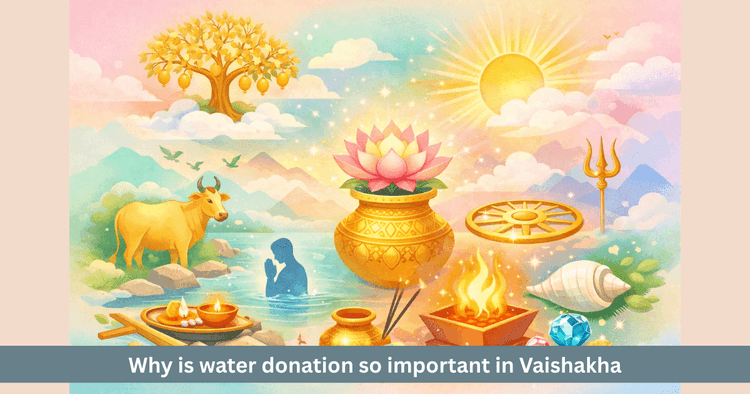
Table of Contents
In the Hindu panchang the Vaishakha month is regarded as highly meritorious and as a dharma sadhaka period. The scriptures say that just as a mother fulfils the wishes of her children, the month of Vaishakha too is capable of fulfilling the worthy desires of sincere seekers. This month is described as especially dear to Lord Vishnu and it is considered the essence of dharma, yajna, noble deeds and tapasya.
According to the Skanda Purana the place of Vaishakha is as elevated as that of Veda vidya among all forms of knowledge, of Pranava among mantras, of Kalpa vriksha among trees, of Surya Deva among radiant forces, of Sudarshana chakra among weapons, of gold among metals, of Shiva among Vaishnavas and of the Kaustubha jewel among precious stones. In this month those who perform bath before sunrise are especially counted among the dear ones of Narayana.
The scriptures also say that just as there is no other yuga like Satya yuga, no charity equal to water donation, no prosperity like farming, no tapasya like fasting, no happiness like giving, no virtue like compassion and forgiveness, no superiority beyond good health, in the same way there is no God like Vishnu.
Why is water donation so important in Vaishakha
The foremost practice of Vaishakha is considered to be jala daana, the offering of water. In the heat of summer when a little shade and cool water feel like a return to life for the thirsty, arranging water becomes an act of great merit.
During this month the following actions are regarded as particularly fruitful.
- Arranging pots filled with water and public water points along the roads for travellers.
- Planting shade giving trees and caring for them.
- Offering umbrellas, footwear and fans to those in need.
- Providing anna daana, food for the hungry and organizing free rest houses or dharmashalas for travellers.
Through such service a person receives benefits not only in this life but also in the world beyond. The Skanda Purana explains that those who arrange such facilities in Vaishakha obtain happiness, honour and the joy of children in this world and in the world after death they are protected from lower regions and are guided towards higher lokas.
Special forms of charity in Vaishakha and their fruits
Various kinds of charity are recommended in Vaishakha, each with specific results.
- One who donates garments finds that many difficulties at the time of birth and death become gentler.
- One who gives mats or seats receives the comfort of rest and stability.
- One who donates beds and bedding gains the blessing of restful sleep and mental peace.
- One who offers clean clothes and light garments to Brahmins is said to obtain increase in life span and radiance.
- One who gives flowers enjoys enhanced beauty and comforts in life.
- One who donates chandan and fragrant substances experiences more happiness and coolness in his life.
- One who creates gardens, wells, ponds and mandapas receives the joy of noble children and enduring merit.
- One who offers for the Pitras materials like kasturi, camphor, fragrant items and pots filled with scented water gains relief from various forms of suffering in the next world.
Along with these, charity of underground vegetables, fruits, plain vegetables, salt, jaggery, edible leaves and water during this month is said to bring endless benefits.
Actions to be avoided during Vaishakha
The Skanda Purana gives clear instructions to refrain from certain behaviours in Vaishakha. These eight types of avoidances are mentioned.
- Applying oil on the body in excess.
- Bathing only at home and neglecting holy places and sacred bathing.
- Sleeping for long periods during the daytime.
- Eating food in glass vessels.
- Sleeping on water beds or beds filled with water.
- Consuming unnecessary and inappropriate types of food.
- Eating more than once a day in an excessive manner.
- Taking heavy meals late in the night.
Those who observe these restrictions and at the same time engage in vows, donations and baths in Vaishakha strengthen the fruit of this sacred month.
Vaishakha baths and the significance of the seven Gangas
Bathing during Vaishakha in the early hours before sunrise is counted as highly purifying. It is said that if a person bathes carefully in any one of the seven sacred rivers during Vaishakha, he can be freed even from the Pancha patakas, the five great sins.
The seven holy rivers mentioned are as follows.
- Ganga
- Buddha Ganga, also known as Godavari
- Kalindi, that is Yamuna
- Sarasvati
- Kaveri
- Narmada
- Veni
Those who cannot reach these rivers may still bathe at home in clean water while mentally remembering these rivers.
Mantras recited during Vaishakha bathing
During the Vaishakha bath a special prayer is addressed to Madhusudana and Madhava.
“Madhusudana devesha Vaishakhe meshage ravai
pratah snaanam karishyaami nirvighnam kuru Madhava.”
The meaning is that O Madhusudana, Lord of the devas, Madhava, when Surya is in Mesha rashi, I am undertaking the morning bath of Vaishakha. Kindly make this bath free from obstacles and bestow your grace.
After the bath, while offering arghya to the Sun, one meditates as follows.
“Vaishakhe meshage bhaanau praatah snaana paraayanah
arghyam teham pradadasmi gruhaana Madhusudana.”
This means that in the month of Vaishakha, with the sun in Mesha rashi, after the morning bath this arghya is offered to Madhusudana with reverence and he is requested to accept it.
The story of King Kirtiman and the spread of dharma
The Skanda Purana narrates the story of King Kirtiman of Kashipura. Once he went to the forest for hunting and decided to visit the ashram of Sage Vasishtha. There he saw the disciples of the sage serving travellers by offering shade, fruits and cool water. They made no distinction between ordinary people and kings and served everyone with equal devotion.
When the king asked them why they were performing this service, they remained humbly silent. Later Sage Vasishtha explained to the king the greatness of Vaishakha and told him how water donation, food donation and providing shade and rest in this month bring immense merit.
Moved by this, King Kirtiman ordered that throughout his kingdom there should be arrangements during Vaishakha for public water points, tree plantations, rest houses, food distribution and facilities for travellers. As a result, in his kingdom the rate of death, especially among Brahmins, reduced greatly and even those few who died in Vaishakha appeared worthy of going directly towards Vaikuntha.
It is said that seeing this situation Yamaraja complained to Brahma that the normal balance of births and deaths in Kirtiman’s kingdom was disturbed and that the difference between heaven and hell was becoming less visible because most souls from that region were rising upwards.
Lord Vishnu’s special love for the Vaishakha devotee
Brahma then went with Yamaraja to the Kshira Sagara to request Lord Vishnu to intervene. Lord Vishnu smiled and replied that he could give up his Shrivatsa mark, the Kaustubha jewel, the Vijayanti mala, Shveta Dvipa, Vaikuntha, Kshira Sagara, Shesha naga, Garuda or even Goddess Lakshmi but he would never abandon his Vaishakha devotee King Kirtiman.
The Lord added that he desired to multiply examples like that of the king and to extend such devotees’ lives for thousands of years. He also instructed Yamaraja not to interfere with the observance of the Mahatmya of Vaishakha.
however in order to preserve balance, Lord Vishnu granted a special arrangement in favour of Yamaraja. He declared that devotees of Vaishakha should perform a special puja for Yamaraja during the first half of the month before Purnima and should offer in charity a pot full of water, curd and anna.
Special worship of Yamaraja in Vaishakha
Those who observe Vaishakha are thus advised to honour Yamaraja in the first half of the month. Only after offering this special worship should they proceed with rites for the Pitras, Gurus and Lord Vishnu.
In this worship Brahmins are given cool water, curd, anna, fruits, tambula, proper dakshina, a copper vessel and an idol of Maha Vishnu. In this way harmony is maintained between the justice of Yamaraja and the path of mercy and devotion emphasised in Vaishakha.
Akshaya Tritiya and the unending merit of Vaishakha
The Skanda Purana also speaks of Akshaya Tritiya in connection with Vaishakha, through the story of King Purushaya of Panchala desha. He was virtuous and noble, yet due to past karma a famine struck his kingdom, neighbouring rulers defeated him and he was driven into exile.
Two sages then explained to him that in his previous birth he had been a cruel hunter but by chance he had once shown two old and thirsty travellers the way to a water source. Due to that single act of kindness he was born as a king in this life, yet because he did not engage in charity in Vaishakha he now faced difficulties.
The sages told him that the next day was Vaishakha Shukla Tritiya, known as Akshaya Tritiya. If he bathed early in the morning, worshipped Lakshmipati Vishnu and performed acts such as water donation and feeding the hungry, his fortunes could change. The king followed their advice. From Akshaya Tritiya till Amavasya he performed many charities, arranged water facilities and food for those in need. In time he regained his lost kingdom and thereafter every year he made extensive donations throughout the month of Vaishakha. Eventually he became a great devotee of Lord Vishnu, obtained his vision and attained sayujya, union with the Lord.
Special value of Ekadashi and Amavasya in Vaishakha
Every day of Vaishakha has its worth but Ekadashi and Amavasya are given special emphasis.
On Vaishakha Ekadashi, acts such as bath, charity, homa, deva puja, japa, reciting stotras and listening to sacred kathas are said to give quick results. Those who suffer from illness, poverty or mental distress can find relief if they perform virtuous deeds on this Ekadashi with devotion. People in different life situations such as men, women, widows, the elderly, children and youth can all use this day’s merit to lighten their sorrows.
Similarly, the Amavasya of Vaishakha is considered powerful for Pitru puja. On this day shraddha, pinda daana and tila tarpana are performed with special care. Those who follow these rites for their ancestors in Vaishakha Amavasya are believed to receive the blessings of the Pitras and peace in their family line.
Key points of Vaishakha month
| Topic | Details |
|---|---|
| Nature of Vaishakha | Dharma sadhaka, dear to Vishnu, month of tapas and daana |
| Main practices | Pre sunrise bath, water donation, food charity, shade giving |
| Important charities | Garments, bedding, mats, chandan, flowers, water and food |
| Main avoidances | Excess oil, daytime sleep, heavy night meals and others |
| Sacred bathing sites | Seven Gangas and remembrance of holy rivers |
| Core mantras | Invocations to Madhusudana and Madhava at bath and arghya |
| Principal stories | King Kirtiman, King Purushaya and Akshaya Tritiya |
| Main observances | Vaishakha baths, Akshaya Tritiya, Ekadashi, Amavasya |
| Pitru rites | Shraddha, pinda daana and tila tarpana on Amavasya |
Life guidance from the month of Vaishakha
The month of Vaishakha is not just the second month in the calendar. It is a meeting of dharma, charity and tapasya. When small acts such as offering water, planting trees, arranging resting places and feeding the hungry are undertaken in this month, their fruits are said to endure for a very long time.
One who observes bathing, charity, japa, worship and Pitru rites during this month with sincerity can feel a lightness and protection not only in this life but also in the onward journey. Vaishakha teaches that in the heat of the world, to bring coolness and relief to others is among the highest forms of dharma.
Common questions about Vaishakha month
Why is the month of Vaishakha regarded as so meritorious?
Vaishakha is called the essence of dharma, yajna, noble action and tapasya and is described as very dear to Lord Vishnu. Acts such as bathing, water donation and charity during this month are believed to yield multiplied results.
What is the special significance of water donation and tree planting in Vaishakha?
In the heat of summer arranging water, shade and rest for the thirsty and tired is seen as life saving service. The Skanda Purana states that such deeds bring great merit in both this world and the next.
Which actions should be avoided during Vaishakha?
In this month it is advised to avoid excess oil massage, sleeping during the day, eating heavy food late at night, using glass vessels for meals, sleeping on water beds and making a habit of overeating.
Why is Akshaya Tritiya in Vaishakha considered especially important?
On Vaishakha Shukla Tritiya, Akshaya Tritiya, bathing, worship of Vishnu, water donation and food charity are said to create merit that is akshaya, inexhaustible. The story of King Purushaya shows how charity on this day can change the course of a life.
Which observances are best on Vaishakha Ekadashi and Amavasya?
On Vaishakha Ekadashi, bath, daana, japa, stotra recitation and listening to sacred kathas are highly recommended. On Vaishakha Amavasya, Pitru puja through shraddha, pinda daana and tila tarpana is regarded as very effective for receiving ancestral blessings.
Get your accurate Kundali
Generate KundaliDid you like it?
Author
Pt. Amitabh Sharma (56 Years)
Experience: 20
Consults About: Family Planning, Career
Clients In: Punjab, Haryana, Delhi
Share this article with friends and family
WELCOME TO
ZODIAQ
Right Decisions at the right time with ZODIAQ
