Meaning Of Dakshinayan
By Aparna Patni
Learn how Dakshinayan, the night of the gods, influences karma, devotion and detachment during this celestial shift
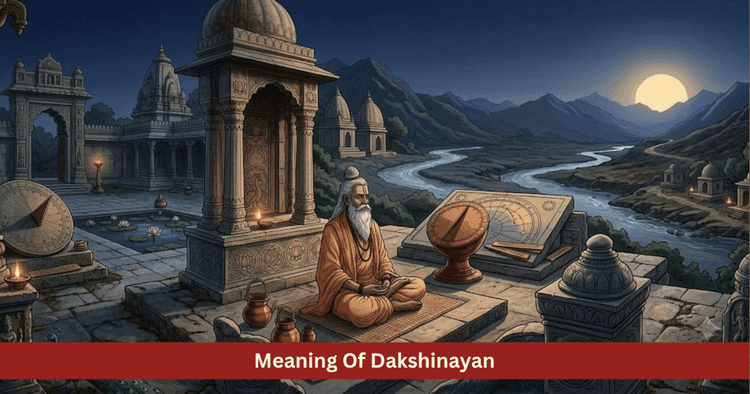
Table of Contents
Date, signals and main astrological basis
| Aspect | Description |
|---|---|
| Topic | Beginning of Dakshinayan and its spiritual and astrological significance |
| Celestial basis | The Sun entering Karka, meaning Cancer |
| Related month | Middle of Ashadha |
| End of Uttarayan | With the Sun's entry into Cancer |
| Beginning of Dakshinayan | Start of the night of the gods |
| Main feeling | Inwardness, detachment, spiritual practice and reflection on karma |
| Recommended direction | Japa meaning sacred repetition, meditation, self reflection, restraint and service |
| Subtle message | Calming of outer radiance and awakening of the inner lamp |
What is considered especially auspicious in Dakshinayan
- Think calmly about the direction of life
- Keep fixed time for japa, meditation and prayer
- Bring restraint into speech, food and conduct
- Review incomplete duties and unresolved relationships
- Practice reducing greed, anger and ego
- Deepen reverence for teachers, sacred wisdom and spiritual practice
Which themes become more active in Dakshinayan
| Area | Possible effect |
|---|---|
| Mind | Depth, sensitivity and self reflection |
| Karma | Review of past actions and decisions |
| Spirituality | Increase in devotion and detachment |
| Ego | Need for control and humility |
| Rhythm of life | Patience, waiting and maturity |
| Relationships | Experience of duty and karmic result |
When the Sun's movement opens the inner path
In the middle of Ashadha, the Sun leaves Mithuna, meaning Gemini and enters Karka, meaning Cancer. With this, Uttarayan is considered complete and Dakshinayan begins. This is not only a celestial event but a profound shift of time carrying deep meaning in Indian spiritual tradition. The scriptures describe Uttarayan as the day of the gods and Dakshinayan as the night of the gods. Within this symbol lie the secrets of time, consciousness and karma.
When this subtle shift from day to night takes place, the current of life also begins to change slowly. The energy that was earlier active in achievement, goals, movement and expansion starts returning inward. Dakshinayan reminds human beings that growth does not mean only moving forward. At times, pausing and looking at one's own mind, karma and tendencies is equally necessary. That is why this period is regarded as especially sacred for spiritual practice and inner reflection.
What is Dakshinayan
Dakshinayan is the phase of the Sun that is traditionally considered to begin with the Sun's entry into Cancer. In the Vedic view, the year is understood in 2 parts, Uttarayan and Dakshinayan. Uttarayan is linked with outer light, rise, active karma and an awakened divine direction, while Dakshinayan is understood through inward practice, patience, austerity, devotion and self examination. For this reason, Dakshinayan does not mean obstruction. It means a change of direction.
Calling it the night of the gods also expresses this deeper truth. At night, outer noise becomes less and the inner voice is heard more clearly. In the same way, during Dakshinayan the rush of the world may feel slower but the inner journey becomes more possible. This is the period when a person may step beyond outer layers and come face to face with the real questions of life.
What is the real meaning of the night of the gods
The night of the gods does not mean darkness or inauspiciousness. It means subtlety, silence, preservation and insight. In the day, the visible world is dominant, while at night the unseen becomes deeper. In the same way, in Uttarayan outer actions may become more visible but in Dakshinayan the intention behind those actions, the samskara meaning inner impression of karma and the direction of the soul become more important.
This idea is deeply beautiful because it teaches that not every light comes from outside. Some light must be kindled within. When the scriptures call Dakshinayan the night of the gods, they also indicate that this is the time when the seeker must rely more on inner faith than on outer support. This is the phase that deepens devotion and can turn detachment from a mere thought into a living experience.
Subtle signs of the night of the gods
- Slowing of outer movement
- Greater clarity of inner consciousness
- Increase in the importance of silence and spiritual practice
- Time to review one's karma
- Testing of the depth of faith
What changes when the Sun enters Cancer
Cancer is a water sign and is associated with mind, emotion, nourishment, protection and inner experience. The Sun is the significator of soul strength, radiance, vital force, leadership and ego. When the Sun enters Cancer, the tone of its energy may be experienced as softer, more sensitive and more inward. That is why in this period the psychological field of a person may become more receptive.
When the fire of the Sun enters a water sign, the quality of willpower also changes. The same energy that was moving toward victory and expansion may now turn toward self restraint and emotional depth. This shift has also been understood as the calming of ego. Dakshinayan seeks to make a person humble. It teaches that brilliance is beautiful only when compassion lives within it. In the same way, willpower becomes sacred only when it is joined with dharma and devotion.
The changing planetary impact on karma in Dakshinayan
From an astrological point of view, Dakshinayan is regarded as a period that makes the subtle results of karma more visible. This does not mean that planets suddenly begin to punish. Its deeper meaning is that as the rhythm of life becomes slower, a person becomes more aware of the consequences of one's own actions. Old decisions, unfinished duties, burdens in relationships, emotional reactions and repeating life patterns may come forward more clearly.
That is why this period is considered suitable for understanding and repaying karmic debts. If someone has neglected duty, created imbalance in relationships, spoken harshly or kept inner faults hidden, Dakshinayan offers the chance to see them. This is its blessing. It does not only show the result. It also gives the chance to improve. In this sense, Dakshinayan is not a period of oppression but of purification.
Which karmic themes deserve attention in Dakshinayan
- Unfinished duties
- Imbalance in relationships
- Harshness in speech and conduct
- Mindful reflection on past mistakes
- Repeating patterns of the mind
- Desire for atonement and correction
Is this a time for the calming of negative forces
From the traditional point of view, Dakshinayan is considered a period for quieting the tendencies that pull a human being toward adharma meaning imbalance, ego, laziness, desire, anger and confusion. It is called a time for the subduing of negative forces but this should not be understood through fear. Here one meaning of negative forces is the inner tendencies that make a person unstable. Dakshinayan inspires one to see them, accept them and regulate them through spiritual discipline.
When spiritual practice increases, the dark corners of the mind begin to show themselves. The faults hidden there start becoming visible. This is the moment when a person either runs away from them or bravely decides to transform them. The true yoga of Dakshinayan lies here. It teaches us to recognize the inner enemy before the outer one. That is why this period is considered highly useful for japa, meditation, silence, fasting and guidance from a teacher.
Why are detachment and devotion considered easier now
When outer energy slows somewhat and the glare of life reduces, a natural emptiness may arise in the mind. If this emptiness turns into dissatisfaction, a person may drift. But if that same emptiness turns into a search for the Divine, it becomes the doorway to detachment and devotion. Dakshinayan is regarded as the time of this transformation.
Detachment does not mean hatred for the world. It means seeing the world in its true nature. It means recognizing what is changing as changing, not expecting eternal joy from what is temporary and gradually turning toward what is timeless. Dakshinayan nourishes this understanding. Devotion also becomes deeper for the same reason, because when a person sees the limits of one's own strength, surrender to the Divine becomes more sincere.
How to deepen detachment and devotion in this period
| Practice | Purpose |
|---|---|
| Japa | To make the mind focused and pure |
| Meditation | To calm reactions |
| Silence | To discipline speech and thought |
| Scriptural reflection | To understand the higher meaning of life |
| Service | To soften the ego |
| Prayer | To deepen trust in the Divine |
Is Dakshinayan a time to fear
No, Dakshinayan should be seen with understanding, not fear. This period may feel intense because it introduces us to our own inner world. Yet that very meeting may become the beginning of real transformation. The person who depends only on outer success may find this slowing uncomfortable. But for one who seeks inner growth, this time may become invaluable.
Dakshinayan teaches that darkness is not always a symbol of destruction. Many times the same darkness prepares a seed to become a sprout. Night gives rest and renewal. In the same way, this phase known as the night of the gods offers a new ground for rebalancing, atonement, purification and devotion. Therefore it should be lived not with anxiety but with reverence.
Which practices are considered best in this time
During Dakshinayan, japa, meditation, prayer, fasting, sattvic food, service, charity and remembrance of teachers are given special importance. This is a time not for outer display but for small yet regular spiritual discipline. If a person can sit in silence each day for some time, review the actions of the day and remember the name of the Divine, that practice itself may slowly change the direction of life.
It is also considered appropriate that during this time a person works on one inner fault. It may be anger, falsehood, laziness, lack of restraint, harsh speech or excessive expectation. The spiritual practice of Dakshinayan becomes fruitful when it does not remain limited to ritual but enters conduct. That is the real way to light the lamp within.
Simple rules to follow in Dakshinayan
- Offer respect to the Sun every day
- Meditate in the morning or evening
- Take sattvic and balanced food
- Remember teachers, deities and ancestors
- Review your actions daily
- Take a vow to reduce one inner fault
Where even night becomes spiritual practice
The beginning of Dakshinayan reminds us that not every change in life brings loss. Many times it also brings depth. The Sun entering Cancer, the beginning of the night of the gods, the calming of ego and the review of karma together may lead a person toward a new maturity. This period says that when outer light becomes softer, the inner lamp must not be allowed to go out. That is spiritual practice. That is faith. That is the real light of life.
No matter how long the night may seem, the lamp of sadhana meaning spiritual discipline gives meaning to its darkness. Dakshinayan is the name of that meaningful night. The person who corrects karma, becomes humble in mind and deepens faith in the Divine during this time may find that this phase is not an obstacle but a sacred opportunity for profound transformation.
FAQ
What is Dakshinayan
Dakshinayan is the period beginning with the Sun's entry into Cancer and in Vedic tradition it is known as the night of the gods.
When does Dakshinayan begin
Dakshinayan is considered to begin in the middle of Ashadha when the Sun enters Cancer.
Why is Dakshinayan called the night of the gods
Because this period is associated more with inward spiritual practice, silence, patience and inner consciousness than outer activity.
Is Dakshinayan a time to repay karmic debts
From the traditional astrological perspective, this period is considered especially useful for reviewing old karma, making corrections and seeking atonement.
What is considered auspicious during Dakshinayan
Japa, meditation, fasting, sattvic food, service, prayer, remembrance of teachers and self reflection are considered especially auspicious in this time.
Get your accurate Kundali
Generate KundaliDid you like it?
Author

Aparna Patni (63)
Experience: 20
Consults About: Family Planning, Career
Clients In: Punjab, Haryana, Delhi
Share this article with friends and family
WELCOME TO
ZODIAQ
Right Decisions at the right time with ZODIAQ
