Remedy When Akhand Jyoti Goes Out
By Pt. Sanjeev Sharma
Relighting, prayaschitta and safety rules for Navratri
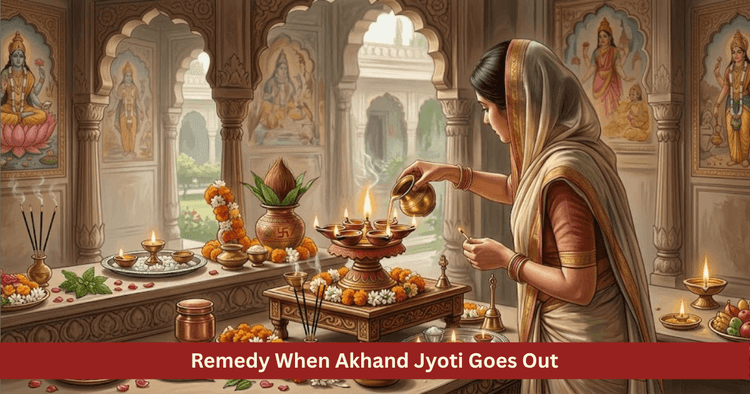
Table of Contents
The Flame Has Gone Out, Not Faith
Lighting an Akhand Jyoti during Ashwin Navratri is regarded as a deeply meaningful resolve of Devi worship. A flame that continues for nine days is not merely a lamp for the devotee. It becomes a symbol of Devi consciousness, hope, discipline and spiritual light in the home.
For this reason when the Akhand Jyoti goes out because of a strong current of air, lack of oil or ghee, a wick that has completely burned, an unstable lamp or another unintentional cause the mind may become fearful. Many people begin to consider it a sign of misfortune. Yet the extinguishing of a lamp does not always indicate something inauspicious. It often happens because of a natural physical reason.
In Devi worship faith, purity of conduct and the resolve receive primary importance. Therefore instead of becoming frightened it is considered appropriate to relight the lamp calmly, offer a prayer for forgiveness and continue the worship.
What Should Be Done Immediately?
If the Akhand Jyoti goes out first consider safety related to fire and oil. The lamp may remain hot. It should not be lifted or filled with oil immediately by hand. Continue only when the vessel can be handled safely.
| Order | What to do |
|---|---|
| 1 | Calm the mind and remember Goddess Durga |
| 2 | Light a small witness lamp near the main lamp |
| 3 | Do not touch the main lamp until it is safe |
| 4 | Carefully remove the burned or partly burned wick |
| 5 | Clean the vessel and add pure ghee or suitable oil |
| 6 | Place a new and sufficiently long wick |
| 7 | Relight the Akhand Jyoti from the witness lamp |
| 8 | Pray to the Mother for forgiveness |
| 9 | Repeat the resolve and continue worship |
| 10 | Observe the flame for some time |
If a witness lamp is already burning it is considered auspicious in many household traditions to relight the Akhand Jyoti from that flame. If no witness lamp was kept a new small lamp may be lit first and then used to relight the main flame.
Is an Extinguished Akhand Jyoti Inauspicious?
Different regions and families hold different beliefs about the extinguishing of an Akhand Jyoti. Some consider it an interruption in the resolve. Some traditions regard it as an ordinary event related to the lamp. It is not appropriate to impose one view as a compulsory rule upon every family.
Common reasons for the flame going out include the following.
• Oil or ghee has finished
• The wick has become too short
• The wick has leaned to one side
• Moisture or impurity has entered the lamp
• Strong wind or air from a fan
• The lamp has been placed on an unstable surface
• The wick is too thick for the amount of oil
• Soot has collected inside the vessel
Connecting the extinguishing of the flame with an unavoidable future misfortune without understanding these causes can create unnecessary fear. From the religious view awareness and faith are more useful than fear.
Spiritual Meaning of the Akhand Jyoti
The flame of a lamp is regarded in Indian tradition as a symbol of Agni Tattva, knowledge and consciousness. When a devotee lights an Akhand Jyoti the devotee takes a resolve to transform ignorance, laziness, fear and negativity into light.
Akhand does not only mean that the flame must burn every moment without any physical interruption. It also carries the deeper meaning of continuous remembrance. If the flame goes out because of an unintentional reason and the devotee relights it calmly and continues worship the feeling of the resolve does not disappear.
The lamp flame can be understood at three levels.
| Level | Symbolic meaning |
|---|---|
| Outer flame | Light and purity in the worship area |
| Steady flame | Concentration and discipline of the mind |
| Relit flame | Correction and faith after a mistake |
From this view an extinguished flame can become an opportunity for care and self remembrance and not only a cause of fear.
Simple Method to Relight the Lamp
Arrange the worship space before relighting the Akhand Jyoti. If oil or ghee has spilled clean the floor and the worship platform. Remove the burned wick respectfully. Do not leave it around the worship area.
Simple Relighting Method
-
Fold the hands and remember Goddess Durga
-
Light a small lamp and place it as a witness lamp
-
Allow the vessel of the Akhand Jyoti to cool
-
Remove the partly burned wick
-
Wipe the vessel with a clean cloth
-
Add pure ghee or sesame oil
-
Place a new long cotton wick
-
Relight the Akhand Jyoti from the witness lamp
-
Fold the hands and offer a prayer for forgiveness
-
Repeat the resolve after chanting a Durga mantra
Traditions differ regarding the reuse of a burned or partly burned wick. Many worship methods advise placing a new wick so that the flame remains steady and the old wick does not create smoke.
Which Mantra Can Be Chanted?
A simple and devoted mantra may be chanted while relighting the Akhand Jyoti. Pronunciation should be clear and the mind should hold forgiveness and surrender.
Durga Mantra
Om Dum Durgayai Namah
Its meaning is salutations to Goddess Durga. The mantra remembers protection, courage and surrender to the Devi.
Navarna Mantra
Om Aim Hreem Kleem Chamundayai Vichche
This mantra is associated with the power of Devi Chamunda. Aim carries the seed feeling of knowledge, Hreem represents Shakti and Kleem is connected with attraction and concentration of consciousness. The Navarna Mantra is better practised within a guru tradition and with suitable pronunciation.
Prayer for Forgiveness
Aparadha Sahasrani Kriyante Ahar Nisham Maya.
Daso Ayam Iti Mam Matva Kshamasva Parameshwari.
Its simple meaning is that many mistakes are committed day and night. The devotee considers the self a servant of the Devi and asks for forgiveness.
If a person does not know the correct pronunciation of Sanskrit mantras prayer may also be offered in simple Hindi. A prayer spoken with sincerity is an important part of worship.
Is It Necessary to Repeat the Resolve?
If the flame has gone out unintentionally it is not necessary to consider the entire resolve broken. Even so repeating the resolve after relighting the lamp is considered auspicious and helps steady the mind.
The following feelings may be included in the resolve.
• A resolve to complete Navratri worship with faith
• Forgiveness and surrender before the Devi
• A prayer for peace, health and good sense in the home
• A feeling of offering grains or clothes to someone in need
• An effort to remain away from anger, falsehood and criticism
A resolve should not become a bargain. Saying that a certain object must be received because the flame went out weakens the spirit of worship. A resolve is a method of self discipline and devotion.
Which Prayaschitta Remedies Can Be Performed?
Prayaschitta after the flame goes out does not mean a difficult act performed out of fear. Prayaschitta means accepting a mistake, continuing worship with pure feeling and improving personal conduct.
According to ability the following sattvic remedies may be performed.
• Offer a prayer for forgiveness before Goddess Durga
• Chant a Durga mantra 11, 21 or 108 times
• Read a chapter of the Durga Saptashati
• Donate grains to a needy person
• Offer fruits, food or a useful object to a girl
• Clean the temple or home worship area
• Serve an elder, sick person or helpless person
• Carefully protect the flame during the remaining days of Navratri
The purpose of donation should be service and humility and not removal of fear. It is not proper for a priest, astrologer or sadhaka to pressure someone into expensive rituals by creating fear.
How Can the Akhand Jyoti Be Kept Safe?
Keeping an Akhand Jyoti burning for nine days requires practical care along with devotion. The lamp should be placed where there is no direct flow of air but it should also not be kept in a completely closed and unsafe location.
Rules for Caring for the Lamp
| Precaution | Reason |
|---|---|
| Keep the lamp on a stable platform | Reduces the risk of falling |
| Keep it away from a fan or open window | Wind can extinguish the flame |
| Check the amount of ghee or oil | The lamp can go out when fuel ends |
| Observe the wick | A bent or short wick weakens the flame |
| Keep cloth and paper away | Reduces the risk of spreading fire |
| Keep it away from children and pets | Prevents accidents |
| Do not leave it unattended in an unsafe place | Maintains fire safety |
Responsibility for caring for the Akhand Jyoti may be shared among family members. If no one can remain present continuously the family may follow a tradition of maintaining a small and stable flame. The purpose of worship is not to place the home at risk.
What Is the Difference Between Ghee and Oil?
Tradition allows lamps to be lit with both ghee and sesame oil. The flame of ghee is regarded as sattvic and auspicious for worship. Sesame oil is connected with peace of Shani, ancestral remembrance and protection from negativity.
The choice of fuel may depend on family tradition, availability and the design of the lamp. It is not appropriate to mix ghee and oil in the same vessel without understanding the family practice. Whatever fuel is used should be clean and safe.
| Fuel | General religious feeling |
|---|---|
| Cow ghee | Sattvic quality, purity and Devi worship |
| Sesame oil | Peace of Shani, ancestral remembrance and protection |
| Mustard oil | Obstacle removal and Shakti feeling in some traditions |
| Mixed fuel | Do not use without family tradition |
The most important point here is fire safety. Oil or ghee should not be allowed to spill outside the lamp.
What Should Be Done If the Flame Goes Out Repeatedly?
If the flame goes out repeatedly it is not appropriate to consider it only an inauspicious sign. First examine the physical causes. The size of the wick, depth of the lamp, air movement or quality of fuel may be responsible.
Pay attention to the following points.
• Is the wick too thick or too thin
• Is the lamp placed on a level surface
• Is air from a fan reaching the flame
• Is the ghee becoming too cold and solid
• Is there water or impurity in the oil
• Has soot collected inside the vessel
• Is the wick being straightened when required
In spiritual practice discernment is also considered part of Devi grace. Understanding a physical cause and correcting it is not an insult to worship. It is a form of responsibility toward worship.
What Should Be Done If the Lamp Falls Over?
If the lamp falls over first check the safety of the person and the home. If oil or ghee has spilled stay away from the source of fire. Turn off a fan or electrical switch when appropriate and take immediate safety measures if fire may spread.
After the place becomes safe clean the worship area. Arrange the lamp, wick and fuel again. A new lamp may be lit after asking the Mother for forgiveness. It is not appropriate to consider this situation an unavoidable sign of misfortune.
Why Does Fear Increase Psychologically?
During Navratri a person is already connected with religious feeling, resolve and expectation. The Akhand Jyoti becomes a symbol of continuity for nine days. When the flame goes out the mind may feel that the entire resolve has broken. This thought creates fear.
When the situation is observed calmly it becomes clear that a lamp depends on air, fuel and the wick. Faith should not depend only on the flame. Continuity of worship is also seen in the mind, speech and conduct.
Relighting the lamp teaches the mind that practice can begin again after a mistake or interruption. This is an inner message of Navratri. To awaken light again after darkness is itself a form of sadhana.
What Should Be Understood Astrologically?
A lamp represents the Agni Tattva. In Vedic astrology Agni Tattva is associated with Surya and Mangala. Chandra represents the mind and emotions. The extinguishing of a lamp during Navratri may disturb the mind but it cannot be treated as proof of a particular defect in a horoscope.
It is not proper to declare planetary affliction, ancestral affliction or the anger of the Devi on the basis of one event. Astrological analysis requires the birth chart, planetary periods, transits, ascendant, Moon sign and actual life circumstances to be considered together.
For a sadhaka the astrological meaning of this event may be to pay attention to balance among fire, mind and discipline.
| Symbol | Astrological feeling |
|---|---|
| Fire | Surya, Mangala and consciousness |
| Oil or ghee | Life force and nourishment |
| Wick | Resolve and the medium of practice |
| Flame | Knowledge, prayer and awakening |
| Extinguishing | Care, pause or physical cause |
| Relighting | Correction, patience and faith |
This interpretation is meant for spiritual reflection. It should not become a basis for fear or a fixed prediction.
Which Mistakes Should Be Avoided?
After an Akhand Jyoti goes out some people make mistakes because of panic. Someone lifts the lamp immediately. Someone pours too much oil into it. Someone places a new wick over the burned wick. Some people stop worship altogether because of fear.
The following mistakes should be avoided.
• Do not lift a hot lamp immediately
• Do not suddenly pour a large amount of oil or ghee into a burning lamp
• Do not push a new wick over a burned wick
• Do not keep cloth, paper or dry material near the lamp
• Do not immediately believe messages that spread fear
• Do not stop worship or consider the self guilty
• Do not perform expensive prayaschitta beyond financial capacity
• Do not treat fire safety as less important than religious rules
How Should the Akhand Jyoti Be Completed After Navratri?
After Navratri the family tradition regarding the Akhand Jyoti should be followed. If the lamp is still burning it is not considered appropriate in many traditions to extinguish it by blowing or forcing it out. Many families allow it to become calm naturally. Some families formally complete the flame after Navami or Dashami worship.
At the time of completion an offering of food, flowers and prayer may be made to the Devi. Keep the remaining lamp material in a clean place. Ash or the burned wick should be disposed of according to family tradition instead of being thrown into ordinary waste.
Keep Faith Rather Than Fear in Worship
The purpose of the Akhand Jyoti is not to create fear. It is a means of maintaining discipline, light and remembrance of the Devi in the home. If it goes out the devotee should relight it calmly instead of blaming Goddess Durga or considering the self inauspicious.
The value of devotion is not decided by how long the flame burned on a particular day. It is decided by how truthful, compassionate and disciplined the mind remained. If the lamp went out unintentionally and the devotee sincerely asked for forgiveness, placed a new wick, relit the flame and continued worship the Navratri resolve remains alive in its essential feeling.
Let the Light Be Lit Again
The extinguishing of an Akhand Jyoti may be a temporary interruption but the light of faith is much deeper. Wind can extinguish the flame, fuel can end and the wick can burn. Understanding these physical causes is necessary.
It is also important to remember that Devi sadhana does not live only in the flame of a lamp. It also appears in truthful speech, service, restraint, compassion and noble action. When a devotee calmly relights the lamp the devotee does not light only the vessel. The inner faith also awakens again.
FAQ
What should be done if the Akhand Jyoti goes out during Ashwin Navratri?
First calm the mind, light a small witness lamp, clean the lamp safely, add a new wick with ghee or oil and relight the flame. Then ask the Mother for forgiveness.
Is an extinguished Akhand Jyoti an inauspicious sign?
The extinguishing of the Akhand Jyoti is not always inauspicious. Ordinary physical causes such as wind, lack of oil, a bent wick or the position of the lamp may be responsible.
Which mantra should be recited after the Akhand Jyoti goes out?
The mantra Om Dum Durgayai Namah may be chanted. The Navarna Mantra or a simple prayer for forgiveness may also be offered with devotion.
Can the Akhand Jyoti be relit with the burned wick?
Many traditions advise removing a burned or partly burned wick and placing a new one. This helps keep the flame steady and reduces smoke.
How can the Akhand Jyoti be kept safely for nine days?
Keep the lamp on a stable surface away from strong air and flammable objects, check the amount of ghee or oil and keep a safe distance from children and pets.
Get your accurate Kundali
Generate KundaliDid you like it?
Author
Pt. Sanjeev Sharma (63)
Experience: 20
Consults About: Family Planning, Career
Clients In: Punjab, Haryana, Delhi
Share this article with friends and family
WELCOME TO
ZODIAQ
Right Decisions at the right time with ZODIAQ
