Prohibited Acts in Ashwin Month
By Pt. Abhishek Sharma
Food and conduct rules for Pitru Paksha and Navratri
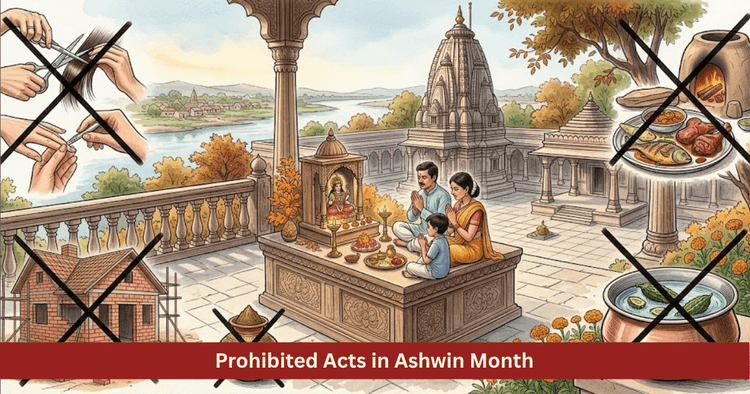
Table of Contents
The Importance of Restraint in a Sacred Month
Ashwin month is a significant period in the Hindu calendar because it includes Pitru Paksha, Sharadiya Navratri, Vijayadashami and Sharad Purnima. On one side this month offers an opportunity to express gratitude to the ancestors. On the other side it opens a path of self purification through worship of Devi Shakti.
For this reason many rules are described for food, conduct and daily routine during Ashwin month. Some rules are followed throughout the month. Some belong only to Pitru Paksha. Some are connected with Navratri fasting and the nine days of worship. It is not proper to treat all of them as one rigid list.
Rules may differ according to region, family, sampradaya, health and fasting tradition. Therefore every food or daily activity should not be described as universally forbidden without understanding the context. The central feeling of Ashwin month is sattvic living, restraint, service and a peaceful mind.
Which Periods Should Be Observed?
Since Ashwin includes different festivals the rules should be understood according to the period. Pitru Paksha carries the feeling of Shraddha and tarpan for the ancestors. Navratri gives priority to Devi worship and fasting. Vijayadashami celebrates dharma and victory.
| Period | Main feeling | Main restraint |
|---|---|---|
| Ashwin Krishna Paksha | Ancestral remembrance and tarpan | Tamasic food, conflict and display |
| Pitru Tithi | Shraddha and gratitude | Distance from auspicious celebrations |
| Sharadiya Navratri | Devi worship and fasting | Meat, alcohol and food against the fast |
| Ashtami and Navami | Shakti worship and honouring girls | Anger, abusive speech and lack of restraint |
| Vijayadashami | Victory of dharma and renewed energy | Ego, violence and unnecessary conflict |
| Sharad Purnima | Lunar peace and prosperity | Impurity, overeating and carelessness |
First Prohibited Act: Tamasic Food
During Ashwin month especially during Pitru Paksha and Navratri many traditions avoid meat, alcohol, eggs and other tamasic items. This is not connected only with religious prohibition. Tamasic food may increase heaviness, laziness, agitation and lack of restraint. Light and sattvic food is considered useful for keeping the mind calm during worship and fasting.
During Navratri fasting many people also avoid onion, garlic, grains and common salt. Some families give up only meat and alcohol. Some observe fruit based fasting or eat one meal. Therefore food rules should be adopted according to family tradition and the condition of the body.
In general the following items are avoided.
• Non vegetarian food
• Alcohol and intoxicants
• Eggs
• Stale or contaminated food
• Extremely fried food
• Very spicy and heavy food
• Grains and common salt during fasting when the family tradition avoids them
A strict fast should not be kept during illness, pregnancy, old age or medication unless suitable medical advice is available. Dharma does not consider neglect of the body a form of sadhana.
Second Prohibited Act: Onion and Garlic
Onion and garlic are considered rajasic or tamasic in many spiritual traditions. The reason for avoiding them during Navratri is to keep the mind steady during fasting and japa. Their strong smell, effect on digestion and presumed stimulating quality are reasons they are kept separate from sattvic food.
This rule is not the same in every family. Some people avoid onion and garlic throughout Ashwin month. Some avoid them only during the nine days of Navratri. Some include them because of health related needs.
The following points should be remembered.
• Understand the tradition before adopting the rule
• Do not insult another person food practice
• Consult a qualified doctor when health requires it
• Do not make the body extremely weak or dehydrated in the name of fasting
• Use fresh ingredients, less spice and clean cooking to keep food sattvic
Third Prohibited Act: Meat, Alcohol and Intoxicants
Pitru Paksha and Navratri are both festivals of self restraint. The tradition of avoiding meat, alcohol, tobacco and other intoxicants is followed so that the mind remains engaged in remembrance, worship and service.
Alcohol and intoxicants can weaken judgement. Anger, carelessness and family conflict may increase. Staying away from intoxicants during ancestral rites is considered an act of respect toward the ancestors. During Navratri it helps create a pure atmosphere for Devi worship.
If a person is struggling with addiction only religious fear is not enough. Family support, medical assistance and structured treatment may also be required. Connecting a spiritual resolve with practical help is more effective.
Fourth Prohibited Act: Family Conflict and Harsh Speech
During Ashwin month people are advised to avoid quarrels, abusive language, criticism, humiliation and unnecessary disputes. This is not connected only with the idea of merit and sin. Family conflict affects both the worship space and the peace of the household.
During Pitru Paksha the family remembers the ancestors. If constant bitterness, humiliation and conflict remain in the home at the same time the feeling of gratitude in Shraddha becomes weak. During Navratri the Devi is regarded as the presiding power of Shakti and compassion. Maintaining insulting or violent behaviour at home does not match the essence of Devi worship.
Simple Rules for Speech Restraint
• Pause for a few moments before replying
• Do not make decisions in anger
• Do not speak harshly with elders
• Avoid abusive words before children
• Do not turn disagreement into a subject of worship or fasting conflict
• Do not hesitate to ask forgiveness
• Do not turn difference of opinion into humiliation
Peaceful speech is itself a form of Devi worship. Avoiding words that injure another person may be one of the most useful practices of Ashwin month.
Fifth Prohibited Act: Auspicious Functions During Pitru Paksha
Many families follow the tradition of postponing weddings, house warmings, thread ceremonies, large celebrations and new auspicious beginnings during Pitru Paksha. The reason is that this period is reserved more for ancestral remembrance and Shraddha than for celebration.
This rule does not apply to every necessary action. Health, education, employment, legal requirements and unavoidable life situations should not be stopped. Before beginning a new business or making a property related decision during Pitru Paksha a family may consider its tradition and seek the guidance of a local acharya.
| Activity | General practice during Pitru Paksha |
|---|---|
| Wedding | Usually postponed |
| House warming | Usually postponed |
| Upanayana | According to family tradition |
| New business | Consider muhurta and circumstances |
| Medical care | Continue immediately when needed |
| Education or employment | Continue according to need |
| Shraddha and tarpan | Auspicious on the relevant tithi |
Religious rules are not meant to stop necessary responsibilities. They help a person arrange priorities according to the feeling of the period.
Sixth Prohibited Act: The Strict Rule About Body Oiling
Some religious traditions advise avoiding body oiling during Ashwin month especially during Pitru Paksha or on particular fasting days. This rule is not the same in every region or family. It is not proper to treat it as a universal scriptural prohibition for the entire month.
Ayurveda also gives importance to oil massage during seasonal change according to the condition of the body, skin and Vata balance. Therefore if a person has dry skin, joint discomfort or a medical need it is not proper to stop oil massage only because of fear.
A balanced view should be adopted.
• Respect the family tradition if it includes a rule for worship or fasting
• Consult a specialist when there is a medical need
• Do not neglect cleanliness and health
• Do not connect body oiling with the anger of the Devi
• Maintain cleanliness, light food and adequate rest during Navratri
Religious restraint and care of health are not enemies. Since the body is a medium of sadhana proper care of it is also necessary.
Seventh Prohibited Act: Disrespect Toward Plants and Living Beings
Pitru Paksha and Ashwin month include a tradition of showing compassion toward plants and living beings. Many families avoid cutting trees without need, destroying plants or causing pain to animals and birds during this period.
A popular belief says that ancestors may arrive at the doorstep in any form. The ethical meaning is that a visiting living being should not be insulted. Feeding a hungry animal, keeping water for birds and protecting trees are beautiful forms of remembering ancestors and respecting nature.
The following should be avoided.
• Cutting a tree without need
• Harming or frightening animals and birds
• Polluting water sources
• Throwing worship material into rivers or ponds
• Feeding living beings and then troubling them
• Damaging a tree in the name of worship
Compassion in dharma means protection of life and not only ritual worship.
Eighth Prohibited Act: Falsehood and Deception
During Ashwin month a person should especially avoid falsehood, cheating, false testimony, unjust profit and taking another person property. While remembering ancestors during Pitru Paksha it is necessary to accept responsibility for personal actions. During Navratri the Devi is regarded as the power of truth and dharma.
If a person sits in worship while cheating others in daily life the outer ritual and inner conduct become separate. This is why truth in speech, honest income and clear conduct receive importance during Ashwin month.
Following truth does not mean harshness. Words that injure another person cannot become proper merely by calling them truth. Truth must be joined with compassion and discernment.
Ninth Prohibited Act: Careless Harm to Plants and Worship Material
Flowers, leaves and wood are used for worship during Ashwin month. Yet it is not proper to destroy plants in the name of collecting worship materials. Take only the number of flowers and leaves that are needed. Many traditions accept the use of flowers that have fallen naturally.
After worship keep the material in a clean place. Do not release plastic, chemicals, synthetic cloth or decorative items into water sources. This harms nature and weakens the purpose of a religious act.
How Should Food Rules Be Understood?
Lists of food items to avoid during Ashwin month differ across regions. Some traditions mention brinjal, radish, lentils, gram, bitter gourd, bottle gourd or certain leafy vegetables. Others avoid only meat, alcohol, onion and garlic.
These rules may also carry local experience connected with seasonal change and digestion. After the rainy season the environment remains moist. Fresh, light and clean food may support digestion. Stale, very fried or contaminated food can affect health.
| Type of food | General advice |
|---|---|
| Fresh and light food | Take in suitable quantity |
| Stale food | Avoid |
| Very fried food | Limit |
| Meat and alcohol | Avoid during Navratri and Pitru Paksha according to tradition |
| Onion and garlic | Avoid according to fasting tradition |
| Milk and other items | Take according to health and family tradition |
| Fruits and clean water | Take according to the needs of the body |
A food should not be abandoned only because of religious fear. Its health effect, availability and the physical condition of the person should also be understood.
Are Strict Rules Necessary for the Entire Month?
Every person does not need the same strict rules throughout Ashwin month. Some families follow a sattvic diet for the entire month. Some follow special rules only during Pitru Paksha. Some keep a fast during the nine days of Navratri.
The purpose of a fast or rule is not to punish the body. Its purpose is to create restraint over the senses, concentration of mind and discipline in life. If a strict rule increases illness, weakness or mental stress it may be simplified.
The following simple practices may support sattvic living.
• Keep food portions moderate
• Sleep at regular times
• Spend some time in silence or meditation each day
• Limit unnecessary entertainment and device use
• Give food to someone in need
• Keep the home clean
• Keep worship away from display
Care of Physical and Mental Health
Seasonal change can bring many changes in the body. Digestion, sleep, skin and energy may be affected. Long fasting, low water intake, excessive night wakefulness or very spicy food can harm some people.
A person who fasts should consider age, health and medication. People with diabetes, blood pressure concerns, pregnancy, breastfeeding, kidney problems or another serious condition should not fast without medical advice.
Spiritual practice also includes respect for the body. It is not appropriate to stop treatment by considering illness a test from the Devi. Medicine, rest and suitable food are also part of the resources given by the Divine.
What Should Be Done During Ashwin Month?
Along with understanding prohibited acts it is necessary to know which positive actions may be performed during this month.
• Tarpan and dana for the ancestors
• Worship of Durga, Kali or the Navadurga
• Reading of the Durga Saptashati or a Devi hymn
• Service to girls, elders and needy people
• Cleaning the home and worship space
• Donation of grains, clothes and useful items
• Practising truthful speech and restraint
• Protecting water sources, trees and plants
• Forgiveness and dialogue within the family
• Avoiding food waste
These practices bring the spiritual feeling of Ashwin month into daily life. Focusing only on prohibitions can create fear. Positive service and devotion steady the mind.
Why Are the Shakti Considered Displeased?
Religious language sometimes says that ancestors or the Devi may become displeased through wrong conduct. Its deeper meaning is that imbalance increases in life when a person moves away from gratitude, compassion, truth and restraint.
Shakti is not only the fear of an external power. Shakti is the life energy working through home, body, mind, society and nature. Family conflict weakens the energy of a home. Intoxicants weaken the body and judgement. Falsehood reduces trust in relationships. Disrespect toward nature weakens the foundation of life.
From this view the purpose of prohibited acts is not to create fear but to preserve balance.
Follow Ashwin Rules Peacefully
The rules of Ashwin month should be followed with understanding and faith and not because of fear, superstition or social pressure. Giving up meat and alcohol, avoiding onion and garlic, staying away from harsh speech, maintaining restraint during Pitru Paksha and following a sattvic routine during Navratri can make the mind suitable for spiritual practice.
The rule about body oiling is not the same for every family or every day. Suppressing health needs because of religious fear is not proper. Food restrictions should also be understood according to tradition and the condition of the body.
The true discipline of Ashwin month is that a person becomes less violent, less angry, more truthful and more compassionate. When food becomes pure, speech becomes restrained and conduct becomes service, the meaning of Devi grace becomes visible in life.
Restraint Opens the Path of Grace
The list of prohibited acts in Ashwin month is not meant to bind life through fear. It gives a person an opportunity to pause and observe. Is food making the mind heavy? Is speech disturbing the peace of the home? Is ancestral remembrance limited only to ritual? Does compassion toward nature and living beings accompany worship?
The answers to these questions become real sadhana. Sattvic food, respect for ancestors, Devi worship, a restrained routine and peaceful conduct during Ashwin create stability in the mind. This stability becomes the foundation for peace in the home and auspicious energy in life.
FAQ
Which activities should be avoided during Ashwin month?
Tradition advises avoiding tamasic food, meat, alcohol, intoxicants, family conflict, falsehood, humiliation, violence and unnecessary auspicious functions during Pitru Paksha.
Is onion and garlic forbidden during Ashwin month?
Many families and fasting traditions avoid onion and garlic during Pitru Paksha or Navratri. The rule is not the same for every family and health needs should be considered.
Is body oiling prohibited during Ashwin month?
Some traditions avoid body oiling during specific fasting days or Pitru Paksha. It is not a universal rule for the entire month. Medical and Ayurvedic needs should be considered with expert guidance.
Should weddings or house warmings be performed during Pitru Paksha?
Many families postpone weddings, house warmings and major auspicious functions during Pitru Paksha. Necessary medical, educational, employment or legal activities should not be stopped.
What is the most important rule of Ashwin month?
Truth, sattvic living, restraint, respect for ancestors, Devi worship, service, cleanliness and peace within the family may be regarded as the main rules of Ashwin month.
Get your accurate Kundali
Generate KundaliDid you like it?
Author

Pt. Abhishek Sharma (63)
Experience: 20
Consults About: Family Planning, Career
Clients In: Punjab, Haryana, Delhi
Share this article with friends and family
WELCOME TO
ZODIAQ
Right Decisions at the right time with ZODIAQ
