Tulsi Puja Rules in Ashwin
By Aparna Patni
Tulsi care, Deep Daan and prosperity practices in autumn
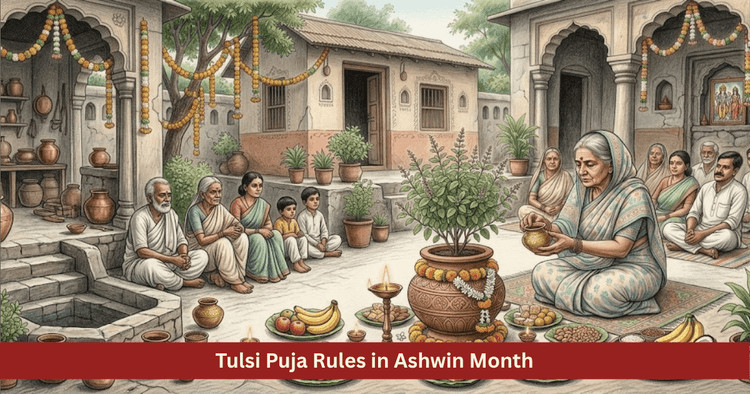
Table of Contents
Know the Worship and Care First
The importance of Tulsi worship becomes deeper during Ashwin month because this period is connected with the end of the rains, the arrival of autumn, Pitru Paksha and Sharad Navratri. Tulsi is regarded as dear to Goddess Lakshmi and Lord Vishnu. therefore lighting a lamp near Tulsi, offering water, chanting a Mantra and caring for the plant are followed with an auspicious feeling.
Religious belief connects lighting a ghee lamp near Tulsi with positivity, peace and prosperity in the home. The belief that it removes Vastu defects belongs to faith and tradition. It should not be treated as a guaranteed result. Cleanliness, ventilation, suitable light, family harmony and responsible living are equally important.
Primary Tulsi Puja Information for Ashwin
- Morning: offer the required amount of water after bathing.
- Evening: light a ghee or sesame oil lamp near Tulsi.
- Pitru Paksha: offer water with black sesame according to family tradition.
- Devi Paksha: offer water, flowers and Chunari to Tulsi.
- Main verse: Mahaprasad Janani Sarva Saubhagyavardhini Adhi Vyadhi Hara Nityam Tulasi Tvam Namostute
- Simple Mantra: Om Tulsayai Namah
- Direction: keep Tulsi in a clean, bright and ventilated place.
- Water rule: water according to soil dryness and avoid excess.
- Leaves: take the required quantity in the morning after purification.
- Evening rule: do not pluck leaves or disturb the plant after sunset.
- Lamp rule: keep the lamp at a safe distance from the plant.
- Core feeling: combine worship with plant care and respect for nature
| Time or Period | Worship Action | Main Feeling |
|---|---|---|
| Morning | Water offering and bowing | Purity and respect for life |
| Pitru Paksha | Water and black sesame | Remembrance of ancestors |
| Navratri | Flowers, Chunari and lamp | Goddess Shakti |
| Evening | Ghee or sesame oil lamp | Light and prosperity |
| Friday | Lakshmi and Tulsi worship | Fortune and household happiness |
| Daily | Care of soil and leaves | Service to nature |
Why Is Tulsi Connected with Lakshmi and Vishnu?
Tulsi is regarded as highly sacred in the Vaishnava tradition. Tulsi leaves are offered during the worship of Lord Vishnu and his forms. Goddess Lakshmi is regarded as the Goddess of prosperity, household happiness and auspiciousness. Tulsi connects both feelings with daily home worship.
Tulsi was traditionally kept in the courtyard or near the home. Family members offered water in the morning, lit a lamp in the evening and prayed near the plant. This created a regular spiritual centre in household routine.
The deeper meaning of Tulsi worship is that prosperity does not mean only money. A healthy atmosphere, pure speech, family cooperation, contentment and service are also forms of Lakshmi.
Spiritual Messages of Tulsi Worship
- Purity along with wealth
- Contentment along with prosperity
- Service to nature along with worship
- Protection of the environment along with the home
- Discipline along with devotion
- Compassion toward the plant
- Balance between Lakshmi and Vishnu qualities
Special Connection of Tulsi with Ashwin Month
Ashwin contains both Pitru Paksha and Devi Paksha. During Pitru Paksha, lighting a lamp and offering water near Tulsi may be connected with remembrance of ancestors. During Devi Paksha, Tulsi worship is connected with Lakshmi, Shakti and household prosperity.
Some families offer water mixed with black sesame near Tulsi during Pitru Paksha. Follow this only according to family tradition. For ancestral Tarpan, it is more appropriate to follow the traditional method involving water, black sesame, Kusha and resolve.
After Navratri begins, some regions follow the practice of offering water, tying Chunari and lighting a lamp near Tulsi. Do not tie the Chunari tightly around the branches.
Evening Lamp Near Tulsi
Lighting a lamp near Tulsi in the evening is one of the most common worship practices. The flame symbolises light, knowledge, positivity and peace in household life.
Keep sufficient distance between the lamp and the leaves and branches. Spilled ghee or oil may damage the soil and roots. It is not appropriate to place the lamp above or too close to the leaves.
Simple Method of Evening Deep Daan
- Clean the area before sunset or at the beginning of evening.
- Take a stable earthen or metal lamp.
- Add ghee or sesame oil.
- Place a cotton wick.
- Keep the lamp at a safe distance from the Tulsi pot.
- Bow to Tulsi.
- Remember Lord Vishnu and Goddess Lakshmi.
- Chant Om Tulsayai Namah.
- Stand or sit quietly for a few moments.
- Maintain fire safety until the lamp goes out.
The tradition of avoiding water and leaf plucking in the evening may also be understood through the natural resting period of the plant. If the soil becomes very dry, limited water may be given when necessary.
Tulsi Mantra and Prayer
Simple Mantras may be used during Tulsi worship. A long ritual is not necessary. Devotion, cleanliness and regularity remain central.
Common Mantras
- Om Tulsayai Namah
- Om Shri Tulsayai Namah
- Om Namo Bhagavate Vasudevaya
- Om Shreem Mahalakshmyai Namah
- Mahaprasad Janani Sarva Saubhagyavardhini Adhi Vyadhi Hara Nityam Tulasi Tvam Namostute
The simple feeling of the verse is a salutation to Tulsi as the mother of life, fortune, health and purity. While chanting, do not damage the plant, pour excessive water on its leaves or place the lamp so close that the plant may burn.
Tulsi Worship and Vastu Beliefs
Vastu tradition connects Tulsi with a clean, bright and positive place in the home. Some traditions advise keeping Tulsi in the north, northeast or east. The actual location should be selected according to sunlight, air, drainage and the needs of the plant.
It is not an established fact that lighting a lamp near Tulsi automatically removes every Vastu defect. A lamp may create a peaceful atmosphere, regularity and cleanliness in the home. Practical examination of construction, direction, light, air and usefulness is also necessary for Vastu improvement.
Rules for the Tulsi Location
- Provide sufficient morning sunlight.
- Keep the place ventilated.
- Use a pot with a drainage hole.
- Do not allow water to collect around the roots.
- Do not keep waste near the plant.
- Keep it away from shoes and dirty clothes.
- Do not place it too close to kitchen smoke.
- Protect it from very cold wind.
- Do not change the pot location repeatedly.
- Do not treat the plant only as decoration.
Seasonal Tulsi Care in Sharad
During Ashwin, the rains reduce and the weather gradually becomes cooler and drier. Tulsi may require sufficient light, controlled watering and protection from wind during this period.
Excess watering may increase the risk of fungal growth and root rot. It is better to water when the upper layer of soil appears dry. Mild morning sunlight may remain useful for the plant.
Seasonal Care of the Plant
- Check soil moisture daily.
- Do not water when soil remains wet.
- Maintain proper drainage.
- Provide gentle morning sunlight.
- Remove yellow and dry leaves.
- Protect the plant from cold wind.
- Cover it with thin cotton cloth on very cold nights.
- Use limited organic manure once a month.
- Avoid unnecessary chemical fertiliser.
- Use safe organic methods if insects appear.
Pouring a full vessel of water every day in the name of worship may harm the roots. Maintain the feeling of offering water while respecting the actual needs of the plant.
When Should Tulsi Leaves Be Plucked?
Tulsi leaves are generally taken in the morning after bathing and purification. Many families avoid plucking leaves after sunset. Traditions connected with Sunday, Ekadashi, Dwadashi and other special days may also differ.
Rules for Taking Leaves
- Bow to Tulsi first.
- Take only the required quantity.
- Do not pluck leaves with fingernails.
- Do not damage soft branches.
- Do not break the main growth of the plant.
- Remove diseased or dry leaves separately.
- Do not pluck leaves in the evening.
- Follow special family tradition.
Treating Tulsi as sacred also means treating the plant gently. Protecting the plant is an essential part of worship.
Tulsi and Deep Daan During Pitru Paksha
Some homes light a lamp near Tulsi during Pitru Paksha. The lamp becomes a symbol of remembrance, peace and spiritual progress for ancestors.
Use Tulsi during ancestral rituals according to family tradition. Water, black sesame, Kusha and resolve have separate importance in Tarpan. Lighting a lamp near Tulsi is not a complete substitute for Tarpan.
Simple Tulsi Worship During Pitru Paksha
- Bathe in the morning.
- Clean the area near Tulsi.
- Offer limited water if required.
- Use black sesame according to family tradition.
- Light a lamp in the evening.
- Remember the names and Gotra of ancestors.
- Pray for peace.
- Donate food or clothing.
Tulsi and Goddess Worship During Navratri
Navratri is a period of Goddess Shakti and Lakshmi practice. Lighting a ghee lamp near Tulsi may create an atmosphere of regular worship and positivity in the home.
Tulsi Service During Navratri
- Check the condition of the plant each morning.
- Water according to soil moisture.
- Light a lamp in the evening.
- Remember Lakshmi and Vishnu.
- Offer red or yellow flowers.
- If a Chunari is tied, do not tighten it around branches.
- Take Sattvic food during Navratri.
- Offer Tulsi leaves to Lord Vishnu.
- Keep the lamp at a safe distance.
- Give special care to the plant on Navami or Dashami.
Belief in Financial Growth
Tulsi worship is connected with financial growth and stability. Religiously, Tulsi symbolises Lakshmi qualities and the protection of Vishnu. Yet money does not increase through worship alone.
Financial Discipline Along with Tulsi Worship
- Keep income and expense records.
- Avoid unnecessary debt.
- Save part of income.
- Remain honest in sources of income.
- Give food or education support to people in need.
- Avoid display spending.
- Prioritise family needs.
- Take proper advice before investment.
Lighting a lamp near Tulsi while earning through wrongdoing creates a contradiction in Lakshmi practice. Prosperity should remain joined with Dharma and service.
Negativity and Mental Peace
Sitting near Tulsi for a few minutes in the morning and evening may calm the mind. Green leaves, fragrance, lamp and Mantra create regularity in the home. This is not a proven method of removing negativity through an unseen force. It is a spiritual practice that may improve the mental environment.
Simple Practice for Mental Peace
- Sit quietly before the lamp.
- Chant Om Tulsayai Namah 11 times.
- Take five slow breaths.
- Write down the day's worries.
- Resolve to improve one harmful habit.
- Use gentle speech in the family.
- Clean the place after worship.
Mistakes That Should Be Avoided
- Do not damage roots through excessive watering.
- Do not pluck Tulsi leaves in the evening.
- Do not keep the lamp too close to the leaves.
- Do not pour oil, milk or chemicals on the plant.
- Do not break dry branches without reason.
- Do not tie plastic Chunari or thread.
- Do not keep the plant in complete darkness.
- Do not treat Tulsi as the only treatment during illness.
- Do not create fire risk in the name of worship.
- Do not immediately treat a dry plant as an inauspicious sign.
If the Tulsi Plant Dries
Tulsi may dry because of weather, excess water, insufficient sunlight, root problems, insects or poor soil quality. It is not necessary to treat this immediately as a sign of misfortune.
Remove dry branches and leaves. Check moisture, drainage and sunlight. If the plant has completely dried, remove it respectfully, mix it into soil and plant a new Tulsi at a suitable time.
While maintaining religious feeling, it is necessary to understand the actual botanical needs of the plant.
Essence of Tulsi Worship in Ashwin
Tulsi worship during Ashwin is connected with beliefs about financial growth, Vastu peace and removal of negativity. Its deeper meaning is cleanliness, regularity, service to nature, devotion to Vishnu and balance of Lakshmi qualities.
Offering water in the morning expresses respect for life. Lighting a lamp in the evening symbolises light and awareness. During Pitru Paksha, the lamp represents ancestral memory. During Navratri, Tulsi service expresses Goddess and Lakshmi practice.
When worship is joined with plant care, water conservation, household cleanliness, financial honesty and gentle family conduct, Tulsi Puja becomes truly meaningful. A lamp cannot guarantee removal of every Vastu defect but it can create a beautiful centre of discipline and light in the home.
FAQ
How should Tulsi Puja be performed in Ashwin month?
Offer the required amount of water in the morning, light a safe lamp in the evening, chant Om Tulsayai Namah and remember Lord Vishnu and Goddess Lakshmi.
Does lighting a ghee lamp near Tulsi increase wealth?
Religious belief connects it with Lakshmi grace and prosperity. Saving, honesty, effort and proper planning are also necessary for financial progress.
Should water be offered to Tulsi in the evening?
Morning watering is generally considered more suitable for regular care. Light a lamp and pray in the evening. If the soil is very dry, limited water may be given when necessary.
How should Tulsi be cared for in Ashwin?
Avoid excess water, provide gentle morning sunlight, maintain drainage, protect the plant from cold wind and remove dry leaves.
Is a dried Tulsi plant inauspicious?
Not necessarily. Excess water, insufficient sunlight, insects and weather may dry the plant. Check the cause, remove it respectfully and plant a new one at a suitable time.
Get your accurate Kundali
Generate KundaliDid you like it?
Author

Aparna Patni (63)
Experience: 20
Consults About: Family Planning, Career
Clients In: Punjab, Haryana, Delhi
Share this article with friends and family
WELCOME TO
ZODIAQ
Right Decisions at the right time with ZODIAQ
