Goddess Durga Vahana 2026
By Pt. Sanjeev Sharma
Elephant arrival, horse departure and Navratri vehicle predictions
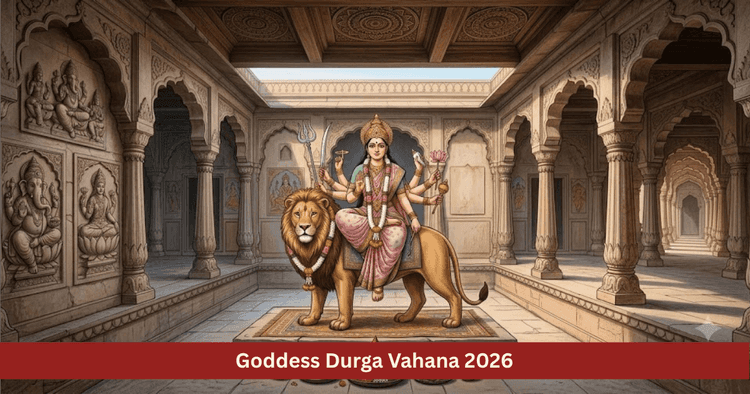
Table of Contents
Know the Arrival and Departure First
Sharad Navratri 2026 will begin on Sunday, 11 October. According to the popular religious and astrological tradition, when Navratri begins on Sunday or Monday, the Goddess arrives on an elephant. Therefore, the arrival of Goddess Durga in 2026 is associated with the elephant vehicle.
Vijayadashami will be observed on Tuesday, 20 October. When Navratri ends on Tuesday or Saturday, the departure vehicle is regarded as the horse. Therefore, the departure of Goddess Durga in 2026 is associated with the horse vehicle.
This vehicle prediction belongs to religious and folk tradition. It cannot provide a certain scientific prediction about the economy, rainfall, politics or public life. It is more balanced to understand it as a symbolic indication.
Primary Information for Navratri 2026
- Navratri begins: Sunday, 11 October 2026
- Ghatasthapana: 11 October 2026
- Goddess arrival: elephant
- Ashtami: Monday, 19 October 2026
- Navami and Vijayadashami: Tuesday, 20 October 2026
- Goddess departure: horse
- Main worship: Navadurga, Ghatasthapana, Havan and Kanya Puja
- Main symbols: stability through elephant and movement through horse
- Religious feeling: arrival of Shakti and activation of action
- Caution: do not treat the vehicle prediction as fear or fixed prophecy
| Occasion | Weekday | Traditional Vehicle | Symbolic Meaning |
|---|---|---|---|
| Goddess arrival | Sunday | Elephant | Rain, prosperity and stability |
| Goddess departure | Tuesday | Horse | Movement, struggle and active change |
| Monday beginning | Monday | Elephant | Peace, nourishment and abundance |
| Wednesday beginning | Wednesday | Boat | Travel, transition and accomplishment |
| Thursday or Friday beginning | Thursday or Friday | Palanquin | Social movement and collective responsibility |
| Saturday or Tuesday beginning | Saturday or Tuesday | Horse | Fast events and struggle |
How Is the Goddess Vehicle Determined?
The vehicle of Navratri is generally determined by the weekday of Ghatasthapana. Some traditions also give importance to the position of the Moon and the Nakshatra. The traditional verse mentions an elephant for Sunday and Monday, a horse for Tuesday and Saturday, a boat for Wednesday and a palanquin for Thursday and Friday.
The arrival vehicle is considered from the weekday of the first Navratri day and the departure vehicle from the weekday of Vijayadashami. Therefore, the vehicles may be different in the same year. In 2026, the beginning is on Sunday and the ending is on Tuesday, so the arrival is linked with the elephant and the departure with the horse.
Simple Method of Determining the Vehicle
- Check the date of Ghatasthapana.
- Check the weekday of that date.
- Determine the arrival vehicle according to the weekday.
- Check the date and weekday of Vijayadashami.
- Determine the departure vehicle according to the weekday.
- Confirm the festival date through the local Panchang.
- Understand the vehicle prediction as a symbolic indication.
Goddess Arrival on an Elephant
In Indian tradition, the elephant symbolises stability, strength, patience, water and royal dignity. When the Goddess is believed to arrive on an elephant, folk belief connects it with rain, grain, wealth and social stability.
The elephant moves slowly but firmly. Its symbol teaches that major results come through patience, organisation and long preparation. The elephant may also be connected with memory. This arrival reminds families and society to remember traditions, roots and collective responsibilities.
Symbolic Results of the Elephant Vehicle
- Hope for agriculture and grain production
- Attention toward rain and water resources
- Resolve for financial stability
- Need for patience in government and society
- Slow but lasting progress in major work
- Cooperation within family and community
- Inspiration to avoid haste in planning
The elephant vehicle does not mean that rainfall or prosperity will certainly be good throughout the year. Rain depends on natural and environmental factors. The economy depends on policy, markets, employment and global conditions.
Meaning of the Elephant Arrival in 2026
Since Navratri begins on Sunday in 2026, the elephant vehicle is traditionally indicated. Sunday is connected with the Sun. The Sun represents self strength, leadership, administration, agriculture and life force. The stability of the elephant joined with the radiance of the Sun indicates the need for firmness and organisation in leadership.
This period may symbolically encourage patience in major decisions, respect for natural resources and attention to rural and agricultural life. At the family level, this vehicle may represent saving, household stability and long term planning.
Symbolic Message for Society
- Give importance to water conservation.
- Respect agriculture and grain production.
- Practise patience in financial planning.
- Maintain transparency in government and administration.
- Take expert guidance for major decisions.
- Protect nature and wildlife.
- Place collective welfare above personal gain.
Goddess Departure on a Horse
Since Vijayadashami falls on Tuesday in 2026, the departure vehicle is regarded as the horse. The horse symbolises speed, energy, struggle, travel and rapid change. In folk tradition, departure on a horse is connected with a more active and challenging period.
The horse has been a companion of both war and travel. Its symbol indicates that after Navratri, resolves must become action. Worship and intention alone are not enough. A goal also requires speed, courage and continuous effort.
Symbolic Results of the Horse Vehicle
- Increased speed in work
- Travel and movement
- Increase in political or social activity
- Competition and struggle
- Quick decisions
- Administrative activity
- Possibility of disputes and accidents through carelessness
The horse vehicle should not be called inauspicious in a way that creates fear. Speed creates opportunities but also increases risk. When energy receives discipline, the horse becomes a symbol of victory, progress and courage.
Meaning of the Horse Departure in 2026
Tuesday is associated with Mangala, Mars. Mars represents courage, war, land, energy and struggle. The horse vehicle on Vijayadashami may therefore be symbolically connected with the active qualities of Mars.
This indication suggests that after Navratri, society and individuals should work with speed on their resolves. Yet Martian energy may turn into anger, haste and violence. Therefore, the balanced meaning of the horse vehicle is fast action joined with restraint.
Message for Personal Life
- Complete work on time instead of delaying it.
- Give attention to speed and safety while driving.
- Do not react immediately during conflict.
- Use energy correctly through exercise.
- Check documents during land and property decisions.
- Maintain discipline in competition.
- Do not turn courage into aggression.
Traditional Results of Other Vehicles
Along with elephant and horse, the traditions of boat and palanquin are also mentioned for the arrival and departure of the Goddess. Interpretations of vehicles and results differ across scriptures and regions.
Boat
When Navratri begins on Wednesday, the boat vehicle is traditionally mentioned. The boat symbolises water, travel, transition, trade and the ability to cross a difficult situation. It may be connected with accomplishment, opportunity and change.
The message of the boat is that time does not remain still. A person who changes direction according to circumstances can cross difficult periods. Attention should also be given to water related disasters and ecological balance.
Palanquin
When Navratri begins on Thursday or Friday, the palanquin is traditionally mentioned. A palanquin symbolises collective support, social dignity and carrying a power from one place to another.
Some folk beliefs connect the palanquin with instability, financial pressure or social disturbance. This is not a certain prediction of harm. A positive meaning of the palanquin is that society may carry a difficult responsibility through cooperation.
Goddess Vehicle and the Economy
Religious interpretations connect the elephant with rainfall, agriculture, wealth and prosperity. The horse is connected with struggle, speed and changes in authority. The boat is linked with trade, travel and water routes. The palanquin is associated with social change and collective responsibility.
These symbols should not be read as economic forecasts. The economy develops through many causes.
Real Factors Affecting the Economy
- Agriculture and rainfall
- Employment and wages
- Market demand
- Government policy
- Inflation
- Trade and investment
- Global events
- Technological change
- Natural disasters
- Social stability
The vehicle tradition may offer cultural reminders to consider these subjects. In a year of elephant arrival, attention to water and agriculture may be useful. In a year of horse departure, safety and discipline may receive more attention. In a boat period, water resources and travel arrangements may become important.
Relation Between the Goddess Vehicle and Weather
The tradition connecting the elephant with rainfall and prosperity may have developed through symbolic links between the elephant, water and clouds. In Indian culture, the elephant has been associated with clouds, rain and royal power. The horse, in contrast, has been associated with speed, heat and war.
Even so, weather cannot be predicted with certainty from a vehicle. Weather science, ocean conditions, atmospheric cycles, temperature and natural rainfall patterns are the real causes.
Balanced Conduct Related to Weather
- Use scientific information for rainfall forecasts.
- Store and conserve water.
- Prepare agricultural plans according to weather.
- Prepare for floods and droughts.
- Protect animals and wildlife.
- Celebrate Navratri in an environment friendly way.
Goddess Vehicle and Personal Predictions
The Goddess vehicle is regarded as a collective religious indication. It is not a personal birth chart prediction. To understand personal results, the Ascendant, Moon sign, planetary periods, transits and birth Nakshatra must be studied.
Even so, the symbols can guide personal reflection.
| Vehicle | Personal Message |
|---|---|
| Elephant | Patience, stability and long term planning |
| Horse | Courage, speed and disciplined action |
| Boat | Change, adaptation and travel |
| Palanquin | Cooperation, social responsibility and balance |
What Should Be Done During Navratri?
- Welcome the Goddess during Ghatasthapana.
- Chant and worship regularly for nine days.
- Take a resolve for water conservation through the elephant symbol.
- Take a resolve for disciplined action through the horse symbol.
- Donate food, water, clothing and medicine.
- Respect natural resources.
- Offer safe food and water to animals and birds.
- Convert one intention into action on Vijayadashami.
What Should Be Avoided?
- Do not treat the vehicle tradition as a fixed prediction.
- Do not take financial risks through excessive optimism about the elephant.
- Do not develop fear or despair because of the horse.
- Do not make weather decisions only through religious indications.
- Do not blame a community in the name of religious belief.
- Do not misuse Martian energy by driving recklessly.
- Do not disturb elephants, horses or other living beings during festivals.
- Do not harm the environment through worship.
The Deeper Message of the Goddess Vehicle
The vehicle of Goddess Durga is a symbol that communicates with the collective mind and nature of the year. The elephant reminds one of stable strength and nourishment. The horse reminds one of movement and action. The boat represents change and transition. The palanquin represents cooperation and collective responsibility.
In 2026, the elephant arrival and horse departure traditionally suggest stability and hope at the beginning and active work and struggle at the conclusion. This should be understood through preparation and not fear.
The vehicle of the Goddess reveals an inner direction more than an outer future. If the elephant arrives, patience and respect for water and grain should awaken. If the horse departs, courage, discipline and responsible speed should enter life. This is the safest, deepest and most spiritual meaning of the vehicle tradition.
FAQ
Which vehicle will Goddess Durga arrive on during Sharad Navratri 2026?
Navratri 2026 begins on Sunday, 11 October. According to the popular tradition, the Goddess arrives on an elephant when Navratri begins on Sunday.
Which vehicle will Goddess Durga depart on in 2026?
Vijayadashami falls on Tuesday, 20 October. According to the traditional vehicle rule, the Goddess departs on a horse when the festival ends on Tuesday.
What is believed to be the result of the elephant arrival?
The elephant is regarded as a symbol of rain, grain, prosperity, stability and peace. This is a religious belief and not a certain weather or economic forecast.
What does the horse departure mean?
The horse symbolises speed, struggle, travel, activity and change. It should be understood as an inspiration for disciplined action rather than as a sign of fear.
Does the Goddess vehicle affect an individual's zodiac sign?
The vehicle is a collective religious indication. Personal predictions require study of the birth chart, Ascendant, Moon sign, planetary periods and transits.
Get your accurate Kundali
Generate KundaliDid you like it?
Author
Pt. Sanjeev Sharma (63)
Experience: 20
Consults About: Family Planning, Career
Clients In: Punjab, Haryana, Delhi
Share this article with friends and family
WELCOME TO
ZODIAQ
Right Decisions at the right time with ZODIAQ
