Sacred Vrat of Jimutavahana
By Pt. Suvrat Sharma
Jitiya 2026 date, waterless rules, puja method and child protection
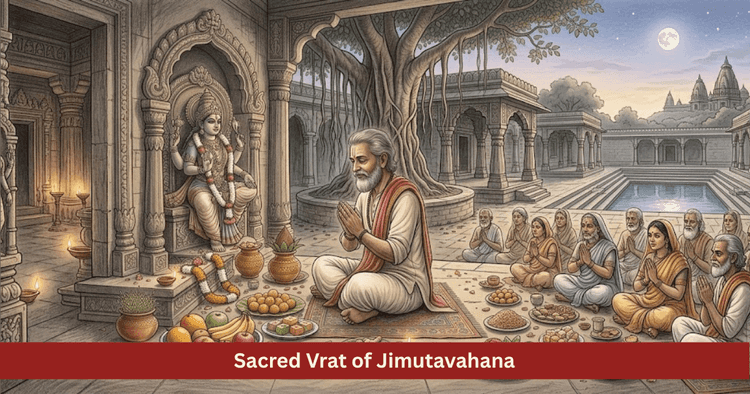
Table of Contents
Know the Date and Rules First
Jimutavahana Vrat is also called Jivitputrika, Jitiya or Jiutiya Vrat. It is observed on the Ashtami Tithi of Ashwin Krishna Paksha. Mothers observe it for the long life, health, safety and happy future of their children.
According to the Udaya Ashtami tradition, Jitiya Vrat will be observed on Saturday, 3 October 2026. Nahay Khay will be observed on 2 October and Parana will be performed on the morning of 4 October. The Ashtami Tithi is calculated to begin around 7:59 AM on 3 October and end around 5:51 AM on 4 October. Timings may differ according to regional Panchang, sunrise and family tradition.
The fast is observed without water in many families but a waterless fast is extremely strict. Pregnant women, patients, elders, children and people taking regular medicine should observe it according to health. A religious fast should not cause serious harm to the body.
Jitiya Vrat 2026 Primary Information
- Name: Jivitputrika or Jitiya Vrat
- Main date: Saturday, 3 October 2026
- Paksha: Ashwin Krishna Paksha
- Nahay Khay: Friday, 2 October 2026
- Ashtami begins: around 7:59 AM on 3 October
- Ashtami ends: around 5:51 AM on 4 October
- Parana: morning of Sunday, 4 October 2026
- Main deity: King Jimutavahana and the power of motherhood
- Fast type: waterless or simple fast according to health
- Main worship: Jimutavahana story, Sun worship and prayer for mothers
- Main materials: Kusha, flowers, Roli, Akshat, fruit, lamp and red thread
- Core feeling: protection of children, sacrifice, compassion and motherhood
| Day | Date | Main Ritual | Food Rule |
|---|---|---|---|
| First day | 2 October | Nahay Khay and purification | One Sattvic meal |
| Second day | 3 October | Waterless Jitiya fast and worship | No water and no grains |
| Third day | 4 October | Parana and Prasad | Begin with water, then light food |
Meaning of Jimutavahana Vrat
The word Jivitputrika is connected with the life and welfare of children. Jimutavahana is remembered as a compassionate and self sacrificing ruler who resolved to offer his own life to save another mother's child.
The feeling of motherhood in Jitiya Vrat is not limited only to one's own children. The story of Jimutavahana teaches that true compassion understands the pain of another child and another family.
This fast is a symbol of the mental strength, patience and resolve of mothers. Tradition prays for long life and protection of children but the practice also includes responsibility toward their health, education, safety and emotional development.
Main Spiritual Messages of the Vrat
- Sacrifice in motherhood
- Compassion toward the suffering of others
- Resolve to protect life
- Patience during difficult conditions
- Responsibility toward family
- Good conduct for children
- Faith instead of fear
Puranic Story of Jimutavahana
According to the story, Jimutavahana was a kind, brave and righteous prince. He was not deeply attracted to worldly comfort and royal authority. He gave the responsibility of the kingdom to his brothers and went to the forest to live a life of spiritual restraint.
One day, he saw an elderly woman in the forest who was deeply distressed. Jimutavahana asked the reason for her sorrow. The woman belonged to the Naga lineage and had only one son. According to an old agreement between the Nagas and Garuda, one Naga was offered each day as food for Garuda. It was the turn of the woman's son that day.
The mother was crying because she feared losing her only child. Jimutavahana saw her pain and resolved to protect the Naga prince. He covered himself in a red cloth and lay at the place where Garuda came to take his food.
Garuda arrived and carried Jimutavahana away, believing him to be the Naga prince. There was no fear or anxiety of death in Jimutavahana's face. Garuda was surprised and asked his identity. When he learned the entire story, Garuda was moved by Jimutavahana's compassion and courage.
Garuda released Jimutavahana and resolved to end the tradition of taking Naga sacrifices. In this way, the life of the Naga prince and many other Nagas was saved.
Deep Message of the Story
- A true hero protects the weak.
- Sacrifice should extend beyond one's own family.
- Compassion can be stronger than fear.
- Society must respect motherhood.
- Protection of life is a great Dharma.
- Strength should be used for service.
Tradition of Nahay Khay
Jitiya Vrat is connected with a three day observance. The first day is Nahay Khay. On this day, the observing mothers bathe and purify body and mind. The home is cleaned and one Sattvic meal is taken.
Nahay Khay prepares the body and mind for the demanding fast of the next day. Food should be light, fresh and easy to digest. Regional traditions may include different food items.
Rules for Nahay Khay
- Bathe in the morning.
- Wear clean clothes.
- Clean the home and kitchen.
- Remember the Sun.
- Take one Sattvic meal.
- Avoid meat, alcohol and Tamasic food.
- Prepare materials for the next day's worship.
- Pray for the safety of children.
Excessive food on Nahay Khay is not suitable. Balanced nourishment is more useful while preparing for a waterless fast.
Waterless Jitiya Fast
The main fast is observed on Ashtami Tithi. In many families, mothers give up water and food after sunrise. Some traditions regard it as a waterless fast lasting about 24 hours.
A waterless fast may be extremely difficult. Heat, illness, blood pressure, diabetes or pregnancy can make it risky. Families and society should not pressure any woman to observe a strict fast.
What to Do During the Fast
- Remember Jimutavahana.
- Pray for the health and safety of children.
- Read or listen to the Jitiya story.
- Light a lamp.
- Bow to the Sun.
- Avoid unnecessary physical labour.
- Stay careful in heat and strong sunlight.
- Inform family if weakness appears.
- Change the form of the fast if health worsens.
- Do not turn the fast into a competition.
If the fast breaks or water must be taken for health, there should be no guilt. Devotion remains in the mind and not only in causing physical hardship.
Simple Jitiya Puja Method
Worship Materials
- Image or symbol of Jimutavahana
- Red or yellow cloth
- Kusha
- Roli and Akshat
- Flowers
- Fruit
- Lamp and incense
- Red thread or Jitiya thread
- Water vessel
- Naivedya
- Water for Sun worship
- Story book
Step by Step Worship
- Clean the worship area.
- Spread red or yellow cloth on the platform.
- Establish the image of Jimutavahana.
- Light a lamp and incense.
- Offer Roli, Akshat and flowers.
- Place a Kusha symbol if the tradition includes it.
- Worship the red thread or Jitiya thread.
- Read or listen to the Jimutavahana story.
- Offer water to the Sun.
- Pray for the health and long life of children.
- Resolve to protect and love children in the family.
- Distribute Prasad after Parana.
Some regions create symbols or clay figures connected with the eagle and jackal. These are linked with the Jitiya story and folk tradition. They may be included according to regional custom.
Importance of Sun Worship
Offering water to the Sun is followed in several regions during Jitiya Vrat. The Sun represents life force, health, self strength and the feeling of fatherhood.
In the prayer for the long life of children, Sun worship expresses the wish that children may receive health, energy and clear direction in life. Do not waste water while offering Arghya. Perform the ritual calmly in an open place.
Method of Sun Arghya
- Take water in a clean vessel.
- Add Akshat and flowers.
- Face the Sun.
- Offer water slowly.
- Chant Om Suryaya Namah.
- Pray for the health of children.
- Respect parents and teachers.
Social Meaning of the Vrat Story
The story of Jimutavahana contains the suffering of a mother, fear for a child and compassion from a self sacrificing ruler. It tells families and society that protection of children is not only the responsibility of the mother. The whole society must protect their life, health and dignity.
In modern times, the meaning of Jitiya Vrat may be connected with child health, education, nutrition, vaccination, safe surroundings and emotional support.
Ways to Bring the Story into Life
- Arrange regular health checks for children.
- Provide nutritious food.
- Support education.
- Protect children from violence and fear.
- Give equal opportunities to girls and boys.
- Listen carefully to children.
- Maintain safe communication within the family.
Method of Parana
Jitiya Vrat Parana will be performed on the morning of 4 October 2026 when Ashtami ends and Navami begins. Exact Parana time may differ according to sunrise and the local Panchang.
After a strict waterless fast, sudden heavy food is not suitable. Begin Parana with water, a light drink or fruit.
Steps of Parana
- Bow to the Sun and Jimutavahana.
- Take a little clean water.
- Have fruit or a light drink.
- Take Sattvic food after some time.
- Avoid very fried, spicy or heavy food.
- Distribute Prasad in the family.
- Feed a person in need.
- Give the body sufficient rest.
Health and Jitiya Vrat
A strict waterless fast may cause dehydration, weakness, headache, dizziness and blood pressure related problems. Risk may increase during heat, illness and pregnancy.
Who Needs Special Care?
- Pregnant women
- People with diabetes
- People with low or high blood pressure
- People with kidney related illness
- Breastfeeding mothers
- Elderly women
- Women taking regular medicine
- Women recovering from illness
Fruit fasting, water intake, one Sattvic meal or mental restraint may become alternatives. The family should respect the health condition of the observing woman.
Jivitputrika Vrat from an Astrological View
Jimutavahana Vrat may be understood through qualities connected with the Sun, Moon, Jupiter and Mars. The Sun represents health and life force, the Moon motherhood and mind, Jupiter children and knowledge and Mars protection and courage.
For matters related to children, astrology examines the fifth house, fifth lord, Jupiter, Sun, Moon and relevant planetary periods. It cannot be claimed that Jitiya Vrat alone will solve every issue related to children.
Planetary Feelings of Practice
- Sun: health and life energy
- Moon: motherhood and mental peace
- Jupiter: children, knowledge and blessings
- Mars: protection and courage
- Mercury: children's education and communication
- Venus: love and nourishment in the family
- Saturn: patience and responsibility
Along with religious fasting, medical advice, nutrition and family support remain necessary.
Wider Meaning of Motherhood
Limiting Jitiya Vrat only to the long life of sons reduces the wider meaning of the tradition. In the present age, children includes both sons and daughters. The life, health, education and dignity of every child are equally important.
The story of Jimutavahana is not about only one gender of child. It is a message of protection of life. therefore the modern and humane form of this Vrat should be a resolve for safety, nourishment and compassion toward all children.
What Should Be Avoided?
- Do not observe a waterless fast while damaging health.
- Do not pressure any woman to fast.
- Do not connect children with fear or blind belief.
- Do not understand the story only through miracles.
- Do not rush Parana.
- Do not abandon medical advice.
- Do not mock the weakness of an observing woman.
- Do not spend excessively on worship.
- Do not discriminate between children by gender.
- Continue protection and education after the Vrat.
Jitiya Completed Through Compassion
Jimutavahana Vrat is a practice of motherhood, sacrifice and protection of life. Its difficulty does not lie only in the waterless fast. It lies in the resolve through which a mother prays for patience, love and protection for her child.
The story of Jimutavahana teaches that the suffering of one child can become the responsibility of the whole society. Garuda's transformation shows that compassion can change even a tradition of violence and revenge.
On Jitiya Vrat, pray not only for long life but also for good values, health, education, self respect and a safe future for children. A waterless fast is one form of devotion but true practice appears in daily responsibility toward children.
When the mother's fast joins the father's support, family safety and social responsibility, Jivitputrika Vrat becomes more than a difficult fast. It becomes a sacred resolve of deep respect for life and human service.
FAQ
When is Jitiya Vrat in 2026?
According to the Udaya Ashtami tradition, Jivitputrika or Jitiya Vrat will be observed on Saturday, 3 October 2026. Nahay Khay is on 2 October and Parana on 4 October.
Why is a waterless fast observed during Jitiya?
Religious tradition describes mothers observing a waterless fast for the long life and safety of their children. It is very strict, so health must guide the decision.
Who was Jimutavahana?
Jimutavahana is described as a kind and self sacrificing king or prince who offered himself before Garuda to protect a Naga prince.
When should Jitiya Parana be performed?
In 2026, Parana will be performed on the morning of 4 October. Check the end of Ashtami, sunrise and the local Panchang for the exact time.
Is Jitiya Vrat only for sons?
Tradition connected it with the long life of sons but its wider meaning is a prayer for the health, safety, education and welfare of all children.
Get your accurate Kundali
Generate KundaliDid you like it?
Author

Pt. Suvrat Sharma (63)
Experience: 20
Consults About: Family Planning, Career
Clients In: Punjab, Haryana, Delhi
Share this article with friends and family
WELCOME TO
ZODIAQ
Right Decisions at the right time with ZODIAQ
