Kojagari Lakshmi Vrat Method
By Pt. Abhishek Sharma
Meaning of Ko Jagrati, Lakshmi Puja, Kheer and night vigil
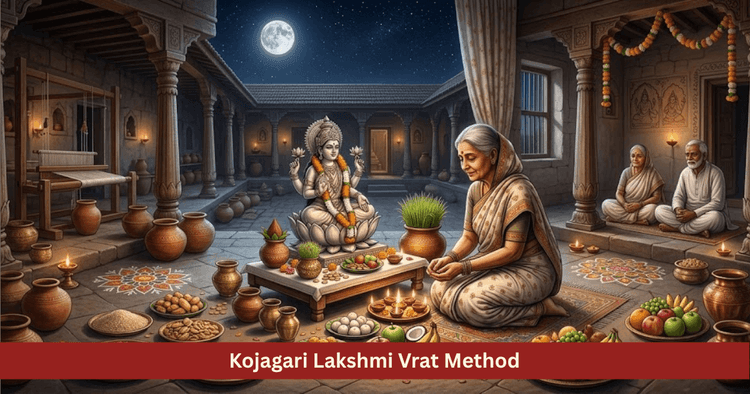
Table of Contents
Know the Date and Worship Time First
The full Moon of Ashwin is called Kojagari Purnima, Kojagari Lakshmi Vrat or Kaumudi Purnima. The word Kojagari is connected with the Sanskrit question Ko Jagrati, which simply means who is awake. Religious belief says that Goddess Lakshmi moves through the earth on this night and blesses devotees who remain awake in prayer, spiritual practice and good conduct.
In 2026, Kojagari Lakshmi Puja will be performed on the night of 25 October. The Purnima Tithi is calculated to begin around 11:55 AM on 25 October and end around 9:41 AM on 26 October. Moonrise is expected around 4:55 PM and the Nishitha Puja period is expected from about 11:40 PM to 12:31 AM. Timings may differ according to location and Panchang tradition.
Kojagari Lakshmi Vrat 2026 Primary Information
- Festival: Kojagari Lakshmi Vrat and Sharad Purnima
- Main night: Sunday, 25 October 2026
- Purnima Tithi begins: around 11:55 AM on 25 October
- Purnima Tithi ends: around 9:41 AM on 26 October
- Moonrise: around 4:55 PM according to local time
- Nishitha Puja: about 11:40 PM to 12:31 AM
- Main deities: Goddess Lakshmi and Lord Vishnu
- Main practice: Lakshmi Puja, Chandra Arghya, Kheer offering and night vigil
- Fast type: waterless, fruit or Sattvic fast according to health
- Main Mantra: Om Shreem Mahalakshmyai Namah
- Main charity: rice, milk, white clothing, Kheer and food
- Core feeling: awareness, cleanliness, prosperity and wisdom
| Time | Ritual | Main Materials |
|---|---|---|
| Morning | Bath, resolve and home cleaning | Water, clean clothes and worship materials |
| Evening | Lakshmi Puja preparation | Platform, red cloth, lamp and flowers |
| After Moonrise | Moon viewing and Arghya | Water, Akshat and flowers |
| Night | Lakshmi Puja and Kheer offering | Kheer, lotus, incense and lamp |
| Nishitha period | Special Kojagari worship | Mantra, Shri Sukta and Naivedya |
| Night vigil | Bhajan, story and meditation | Lamp, book and prayer beads |
| Next morning | Prasad and Parana | Kheer, fruit and Sattvic food |
Secret of Ko Jagrati
The most famous feeling of Kojagari Vrat is Ko Jagrati, meaning who is awake. According to religious story, Goddess Lakshmi moves through the earth at midnight and observes who remains awake in worship, meditation, Bhajan or good action.
Being awake here does not mean only giving up sleep. It means remaining aware of life. A person who uses money properly, keeps the home clean, respects time, remains honest in action and helps people in need is considered truly awake in the deeper sense.
Remaining awake only for entertainment does not express Kojagari practice. The purpose of the vigil is to move the mind away from unnecessary subjects toward remembrance of the Goddess, self reflection and harmony.
Four Levels of Awareness
- Awareness of the body
- Awareness of thoughts
- Awareness of money and action
- Awareness of Dharma and responsibility
Connection Between Goddess Lakshmi and a Clean Home
Goddess Lakshmi is connected with cleanliness order, light and harmony. The tradition of cleaning the home before Kojagari Lakshmi Puja exists because disorder creates heaviness not only outside but also in the mind.
The main entrance, worship area, kitchen, safe and workplace may be cleaned specially. Removing broken objects, unused items and excessive disorder can also become a practical form of Lakshmi practice.
Preparing the Home Before Worship
- Clean the main entrance.
- Wipe the worship area with clean water and cloth.
- Arrange the safe or place where money is stored.
- Separate old and unused objects.
- Choose a safe place for the lamp.
- Keep red or yellow cloth ready for worship.
- Maintain gentle speech and a peaceful environment.
Along with worship of the Goddess of wealth, discipline with money is also necessary. Spending without a plan and then expecting financial stability only through Lakshmi worship is not a balanced view.
Spiritual Importance of Kojagari Lakshmi Vrat
Lakshmi is not only the Goddess of money. Shri has a wider meaning that includes beauty, health, prosperity, contentment, reputation, knowledge and auspicious opportunity. Kojagari Vrat teaches that wealth becomes beneficial when used for Dharma, family and service.
Lord Vishnu is remembered with Lakshmi because Vishnu represents preservation, balance and order. Lakshmi without Vishnu may become unstable abundance and Vishnu without Shri may become rigid order. Balance between both is necessary for household life.
Spiritual Messages of Kojagari Vrat
- Purity in wealth
- Order in the home
- Sweetness in relationships
- Honesty in action
- Contentment in the mind
- Humility in charity
- Service along with prosperity
- Self reflection during the vigil
Morning Vrat Method
The resolve for Kojagari Vrat may be taken in the morning. The form of fasting should depend on age, health and family tradition.
Morning Worship
- Wake before or around sunrise.
- Bathe and wear clean clothes.
- Offer water to the Sun.
- Clean the home and worship area.
- Take the resolve facing east or north.
- Remember Goddess Lakshmi and Lord Vishnu.
- Decide on fruit fasting or Sattvic food.
- Pray for wisdom and service along with wealth.
Keep the purpose of the resolve clear. If a family observes Kojagari only as a night worship, strict fasting is not necessary. A restrained diet with devotion is also acceptable.
Simple Method of Lakshmi Puja
Worship Materials
- Image or idol of Lakshmi and Vishnu
- Red or yellow cloth
- Wooden platform
- Kalash and water
- Mango leaves
- Coconut
- Lotus or white flowers
- Roli and Akshat
- Sandalwood
- Incense and lamp
- Kheer and fruit
- Dakshina
- Shri Sukta or Lakshmi Mantra
Step by Step Worship
- Spread clean cloth on the platform.
- Place images of Goddess Lakshmi and Lord Vishnu.
- Fill a Kalash with water and place mango leaves and coconut.
- Light a lamp and incense.
- Remember Lord Ganesha.
- Offer lotus or white flowers to Lakshmi.
- Offer Roli, Akshat and sandalwood.
- Place Kheer, fruit and sweets as Naivedya.
- Chant Om Shreem Mahalakshmyai Namah.
- Recite Shri Sukta or Lakshmi Chalisa.
- Perform Aarti.
- Pray for wisdom, health and contentment along with wealth.
Chandra Puja and Kheer Offering
There is a tradition of offering Arghya to the Moon during the Kojagari night. The Moon represents the mind, water, emotions and nourishment. After viewing the Moon, Kheer may be offered as Naivedya.
Kheer made from milk and rice is placed in a clean vessel under moonlight for some time. Religiously, it is a Prasad connected with lunar grace. From the view of food safety, covering it with a thin clean cloth or food safe mesh is appropriate.
Method of Placing Kheer
- Prepare Kheer with fresh milk and rice.
- Add cardamom, saffron or fox nuts according to tradition.
- Transfer the Kheer into a clean vessel.
- Offer it to Goddess Lakshmi.
- After viewing the Moon, place the vessel in a safe place.
- Keep it covered under moonlight for some time.
- Do not leave it in a warm environment for long.
- Distribute it at night or the next morning.
Kojagari Night Vigil
The night vigil may include Lakshmi Mantra, Shri Sukta, Vishnu Sahasranama, Bhajan, story, meditation and peaceful conversation. The purpose is to keep the mind involved in spiritual practice.
Staying awake all night may affect health. Children, elders, pregnant women and patients should not be forced to remain awake. A few hours of attentive worship may also be sufficient.
What to Do During the Vigil
- Keep a lamp burning with fire safety.
- Chant a Lakshmi Mantra.
- Sing Bhajan with the family.
- Recite Shri Sukta or Vishnu Sahasranama.
- Reflect on money and action.
- Prepare Prasad and charity for the next day.
- Rest if fatigue appears.
What Can Be Eaten During the Vrat?
Fasting food should depend on health and tradition. A waterless fast is not suitable for everyone.
Fruit Fasting Options
- Fruits
- Milk
- Curd
- Fox nuts
- Sago
- Water chestnut flour
- Buckwheat flour
- Sweet potato
- Coconut
- Rock salt
People with diabetes, blood pressure concerns, pregnancy, digestive illness or regular medicine should consult a doctor. The purpose of fasting is not to damage health.
Special Charity and Service
Food, milk, rice, white clothing, Kheer, lamps and water are considered suitable donations during Kojagari Lakshmi Vrat. The purpose is not display in the name of pleasing Lakshmi. It is to share prosperity with society.
Useful Donations
- Rice and milk for a poor family
- Books and writing materials for a student
- Clothing and medicine for an elder
- Sattvic food for a patient
- Water and fruit for workers
- Water vessel for birds
- Food for a temple or service organisation
- Support for education of needy children
Give according to capacity. Donating through debt or neglecting family needs is not appropriate.
Kojagari Vrat from an Astrological View
The full Moon represents fullness of mind and emotion. Lakshmi worship may become a spiritual method for balancing qualities connected with Venus, the Moon and Jupiter. Venus represents comfort, beauty and prosperity, the Moon represents mind and nourishment and Jupiter represents Dharma and knowledge.
During Kojagari worship, the lamp represents the Sun and awareness, Chandra Arghya mental peace and Lakshmi worship the pure use of wealth.
Planetary Feelings of Practice
- Moon: mental peace
- Venus: cleanliness and sweet relationships
- Jupiter: knowledge and charity
- Sun: self strength and clarity
- Mercury: money management
- Saturn: discipline and labour
The Kojagari Vrat should not be treated as a guaranteed remedy for a planetary affliction. Personal guidance may be needed according to the birth chart, planetary periods and life situation.
Modern Meaning of Ko Jagrati
In the present time, being awake does not mean only remaining awake at night. A person should remain awake regarding money, health, relationships, time and responsibility.
Modern Kojagari Resolutions
- Reduce unnecessary expenses.
- Maintain an income and expenditure record.
- Prepare a plan to repay debt.
- Do not neglect health.
- Give time to the family.
- Remain honest in work.
- Help people in need.
- Recognise harmful personal habits.
A person who remains awake through worship but misuses money during the day remains distant from the true meaning of Kojagari. The fruit of the vigil should appear in an aware lifestyle.
What Should Be Done and Avoided?
What Should Be Done?
- Clean the home thoroughly.
- Worship Lakshmi and Vishnu.
- Offer Arghya to the Moon.
- Offer Kheer as Naivedya.
- Chant Shri Sukta and Lakshmi Mantra.
- Practise Bhajan and meditation with the family.
- Donate white clothing, milk, rice or food.
- Pray for contentment and service along with wealth.
What Should Be Avoided?
- Do not limit worship only to greed for money.
- Do not damage health through the vigil.
- Do not place Kheer in an unclean open place.
- Do not eat spoiled or stale Kheer.
- Do not take debt for a display festival.
- Do not publicise charity.
- Do not create family disputes over wealth.
- Do not treat Moon rays as a cure for every illness.
Meaning of Lasting Grace of Mahalakshmi
The question of Goddess Lakshmi in Kojagari Vrat does not mean that the Goddess will give no wealth to a person who sleeps. Its deeper message is that only a person who remains aware can preserve and use prosperity correctly.
Earning wealth is one matter and protecting, using and sharing it through Dharma is another. Lakshmi is considered stable when the home contains cleanliness, honesty, sweetness, discipline and service.
On Ashwin Purnima, worship Lakshmi, offer Arghya to the Moon, chant Mantras and donate according to capacity. Yet the greatest Kojagari Vrat is awareness of personal mistakes, use of money and family responsibilities.
A person who remains awake is not only one who stays awake at night. The person who remains alert toward Dharma, action, wealth, health and relationships becomes the true recipient of Kojagari practice.
FAQ
When is Kojagari Lakshmi Vrat in 2026?
Kojagari Lakshmi Puja will be observed on the night of 25 October 2026. The Purnima Tithi is calculated to continue from 25 October into the morning of 26 October. Confirm locally.
What does Ko Jagrati mean?
Ko Jagrati means who is awake. Religious belief says that Goddess Lakshmi blesses devotees who remain awake in worship and spiritual practice.
Which worship should be performed during Kojagari Vrat?
Worship of Goddess Lakshmi, Lord Vishnu and Chandra Dev, Chandra Arghya, Kheer offering, Lakshmi Mantra, Shri Sukta and night vigil may be performed.
Is it necessary to stay awake all night during Kojagari Vrat?
Staying awake all night is not necessary for everyone. A few hours of Mantra, Bhajan and meditation according to health and capacity are sufficient.
What should be donated during Kojagari Lakshmi Vrat?
Rice, milk, Kheer, white clothing, food, water, books, medicine and meals for people in need may be donated.
Get your accurate Kundali
Generate KundaliDid you like it?
Author
Pt. Abhishek Sharma (63)
Experience: 20
Consults About: Family Planning, Career
Clients In: Punjab, Haryana, Delhi
Share this article with friends and family
WELCOME TO
ZODIAQ
Right Decisions at the right time with ZODIAQ
