Spiritual Meaning of Mahalaya Amavasya
By Pt. Sanjeev Sharma
Pitru Visarjan, unknown ancestor Shraddha and lamp ritual
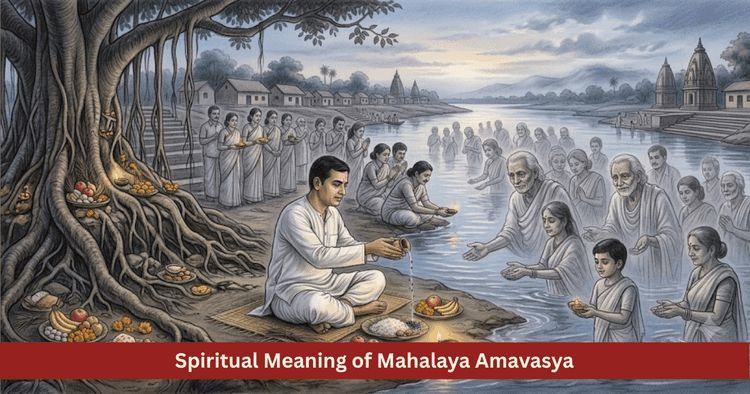
Table of Contents
Know the Date and Rituals First
Mahalaya Amavasya is also called Sarva Pitru Amavasya, Pitru Visarjan Amavasya or Pitru Moksha Amavasya. It is the final and highly important day of Ashwin Krishna Paksha Pitru Paksha. On this day, Shraddha, Tarpan and remembrance are performed for ancestors whose death Tithi is unknown, whose annual ritual was missed or whom the family wishes to honour collectively.
In 2026, Mahalaya Amavasya is observed on Saturday, 10 October. The Amavasya Tithi is calculated to begin at about 9:35 PM on 9 October and end at about 9:19 PM on 10 October. The correct time for Tarpan, Shraddha and Pinda Daan should be checked according to the location, sunrise and local Panchang.
Mahalaya Amavasya 2026 Primary Information
- Festival: Mahalaya Amavasya and Sarva Pitru Amavasya
- Date: 10 October 2026
- Day: Saturday
- Paksha: Ashwin Krishna Paksha
- Tithi begins: around 9:35 PM on 9 October
- Tithi ends: around 9:19 PM on 10 October
- Main period: afternoon Shraddha period after the morning bath and resolve
- Main rituals: Tarpan, Shraddha, Pinda Daan, food charity and lamp offering
- Special purpose: collective remembrance of all known and unknown ancestors
- Peepal lamp: at evening in a safe place
- Water Tarpan: in clean water or a clean vessel at home
- Central feeling: farewell, gratitude, peace and acceptance of ancestral responsibility
| Ritual | Suitable Time | Main Materials |
|---|---|---|
| Bath and resolve | Morning | Clean water, Kusha and sesame |
| Pitru Tarpan | Morning or afternoon | Water, black sesame and Kusha |
| Shraddha food | Afternoon | Sattvic food, Pinda and Dakshina |
| Food charity | After Shraddha | Rice, flour, pulses, fruit and clothing |
| Peepal lamp offering | Evening | Sesame oil, earthen lamp and flowers |
| Pitru Visarjan prayer | Evening or at the end of worship | Lamp, water and peaceful feeling |
Completion of the 16 Days of Shraddha
Pitru Paksha is regarded as a period of 16 lunar days in many traditions. During this time, families perform Shraddha according to the death Tithi of their ancestors. When the Tithi is known, Shraddha is performed on that specific Tithi. When the Tithi is unknown, Shraddha is performed on Mahalaya Amavasya.
The word Mahalaya may be understood as being connected with a great or expanded gathering. On this day, a family may remember not only one ancestor but also ancestors from the lineage, the maternal side, the paternal side and all departed relatives whose names or Tithis may have been forgotten with time.
This day is not a harsh farewell in which ancestors are sent away. Pitru Visarjan means that the remembrance, Tarpan and hospitality performed during Pitru Paksha are completed with gratitude. The family offers a prayer for peace and spiritual progress while respectfully concluding the period.
For Whom Is Sarva Pitru Amavasya Observed?
Sarva Pitru Amavasya is considered especially useful for ancestors whose death Tithi is unknown. It is also suitable for families that missed an annual Shraddha due to a reason.
Whom Should One Remember?
- Known and unknown ancestors from the paternal side
- Ancestors from the maternal side
- Grandfathers, grandmothers and maternal grandparents
- Departed unmarried members of the family
- Relatives who passed away prematurely
- Ancestors whose death Tithi is unavailable
- Ancestors who have no close descendant remaining
- All departed well wishers of the family
Remember with gratitude rather than fear or guilt. When a name is unknown, the person may be remembered collectively as part of all ancestors of the family and lineage.
Importance of Tarpan in Flowing Water
Water in Tarpan is regarded as a symbol of life, peace and satisfaction. Flowing water indicates change and movement forward. This is why Tarpan near a river or sacred water stream became a tradition. Water is offered with sesame and Kusha while remembering the ancestors.
From a religious view, offering water conveys the feeling of devotion and satisfaction to the ancestors. Scientifically, there is no evidence that flowing water reaches a dead person physically. The social and psychological meaning of Tarpan is clearer. A person expresses grief, love and gratitude through an organised ritual.
Simple Method of Tarpan in Flowing Water
- Bathe and wear clean clothes.
- Go to a river, lake or clean water source.
- Do not carry anything that may pollute the water.
- Follow the tradition of facing south.
- Hold water, black sesame and Kusha.
- Remember the Gotra and ancestors.
- Offer water slowly with both hands.
- Pray for peace for all known and unknown ancestors.
- Do not release plastic, cloth, food or worship materials into water.
- Express gratitude toward the river and nature at the end.
If a river or sacred water stream is unavailable, Tarpan may be performed at home in a clean vessel. The water may be offered to the roots of a plant or clean soil. Protecting the environment is also a form of ancestral service.
Pinda Daan and Shraddha Food
Pinda Daan uses rice, barley, black sesame, ghee and sometimes honey or milk. The Pinda is regarded as a symbol of body, nourishment and the connection of life. Pinda Daan expresses acceptance of the debt of body and life received from ancestors.
Sattvic food is prepared for Shraddha. According to family tradition, food may be served to a learned priest, elder, needy person or a person connected with cow service. The true importance of charity lies in fulfilling the need of the person receiving help.
Common Shraddha Food Materials
- Rice
- Pulses
- Vegetables
- Puri or Roti
- Kheer
- Fruits
- Sesame and jaggery
- Ghee
- Dakshina
- Clean clothing
Food should be fresh and served with respect. Treating the recipient as inferior, serving in haste or displaying charity contradicts the feeling of Shraddha.
Importance of a Lamp Under the Peepal Tree
The Peepal tree is regarded in Indian tradition as a sacred tree connected with Devas, ancestors and nature. Its shade, long life and environmental value have given it religious respect. In many regions, a sesame oil lamp is lit under a Peepal tree on the evening of Mahalaya Amavasya.
Religious belief regards the Peepal lamp as a symbol of ancestral peace, balance connected with Saturn and movement from darkness toward light. The lamp does not become a physical light for a dead person. Its spiritual meaning is that descendants light the inner lamp of gratitude, memory and Dharma.
Simple Method of Peepal Lamp Offering
- Choose a safe time after sunset.
- Clean waste from around the tree.
- Fill an earthen lamp with sesame oil.
- Place it at a safe distance from the roots.
- Do not place nails or metal objects in the trunk.
- Offer water, flowers and Akshat.
- Pray for peace for ancestors.
- Perform circumambulation according to tradition.
- Do not tie plastic, cloth or synthetic material to the tree.
- Keep the place clean after the lamp goes out.
Take full care of fire safety while lighting the lamp. Do not place it near dry leaves, plastic or vehicles. Follow local rules in public places.
Simple Mahalaya Amavasya Puja Method
Home Worship Sequence
- Bathe in the morning and wear clean clothes.
- Clean the home and worship area.
- Remember Lord Vishnu, ancestors and the family deity.
- Arrange water, sesame and Kusha.
- Take a resolve that the worship is dedicated to all known and unknown ancestors.
- Complete Tarpan or Shraddha.
- Prepare Sattvic food.
- Feed a needy person, elder or service organisation.
- Keep grains for cows, birds or other living beings.
- Light a lamp near the Peepal tree or Tulsi in the evening.
- Share good memories of ancestors with the family.
- Complete Pitru Visarjan with a peace prayer.
Guidance from the family priest is appropriate for extensive Pinda Daan or Vedic Shraddha. A person performing simple worship may also remember ancestors through water, sesame, lamp and charity with devotion.
Feeling Behind Pitru Visarjan
Visarjan does not mean ending the relationship. It means respectfully concluding the prescribed ancestral rites and offering farewell at the end of Pitru Paksha. The family tries to transform grief into memory and blessings rather than allowing it to become permanent fear.
At Pitru Visarjan, the devotee may pray for peace for ancestors, wisdom for the family and a righteous life for future generations. This ritual gives a person an opportunity to accept the reality of death and fulfil responsibilities in life with greater awareness.
Importance of Charity and Service
Charity on Mahalaya Amavasya is connected with ancestral grace and dedication of merit. Food, clothing, fruit, umbrellas, blankets, medicine, education materials and water service may be offered.
Useful Charity
- Groceries for a poor family
- Clothing or medicine for an elder
- Books or fee support for a student
- Food in a hospital
- Water and fruit for workers
- Food for animals and birds
- Planting trees or caring for trees
- Education for orphaned or needy children
- Water vessels or public water service
- Cow service or compassion toward living beings
Give according to capacity. Donating through debt or neglecting the needs of the family is not appropriate.
Mahalaya Amavasya from an Astrological View
Amavasya is the Tithi when the Moon is not visible. In astrology, the Moon represents the mind, memory and emotions. therefore Amavasya offers an opportunity for self observation and attention toward old relationships and subconscious feelings.
Astrological discussions of ancestral concerns may examine the Sun, Saturn, Rahu, the ninth house and the fifth house. Even so, it is not appropriate to claim that lighting a lamp on Mahalaya Amavasya will certainly remove every Pitru Dosha.
Astrological Supports for Ancestral Peace
- Offer water to the Sun regularly.
- Respect the father and elders.
- Donate food on Amavasya.
- Offer education service in the name of ancestors.
- Correct old harmful habits within the family.
- Offer labour and help to someone in need on Saturday.
- Seek chart based guidance from a qualified astrologer.
Scientific and Psychological Importance
The religious effect of Mahalaya Amavasya belongs to the sphere of faith. There is no scientific evidence that Tarpan water reaches ancestors physically. Even so, the social and psychological value of the day can be clear.
- The family remembers ancestors together.
- It creates an opportunity to express grief and unfinished emotions.
- Family history reaches the next generation.
- Charity gives real support to people in need.
- Respect and communication with elders increase.
- People reflect on death and the uncertainty of life.
- A feeling of protecting nature and water sources may develop.
- The family discusses responsibility and good conduct.
In this way, religious belief and modern understanding can remain balanced. Devotion should be preserved together with respect for the environment, health and human dignity.
What Should Be Avoided?
- Do not release plastic or waste into rivers and lakes.
- Do not harm the Peepal tree.
- Do not place the lamp where fire may spread.
- Do not become frightened in the name of Pitru Dosha.
- Do not take unnecessary debt for Shraddha.
- Do not waste food or Prasad.
- Do not insult a poor person.
- Do not treat dreams of death as certain signs.
- Do not connect a health issue only with ancestral anger.
- Do not turn the ritual into display or competition.
The Lamp of Memory
Mahalaya Amavasya completes the 16 days of Shraddha but it does not end responsibility toward ancestors. Water Tarpan creates humility in the mind. Charity keeps service alive. The Peepal lamp becomes a symbol of memory and hope. Pitru Visarjan is the process of honouring the past and returning to the present.
This day gives special support to those whose ancestral Tithi is unknown. Those whose names are forgotten may be remembered collectively as ancestors of the family and lineage. The most important point is that truth, service, restraint and compassion continue after Shraddha.
When a family remembers ancestors through gratitude rather than fear, Mahalaya Amavasya does not remain a day of grief. It becomes a bridge of love, memory and responsibility between generations.
FAQ
When is Mahalaya Amavasya in 2026?
Mahalaya Amavasya or Sarva Pitru Amavasya will be observed on Saturday, 10 October 2026. The Amavasya Tithi may continue from the night of 9 October to the night of 10 October.
Is Shraddha performed for unknown ancestors on Mahalaya Amavasya?
Yes. Shraddha and Tarpan may be performed on Mahalaya Amavasya for ancestors whose death Tithi is unknown or whose annual ritual was missed.
How should Tarpan be performed in flowing water?
Offer water, black sesame and Kusha near a clean water source. Do not release plastic, cloth or worship materials into the water. Tarpan may also be done at home in a clean vessel.
Why is a lamp lit under a Peepal tree?
Religious belief regards the Peepal lamp as a symbol of ancestral peace, remembrance and movement from darkness toward light. Fire safety and protection of the tree are necessary.
What should be donated on Mahalaya Amavasya?
Food, clothing, medicine, education materials, fruit, water and meals for people in need may be donated. Charity should follow capacity and actual need.
Get your accurate Kundali
Generate KundaliDid you like it?
Author

Pt. Sanjeev Sharma (63)
Experience: 20
Consults About: Family Planning, Career
Clients In: Punjab, Haryana, Delhi
Share this article with friends and family
WELCOME TO
ZODIAQ
Right Decisions at the right time with ZODIAQ
