Spiritual Secret of Garba and Dandiya
By Aparna Patni
Meaning of Garbha Deep, Goddess Shakti, energy cycle and Dandiya Raas
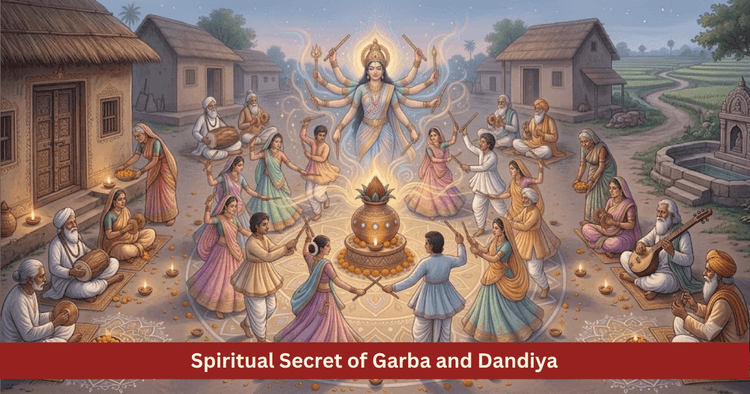
Table of Contents
Understand the Feeling of Garba and Dandiya First
Garba and Dandiya performed during the nights of Ashwin Navratri are not only entertainment or cultural performances. Their roots are connected with Goddess Shakti, the Garbha Deep, the circular cycle of life and collective devotion. The word Garba is connected with Garbha or the Garbha Deep. The flame burning inside the lamp is regarded as a symbol of creation, life and divine consciousness.
In traditional Garba, a lamp is placed inside a perforated earthen vessel or Garbi. Devotees move around it in a circle with rhythm, clapping and devotional songs. The lamp at the centre remains still while human beings move around it. This scene gives a deep message about the movement of life and the stability of divine consciousness.
Primary Information About Garba and Dandiya During Ashwin Navratri
- Occasion: Sharad Navratri during Ashwin Shukla Paksha
- Main centre: Garbha Deep, image of the Goddess or symbol of Shakti
- Meaning of Garba: creation, life and divine feminine power
- Circular movement: cycle of life, death and rebirth
- Meaning of Dandiya: struggle between the Goddess and demonic forces
- Dandiya sticks: symbols of the weapons and action power of the Goddess
- Main practice: rhythm, devotion, concentration and collective participation
- Physical aspect: light to moderate exercise and rhythmic movement
- Social aspect: community, cooperation and equal participation
- Caution: avoid loud sound, crowds and extreme fatigue
| Element | Symbolic Meaning | Message of Practice |
|---|---|---|
| Garbha Deep | Flame of life and creation | Recognising inner consciousness |
| Earthen vessel | Body and nature | Treating the body as a means of practice |
| Circle | Cycle of life | Do not forget the centre during change |
| Clapping and rhythm | Life force and harmony | Bringing the mind into focus |
| Dandiya sticks | Weapons of the Goddess | Courage against Adharma |
| Collective dance | Unity and cooperation | Rising above ego |
| Image of the Goddess | Stable Shakti | A spiritual centre in moving life |
Secret of the Garbha Deep
The deepest symbol of Garba is the Garbha Deep. A lamp burns inside a perforated earthen vessel. From outside the vessel may appear ordinary, but the inner flame makes it appear alive.
The earthen vessel symbolises the body. The body is made of nature and changes with time. The lamp indicates inner consciousness, which gives meaning to life through bodily change. The light emerging from the holes shows that inner consciousness appears through action, speech and conduct.
Some traditions connect the holes of the Garbha Deep with Nakshatras and cosmic directions. This interpretation is symbolic. Its main message is that human life is personal yet connected with nature and the wider order of the universe.
Life Messages from the Garbha Deep
- The body is a means of spiritual practice.
- Inner light should appear in outer conduct.
- Life changes while the centre of consciousness may remain steady.
- Creative power should be respected.
- Feminine power and motherhood should be honoured.
- The light of compassion should spread through home and society.
Why Is the Dance Performed in a Circle?
The circular form of Garba is regarded as a symbol of the cycle of life. Life passes through birth, growth, change, death and rebirth. The dancers move in a circle while the Garbha Deep or Goddess at the centre remains still.
The spiritual meaning is that the world keeps changing but the original centre of consciousness remains steady. A person moves through success, failure, pleasure and sorrow. If a stable spiritual centre exists within, outer change cannot completely disturb the person.
A person dancing in the circle does not remain alone. Everyone moves in one rhythm. This creates collective energy and unity. No one rises above the centre and no one is left outside. It becomes a beautiful expression of social equality and cooperation.
Symbolic Meaning of Circular Movement
- Continuous connection between beginning and end
- Cycle of life and death
- Seasonal movement of nature
- Feeling of planetary and Nakshatra movement
- Dissolution of ego by placing the Goddess at the centre
- Reduction of personal differences through collective rhythm
Connection Between Garba and Navratri
Navratri is the festival of worshipping Goddess Shakti. The nine forms of Goddess Durga are worshipped for nine days. Garba connects this nine night practice with the body, rhythm and collective joy.
The traditional purpose of Garba is to express gratitude by dancing before the Goddess. The devotee offers energy, happiness and effort to the Goddess. Through dance, the body also becomes a participant in spiritual practice.
Devotion during Navratri is not limited to sitting in a worship area. Serving through the body, joining the community, sharing joy and dancing with discipline can also become forms of devotion. Garba is a celebration of this wider devotion.
Religious Meaning of Dandiya Raas
Dandiya Raas is regarded as a dramatic form of the struggle between Goddess Durga and Mahishasura. The Dandiya sticks symbolise the weapons of the Goddess. The meeting of the two sticks in rhythm represents struggle, action and the power of Dharma.
In Dandiya, a person must match rhythm with the person opposite. If the rhythm breaks, the sticks may collide and cause injury. This gives a life message. Strength must remain joined with balance and awareness of another person.
Life Messages from Dandiya
- Face Adharma with courage.
- Use strength with restraint.
- Respect the limits and speed of others.
- Maintain coordination during struggle.
- Remain aware before reacting.
- Do not allow victory to become ego.
Dandiya is not only a symbol of war. It is also a dance of cooperation. Two people can create a beautiful Raas only when both respect each other's speed, distance and rhythm.
Importance of Clapping and Rhythm in Garba
In Garba, clapping, footsteps and instruments move together in rhythm. The sound of clapping creates enthusiasm and collective concentration. Some traditions connect three claps with three powers of the Goddess, the powers of desire, knowledge and action.
This interpretation differs by sect and region. In general, clapping means bringing body, mind and speech into one rhythm. When clapping and footsteps move together, the mind begins to remain in the present moment.
Mental Benefits of Rhythm
- Reduced distraction
- Rhythm in breathing and movement
- A feeling of connection with the group
- Lightness in emotional stress
- Happiness and enthusiasm
- Coordination between body and mind
Rhythmic movement is not a replacement for meditation, but it can become a form of meditation in motion. If a person observes steps, breath, music and the centre while dancing, Garba becomes a practice of concentration.
Physical and Scientific Aspect of Garba
Garba and Dandiya include continuous walking, turning, movement of the hands, rhythm and bodily balance. This generally keeps the body active and may increase the heart rate. Regular and balanced dancing can become a form of light to moderate exercise.
Collective dance may support social contact and mental happiness. Music, rhythm and group participation may reduce loneliness. Even so, it is not appropriate to claim that Garba cures every disease or that dance alone removes every physical problem.
Health Precautions
- Perform light body movement before dancing.
- Drink sufficient water.
- Wear comfortable and safe footwear.
- Do not dance at extreme speed for a long time.
- Consult a doctor in cases of knee, back or heart problems.
- Stop immediately in case of dizziness, chest pain or breathing difficulty.
- Do not dance intensely immediately after a meal.
- Keep a safe area for children and elders.
- Maintain distance and personal safety in crowds.
- Rest when fatigue appears.
Scientifically, the benefits of Garba may be understood through physical activity, rhythm, social contact and emotional happiness. There is no scientific basis for claiming that a special measurable energy is produced by the Garbha Deep. Its spiritual importance is based on symbol and devotion.
Garba and Feminine Power
The Garbha Deep is regarded as a symbol of creative power and motherhood. Therefore, Garba is connected with feminine power, the capacity to hold life and respect for nature. Goddess Durga shows that womanhood represents not only compassion but also courage, leadership, protection and transformation.
The participation of women makes this tradition living and vibrant. Yet respect for women is not complete only through participation in dance. Safety, education, freedom and decision making rights for women must also be respected at home, in the workplace and in society.
True Respect for Feminine Power
- Respect the wishes and limits of women.
- Create safe public environments.
- Support education for girls.
- Respect labour and talent properly.
- Provide equal decision making rights in the family.
- Act firmly against violence and insult.
- Respect personal identity along with motherhood.
Garba Practice During Ashwin Navratri
To perform Garba with devotion, not only movement but also feeling is necessary.
Before Garba
- Bathe and wear clean clothes.
- Light a lamp before the Goddess.
- Bow to the Garbha Deep or image of the Goddess.
- Keep a peaceful and pure resolve.
- Perform simple movement to activate the body.
- Check the safety of the venue.
During Garba
- Remember the lamp or Goddess at the centre.
- Pay attention to rhythm and steps.
- Do not push anyone.
- Avoid excessive speed.
- Dance with devotion and joy.
- Respect the rhythm of the group.
- Consider safety while wearing ornaments and clothing.
After Garba
- Bow to the Goddess.
- Drink water.
- Allow the body to rest.
- Help clean the venue.
- Respect the Prasad.
- Turn the joy of dance into service and harmony.
Rules for a Dandiya Event
- Dandiya sticks should be smooth and safe.
- Do not use very heavy or broken sticks.
- Understand distance and rhythm before playing.
- Respect the speed of the person opposite.
- Keep light sticks for children.
- Avoid fast turns in crowds.
- Stop immediately after an injury.
- Keep ornaments and loose clothes safe.
- Ensure sufficient light at the venue.
- Do not turn competition into conflict.
The purpose of Dandiya is joy, devotion and participation. Pressure to defeat others or perform for display reduces its natural spirit.
Astrological Side of Garba
Navratri occurs during Shukla Paksha and the light of the Moon gradually grows. Circular movement may be connected with the lunar cycle, planetary movement and the cyclical nature of time. The lamp at the centre becomes a symbol of the Sun and inner consciousness.
Rhythmic steps in Garba may express the energy of Mars, the lamp the awareness of the Sun, music the art of Venus, collective participation the emotional power of the Moon and devotion the Dharmic feeling of Jupiter.
Symbolic Planetary Feelings
- Sun: centre, self strength and light
- Moon: emotions, group and rhythm
- Mars: energy, steps and courage
- Mercury: rhythm, communication and learning
- Jupiter: devotion, Dharma and guidance
- Venus: music, beauty and art
- Saturn: discipline, endurance and continuity
These connections are symbolic. It cannot be claimed with certainty that playing Garba automatically removes a planetary affliction.
Balance Between Festival and Devotion
Over time, Garba and Dandiya have become part of large public events. Large gatherings connect communities and carry culture to younger generations. Even so, loud sound, excessive commercialisation and focus only on display may weaken the spiritual feeling.
There is no conflict between celebration and devotion. Decoration, music, colour and joy make Navratri vibrant. The essential point is to preserve the centre of the Goddess, respect the Garbha Deep, maintain safe conduct and protect collective dignity.
Ways to Make an Event Sattvic
- Begin the program with Goddess Aarti.
- Give the Garbha Deep a safe and respected place.
- Provide opportunities to local artists and craftspeople.
- Reduce the use of plastic.
- Keep water and medical assistance available.
- Create safe areas for women, children and elders.
- Follow sound limits and local rules.
- Clean the venue after the event.
- Join the festival with charity or service.
- Give importance to participation over competition.
The Energy Cycle of Navratri
The group moving in the Garba circle symbolises the cycle of human life. Each step may indicate movement from birth to death and death to rebirth. The lamp at the centre represents consciousness that remains steady through time and change.
Dandiya adds action and struggle to this cycle. Life is not only a peaceful circle. It also includes struggle against demonic tendencies, decisions, effort and victory. Garba presents inner peace and Dandiya presents active strength.
During Ashwin Navratri, this energy cycle reminds the devotee that life should have movement but also direction, celebration but also restraint and strength but also compassion. This is the balanced form of Goddess practice.
Devotion Awakened by the Lamp
Garba is not only dance. It is devotion moving around a lamp. The earthen vessel symbolises the body, the inner flame consciousness and the circle the movement of life. Dandiya reminds the devotee of the weapons of the Goddess and rhythm teaches harmony in action.
When a devotee dances with the Garbha Deep at the centre, a deep resolve is repeated without words. No matter how much life changes, Dharma, light and compassion within should remain steady.
The greatest success of Garba and Dandiya appears when their feeling continues after the celebration ends. When the body gains health, the mind happiness, society cooperation and conduct the qualities of the Goddess, the energy cycle of Ashwin Navratri becomes complete.
FAQ
Why is Garba performed during Navratri?
Garba is a devotional dance performed around the Garbha Deep or a symbol of Goddess Shakti. It represents creation, the cycle of life, Goddess worship and collective unity.
What is the meaning of the Garbha Deep?
The Garbha Deep is a flame burning inside an earthen vessel. The vessel symbolises body and nature while the lamp represents life, inner consciousness and divine Shakti.
Why are Dandiya sticks connected with the weapons of the Goddess?
Dandiya sticks are regarded as symbols of the weapons of the Goddess. Dandiya Raas represents the struggle between the Goddess and demonic forces and the victory of Dharma.
Does Garba provide health benefits?
Rhythmic dance keeps the body active, may increase heart rate and can support social happiness. People with health concerns should take precautions and seek medical advice.
What is the spiritual meaning of the Garba circle?
The circle represents the cycle of life, death and rebirth. The lamp at the centre indicates Goddess consciousness and the stable spiritual truth.
Get your accurate Kundali
Generate KundaliDid you like it?
Author
Aparna Patni (63)
Experience: 20
Consults About: Family Planning, Career
Clients In: Punjab, Haryana, Delhi
Share this article with friends and family
WELCOME TO
ZODIAQ
Right Decisions at the right time with ZODIAQ
