Navratri Kanya Puja Method
By Pt. Abhishek Sharma
Goddess forms and traditional results for girls aged 2 to 10
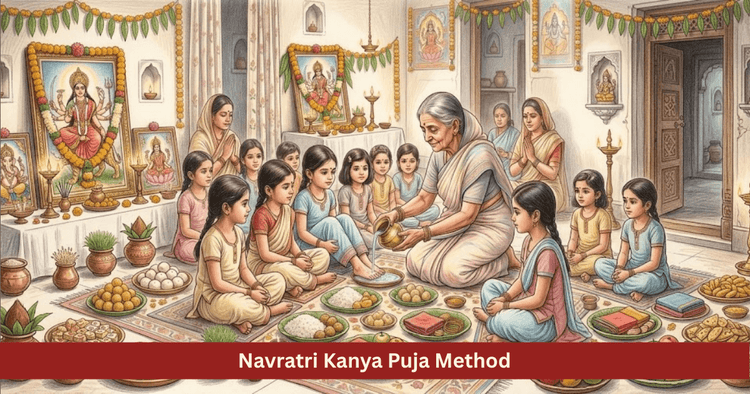
Table of Contents
Know the Date and Rules First
Kanya Puja is considered a deeply meaningful part of Goddess worship during Ashwin Navratri. On Ashtami or Navami, young girls are respected as child forms of Goddess Durga and offered food. Some families worship one or more girls each day while most homes perform Kanya Puja on Mahashtami or Mahanavami.
In the popular tradition, girls from 2 to 10 years of age are connected with different forms of the Goddess. The names and promised results vary slightly across scriptures and regions. therefore no single list should be treated as a rigid rule. Family tradition, local practice and the comfort of the children should guide the worship.
Sharad Navratri 2026 Primary Information
- Navratri begins: 11 October 2026
- Mahashtami: 19 October 2026
- Mahanavami: 20 October 2026
- Kanya Puja: Ashtami or Navami
- Age tradition: 2 to 10 years
- Main materials: Roli, Akshat, flowers, water, lamp and Prasad
- Food: Halwa, chickpeas, Puri, fruit and Sattvic sweets
- Respect: seat, food, Dakshina and useful gift
- Central feeling: respect for divine Shakti in a girl
- Caution: do not force a child to worship, touch feet or pose for photographs
- Core rule: do not turn Kanya Puja into display or a transaction for wishes
- Health rule: keep food fresh and suitable for children
| Age of Girl | Goddess Form | Traditional Result |
|---|---|---|
| 2 years | Kumarika | Relief from sorrow and poverty |
| 3 years | Trimurti | Wealth, family welfare and children |
| 4 years | Kalyani | Auspiciousness, education and prosperity |
| 5 years | Rohini | Health and relief from illness |
| 6 years | Kalika | Courage and victory over opposition |
| 7 years | Chandika | Fame, prosperity and success |
| 8 years | Shambhavi | Respect, wealth and spiritual growth |
| 9 years | Durga | Protection, relief from difficulty and fulfilment |
| 10 years | Subhadra | Auspiciousness, wishes and overall success |
Spiritual Meaning of Kanya Puja
The central feeling of Kanya Puja is that Goddess Shakti is visible not only in a temple image but also in living creation. Respecting a girl means respecting creative power, purity, the future and maternal consciousness.
Navratri worships the nine forms of Goddess Durga. Kanya Puja gives the devotee an opportunity to experience that Shakti in a simple human form. Feeding girls is not only a religious act. It reminds society that every girl deserves respect, safety, education and love.
The true result of Kanya Puja appears when the dignity of girls remains protected after the ritual ends. If a family calls a girl Goddess on the worship day but neglects her education, freedom or safety in daily life, the feeling of the ritual remains incomplete.
Main Messages of Kanya Puja
- Respect for girls
- Acceptance of feminine power
- Honour for creation and life
- Compassion within the family
- Safety and equality in society
- Culture of food and service
- Devotion without ego
Nine Goddess Forms According to Age
The 2 Year Old Kumarika
A 2 year old girl is called Kumarika. This form represents purity, simplicity and the first expression of life force. Tradition connects Kumarika worship with the wish for relief from sorrow, poverty and mental deprivation.
A child of this age cannot fully understand the worship process. therefore the ritual should remain simple, safe and affectionate. Do not subject the child to a long or difficult procedure.
The 3 Year Old Trimurti
A 3 year old girl is regarded as Trimurti. Trimurti represents the three powers of creation, preservation and transformation. Worship of this form is connected with wishes for wealth, grain, children and overall family welfare.
Trimurti also teaches that a family does not live by property alone. Love, care and proper discipline are also necessary.
The 4 Year Old Kalyani
A 4 year old girl is called Kalyani. Kalyani means the power that brings auspiciousness and welfare. Worship of this form is connected with wishes for auspiciousness, education, happiness and prosperity.
Along with Kalyani worship, taking a resolve to support education and healthy development of girls becomes more meaningful. Knowledge and values are the foundation of lasting prosperity.
The 5 Year Old Rohini
A 5 year old girl is called Rohini. Rohini represents growth, nourishment and health. Worship of this form is connected with prayers for relief from illness and family health.
Offering nutritious food, fruit or useful health materials brings this feeling into practical life. Instead of giving only sweets, keep the food balanced and suitable for children.
The 6 Year Old Kalika
A 6 year old girl is connected with the Kalika form. Kalika represents strength, fearlessness and opposition to Adharma. Worship of this form is associated with wishes for courage, self protection and victory over difficult opposition.
Kalika does not mean anger or violence. It is the strength to remain alert and firm before injustice. Children should also be taught courage along with humility and compassion.
The 7 Year Old Chandika
A 7 year old girl is called Chandika. Chandika is the fierce yet protective form of the Goddess. Worship of this form is connected with wishes for reputation, prosperity, success and victory over obstacles.
Chandika teaches that strength should be used for protection and justice. Treating others as inferior after success does not express the purpose of Goddess practice.
The 8 Year Old Shambhavi
An 8 year old girl is regarded as Shambhavi. Shambhavi represents the power of Shambhu and spiritual consciousness. Worship of this form is connected with wishes for respect, financial stability, knowledge and inner progress.
Shambhavi reminds the family that prosperity must remain joined with wisdom. Wealth should support education, health and service.
The 9 Year Old Durga
A 9 year old girl is regarded as Durga. This form is connected with protection, removal of difficulty and victory over obstacles. The tradition of Kanya Puja on Navami expresses this feeling strongly.
Along with Durga worship, the family should resolve to protect the safety and freedom of girls. Respect for the protective power of the Goddess becomes complete when society becomes safe for girls.
The 10 Year Old Subhadra
A 10 year old girl is called Subhadra. Subhadra represents auspiciousness, balance and completion. Worship of this form is connected with wishes, fulfilment of work and welfare of the family.
A 10 year old child can express preferences, discomfort and feelings more clearly. therefore her consent, comfort and respect deserve special attention during Kanya Puja.
Kanya Puja on Ashtami or Navami
Both Ashtami and Navami are traditional days for Kanya Puja. Some families perform it on Mahashtami while others perform it on Mahanavami. Families observing the full Navratri fast may also complete Parana after Kanya Puja.
In 2026, Mahashtami is observed on 19 October and Mahanavami on 20 October. The local timing of Tithi, Sandhi Puja and Parana may differ. Make the final decision according to the local Panchang and family tradition.
Which Day Should Be Chosen?
- Ashtami with the feeling of Shakti and Mahagauri
- Navami with the feeling of Siddhidatri and completion
- Daily as a small form of worship during nine days
- According to family tradition
- According to the comfort and availability of girls
A fixed number is not required for display. Respecting even one girl with sincere devotion can express the complete feeling.
Simple Method of Kanya Puja
Preparation Before Worship
- Clean the home and worship area.
- Prepare fresh and Sattvic food.
- Arrange clean seats for the girls.
- Keep Roli, Akshat, flowers and water ready.
- Cover the food and Prasad.
- Prepare Dakshina or useful gifts in advance.
- Consider age, allergies and food preferences of the children.
Step by Step Worship
- Welcome the girls respectfully.
- Seat them on clean seats.
- If followed by family tradition, wash their feet gently with clean water.
- Wipe their feet with a clean cloth.
- Apply a light mark of Roli or Kumkum on the forehead.
- Offer Akshat and flowers.
- Tie Mauli only if the girl feels comfortable.
- Serve Sattvic food such as Halwa, chickpeas and Puri.
- Give fruit, sweets and water.
- Offer Dakshina or a useful gift.
- Do not force the girls to give blessings.
- Perform Aarti of Goddess Durga at the end.
What Food Should Be Served?
Halwa, chickpeas and Puri are the most common foods served during Kanya Puja. Fruit, Kheer, sweets, curd and other Sattvic foods suitable for children may also be offered.
Food should be fresh, clean and light. Avoid food that is excessively spicy, very hot or likely to cause discomfort to children.
Useful Prasad
- Halwa
- Black chickpeas
- Puri
- Kheer
- Bananas and other fruits
- Coconut
- Rock sugar
- Milk or curd
- Clean water
- A light option for children
Keep alternatives for children with allergy to milk, nuts or other ingredients. Health safety in religious food is also part of devotion.
Gifts and Dakshina
Dakshina does not mean only money. A useful and respectful item can also become a form of Dakshina.
Useful Gifts
- Book
- Writing materials
- Water bottle
- Clean clothes
- Useful hair care materials
- Fruit and nutritious food
- Small amount of money
- School supplies
- Clean handkerchief or towel
- An item according to the girl's actual need
Do not treat a girl as poor, weak or someone receiving a favour while giving a gift. Respecting her as the Goddess means respecting her dignity and wishes.
Kanya Puja and Personal Wishes
Tradition connects different ages of girls with different results. These results should be understood as symbolic prayers rather than fixed guarantees.
| Wish | Symbolic Form |
|---|---|
| Relief from sorrow and deprivation | Kumarika |
| Family and financial growth | Trimurti |
| Auspiciousness and education | Kalyani |
| Health and nourishment | Rohini |
| Courage and protection | Kalika |
| Reputation and success | Chandika |
| Respect and spiritual growth | Shambhavi |
| Protection and fulfilment of work | Durga |
| Auspiciousness and completion | Subhadra |
The actual foundation of fulfilment is not worship alone. Education, health, financial planning, proper treatment and improvement in action are also necessary.
Kanya Puja from an Astrological View
Kanya Puja may be understood through qualities connected with the Moon, Venus, Jupiter and Goddess Shakti. The Moon represents motherhood and emotions, Venus beauty and relationships, Jupiter knowledge and Dharma and Mars protection and courage.
Kanya Puja may symbolise awakening the Sattvic form of these planetary qualities. It is not appropriate to guarantee that planetary difficulties will certainly end through this ritual. Remedies may differ according to the birth chart.
Planetary Feelings
- Moon: motherhood, compassion and emotional safety
- Venus: beauty, respect and sweet relationships
- Jupiter: education, Dharma and blessings
- Mars: courage, safety and strength
- Sun: self respect and leadership
- Mercury: learning, communication and intelligence
Social Responsibility of Kanya Puja
The most important modern meaning of Kanya Puja is the safety and education of girls. If society regards girls as the Goddess, it must also protect them from child marriage, violence, discrimination, lack of education and insecurity.
Resolutions After Worship
- Support the education of a girl.
- Pay attention to health of girls.
- Provide equal opportunities in the family.
- Oppose child marriage.
- Support safe schools and public places.
- Respect a girl's wishes and decisions.
- Offer regular help to a needy family.
Supporting girls throughout the year is more meaningful than feeding them only once during the ritual.
What Should Be Avoided?
- Do not force a girl to sit for worship.
- Do not force her to touch feet.
- Do not take photographs or videos without permission.
- Do not serve hot or unhealthy food.
- Do not ignore allergies and health limits.
- Do not make a young child wait for a long time.
- Do not create fear or pressure in the name of worship.
- Do not display the amount of Dakshina.
- Do not compare girls with one another.
- Do not forget their dignity after Kanya Puja.
Respect for the Child Form of the Goddess
Kanya Puja is a Navratri ritual in which the Goddess is seen not only in a distant image but also in a living girl seated before the family. This view compels the family to examine its own conduct.
From the 2 year old Kumarika to the 10 year old Subhadra, each form represents a different power of life. Traditional results give direction to wishes but their deeper meaning lies in respect for girls and responsibility toward society.
When a girl receives safety, education, freedom and affection along with food, Kanya Puja becomes complete. The grace of Goddess Durga appears not only as prosperity in the home but also in a society where every girl can grow without fear.
FAQ
When should Kanya Puja be performed during Navratri?
Kanya Puja is generally performed on Mahashtami or Mahanavami. Some families also perform it daily during the nine days.
What age should the girls be for Kanya Puja?
The popular tradition includes girls from 2 to 10 years of age. Ages and names may differ slightly across regions and scriptures.
Which Goddess form is represented by a 2 year old girl?
A 2 year old girl is regarded as Kumarika. Tradition connects Kumarika worship with the wish for relief from sorrow and poverty.
What food should be served during Kanya Puja?
Halwa, chickpeas and Puri are the most common foods. Fruits, Kheer, curd, sweets and child friendly Sattvic food may also be offered.
Does Kanya Puja fulfil personal wishes?
Religious belief considers Kanya Puja auspicious. Education, health, right action, effort and practical support are also necessary for the fulfilment of wishes.
Get your accurate Kundali
Generate KundaliDid you like it?
Author

Pt. Abhishek Sharma (63)
Experience: 20
Consults About: Family Planning, Career
Clients In: Punjab, Haryana, Delhi
Share this article with friends and family
WELCOME TO
ZODIAQ
Right Decisions at the right time with ZODIAQ
