Delicious Sattvic Navratri Recipe Ideas
By Pt. Abhishek Sharma
Five unique fasting dishes without onion and garlic
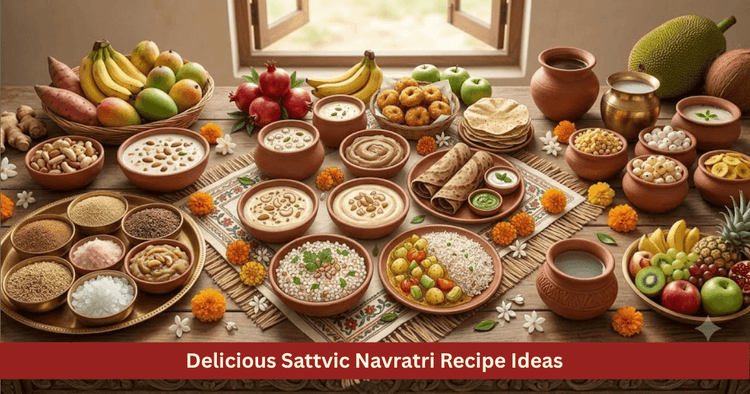
Table of Contents
Know the Food Rules First
During Navratri, many devotees observe a fast and many families follow a Sattvic diet. Food without onion and garlic can still be delicious, nourishing and satisfying. The main requirements are the right choice of ingredients, balance of spices and patience in the cooking method.
The tradition of fasting food and Sattvic meals may differ according to region and family. Some homes take only fruits, some use water chestnut flour, buckwheat, barnyard millet and sago and some prepare a regular vegetarian thali after removing onion and garlic. Therefore, the methods given below may be adopted according to family tradition and personal health.
Primary Information for Sattvic Navratri Food
- Suitable time: morning, afternoon and evening meals during the nine days of Navratri
- Core principle: simplicity, cleanliness, restraint and easily digestible food
- Common avoidance: onion, garlic and excessively fried food
- Fasting ingredients: water chestnut flour, buckwheat flour, barnyard millet, sago and amaranth
- Vegetables: potato, colocasia, bottle gourd, pumpkin, sweet potato, tomato and green chilli
- Flavour builders: cumin, black salt, rock salt, green cardamom, cinnamon and ginger
- Protein sources: paneer, curd, fox nuts, peanuts and coconut
- Sweetness: jaggery, rock sugar, sugar, dates and fruits
- Fat: ghee or pure cooking oil in moderate quantity
- Core feeling: treat food not only as taste but as support for spiritual practice
| Dish | Main Ingredients | Suitable Time | Nature of Taste |
|---|---|---|---|
| Water chestnut paneer kachori | Water chestnut flour, paneer, potato | Breakfast or evening | Crisp and filling |
| Barnyard coconut khichdi | Barnyard millet, coconut, fox nuts | Afternoon meal | Light and fragrant |
| Buckwheat paneer tikki | Buckwheat flour, paneer, potato | Evening snack | Golden and spiced |
| Fox nut cream curry | Fox nuts, tomato, cashew | Main thali | Creamy and rich |
| Sweet potato pomegranate chaat | Sweet potato, pomegranate, curd | Fasting snack | Sweet sour and fresh |
How Taste Develops Without Onion and Garlic
Onion and garlic give food a sharp and deep flavour, but the Sattvic kitchen has other paths to taste. Roasted cumin, grated ginger, green chilli, tomato pulp, coconut, cashew paste, sesame, rock salt and fresh coriander create depth in a dish.
The purpose of Sattvic food is not only restriction. Its feeling is to keep the mind light, the body comfortable in digestion and the spiritual practice steady. Too much chilli, excessive frying and heavy sweetness can also disturb balance. Therefore, moderation remains most important.
When the fragrance of ghee rises while kneading dough, cumin blossoms in tempering and tomato slowly thickens, full flavour awakens even without onion and garlic. Food cooked in haste often tastes flat. Slow heat and the right sequence form the real base of flavour.
Recipe 1: Water Chestnut Paneer Kachori
This dish lifts the fasting breakfast beyond ordinary potato puri. A crisp outer covering and a soft spiced paneer filling make the meal special.
Required Ingredients
- Water chestnut flour 2 cups
- Boiled potatoes 2 medium
- Paneer 1 cup, crumbled
- Green chillies 2, finely chopped
- Ginger 1 small piece, grated
- Cumin powder 1 small spoon
- Black salt as needed
- Rock salt as needed
- Finely chopped coriander 2 large spoons
- Ghee or oil for kneading and frying
Method
- Mash 1 boiled potato into the water chestnut flour.
- Add rock salt and 1 small spoon ghee and knead a soft dough.
- If the dough feels dry, bind it with a very small amount of water.
- Mix paneer, the second mashed potato, green chilli, ginger, cumin powder, black salt and coriander to prepare the filling.
- Take small portions of dough, place filling in the center and shape into kachoris.
- Fry on medium heat in ghee or oil until golden.
- Frying in very hot oil may colour the outside quickly while leaving the inside undercooked.
- Serve hot kachoris with curd or green chutney.
This kachori is suitable for travel, fasting gatherings and a light meal after evening Aarti. Adding a few crushed fox nuts to the filling increases the crisp texture.
Recipe 2: Barnyard Coconut Khichdi
Barnyard millet is light and cooks quickly. Coconut and fox nuts raise ordinary fasting food into a fragrant and satisfying dish.
Required Ingredients
- Barnyard millet 1 cup
- Water 3 cups
- Fresh grated coconut half cup
- Fox nuts half cup
- Cumin 1 small spoon
- Green chillies 1 or 2
- Ginger a little, grated
- Rock salt as needed
- Ghee 2 large spoons
- Cashews 8 to 10 pieces
- Lemon juice 1 small spoon
- Fresh coriander for garnish
Method
- Wash the barnyard millet and soak it for 10 minutes.
- Heat ghee in a vessel and temper the cumin.
- Roast cashews and fox nuts until lightly golden.
- Add ginger and green chilli and roast until fragrant.
- Add grated coconut and stir for one minute.
- Add the soaked millet and mix gently.
- Add water and rock salt and bring to a boil.
- Lower the heat, cover and cook for 8 to 10 minutes.
- When the grains soften and the water dries, turn off the heat.
- Mix lemon juice and coriander and serve hot.
Bottle gourd raita or plain curd forms a very digestible combination with this khichdi. If a thicker khichdi is preferred, keep the water quantity slightly lower.
Recipe 3: Buckwheat Paneer Tikki
Buckwheat flour is popular during fasting, but it need not remain limited to roti or fritters. A tikki made with paneer and potato appeals to both children and adults.
Required Ingredients
- Boiled potatoes 3
- Paneer 1 cup
- Buckwheat flour half to 1 cup
- Green chillies 2
- Ginger 1 small piece
- Black salt as needed
- Rock salt as needed
- Cumin powder 1 small spoon
- Finely chopped coriander 2 large spoons
- Ghee or oil for roasting
Method
- Mash the potatoes and paneer well.
- Mix green chilli, ginger, spices and coriander.
- Add buckwheat flour gradually and make a mixture that binds well.
- Too much flour can make the tikki hard, so remain moderate.
- Shape small tikkis and roast them on a pan over medium heat.
- Apply ghee on both sides and cook until golden.
- Serve hot tikkis with pomegranate seeds and curd.
It is better to roast the tikkis immediately. If the mixture is left open for long, the potato may release water. If the mixture feels loose, add a little more buckwheat flour.
Recipe 4: Fox Nut Cream Curry
This dish makes the Navratri thali feel festive. Fox nuts are light and the cashew tomato gravy gives them a creamy form. Even without onion and garlic, the curry tastes deep and balanced.
Required Ingredients
- Fox nuts 2 cups
- Tomatoes 3 large
- Cashews 12 pieces
- Ghee 2 large spoons
- Cumin 1 small spoon
- Ginger 1 small piece
- Green chilli 1
- Rock salt as needed
- Red chilli as needed, if family tradition allows
- Garam masala one pinch
- Fresh milk or water half to 1 cup
- Cream 2 large spoons, optional
Method
- Roast the fox nuts in 1 large spoon ghee until lightly golden.
- Boil tomatoes, cashews, ginger and green chilli and allow them to cool.
- Grind them into a smooth paste.
- Temper cumin in the remaining ghee and add the paste.
- Roast the paste until the ghee begins to separate lightly.
- Add rock salt, chilli and garam masala.
- Add milk or water and bring the gravy to the desired thickness.
- Add the roasted fox nuts and cook on low heat for 4 to 5 minutes.
- Mix cream at the end and allow one gentle boil.
- Serve the hot curry with barnyard millet or buckwheat puri.
If fox nuts boil for too long, they may become excessively soft and lose shape. Therefore, add them only in the final stage of cooking. This dish holds a special place in a guest thali.
Recipe 5: Sweet Potato Pomegranate Chaat
During fasting days, a light and refreshing chaat creates balance between heavier meals. Sweet potato gives natural sweetness, curd gives coolness and pomegranate adds a juicy taste.
Required Ingredients
- Boiled sweet potato 2 medium
- Thick curd 1 cup
- Pomegranate seeds half cup
- Raw banana 1, optional
- Black salt as needed
- Rock salt as needed
- Roasted cumin powder 1 small spoon
- Lemon juice 1 small spoon
- Honey or rock sugar half small spoon, optional
- Mint leaves for garnish
Method
- Peel the sweet potato and cut it into small pieces.
- Whisk the curd until smooth.
- Mix black salt, rock salt, cumin powder and lemon juice into the curd.
- Add the sweet potato pieces to the curd.
- Mix pomegranate seeds and banana pieces.
- If a sweet sour balance is desired, add honey or rock sugar.
- Garnish with mint and a few pomegranate seeds.
- Serve immediately so that the chaat remains fresh.
This chaat is also suitable when breaking a fast because it is not heavily fried. Fresh and thick curd should be used to keep digestion comfortable.
Practical Tips to Improve Flavour
- Use spices after lightly roasting them, not in a raw state.
- The fragrance of ghee makes Sattvic dishes special.
- Roasting tomato well balances its sourness.
- Coconut and cashew paste give body and mild sweetness.
- The balance of rock salt and black salt deepens flavour.
- Add fresh coriander, mint and lemon only at the end.
- Keep both fried and boiled items in one thali.
- Do not overdo sweets and salty snacks.
- Keep the night meal lighter than the daytime meal.
- Drink sufficient water.
Spiritual Side of Sattvic Food
During Navratri, food is not regarded only as a way to fill the stomach. A Sattvic diet is considered helpful in reducing restlessness of mind and bringing steadiness into spiritual practice. Onion and garlic are understood in many traditions as increasing Rajas and Tamas, so they are removed during the fasting period.
Cleanliness of the kitchen, a calm mind and a grateful feeling while cooking are also part of Sattvic living. If the dish is excellent but speech remains harsh, the balance of spiritual practice remains incomplete. Serving food to the family is also a form of service.
Food Related Precautions
- Do not keep stale food during the fast.
- Do not prepare excessively fried items every day.
- Follow medical advice in cases of diabetes, digestive trouble or other illness.
- Keep chilli low for children and elderly family members.
- Choose alternatives if there is allergy to peanuts, milk or paneer.
- Buy outside fasting food only after checking cleanliness.
- After a long fast, do not eat heavy food suddenly.
- Keep space for fruits and water.
Astrological and Mental Perspective
In the Vedic tradition, Navratri is a period of spiritual discipline. Light and Sattvic food is considered helpful in calming the mind associated with the Moon. Reducing excessively sharp food may support Pitta balance and avoiding overly dry food may support Vata comfort.
A well arranged thali creates contentment in the mind. When a devotee feels that fasting means only deprivation, a sense of lack arises. Varied and delicious Sattvic dishes teach that joy is also possible along with discipline.
The Taste of Practice in the Kitchen
Navratri food without onion and garlic does not become dull. Water chestnut paneer kachori, barnyard coconut khichdi, buckwheat paneer tikki, fox nut cream curry and sweet potato pomegranate chaat prepared with the right method prove that purity and flavour can remain together.
The Navratri kitchen becomes successful when it nourishes the body, keeps the mind light and gathers the family around one thali. The simpler and purer the dishes remain, the easier spiritual practice becomes. The secret of taste does not lie in expensive ingredients. It lies in the feeling of careful preparation.
FAQ
Can food without onion and garlic taste delicious during Navratri?
Yes. With the balanced use of cumin, ginger, tomato, coconut, cashew, rock salt and ghee, delicious food can be prepared even without onion and garlic.
Which flours can be used during the fast?
Water chestnut flour, buckwheat flour, amaranth flour and barnyard millet are used in many fasting traditions. Choose according to family custom.
With what should fox nut cream curry be served?
Fox nut cream curry may be served with barnyard millet, buckwheat puri or plain fasting bread options.
Are these dishes suitable for children?
Yes. By reducing chilli and controlling the quantity of fried food, these dishes can be made suitable for children as well.
What is the most important point while preparing Sattvic food?
Clean ingredients, moderate spices, the correct cooking method and a calm feeling are most important. Food should be treated as a support for spiritual practice.
Get your accurate Kundali
Generate KundaliDid you like it?
Author

Pt. Abhishek Sharma (63)
Experience: 20
Consults About: Family Planning, Career
Clients In: Punjab, Haryana, Delhi
Share this article with friends and family
WELCOME TO
ZODIAQ
Right Decisions at the right time with ZODIAQ
