Sacred Fast of Papankusha Ekadashi
By Pt. Amitabh Sharma
2026 date, Padmanabha Puja, Parana time and special charity
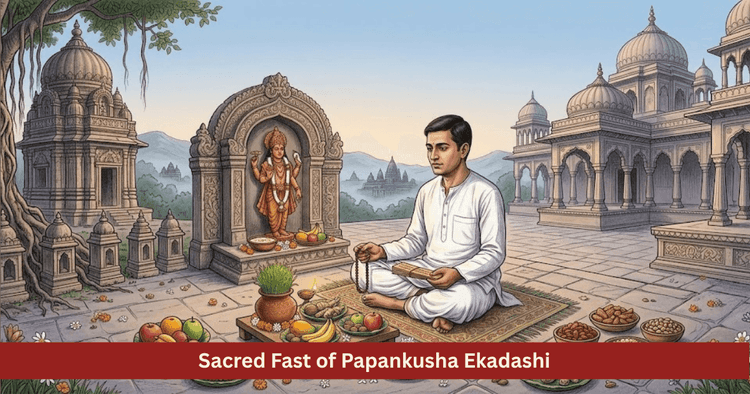
Table of Contents
Know the Date and Parana First
Papankusha Ekadashi falls on the Ekadashi of Ashwin Shukla Paksha. In 2026, the fast will be observed on Thursday, 22 October according to the Udaya Tithi tradition. The Ekadashi Tithi is calculated to begin around 2:12 PM on 21 October and end around 2:48 PM on 22 October.
The fast will be broken on Friday, 23 October 2026 during Dwadashi after sunrise. For Delhi and nearby regions, the general Parana period is given as 6:26 AM to 8:42 AM. The exact time may vary according to the city, sunrise and Vaishnava or Smarta tradition. Confirm the final Parana time through the local Panchang.
Papankusha Ekadashi 2026 Primary Information
- Fast date: Thursday, 22 October 2026
- Paksha: Ashwin Shukla Paksha
- Ekadashi Tithi begins: around 2:12 PM on 21 October
- Ekadashi Tithi ends: around 2:48 PM on 22 October
- Parana date: Friday, 23 October 2026
- General Parana time: 6:26 AM to 8:42 AM
- Main deities: Lord Padmanabha, Lord Vishnu and Goddess Lakshmi
- Main Mantra: Om Namo Bhagavate Vasudevaya
- Important charity: food, clothing, sesame, fruit, lamps and gold or cow service according to capacity
- Central feeling: restraint over mind, speech and action
- Caution: do not observe a strict fast during illness or weakness
- Main rule: perform Parana during Dwadashi after Hari Vasara
| Stage | Date | Main Action |
|---|---|---|
| Dashami preparation | 21 October | Sattvic food and restraint |
| Fast begins | 22 October | Bath, resolve and Vishnu worship |
| Day practice | 22 October | Mantra, story, charity and meditation |
| Night practice | 22 October | Bhajan, remembrance of Vishnu and vigil |
| Parana | 23 October | Break the fast after sunrise during Dwadashi |
| Service | During and after the fast | Food charity, clothing and help for people in need |
Meaning of the Name Papankusha
The word Papankusha is connected with two ideas. Papa means harmful or unrighteous action and Ankusha means an instrument of control. The spiritual meaning of the name is a fast that inspires control over wrong thoughts, uncontrolled desires and harmful actions.
The purpose of the fast is not only to hope that past actions will disappear. Its true purpose is to make future actions purer. If a person fasts while continuing falsehood, violence, deceit, anger and greed, the deeper message of Papankusha remains incomplete.
Ekadashi is connected with restraint of the mind and senses. Reducing food is only an outer rule. The real fast begins when a person also disciplines speech, sight, desire and conduct.
Four Restraints of Papankusha Practice
- Restraint over thoughts
- Restraint over speech
- Restraint over the senses
- Restraint over action
Importance of Lord Padmanabha
Lord Padmanabha is worshipped on Papankusha Ekadashi. Padmanabha is the form of Vishnu whose navel is traditionally associated with the lotus from which creation emerges. The lotus symbolises creation, knowledge and purity.
Lord Vishnu is regarded as the preserver and balancer of life. Worship of this form during Papankusha Ekadashi teaches the need to bring balance into life. It is not necessary to destroy every desire but desires must be directed through Dharma and wisdom.
The Padmanabha form also shows that creation expands from peaceful consciousness. When the mind is unstable, desires and actions become scattered. When the quality of Vishnu becomes balanced within, patience and order develop in life.
Religious Importance of Papankusha Ekadashi
Religious tradition connects Papankusha Ekadashi with reduction of harmful action, the grace of Vishnu, wealth, health and spiritual development. It is also believed that the merit of the fast may be dedicated to the peace and spiritual progress of ancestors.
Papankusha Ekadashi comes in the Shukla Paksha after Pitru Paksha. This creates a beautiful relationship between remembrance of ancestors and devotion to Vishnu. Pitru Paksha reminds a person of the past and ancestors while Papankusha Ekadashi inspires improvement in present action.
Results Described in Religious Tradition
- Repentance and inner purification
- Grace of Lord Vishnu
- Mental peace and restraint of the senses
- Discipline in financial life
- Harmony in the family
- Dedication of merit for ancestral peace
- Inspiration toward Dharma and service
- Spiritual wish for liberation and higher progress
These results should not be treated as certain and immediate miracles. The effect of a religious fast depends on feeling, conduct and regularity.
Preparation from Dashami
Preparation for Ekadashi begins on Dashami. Avoid heavy food, Tamasic diet and late night activity on Dashami night.
What to Do on Dashami
- Take a light Sattvic meal before sunset.
- Avoid meat, alcohol and intoxicants.
- Reduce excessive spices and fried food.
- Avoid rice and regular grains according to family tradition.
- Remember Lord Vishnu.
- Arrange materials for the next day's worship.
- Avoid anger and disputes.
- Try to sleep on time.
Restraint on Dashami makes the Ekadashi fast easier. It is not appropriate to suddenly push the body into a difficult state in the name of fasting.
Papankusha Ekadashi Puja Vidhi
Morning Preparation
- Wake during Brahma Muhurta or around sunrise.
- Bathe and wear clean clothes.
- Clean the worship area.
- Establish an image or idol of Lord Vishnu or Padmanabha.
- Remember Goddess Lakshmi.
- Light a ghee lamp and incense.
- Establish a Kalash if followed by family tradition.
- Offer yellow flowers, Tulsi and fruit to the Lord.
- Place Panchamrit or milk as Naivedya.
- Take the resolve for the fast.
In the resolve, include the name, Gotra, purpose of the fast and the feeling of surrender toward Lord Vishnu. If the fast is being observed for ancestral peace, that feeling may also be included.
Practice During the Day
- Chant Om Namo Bhagavate Vasudevaya.
- Recite Vishnu Sahasranama.
- Read or listen to the Papankusha Ekadashi story.
- Recite verses from the Bhagavad Gita.
- Visit a Vishnu temple.
- Light a lamp before Tulsi.
- Give food or fruit to a person in need.
- Maintain truth and gentleness in speech.
- Avoid anger, criticism and falsehood.
- Keep the mind away from unnecessary subjects.
Mantras for Papankusha Ekadashi
Simple Vishnu Mantras may be chanted during the fast. Pronunciation should remain peaceful and clear.
Main Mantras
- Om Namo Bhagavate Vasudevaya
- Om Namo Narayanaya
- Om Vishnave Namah
- Om Padmanabhaya Namah
- Vishnu Sahasranama
- Padmanabhastakam according to tradition
The simple meaning of Om Namo Bhagavate Vasudevaya is salutations to Lord Vasudeva. This Mantra awakens surrender, refuge and Vishnu consciousness.
Concentration is more important than the number of repetitions. If the devotee does not know the pronunciation fully, simple remembrance of the name of the Lord can also become sincere practice.
What May Be Eaten During the Fast?
The Ekadashi tradition includes avoiding regular grains and rice. The form of fasting should be chosen according to health and family tradition.
Fasting Food Options
- Fruits
- Milk
- Curd
- Fox nuts
- Sago
- Water chestnut flour
- Buckwheat flour
- Sweet potato
- Coconut
- Rock salt
What Should Be Avoided?
- Rice
- Wheat and regular grains
- Meat and alcohol
- Onion and garlic when fasting tradition restricts them
- Excess fried food
- Excess sweets
- Waterless fasting without need
- Eating through anger and stress
People with diabetes, pregnancy, blood pressure issues, digestive illness or regular medicine should avoid strict fasting. Fruit fasting or one light Sattvic meal may be adopted.
Special Charity on Papankusha Ekadashi
Charity is given importance on Papankusha Ekadashi for the grace of Vishnu and increase of spiritual merit. Charity should always follow capacity and actual need.
Useful Items for Charity
- Food and groceries
- Fruit and milk
- Yellow clothes
- Sesame and jaggery
- Lamps and ghee
- Religious books
- Education materials
- Medicine
- Water vessels
- Cow service
- Food for a person in need
- Gold or financial support according to capacity
Some traditions especially mention donation of land, cows, sesame and gold. In modern life, the meaning of such charity may be understood as genuine support for people in need.
Rules of Charity
- Give clean and useful items.
- Do not insult the recipient.
- Do not publicise the charity.
- Do not spend beyond capacity.
- Do not take debt to donate.
- Consider the needs of students, patients, elders and workers.
- Keep food fresh and Sattvic.
Papankusha Ekadashi and Tulsi Worship
Tulsi is regarded as especially dear to Lord Vishnu. On Papankusha Ekadashi, Tulsi leaves, yellow flowers and fruit are offered. Lighting a lamp before Tulsi and chanting a Vishnu Mantra is also considered auspicious.
Different rules exist regarding plucking Tulsi leaves on Ekadashi and Dwadashi. Many families use leaves collected earlier instead of plucking them on Ekadashi. Follow family tradition and do not harm the plant.
Importance of Vigil and Silence
Some devotees observe a night vigil on Papankusha Ekadashi. The vigil may include Bhajan, story, Mantra chanting and meditation. Its purpose is not to exhaust the body but to move the mind away from unnecessary subjects and toward remembrance of God.
Some traditions advise observing silence for a period. Silence becomes an exercise in restraint over speech. If complete silence is not possible, speaking less, speaking truth and avoiding harsh words can also become meaningful practice.
Importance of Parana
The Ekadashi fast is broken on the next day during Dwadashi. Papankusha Ekadashi Parana in 2026 will be performed on 23 October after sunrise. The general time is given as 6:26 AM to 8:42 AM.
The tradition advises avoiding Parana during Hari Vasara. Confirm the Parana period through the local Panchang because sunrise and the duration of Dwadashi differ according to location.
Simple Method of Parana
- Bow to Lord Vishnu.
- Take Tulsi water.
- Have fruit or a light drink.
- Then take Sattvic food.
- Do not take very fried or heavy food immediately.
- Perform food charity or service before eating.
- Feed a person in need on Dwadashi.
Papankusha Ekadashi from an Astrological View
Ekadashi is connected with the Moon, mind and restraint of the senses. The Moon grows during Ashwin Shukla Paksha. Fasting and Vishnu worship during this period may symbolise giving direction to the mind.
Vishnu worship inspires balance of Sattvic qualities connected with Jupiter, Mercury and the Moon. Jupiter represents Dharma and knowledge, Mercury discernment and speech and the Moon the mind.
Astrological Feelings of Practice
- Jupiter: Dharma, knowledge and charity
- Mercury: truthful speech and clear decisions
- Moon: meditation and mental peace
- Sun: respect for father and seniors
- Saturn: labour and responsibility
- Rahu: control over confusion and greed
A fast does not guarantee automatic removal of a planetary affliction. Remedies may differ according to the birth chart, planetary periods and transits.
Who Should Take Care?
- People with diabetes
- Pregnant women
- Children and elders
- People taking regular medicine
- People with high or low blood pressure
- People with serious digestive illness
- People recovering from illness
- People doing hard labour or travel
The purpose of fasting is not to damage health. If the body does not permit a strict fast, observe a simple fast with fruit, water and mental restraint.
The True Meaning of Restraining Sin
The real message of Papankusha Ekadashi is self control and not fear. Understanding the word sin only through punishment is a limited view. Falsehood, deceit, violence, exploitation, addiction, greed, anger and violation of another person's rights are actions that must be restrained.
Worship of Lord Padmanabha gives an opportunity to move beyond inner restlessness. Fasting is not only the practice of tolerating hunger. It is discipline in directing desire, purifying speech and joining action with Dharma.
Observe Papankusha Ekadashi through fasting, Vishnu worship, Tulsi offering, Mantra chanting, story, charity and Parana. The destruction of harmful action should not appear only as a miracle after worship. It should appear as reduction of harmful habits, increase of service and awakening of wisdom. This is the deepest fruit of Padmanabha worship.
FAQ
When is Papankusha Ekadashi in 2026?
According to the Udaya Tithi tradition, Papankusha Ekadashi will be observed on Thursday, 22 October 2026. The Tithi runs from the afternoon of 21 October to the afternoon of 22 October.
When is Papankusha Ekadashi Parana in 2026?
Parana should be performed on Friday, 23 October 2026 after sunrise during Dwadashi. The general time is 6:26 AM to 8:42 AM. Confirm through the local Panchang.
Which deity is worshipped on Papankusha Ekadashi?
Lord Vishnu in the Padmanabha form and Goddess Lakshmi are worshipped. Tulsi, yellow flowers, fruit and Panchamrit may be offered.
What should be donated on Papankusha Ekadashi?
Food, fruit, milk, yellow clothing, sesame, jaggery, religious books, education materials, medicine, water vessels and financial support according to capacity may be donated.
Does Papankusha Ekadashi destroy every sin?
Religious belief connects the fast with reduction of harmful action and inner purification. The true result appears when a person leaves harmful conduct and adopts truth, restraint, service and a righteous life.
Get your accurate Kundali
Generate KundaliDid you like it?
Author
Pt. Amitabh Sharma (56 Years)
Experience: 20
Consults About: Family Planning, Career
Clients In: Punjab, Haryana, Delhi
Share this article with friends and family
WELCOME TO
ZODIAQ
Right Decisions at the right time with ZODIAQ
