Secret of Panchbali in Shraddha
By Aparna Patni
Meaning of food offerings to crow, dog, ant, cow and Deva
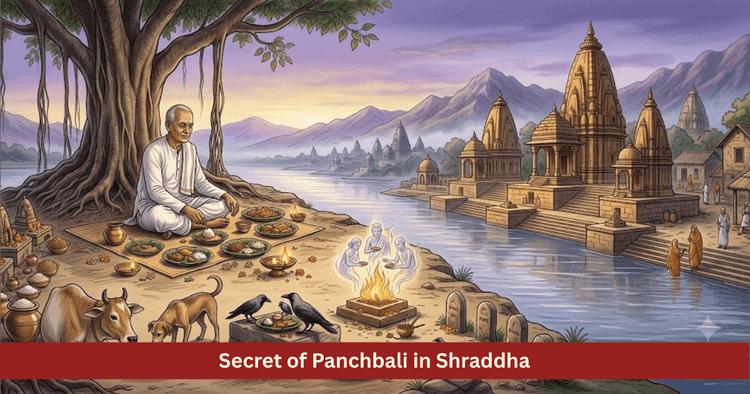
Table of Contents
Know the Rules of Panchbali First
During Pitru Paksha, Panchbali is offered first after the Shraddha meal is prepared. Panchbali does not mean violence toward any bird or animal. It means setting aside five portions of food and offering them to the cow, dog, crow, ant and Deva. In many traditions it is also called Panchgrasa.
In scriptural and folk belief, Shraddha is considered incomplete without Panchbali. Its feeling is that respect for ancestors should not remain limited only to human beings. It should extend to nature, living creatures, subtle beings and the five elements. Panchbali is a symbol of compassion, ecological balance and universal hospitality.
Primary Information About Panchbali
- Time: after the Shraddha meal is ready and before the priest or family eats
- Suitable period: Pitru Paksha, death Tithi Shraddha and Sarva Pitru Amavasya
- Five offerings: cow, dog, crow, ant and Deva
- Materials: Sattvic Shraddha food, leaves, sesame, water and flowers
- Direction: west, south or a clean outer place according to family tradition
- Order: first set aside portions for beings and Devas, then take food
- Feeling: offering of food and compassion, not violence
- Caution: clean food, safe place and respect for living beings
- Alternatives: cow fodder, bird grain or dry flour for ants when means are limited
- Core message: service to ancestors is joined with service to nature
| Panchbali | Being or Form | Symbol | Main Feeling |
|---|---|---|---|
| Gau Bali | Cow | Earth element | Nourishment, compassion and stability |
| Shvana Bali | Dog | Water element | Protection, Dharma and awareness |
| Kaka Bali | Crow | Air element | Ancestral message and remembrance |
| Pipilika Bali | Ant | Fire element | Subtle life and humility |
| Deva Bali | Deity | Space element | Divine presence and gratitude |
What Panchbali Is and What It Is Not
Hearing the word Panchbali, many people understand Bali as violent sacrifice. In Shraddha, Panchbali does not mean violent sacrifice. Here Bali means offering or setting aside a portion of food. Five parts of the meal are separated and given to the cow, dog, crow, ant and deities.
This act teaches that Shraddha is not limited to sitting indoors and eating food. Setting aside a share for nature and living beings before the meal expresses a wider feeling of hospitality. A family that feeds the cow, dog, birds and subtle creatures expresses gratitude toward many forms of life.
The Secret Connected with the Five Elements
According to one popular explanation, Panchbali is connected with the five great elements. The dog is associated with the water element, the ant with the fire element, the crow with the air element, the cow with the earth element and the Deva with the space element. From this view, Panchbali is not only feeding living beings. It is also an expression of gratitude toward the five foundations of creation.
The human body is also regarded as formed of earth, water, fire, air and space. When a devotee offers food to the symbols of these five, the person no longer sees the self as separate from nature but as a part of nature. This idea raises Pitru Paksha from a family ritual to a practice of cosmic balance.
Why Is Food Given to the Crow?
The crow is the most discussed bird in the Shraddha tradition. In folk belief, the crow is regarded as a messenger of the ancestors and a bearer of messages connected with Yama. Many families believe that when a crow accepts the food, it indicates acceptance by the ancestors.
This belief cannot be established as a scientific fact. Even so, the social and environmental meaning of feeding crows is clear. The crow is found in both towns and villages. Feeding it is compassion toward the bird world and respect for the food chain.
Simple Method of Kaka Bali
- Take out a clean portion of the Shraddha food.
- Place it on the roof, courtyard or a safe outer place.
- Prefer a leaf or clean vessel instead of a plastic plate.
- Do not offer food that is stale, excessively fried or extremely spicy.
- Protect the food until birds approach.
- If it remains uneaten, bury it or dispose of it according to a respectful tradition.
- Do not frighten or injure birds.
If a crow does not eat the food, do not treat it as a certain sign of ancestral anger. Weather, place, smell of food, crowd and availability of birds may all be reasons. Maintain devotion and compassion rather than fear.
Why Is Food Given to the Dog?
Food is given to the dog under Shvana Bali. In religious symbolism, the dog is associated with Yama and Bhairava. Some astrological interpretations also connect the dog with Ketu. In folk belief, feeding a dog is associated with protection, safety from sudden danger and auspiciousness on the path.
From a spiritual view, the dog symbolises loyalty, awareness and protection of the doorway. Feeding a dog during Shraddha teaches respect for home protection and loyal relationships. From a biological view, giving safe food to stray or pet dogs is compassion toward living beings.
Precautions for Shvana Bali
- Keep the food boneless and easy to digest.
- Avoid heavily spiced food if it may harm the dog.
- Do not give chocolate, sweets or harmful items.
- Place the food on a leaf or clean vessel.
- Do not beat, frighten or force the dog to eat.
- Offer the Shraddha portion respectfully and separately from the regular meal of a pet dog.
- Maintain cleanliness and safety while feeding stray dogs.
Why Is Food Given to Ants?
The offering to ants is called Pipilika Bali. Ants represent subtle life. Small beings living in the home and courtyard are also part of creation. Giving them flour, powdered rice or a small sweet grain portion symbolises humility and subtle compassion.
Some traditions connect ants with the fire element. Fire indicates transformation, digestion and the movement of action. Feeding ants awakens the feeling that small beings also have a right to life along with larger beings.
How to Perform Ant Offering
- Take dry flour, powdered rice or a fine portion of Shraddha food.
- Place a small amount where ants move safely.
- Do not place food in a way that blocks or crushes them at the mouth of the nest.
- Do not place grain on surfaces treated with insecticide or chemicals.
- Do not make the home unclean.
- Do not try to kill the ants.
- Perform this act for compassion and not for display.
Why Is Food Given to the Cow?
Food or green fodder is offered to the cow under Gau Bali. The cow is regarded as a symbol of the earth element, nourishment, motherhood and stable prosperity. Cow service is considered especially meritorious during Pitru Paksha.
When means are limited, green fodder, roti or jaggery with gram may also be considered sufficient. Forcing a cow to eat or giving unhealthy food is not service.
Simple Method of Gau Bali
- Choose a safe gaushala or protected place.
- Offer fresh fodder, roti or a suitable portion of Shraddha food.
- Keep plastic, polythene and rotten food away.
- One may bow and say Gaubhyo Namah.
- Support cleanliness at the gaushala.
- Avoid places associated with force or cruelty for milk production.
- Make cow service regular compassion rather than only a ritual.
Meaning of Deva Bali
The fifth portion in Panchbali is set aside for the deities. It is called Deva Bali or Devadi Bali. In some traditions it is offered at the fire, near Tulsi or at the home worship place. Later that portion may be placed outside for birds.
Deva Bali symbolises the space element and divine consciousness. Its feeling is that food should first be dedicated to the Divine and Dharma and only then used by human beings. This order reduces ego and increases gratitude.
Step by Step Method of Panchbali
How to Perform Panchbali in Shraddha
- Prepare Sattvic Shraddha food.
- First offer the food in the name of God and the ancestors.
- Keep five clean leaves or vessels ready.
- Take out the first portion for the cow.
- Take out the second portion for the dog.
- Place the third portion for the crow in a safe outer place.
- Place the fourth portion for the deities according to fire or home tradition.
- Place the fifth portion for ants or subtle beings.
- While offering each portion, pray for the satisfaction of the ancestors.
- After this, feed the priest, guest or family.
- Use or donate leftover food respectfully.
- Keep the place clean and do not pollute the environment.
If all five portions are not possible, offer cow fodder, bird grain and dry flour for ants according to capacity. Devotion and compassion are more important than complexity of method.
Biological and Environmental View
It is not appropriate to dismiss Panchbali only as blind belief. Its biological usefulness can also be understood. A portion of food reaches birds, dogs, cows and subtle creatures. In this way, part of the leftover food returns to nature.
In modern life, food waste is a major problem. Panchbali teaches respect for food and sharing a portion with living beings. This tradition may be called an ancient form of environmental sensitivity.
Biological Message
- Food is not the right of human beings alone.
- Birds and animals are part of the ecological system.
- Subtle creatures also play a role in the cycle of life.
- Wasting food is contrary to Dharma.
- Compassion should reach the courtyard and not remain limited to large temples.
Scriptural and Spiritual Meaning
In Garuda Purana and the Shraddha tradition, food charity, Tarpan, Pinda Daan and service to living beings are mentioned for the satisfaction of ancestors. Panchbali is a practical expansion of the same tradition. In religious language it is said that ancestors accept food through animals and birds.
It is more balanced to understand this symbolically. Respect for ancestors becomes meaningful when descendants practise compassion toward living beings, food charity and good conduct. Panchbali spreads that good conduct in five directions.
Spiritual Teaching
- Hospitality should not remain limited to human beings.
- Care for the weak along with the powerful.
- Keep a feeling of dedication before eating.
- Remain grateful toward nature.
- One path of repaying ancestral debt is compassion.
Panchbali from an Astrological View
In astrological interpretations, the crow may be linked with sky movement and ancestral signs, the dog with Ketu or Yama protection, the cow with Venus, Jupiter and earthly stability and food charity with the Moon and the feeling of Annapurna. Offering to the Deva indicates the Sun and the feeling of Dharma.
These connections should not be treated as mechanical formulas for planetary peace. The astrological value of Panchbali becomes meaningful only when a person acts through service and balance rather than fear of chart afflictions.
Simple Relation of Planetary Symbols
- Sun: offering to the Deva and self respect
- Moon: food, mind and nourishment
- Jupiter: Dharma, charity and guidance
- Venus: cow service and gentleness
- Saturn: dog, labour and protective feeling
- Rahu and Ketu: crow, subtle signs and freedom from delusion
- Earth related houses: cow, grain and stability
Psychological Importance
Panchbali takes a person beyond ego. The process of setting aside five portions before serving food teaches that the human being is not the master of creation but a participant in it. This small act can awaken humility and sensitivity in the mind.
If children are taught the meaning of Panchbali in a non violent way, they can learn compassion for living beings, respect for food and care for the environment. Pitru Paksha can become a time for learning compassion and not only a time of grief.
How to Practise It in Modern Life
In today's cities, feeding a cow, crow or ant may feel difficult. Even so, alternatives are available.
- Offer fodder or grain at a gaushala.
- Keep grain for birds on a roof or balcony.
- Give safe food to stray dogs.
- Keep dry flour for ants in a corner.
- Offer Naivedya at the deity place.
- Do not waste leftover food.
- Keep plastic and dirt away from living beings.
- Give children a practical lesson in compassion.
What Should Be Avoided?
- Do not understand Panchbali as violent sacrifice.
- Do not give stale, rotten or harmful food.
- Do not treat the absence of a crow as a curse.
- Do not force living beings to eat.
- Do not throw food and leaves into rivers and lakes.
- Do not spread pollution by placing food on plastic.
- Do not make photographs and publicity necessary.
- Do not give cows or dogs sweet packets and harmful items.
- Do not make Shraddha food contrary to health.
- Do not create unsafe crowds or conflict in the name of compassion.
Shraddha Completed Through Compassion
The secret of feeding the crow, dog, ant, cow and Deva during Shraddha does not lie only in the arrival of one bird. Panchbali teaches that respect for ancestors is joined with respect for nature, living beings and the five elements. The crow is a symbol of remembrance, the dog of protection, the ant of humility, the cow of nourishment and the Deva of gratitude.
When the Shraddha meal is first divided in these five directions, it no longer remains only a family meal. It becomes a sacrifice of compassion. The most beautiful teaching of Pitru Paksha is that sharing food is a living way of remembering ancestors. Panchbali performed without violence, fear and display makes Shraddha complete and humane.
FAQ
What is Panchbali in Shraddha?
Panchbali is the act of offering five portions of the Shraddha meal to the cow, dog, crow, ant and Deva. It is an offering of food and not a violent sacrifice.
Is Shraddha considered incomplete without Panchbali?
In many traditions, Panchbali is regarded as a necessary part of Shraddha because it joins ancestral service with compassion for living beings and respect for nature.
Why is Shraddha food given to the crow?
In folk belief, the crow is regarded as a messenger of the ancestors. Spiritually, it is a symbol of remembrance and compassion toward birds.
What is the meaning of feeding ants and dogs?
The dog is regarded as a symbol of protection and Dharma. The ant is a symbol of subtle life and humility. Feeding both expresses compassion toward all living beings.
What should one do if a cow or crow is not available?
Offer fodder at a gaushala, keep grain for birds, place dry flour for ants and offer Naivedya at the deity place. Maintaining compassion according to capacity is central.
Get your accurate Kundali
Generate KundaliDid you like it?
Author

Aparna Patni (63)
Experience: 20
Consults About: Family Planning, Career
Clients In: Punjab, Haryana, Delhi
Share this article with friends and family
WELCOME TO
ZODIAQ
Right Decisions at the right time with ZODIAQ
