Aja Ekadashi Karmic Meaning
By Aparna Patni
A path of karmic purification and patience through Vishnu worship
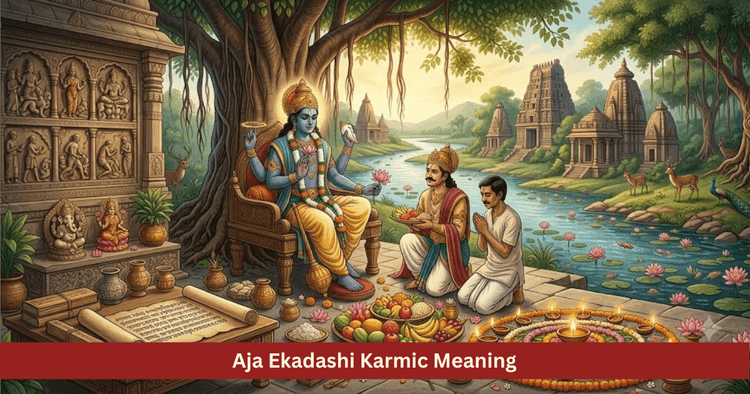
Table of Contents
Tithi Parana and Vrat Rules
Aja Ekadashi observed on the Ekadashi of Krishna Paksha in the Bhadrapada month is dedicated to Lord Hrishikesha, a form of Lord Vishnu. This vrat is regarded as a source of patience and inner strength during financial difficulty, humiliation, instability and suffering linked with karma. The Tithi and Parana time of Aja Ekadashi changes each year according to the local Panchang, so it is appropriate to know the Ekadashi Tithi and the Dwadashi Parana period before observing the vrat.
Key Details
| Subject | Details |
|---|---|
| Tithi | Bhadrapada Krishna Ekadashi |
| Deity | Lord Hrishikesha, Lord Vishnu |
| Main purpose | Karmic purification, mental discipline and stability in life |
| Type of vrat | Waterless fast, fruit diet or fasting according to capacity |
| Night practice | Vishnu remembrance, name chanting and vigil |
| Parana | At the proper time on Dwadashi Tithi |
Main Rules of the Vrat
- Follow purity and restraint from the night of Dashami Tithi
- After bathing on Ekadashi morning, take the vrat resolve before Lord Vishnu
- Observe a waterless fast, water intake fast or fruit diet according to health and capacity
- Avoid rice, wheat, lentils and tamasic food
- Avoid anger, harsh speech, untruth and insulting others
- Include Vishnu remembrance, listening to the sacred account and charity in the day
- Complete the vrat during the proper Parana period on Dwadashi
The nature of fasting is not to cause pain to the body but to discipline the senses and purify the mind. Those who are ill, pregnant women, elderly people and people taking regular medicine may observe the vrat with health suitable sattvic food instead of a strict fast.
When Life Tests a Person
There are times in life when circumstances do not become favourable even after sincere effort. Lack of money, injury to reputation, family tension or fear about the future can create a deep burden within. The message of Aja Ekadashi is not that every difficulty should be answered only through an outer ritual. Its essence is that during adverse times, a person should not allow the flame of truth, patience and dharma to fade within.
This vrat connects fasting with self reflection. A person tries to observe behaviour, decisions, debts, relationships and unnecessary burdens in life. This awareness can transform a difficult period from mere misfortune into an opportunity for learning, correction and refinement of karma.
Aja Ekadashi and King Harishchandra
The sacred account of Aja Ekadashi is associated with King Harishchandra. Known for his unwavering commitment to truth, he faced extremely difficult circumstances. Though deprived of kingdom, family and honour, he did not abandon truth. He was compelled to serve at a cremation ground during the severe test of life, yet he did not move away from dharma.
According to the account, on the guidance of Sage Gautama, King Harishchandra observed the Aja Ekadashi vrat. Through the faith, self restraint and truthfulness connected with this observance, his suffering ended, his family reunited and his kingdom was restored. The deeper meaning of this episode is not an expectation of an immediate miracle but inspiration to retain truth, responsibility and patience even in crisis.
Life Lessons From Harishchandra's Account
- Do not abandon truth even during difficult circumstances
- Maintain discernment during humiliation and loss
- The result of karma appears in time, so patience is essential
- Make the vrat a practice of self purification and resolve
- The dignity of life lies more in conduct than external wealth
Shelter in Lord Hrishikesha
The name Hrishikesha, a form of Lord Vishnu, means the Lord of the senses. Many human difficulties become deeper when fear, desire, anger and lack of restraint take control of decisions. Worship of Hrishikesha reminds a person to keep the senses under discernment rather than chase their demands.
During Aja Ekadashi, restraint receives primary importance in the worship of Lord Vishnu. Giving up food becomes meaningful only when speech becomes gentle, conduct becomes honest and the mind becomes compassionate. Without these qualities, the vrat remains only a change in daily routine.
Simple Worship Method
- Bathe in the morning and wear clean, simple clothes
- Place an image or sacred form of Lord Vishnu or Hrishikesha at the worship space
- Offer water, flowers, Tulsi leaves, incense and lamp
- Chant the name of Vishnu with a calm mind
- Pray for forgiveness for mistakes and strength to follow the right path
- Donate food, clothes or useful items according to capacity
- Complete Parana with discipline on Dwadashi
Vishnu Remembrance Mantra
Om Namo Bhagavate Vasudevaya
This mantra means salutations to Lord Vasudeva. It is considered a practice for steadying the mind and connecting with the deeper refuge of life.
Ekadashi and Purification of Mind
In Vedic tradition, Chandra, the Moon, is regarded as the significator of the mind. Ekadashi is the eleventh lunar day and is considered especially supportive for sense restraint, mental purification and devotion. Fasting creates a temporary distance from regular consumption, which can improve the ability to observe desires and habits.
Light or limited food, adequate water and a calm routine on Ekadashi may help the body experience rest. Yet it should not be considered a substitute for medical treatment. It is essential to respect the specific needs of the body and seek appropriate medical advice in health related circumstances.
Subtle Effects of Ekadashi Practice
| Level | Practice | Possible inner benefit |
|---|---|---|
| Body | Light sattvic food | Experience of rest and restraint |
| Mind | Name chanting and silence | Stability in thoughts |
| Speech | Truth and gentleness | Peace in relationships |
| Karma | Charity and service | Reduction in ego |
| Soul | Vishnu remembrance | Feeling of refuge and faith |
Shani Rahu and Financial Struggle
In Vedic astrology, Shani is considered the planet of labour, delay, responsibility and karmic results. Rahu is associated with confusion, unusual circumstances, sudden fluctuations and concerns related to reputation. When their Dasha, Antardasha or transit influences sensitive areas of life, a person may face financial pressure, instability or social criticism.
Still, it is not appropriate to consider every financial difficulty or loss of reputation only as the result of Shani or Rahu. Money management, work skills, decisions, partnerships, legal caution and social conduct also have important roles. Aja Ekadashi vrat is not meant to fill a person with fear. It is meant to inspire careful observation of karma and patient correction.
Useful Discipline During Difficult Times
- Keep a clear record of income and expenditure
- Remain careful about debt and unnecessary spending
- Consider personal capacity before making promises
- Maintain transparency and punctuality at work
- Stay away from criticism and deception
- Remember Lord Vishnu regularly
- Help a person in need according to capacity
Past Karma and Present Responsibility
The idea of karma from previous births is not meant to make a person inactive. Its purpose is to explain that every action returns in some form in life. Circumstances that appear difficult at present can also make a person more mature, humble and aware.
Karmic bonds become lighter when a person accepts mistakes, makes sincere efforts to improve, remains fair toward others and fulfils duties with integrity. Aja Ekadashi is a day to strengthen this inner resolve. If a person resolves to settle an old dispute, return rightful money or help someone in need, the spirit of the vrat becomes more meaningful.
The Wider Meaning of Ending Poverty
Poverty is not only lack of money. Sometimes a person may have resources yet lack contentment in the mind, trust in relationships, clarity in decisions and purpose in life. This may also be a form of inner poverty.
Aja Ekadashi guides a person toward inner prosperity along with material improvement. Regular effort, wise financial conduct, charity, truth and remembrance of the Divine together create the foundation for lasting prosperity. It is essential to bring the inspiration received from the vrat into daily actions.
Foundations of Real Prosperity
- Wealth earned honestly
- Spending according to need
- Trust and cooperation in the family
- Continuous development of knowledge and skills
- Timely charity and service
- Decisions aligned with dharma
- Contentment and gratitude in the mind
From Adversity to Discernment
The light of Aja Ekadashi awakens the capacity to remain steady during difficult times. This vrat teaches that in the test of life, the most valuable wealth is integrity, patience and self restraint. When a person resolves to refine karma along with worship of Lord Hrishikesha, direction begins to appear even in the midst of hardship.
The true effect of the vrat does not lie only in one day of hunger. It appears in purer thoughts, more responsible conduct and a more compassionate life in the days that follow. This is the lasting practice of Aja Ekadashi.
FAQ
When is Aja Ekadashi observed
Aja Ekadashi is observed on the Ekadashi Tithi of Krishna Paksha in the Bhadrapada month.
Which deity is worshipped on Aja Ekadashi
It is dedicated to Lord Hrishikesha, a form of Lord Vishnu.
What can be eaten during Aja Ekadashi vrat
According to health and capacity, fruits or sattvic vrat food may be taken. Rice, wheat, lentils and tamasic food are avoided.
What is the connection between Aja Ekadashi and King Harishchandra
According to the sacred account, King Harishchandra observed Aja Ekadashi on the guidance of Sage Gautama, after which his deep suffering ended.
Can Aja Ekadashi reduce financial difficulty
This vrat inspires self restraint, correction of karma, charity and wise living, which can strengthen practical and spiritual paths for overcoming financial difficulty.
Get your accurate Kundali
Generate KundaliDid you like it?
Author

Aparna Patni (63)
Experience: 20
Consults About: Family Planning, Career
Clients In: Punjab, Haryana, Delhi
Share this article with friends and family
WELCOME TO
ZODIAQ
Right Decisions at the right time with ZODIAQ
