Sacred Beginning of Pitru Paksha
By Pt. Amitabh Sharma
A spiritual path of remembrance, Tarpan and gratitude
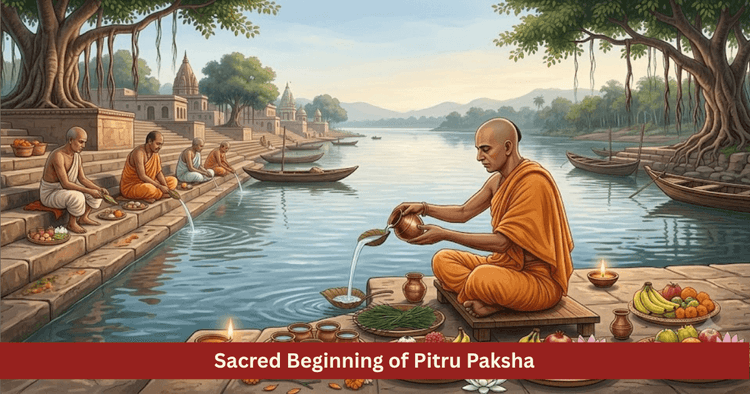
Table of Contents
From Purnima to Shraddha Paksha
Pitru Paksha begins on the Purnima of the Bhadrapada month. This period generally continues for 16 days and ends on Ashwin Amavasya, also known as Sarvapitra Amavasya. Pitru Paksha is a time of humble gratitude toward family memory, lineage and ancestors.
The Shraddha, Tarpan and charity performed during Pitru Paksha are not merely outward rituals. Through them, a person remembers earlier generations of the family, acknowledges their contribution and expresses respect for the values received in life. This feeling makes the entire period solemn, peaceful and spiritual.
Key Details of Pitru Paksha
| Subject | Details |
|---|---|
| Beginning | Bhadrapada Purnima |
| Duration | Generally 16 days |
| Ending | Ashwin Amavasya |
| Main rites | Shraddha, Tarpan, Pinda Daan and charity |
| Main divine beings | Pitrs, Surya Dev and Chandra Dev |
| Suitable time | From morning bath until the afternoon period |
| Central feeling | Faith, gratitude, restraint and remembrance |
Essential Rules for the Beginning Day
- Take a morning bath and wear clean, simple clothes
- Offer water to Surya Dev and remember the ancestors
- If possible, perform Tarpan calmly in a place facing the southern direction
- Black sesame seeds, Kusha grass and Akshata may be used in water according to family tradition
- Maintain sattvic conduct in food, speech and behaviour
- Donate food, clothes or essential items according to ability
- Give greater importance to Shraddha, meaning sincere faith, than display
At the Quiet Threshold of Memory
Every family has certain faces whose visible presence fades with time, yet whose values, struggles, decisions and blessings remain within the character of the household. The language of a home, its worship practices, hospitality, discipline, view of education and family dignity are often shaped across many generations.
Pitru Paksha is an opportunity to bow before that invisible inheritance. This period helps a person understand that life is not shaped by individual achievements alone. Behind it stand the labour, sacrifice and life experience of parents, grandparents and many ancestors.
When a person offers water to departed members of the lineage, it is not only a Vedic rite. It awakens a value of gratitude within, which strengthens humility, responsibility and the dignity of relationships in the family.
Why Does It Begin on Bhadrapada Purnima
Purnima is the day of the Moon's fullness. In Vedic tradition, Chandra, the Moon, is associated with the mind, emotions and maternal feeling. After Bhadrapada Purnima, the Moon begins to wane and the journey of Krishna Paksha begins. This sequence indicates a movement from outer expansion toward inner reflection.
The beginning of Pitru Paksha on Purnima suggests that the path of remembrance opens through emotional acceptance. The coolness of the full Moon steadies the mind, while the coming Krishna Paksha brings detachment, introspection and awareness of the temporary nature of life.
During this period, the family expresses gratitude to departed ancestors. It is not only a time of grief. It is a time to sanctify relationships through remembrance and awaken responsibility toward the lineage.
The Dakshinayana Influence of Surya
In Vedic astrology, Surya, the Sun, is regarded as the significator of father, inner strength, family dignity, authority and life force. Chandra, the Moon, is linked with mother, mind, nourishment and emotional security. therefore both Surya and Chandra hold deep symbolic importance during Pitru Paksha.
Dakshinayana refers to the annual movement in which the Sun is considered to proceed southward after Uttarayana. In religious tradition, the southern direction is associated with the Pitrs, the ancestors. For this reason, Dakshinayana is considered especially suitable for ancestral remembrance, charity, spiritual discipline and self reflection.
Meaning of Surya and Chandra in Pitru Paksha
| Astrological factor | Traditional association | Message during Pitru Paksha |
|---|---|---|
| Surya | Father, soul and family honour | Lineage dignity and responsibility |
| Chandra | Mother, mind and nourishment | Emotional memory and family sensitivity |
| Southern direction | Direction connected with the Pitrs | Humble remembrance and duty |
| Krishna Paksha | Inwardness and decline | Softening of ego and self reflection |
| Amavasya | Silence and surrender | Collective prayer for all ancestors |
It is said that during Dakshinayana, the subtle field between Earth and Pitru Loka, the ancestral realm, is experienced as closer. This should not be understood only as physical distance. Its spiritual meaning is that the mind can become more naturally aware of ancestors, karma and family responsibilities during this period.
Pitru Paksha and Pitru Dosha
Pitru Dosha is better understood as a deep karmic indication rather than a subject of fear. In Vedic astrology, this expression is used for situations where repeated challenges appear in matters related to family, lineage, father, children, honour, relationships or mental stability.
It is not right to consider every difficulty as Pitru Dosha. Life challenges may arise from many causes, including personal karma, present choices, health, surroundings and planetary periods. Yet Tarpan performed during Pitru Paksha gives a person an opportunity to fulfil duties toward the lineage, which can lighten the mind and expand auspicious feeling within the family.
When ancestral remembrance is considered helpful
- When bitterness has continued in the family for a long time
- When there is deep distance in relationships with father or elders
- When concerns related to children arise repeatedly
- When the home has carried neglect or disrespect toward ancestors
- When a person feels disconnected from roots, lineage and family history
In such situations, Shraddha and Tarpan should not be performed with expectation of an immediate result. It is more meaningful to perform them with a pure mind, humility and prayer for family welfare.
The Meaning and Method of Tarpan
The word Tarpan is related to satisfaction and contentment. While offering water, a person holds the feeling of peace, respect and gentle remembrance for the ancestors. Water is the basis of life, while sesame seeds are considered symbols of steadiness and subtle purification.
The method of Tarpan may differ according to family tradition, regional custom and priestly guidance. Those who do not know a detailed Vedic vidhi may still offer water to Surya Dev with a clean heart while remembering departed ancestors by name or in thought.
Simple Tarpan Procedure
- After bathing, sit in a clean place facing east or south
- Keep water in a copper or clean vessel
- Mix black sesame seeds, Kusha grass and Akshata in the water according to tradition
- Hold water in the hands and remember ancestors peacefully
- Offer the water slowly
- Pray for peace, right understanding and welfare of the family
- Offer Arghya, a respectful water offering, to Surya Dev at the end
What to Remember During Tarpan
| Appropriate actions | Actions to avoid |
|---|---|
| Maintain cleanliness and calm | Hurry and display |
| Respect elders at home | Harsh speech and disputes |
| Donate according to ability | Borrowing money for rites |
| Eat sattvic food | Intoxication and violent conduct |
| Remember ancestors with gratitude | Performing rites only out of fear |
The Role of Charity in Shraddha
Charity does not only mean giving an object. It means dedicating a portion of available resources to someone in need. During Pitru Paksha, food donation is given special importance because food sustains life.
If an elaborate Shraddha ceremony is not possible, one may express gratitude by feeding a hungry person, placing food and water for birds and animals, assisting an elderly person or offering useful items to someone in need. The purity of charity is not decided by its size but by the feeling behind it.
Useful Options for Charity
- Food grains and fruits
- Clothes
- Water vessels
- Sesame seeds and jaggery
- Educational materials
- Essential items for elderly people
- Food for cows, birds and other living beings
Charity should not hurt anyone's dignity. Even a small offering given respectfully builds deep values.
Ancestors, Lineage and Body Memory
The human body does not tell the story of the present life alone. Physical tendencies, emotional responses, values, fears, talents and views toward life may also be influenced by experiences across generations. In modern language, this may be understood as inherited memory and family conditioning.
Pitru Paksha offers an opportunity to accept that a person is connected to the journey of the family. This connection does not mean losing personal freedom. It means understanding the past with respect, carrying its virtues forward and transforming difficult memories through compassion and discernment.
This is why ancestral remembrance is emotionally important as well. It can make a person more sensitive toward parents and elders. Family dialogue may improve and the next generation may receive the value of respecting its roots.
Foundation for Future Generations
Honouring ancestors is not only about looking toward the past. It is also a responsible resolve for the future. When a family teaches children that opportunities in life are not only the result of individual talent, humility and responsibility both begin to develop.
During Pitru Paksha, the family may calmly discuss ancestors. Their struggles, virtues, values and traditions can be meaningful for children. At the same time, the family should reflect on behaviours that must not be carried forward, such as bitterness, neglect, arrogance or injustice.
Meaningful Family Practices
- Remember the names and life stories of ancestors
- Speak respectfully with parents and elders
- Pass good family traditions to children
- Make an effort to calm mutual disputes
- Perform a small act of charity or service together
- Maintain gratitude for food and water at home
Through these small practices, Pitru Paksha does not remain limited to ritual. It becomes a true value of harmony, service and dignity within family consciousness.
The Lineage Path Illuminated by Faith
The essence of Pitru Paksha is not fear but gratitude. This time inspires a person to look at the past with respect, improve present relationships and create a more sensitive environment for future generations.
The true fruit of Shraddha, Tarpan and charity becomes deeper when they are joined with honest living, respect for parents, responsibility toward family and compassion for those in need. Then ancestral remembrance does not remain a rite of one day. It becomes an enduring light of humility and dharma within life.
FAQ
When does Pitru Paksha begin
Pitru Paksha is considered to begin on Bhadrapada Purnima and ends on Ashwin Amavasya.
How many days does Pitru Paksha last
This period generally lasts 16 days, during which Shraddha, Tarpan and charity are performed for ancestors.
Why is Tarpan performed during Pitru Paksha
Tarpan is a Vedic process of expressing satisfaction, respect and gratitude toward ancestors.
What is Pitru Dosha
Pitru Dosha is understood as a sign of karmic obstacles connected with family, lineage, father, children or relationships but every problem should not be treated as Pitru Dosha.
What should be donated during Pitru Paksha
According to ability, one may donate food, clothes, sesame seeds, jaggery, water vessels and useful items for people in need.
Get your accurate Kundali
Generate KundaliDid you like it?
Author
Pt. Amitabh Sharma (56 Years)
Experience: 20
Consults About: Family Planning, Career
Clients In: Punjab, Haryana, Delhi
Share this article with friends and family
WELCOME TO
ZODIAQ
Right Decisions at the right time with ZODIAQ
