How To Perform Chaitra Navratri Ghatasthapana: Muhurta, Choghadiya And Akhand Jyoti Rules
By Pt. Abhishek Sharma
Authentic Timings, Materials List, Choghadiya And Flame Protocols
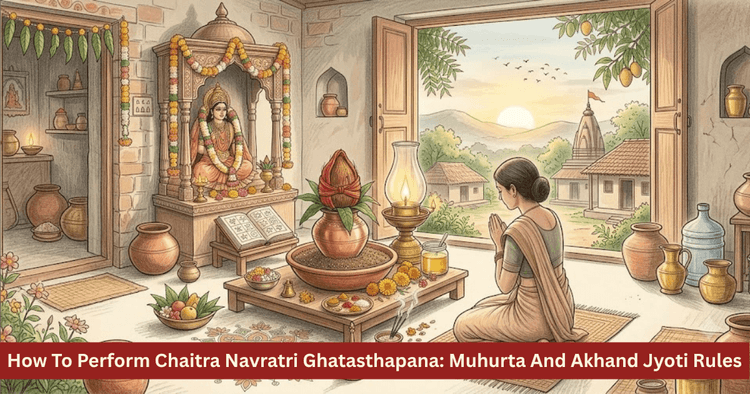
Table of Contents
Panchang Description And The Astrological Dynamics Of Ghatasthapana
According to the classical Vedic calendar, the bright fortnight of the month of Chaitra commences on Pratipada, inaugurating the nine-day spiritual sadhana of Vasanti Navratri. The preliminary rite of Ghatasthapana (Kalash installation) executed during the opening hours of this tithi represents the formal invocation of primordial cosmic energy into the terrestrial sphere. Astronomically, this temporal phase aligns with the vernal transit, as the Sun concludes its passage through Pisces, preparing to enter its exaltation sign of Aries, while the Moon navigates Revati or Ashwini nakshatra, recalibrating the vital forces across nature.
Authoritative digests of predictive astrology-including the Muhurta Chintamani, Dharmasindhu and Nirnayasindhu-mandate that Ghatasthapana must be performed either during the first one-third portion of Pratipada tithi (the morning hours) or during the auspicious midday window known as Abhijit Muhurta. A strict astrological embargo applies to Chitra Nakshatra and Vaidhriti Yoga; executing Kalash installation while these alignments are active is held to cause spiritual and domestic turbulence.
| Astrological Factor | Scriptural Rule and Direction |
|---|---|
| Lunar Month and Fortnight | Chaitra Month, Shukla Paksha (Waxing Fortnight) |
| Lunar Tithi | Pratipada (First Lunar Day) |
| Presiding Divinities | Supreme Mother Adishakti Durga and Lord Varuna |
| Forbidden Alignments | Chitra Nakshatra, Vaidhriti Yoga and Rahu Kala |
| Recommended Windows | Early Morning (Shubh/Amrit Choghadiya) or Midday Abhijit Muhurta |
| Core Element Balance | Earth Element (Seven Grains) and Water Element (Varuna Kalash) |
| Bestowed Spiritual Fruit | Material Prosperity, Somatic Cleansing, Inner Realization |
To ensure that the ritual invocation is executed correctly, the practitioner must observe strict disciplinary protocols starting from the early dawn:
- Awaken during Brahma Muhurta, bathe in cool water mixed with drops of holy river water and dress in unstitched, clean yellow or scarlet cotton attire.
- Consecrate the northeastern (Ishanya) corner of the worship sanctuary by washing the ground and applying an unbroken paste of sacred clay or cow dung.
- Verify that all grains, earthenware trays and botanical offerings are fresh, clean and entirely free from insect damage or contamination.
- Recite the classical Ganapati invocation, Navagraha mantras and lineage remembrance before initiating the Kalash setup.
- Declare your formal intention (Sankalpa) clearly, articulating your ancestral lineage (Gotra), name and spiritual objective.
- If kindling the unbroken flame (Akhand Jyoti), commit firmly to its non-negotiable operational requirements for all nine days.
Comprehensive List Of Consecrated Materials
The Kalash installation represents an alchemical assembly of cosmic building blocks. Every individual material carries a specific symbolic and energetic role:
- Earthen Base and Seven Grains: A wide, shallow terracotta dish; sterile river sand mixed with fertile clay; and the seven sacred grains (barley, wheat, sesame, foxtail millet, green gram, chickpeas and barnyard millet), with barley forming the primary portion.
- The Sacred Vessel (Kalash): An unblemished vessel forged from pure copper, brass or terracotta (iron, steel and aluminum are strictly prohibited).
- Purified Water: Pristine spring water enriched with drops from the sacred Ganga, Narmada or other holy waterways.
- Vessel Inclusions: An unbroken betel nut (supari), dried turmeric root, durva grass blades, natural attar (essential oil), raw unbroken rice (akshata), five sacred gems or a copper coin.
- Botanical Leaves and Coconut: Five or seven intact, fresh mango or ashoka leaves, a whole husk-intact coconut wrapped in scarlet silk and sacred red cotton thread (mouli).
- Liturgical Offerings: Pure cow clarified butter (ghee), thick raw cotton wicks, camphor, unbroken red flowers, seasonal harvest fruits and sweet prasad.
Step-By-Step Scriptural Protocol For Kalash Installation
To establish the Kalash in accordance with traditional liturgical manuals, execute the steps in the following order:
- Preparing the Earthen Base and Sowing the Grains: Construct an eight-petaled lotus design (Ashtadala Kamala) on the sanctified floor. Place the shallow terracotta dish upon it, spread the river sand and earth evenly and sow the seven grains uniformly across the bed. Moisten the layer lightly with sacred river drops.
- Adorning the Sacred Vessel: Wash and dry the copper or clay vessel. Draw an unbroken, sacred Swastika upon its outer surface using vermilion paste and turmeric. Wind the sacred red thread (mouli) three times around the neck of the urn, securing it firmly.
- Invoking Lord Varuna and Filling the Urn: Fill the vessel with pure consecrated water. Drop the betel nut, dry turmeric rhizome, durva grass, coin and drops of scent into the water while softly reciting the Varuna invocation formulas.
- Arranging the Foliage: Place five or seven fresh mango or ashoka leaves around the rim of the urn. Position them so their stems touch the water inside while their leafy tips point upward and outward. Anoint each leaf with sandalwood paste and vermilion.
- Seating the Coconut on the Grain Plate: Position an earthenware or copper lid filled with dry, raw rice over the mouth of the vessel. Wrap the dried, fibrous coconut in red silk, bind it with red thread and seat it securely upon the rice bowl. Ensure that the natural eye of the coconut faces toward the worshiper; it must never point vertically upward, downward or away from the practitioner.
- Invocation and Prana-Pratishtha: Fold your palms and mentally invoke the presence of the sacred rivers, guardian divinities and Mother Durga into the assembly. Conclude with a complete fivefold or sixteenfold adoration (Shodashopachara) utilizing incense, a ghee lamp, flowers and sweet offerings.
The Akhand Jyoti: Directional Science And Disciplinary Protocols
The unbroken flame maintained throughout the nine days represents unbroken conscious awareness and the living presence of the Divine Mother. Maintaining this lamp requires careful adherence to directional and operational guidelines:
| Fuel Source | Lamp Material | Altar Orientation | Spiritual and Energetic Influence |
|---|---|---|---|
| Pure Cow Clarified Butter | Brass or Pure Copper | Right side of the Deity (Left side of Practitioner) | Sattvic refinement, inner peace, divine grace |
| Pure Unrefined Sesame Oil | Brass or Terracotta | Left side of the Deity (Right side of Practitioner) | Pacification of planetary stress, warding off obstacles |
Essential Protocols for the Unbroken Flame
- Wick Preparation: The wick should be fashioned from unbroken, pure red cotton thread (mouli), twisted firmly without knots, measuring approximately one cubit (the length of the forearm).
- Maintenance Technique: Never adjust the wick of the active unbroken flame using fingers or ferrous iron instruments. Utilize a clean peacock feather spine or a copper wire. To adjust the wick safely, light a small secondary lamp first, make the necessary adjustment and allow the primary flame to stabilize.
- Sanctuary Attendance: The room housing the unbroken flame must never be left completely vacant or shuttered. At least one responsible member of the household should remain present on the premises at all times.
- Draft Protection: Shield the flame with a perforated glass cylinder or wire mesh dome to prevent unexpected drafts of wind from extinguishing it.
- Natural Conclusion: At the conclusion of Navratri on the ninth or tenth day, never extinguish the flame by blowing on it or fanning it down; allow the remaining fuel to exhaust itself naturally and peacefully.
The Growth Of Barley Sprouts: Interpreting Environmental Omens
The barley grains sown beneath the Kalash serve as a traditional biological indicator, reflecting subtle energy balances for the upcoming year:
- If the shoots germinate swiftly within three days, growing upright, dense and displaying an emerald-green or pale golden hue, it indicates unhindered progress, vitality and abundance.
- If the lower half of the shoot grows pale white while the upper blade turns lush green, it suggests that the first half of the year may demand patience, followed by material and spiritual expansion.
- If the sprouts emerge sparse, brittle, deeply discolored or fail to germinate altogether, it highlights latent stressors, health vulnerabilities or spiritual inertia. In such instances, the practitioner should intensify their daily mantra recitation and perform charitable acts to clear accumulated obstacles.
Philosophical Essence Of The Ritual
The earthen base represents our mortal physical frame, while the water held within the urn signifies the pure, unattached soul. The grains sown in the soil teach us that our physical existence must be nourished by righteous deeds (dharma). The fibrous coconut placed upon the vessel represents the human ego, wrapped in worldly attachments; when the mind surrenders its attachments before the Divine Mother, genuine spiritual wisdom dawns within. Ghatasthapana encourages the seeker to move away from sensory distractions and enter the New Year centered in awareness and purpose.
FAQ
Why is Abhijit Muhurta considered ideal for Ghatasthapana?
Abhijit Muhurta occurs when the Sun reaches the zenith of the sky at midday. This solar alignment neutralizes minor planetary imperfections and brings stability to new beginnings.
Can stainless steel or glass vessels be used for the Kalash?
No. Scriptural manuals strictly prohibit steel, glass and aluminum because they do not carry the required bio-energetic resonance. Only pure copper, brass, bronze or natural earthenware may be used.
What corrective action should be taken if the Akhand Jyoti is extinguished accidentally?
If the flame extinguishes through an unforeseen accident, offer sincere apologies to the Divine Mother, rekindle it from the secondary lamp, recite one round of the Durga mantra and distribute charity to mend the lapse.
In which direction should the face of the coconut point?
The face of the coconut (the end with the natural indentations or eyes) must point directly toward the devotee. Pointing it upward, downward or away from the worshiper is considered liturgically improper.
Why are Chitra Nakshatra and Vaidhriti Yoga avoided for Kalash installation?
Classical astrological treatises record that installing a sacred Kalash under Chitra Nakshatra or Vaidhriti Yoga introduces instability, anxiety and delays into the household.
Get your accurate Kundali
Generate KundaliDid you like it?
Author

Pt. Abhishek Sharma (63)
Experience: 20
Consults About: Family Planning, Career
Clients In: Punjab, Haryana, Delhi
Share this article with friends and family
WELCOME TO
ZODIAQ
Right Decisions at the right time with ZODIAQ
