What Is The Spiritual Science Of Water Charity (Prapadana) And Bird Feeders In Chaitra?
By Pt. Amitabh Sharma
The Glory Of Prapadana, Science Of Public Water Stations, Bird Feeders And Ancient Water Ethics
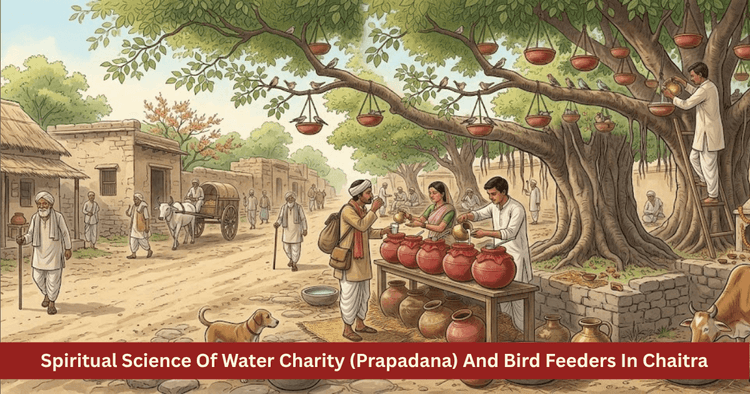
Table of Contents
Panchang Description And The Astrological Dimensions Of Summer Water Charity
Within classical Vedic cosmology, the Garuda Purana, the Skanda Purana and liturgical digests such as the Dharmasindhu, the establishment of public drinking water stations (Prapadana / Piyau) and the provision of earthen bird feeders (Parinde) from the bright fortnight of Chaitra throughout the summer months is celebrated as the highest of all charitable acts. The Sanskrit term Prapa denotes a sheltered, shaded station established along public thoroughfares to provide cool, naturally fragrant water free of charge to weary travelers, animals and birds. Chaitra marks the astronomical threshold where Lord Surya Deva transitions from watery Pisces into the fiery, cardinal sign of Aries.
Astronomically, as the Sun advances in its northern traversal (Uttarayana), solar radiation intensifies across the terrestrial plane. Natural reservoirs diminish, ambient humidity drops and all living organisms experience thermal stress, dehydration and thirst. In response, Sanatana Dharma instituted a clear communal obligation: the protection of human travelers, domestic animals and aerial life through dedicated water philanthropy. Scriptural authorities affirm that offering even a handful of cool water to a parched traveler during the summer heat yields greater spiritual merit than numerous elaborate sacrifices or gifts of gold. This tradition reflects the Vedic ecological understanding that water is not merely a consumable resource but the living presence of the Divine (Narayana).
| Astrological Factor | Scriptural, Ecological and Liturgical Detail |
|---|---|
| Sacred Observance Window | Chaitra Month through the Summer Solstice (Ashadha) |
| Solar Celestial Coordinate | Sun Exalted in Aries, Ascending Northern Traversal |
| Canonical Liturgical Titles | Prapadana (Public Water Charity), Parinda Bandhana, Udaka Dana |
| Presiding Transcendental Deities | Lord Varuna (Regent of Waters), Lord Surya, Lord Sri Hari Vishnu |
| Core Elemental Matrix | Elevating Water Element to Soothe Excess Environmental Fire |
| Traditional Materials Used | Fresh Terracotta Pots, Shaded Thatched Canopies, Earthen Bird Bowls |
| Herbal Infusion Botanicals | Vetiver Root (Ushira / Khus), Rose Water, Cardamom, Tulsi Leaves |
| Primary Beneficiaries | Wayfarers, Manual Laborers, Stray Animals (Cows, Dogs), Birds |
| Bestowed Spiritual Fruit | Dissolution of Karmic Debts, Ancestral Peace, Protection, Moksha |
To undertake the sacred vow of Prapadana and establish bird hydration stations for the summer, a practitioner should observe disciplined scriptural decorum from early dawn:
- Awaken before sunrise during Brahma Muhurta, bathing in fresh ambient water and offering three water oblations to Lord Varuna and Surya Deva.
- Select a shaded public location-near a crossroads, village common, temple precinct, transit stop or under a broad tree canopy-for the water station.
- Cleanse fresh unglazed terracotta urns, anointing their exteriors with vermilion swastikas and tying sacred red cotton thread (mouli) around their necks.
- Fill the vessels with pure drinking water, adding a small bundle of vetiver roots (khus), crushed cardamom pods and fresh tulsi leaves to naturally cool and scent the water.
- Provide clean single-use clay cups (kulhads) or unblemished metallic vessels, ensuring a shaded bench is available for resting travelers.
- Hang terracotta bowls (Parinde) from tree branches, verandah eaves and balcony railings for wild birds, securing them safely with natural cordage.
- Replenish these bird bowls every morning with fresh water, setting out small clay dishes of millet, sorghum, cracked wheat or rice grains beside them.
- Place broad stone or terracotta water basins at ground level in shaded exterior spaces to provide clean water for cows, working animals and stray dogs.
- Attend the water station daily to serve travelers with humility or support a dedicated attendant to maintain the service throughout the heat of the day.
Puranic Lore: The Teachings Of The Skanda Purana And Garuda Purana
The Skanda Purana, the Padma Purana and the Preta Kalpa of the Garuda Purana record detailed discussions on the spiritual significance of water charity.
In the Garuda Purana, when Garuda asks Lord Vishnu about the journey of departing souls across the barren paths of the afterlife-where neither shade nor water is found-the Lord explains:
Prapa karya Vaishakhe cha Chaitre masi visheshatah.
Na hi danat-param kinchit prapadanan-maheepate.
Yah karoti prapam punyam chhayayuktam suvistritam.
Sarva-kama-samayuktah sa yati paramam gatim.
Meaning: In the months of Chaitra and Vaishakha, one must establish public water stations along roadways. O King! There is no philanthropic act superior to providing drinking water to the thirsty. Whosoever establishes a shaded, spacious and well-maintained water station enjoys the fulfillment of noble desires in this life and attains the transcendental realm.
| Scriptural Source | Canonical Verse / Injunction | Metaphysical and Karmic Consequence |
|---|---|---|
| Skanda Purana | Paneeyam yah prayachchhati greeshme kale sudarune... | Merits equal to major sacrificial rites; peace in higher realms |
| Garuda Purana | Prapadanena tripyanti pitaro hyatha devatah... | Complete satisfaction of ancestors; relief during transitional states |
| Padma Purana | Jaladanena shudhyanti sarvanyapi cha patakaih... | Purification of accumulated karmic residue; worldly peace |
| Mahabharata | Paneeyam paramam danam dananam Manurabraveet... | Direct blessing of Lord Sri Krishna; family continuity |
The Compassion of King Rantideva: Offering the Final Drops of Water
The Shanti Parva of the Mahabharata recounts the story of King Rantideva, a monarch who distributed his wealth to the needy until he had nothing left. Enduring a severe drought, he and his family fasted without food or water for forty-eight consecutive days. On the forty-ninth morning, when a small portion of water was brought to break their fast, a parched outcaste traveler arrived accompanied by thirsty dogs, begging for relief.
Without hesitation, Rantideva poured his remaining water to the traveler and the animals, praying: "Na tvaham kamaye rajyam na svargam napunarbhavam. Kamaye duhkha-taptanam praninam arti-nashanam." (I desire neither kingdom, nor heavenly realms, nor personal liberation; my only aspiration is to remove the suffering of living beings tormenting by thirst and pain). Lord Vishnu manifested on the spot, granting the king liberation. This narrative highlights the foundational principle of Sanatana Dharma: direct service to living beings is the highest spiritual offering.
The Design Of A Traditional Water Station: Vastu And Botanical Science
In classical tradition, establishing a Prapa involves careful attention to location orientation and natural water preparation:
1. Site Selection and Vastu Alignment
- Natural Tree Canopy: Stations should be set beneath dense, broad-canopied trees such as the Peepal, Banyan, Neem or Mango. The transpiration of the leaves lowers ambient temperatures naturally around the urns.
- Orientation: Vastu manuals prescribe establishing water stations in the Northeast (Ishanya) or North sector of a public path. Governed by Varuna and Kubera, these directions support clean energetic flow and keep water fresh.
2. Ayurvedic Herbal Infusion of Drinking Water
During summer, poor-quality water easily spreads seasonal gastrointestinal illness. Classical tradition enriched drinking water with therapeutic botanicals:
- Vetiver Root (Ushira / Khus): Bundles of clean vetiver roots placed within the urn naturally cool the water, pacify gastric pitta and impart a gentle earthy aroma.
- Porous Terracotta Pots: Evaporative cooling through porous clay walls keeps water at a comfortable 15°C to 20°C, while the clay's natural alkalinity balances acidity.
- Cardamom and Tulsi Leaves: Crushed cardamom aids light digestion and soothes the throat, while tulsi leaves provide mild antimicrobial action.
| Component | Physical and Biochemical Quality | Health Benefit for Travelers |
|---|---|---|
| Terracotta Urn | Evaporative cooling, alkaline mineral balance | Protects against throat irritation, balances stomach acid |
| Vetiver Root (Khus) | Cooling energy, natural aromatic | Calms internal heat and restlessness, soothes thirst |
| Fresh Tulsi Leaves | Natural antimicrobial, adaptogenic | Helps protect against waterborne microbes |
| Green Cardamom | Tridoshic digestive, aromatic carminative | Freshens the breath, slakes thirst, supports digestion |
| Earthen Kulhads | Single-use, compostable, hygienic | Prevents cross-contamination; provides clean taste |
Hanging Earthen Bird Feeders (Parinde): Ecological Harmony
As summer sets in, wild birds face critical dehydration. In urban environments where traditional ponds, stepwells and village tanks have declined, millions of birds perish each year from lack of water.
Sanatana Dharma addressed this need through the tradition of hanging Parinde (terracotta bowls) starting on Chaitra Shukla Pratipada:
1. Practical Guidelines for Bird Feeders
- Use Unglazed Terracotta: Plastic or metallic containers heat up rapidly in direct sunlight, turning water dangerously hot. Unglazed clay keeps water cool throughout the day.
- Placement: Hang the bowls in deep shade-beneath leafy branches or under balcony eaves-safely out of reach of domestic predators.
- Daily Cleaning: Empty, rinse and refill the bowls every morning to prevent stagnant water, mosquito larvae and bacterial growth.
- Feed Provision: Place a second shallow clay dish nearby containing whole grains such as millet, sorghum, cracked wheat or rice.
2. Astrological Correspondences of Animal Care
In classical predictive astrology, caring for birds balances challenging planetary placements:
- Providing water to small garden birds and sparrows pacifies Mercury (Budha), supporting focus, commercial clarity and intellectual balance.
- Offering water and grain to crows honors Saturn (Shani) and ancestral guardians, softening the trials of Sade Sati.
- Feeding pigeons and doves balances Jupiter and Venus, encouraging domestic harmony and calm.
| Species / Animal | Associated Planetary Energy | Liturgical Service Method | Practical and Spiritual Result |
|---|---|---|---|
| Sparrows & Small Birds | Mercury and the Moon | Shallow terracotta bowl with water and millet | Mental peace, relief from anxiety, commercial focus |
| Doves & Pigeons | Jupiter and Venus | Regular water bowls and whole grains | Domestic tranquility, family harmony, prosperity |
| Crows | Saturn and Yamaraja | Water bowls and moistened flatbreads | Relief from ancestral debts, pacifying Saturn transits |
| Kites & Raptors | Rahu and Ketu | Elevated water bowls on terraces | Protection during legal trials and sudden crises |
| Cows & Street Animals | The Collective Divine / Venus | Large stone or cement water basins at ground level | Protection from untimely accidents, lasting abundance |
Step-By-Step Liturgical Protocol For Establishing A Water Station
To consecrate a public water station or set up domestic bird feeders on Chaitra, observe the following procedure:
- Morning Purification and Sacred Intention: Bathe early and sit facing eastward. Hold water, unbroken rice, flowers and kusha grass in the right palm to make your formal sankalpa:
Om Vishnave Namah. Adya Chaitra mase shukla pakshe, Grishma ritu praveshe, sarva-praninam trishna-shamanartham, Varuna-preeti-kamanaya, pitru-triptyartham cha prapadanam aham karishye.
- Site Preparation: Wash the chosen ground with water and Ganga drops. Erect a simple thatched shade canopy using bamboo posts and woven palm or grass thatch.
- Consecrating the Urns: Place the new clay pots upon stable stands. Mark their surfaces with vermilion swastikas, tie sacred red thread around their necks and fill them with clean water.
- Invoking Lord Varuna: Fold your hands and meditate upon the regent of waters:
Tvam Varuna lokanam jeevanam paramamritam.
Prapayah palako bhootva trishnam hara pipasushu. - Dedication Prayer: Dedicate the water station to the public with the classical verse:
Prapa pravritta devebhyo manushyebhyashcha sarvashah.
Pibantu sheetalam toyam munchantu shramam-adhvagah.
(This water station is dedicated for the welfare of the divine, humanity and all living beings. May travelers drink this cool water and find relief from exhaustion and heat.) - Inaugural Service: Serve the first cups of water to an elder, working traveler or passerby, initiating the season's charity.
Ancient Indian Water Architecture: Stepwells, Tanks and Ponds
The practice of seasonal water charity was historically anchored in a vast architectural tradition of water conservation that protected the Indian subcontinent through centuries of drought:
- Tanks, Wells and Lakes: The Matsya Purana outlines the relative merit of water infrastructure:
Dasha-koopa-sama vaapee dasha-vaapee-samo hradah.
Dasha-hrada-samah putro dasha-putra-samo drumah.
(One stepwell equals ten ordinary wells; one community reservoir equals ten stepwells; one noble child equals ten reservoirs; and planting one shade tree equals ten noble children). - Stepwells as Community Sanctuaries: Monuments like Rani ki Vav in Gujarat and Chand Baori in Rajasthan served as cooled community centers where travelers could rest in subterranean chambers several degrees cooler than the surface.
- Community Desilting: In Chaitra, as community tanks reached their lowest seasonal levels, villages gathered to excavate silt from the dry beds, preparing the basins to capture the coming monsoon rains.
Philosophical Essence: Selfless Stewardship Sustains Creation
The tradition of summer water charity reveals a foundational truth: Human life finds its highest expression not in self-serving accumulation but in relieving the burdens of others.
Classical Sanskrit wisdom reminds us:
Pibanti nadyah svayam-eva nambhah svayam na khadanti phalani vrikshah.
Nadanti sasyam khalu varivahah paropakaraya satam vibhootayah.
Rivers do not drink their own water; fruit trees do not consume their own fruit; and rain clouds do not eat the crops they nourish. The resources of a wise life are dedicated to supporting the living world.
When an exhausted laborer cups their hands beneath your earthen pitcher at midday, the quiet relief that follows touches something far deeper than material wealth. That gratitude connects directly with the divine heart of life.
As the summer sun rises, let us resolve that no traveler passes our door unrefreshed, no bird perches upon our roofs in thirst and our daily actions help sustain the quiet flow of kindness throughout the world.
FAQ
Why is public water charity (Prapadana) considered essential in the month of Chaitra?
Chaitra marks the onset of summer heat; providing cool drinking water to travelers and animals during this transition is regarded in scriptural tradition as an act of profound compassion, equivalent to major sacred offerings.
Where should earthen bird bowls (Parinde) be placed for optimal safety?
Bird bowls should be hung in deep shade-beneath leafy branches or under covered balconies-safely away from direct sun and predators like stray cats.
How is water traditionally prepared and kept cool in a public Prapa?
Water is stored in fresh, unglazed terracotta urns infused with vetiver roots (khus), crushed cardamom, tulsi leaves and a touch of rose water, keeping it naturally cool, sweet and soothing to the digestion.
Which astrological challenges are mitigated by providing water to birds?
Regularly providing clean water and seeds to birds calms afflictions associated with Mercury, Saturn, Rahu and Ketu, promoting mental peace and professional focus.
What is the classical Sanskrit dedication verse chanted when opening a public water station?
Prapa pravritta devebhyo manushyebhyashcha sarvashah. Pibantu sheetalam toyam munchantu shramam-adhvagah.
Get your accurate Kundali
Generate KundaliDid you like it?
Author

Pt. Amitabh Sharma (56 Years)
Experience: 20
Consults About: Family Planning, Career
Clients In: Punjab, Haryana, Delhi
Share this article with friends and family
WELCOME TO
ZODIAQ
Right Decisions at the right time with ZODIAQ
