What Is The Glory Of Gangaur Festival (Chaitra Shukla Tritiya)?
By Pt. Suvrat Sharma
Union Of Shiva-Parvati, 16-Day Discipline And Folk Traditions
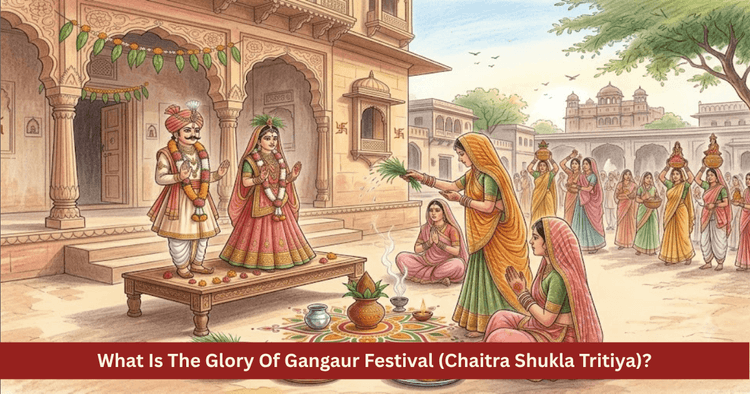
Table of Contents
Panchang Description And The Astrological Context Of Gangaur
According to the classical mathematical chronology of the Vedic calendar, the third lunar day (Tritiya) of the bright fortnight (Shukla Paksha) of the month of Chaitra is celebrated across Rajasthan, Madhya Pradesh (Malwa and Nimar regions), Gujarat and the Braj belt as the festival of Gangaur-also revered in liturgical treatises as Gauri Tritiya or Saubhagya Tritiya. In traditional Sanskrit etymology, the sacred compound Gangaur derives from two divine principles: Gana (Lord Mahadeva Shiva) + Gauri (Mother Adishakti Parvati). Thus, the foundational essence of Gangaur is: The harmonious union of transcendent Shiva and dynamic Shakti in domestic life.
From an astronomical perspective, this festival unfolds at the junction bridging early spring with the onset of radiant summer. Lord Surya Deva traverses the final degrees of Pisces, preparing to enter his exaltation sign of Aries, while the Moon navigates through Bharani or Krittika asterisms. This cosmic alignment stimulates the water and fire elements within the subtle physiology, awakening feminine creativity and marital auspiciousness. Gangaur is not a mere one-day ritual; it represents an unbroken sixteen-day spiritual and cultural discipline commencing on the morning following Holika Dahan (Chaitra Krishna Pratipada / Dhulandi) and culminating on Chaitra Shukla Tritiya.
| Astrological and Astronomical Factor | Classical Scriptural and Cultural Description |
|---|---|
| Lunar Month and Fortnight | Chaitra Month, Shukla Paksha (Bright Fortnight) |
| Lunar Tithi | Tritiya (Third Lunar Station of Vasanti Navratri) |
| Canonical Liturgical Titles | Gangaur, Gauri Tritiya, Saubhagya Tritiya |
| Total Span of Observance | Sixteen Days (Chaitra Krishna Pratipada to Shukla Tritiya) |
| Sovereign Presiding Powers | Lord Shiva (Isar Ji) and Mother Parvati (Gavar / Gauri Mata) |
| Core Cultural Geography | Rajasthan (Jaipur, Udaipur, Jodhpur), Malwa, Nimar, Braj |
| Traditional Sacred Emblems | Clay icons of Isar-Gavar, durva grass, kumkum, kohl, ghevar |
| Bestowed Spiritual Fruit | Marital longevity, suitable life partner, domestic harmony |
To ensure that the blessings of Shiva and Gauri are secured throughout married life, participating maidens and married women observe strict disciplinary guidelines from the first day:
- Commencing on Dhulandi, collect the cool ashes from the Holika pyre, blend them with pure potter's clay and shape sixteen sacred balls (pindis / gor).
- Awaken before sunrise each morning, bathing in ambient fresh water and dressing in clean, unstitched or festive cotton attire.
- Fetch fresh green durva grass (dub) and clean spring water from an unpolluted garden or reservoir.
- Sprinkle milk and water over the icons of Isar and Gauri daily utilizing blades of durva grass, enacting the sacred rite of 'quenching their thirst'.
- Mark sixteen dots each of vermilion (rooli), kohl (kajal), henna (mehndi) and sindoor on the altar wall to affirm lifelong marital fidelity.
- Sing traditional Gangaur folk ballads daily while maintaining emotional peace and refraining from anger, harsh speech or domestic friction.
- Prepare and offer traditional dry sweets known as Gune and honeycombed Ghevar fried in pure cow ghee on the third lunar day.
- Participate in the royal evening procession of Isar-Gavar icons before their immersion in a consecrated river, lake or stepwell.
Puranic Lore: Shiva-Parvati's Terrestrial Journey And The Blessing Of Saubhagya
The Shiva Purana, Padma Purana and Skanda Purana preserve a narrative detailing the origin of Gangaur during the earthly travels of the divine couple.
Once during the bright fortnight of Chaitra, Lord Mahadeva Shiva, Mother Parvati and Sage Narada descended upon the earthly plane to observe the welfare of mortal beings. As they rested near a woodland lake, word spread that the universal parents were residing nearby.
Women from the surrounding rural settlements-humble, unlettered and lacking material wealth-rushed to the lakeside carrying whatever wild roots, seasonal blossoms and clean well water they could assemble. Their hearts carried no ostentation, only devotion and pure love. Deeply moved by their humility, Mother Parvati took water into her cupped palms and sprinkled it over the assembly: "Go forth, your marital bond shall remain unbroken and your households shall be blessed with lasting contentment."
| Category of Devotees | Mental Disposition | Materials Presented | Mother Parvati's Bestowed Blessing |
|---|---|---|---|
| Rural / Humble Women | Unconditional love, rapid arrival | Wild flowers, green roots, cool water | Sprinkled nectar of saubhagya (unbroken marital longevity) |
| Wealthy / Noble Matrons | Delay, vanity, pride of wealth | Fifty-six delicacies, gold platters, jewels | Pierced her finger to bestow her own red blood-sindoor |
Sometime later, noble women, royal consorts and wealthy matrons arrived, adorned in silks, precious gems and accompanied by servants bearing silver and gold platters heaped with elaborate sweets.
Lord Shiva smiled and whispered to Parvati: "O Divine Mother! You have already distributed the complete nectar of good fortune to the humble women; what blessing remains for these noble matrons?"
Mother Parvati replied: "O Lord! Their blessing was bestowed through the medium of elemental water; but to these women, I shall impart the very essence of my own life force." Mother Parvati made a small incision upon the tip of her little finger, scattering drops of her celestial blood over the assembled matrons: "Just as my blood is crimson and unyielding, so too shall your marital auspiciousness remain unshakable. Yet this grace shall endure only if you cast aside pride and serve your households with humility."
Following this event, Mother Parvati shaped an earthen lingam on the riverbank, worshiping Lord Shiva in secret. Pleased by her devotion, Mahadeva granted her a boon: any maiden or married woman who worships Shiva and Gauri on Chaitra Shukla Tritiya shall secure a noble consort and enjoy lifelong domestic peace.
The Sixteen-Day Discipline: From Holika Ashes To Sacred Clay Icons
Gangaur is a structured psychological and spiritual discipline unfolding over sixteen consecutive days:
1. The Sacred Ashes and Formation of Pindis (Dhulandi)
On the morning following Holika Dahan, women gather cool ashes from the pyre. Blending this sanctified ash with clean riverbed clay and water, they mold sixteen small spherical mounds (pindis).
- The ash symbolizes the burning of lust (Kamadeva) and the transcendence of physical pride.
- It teaches that enduring domestic love is anchored not in transient physical desire but in selfless devotion and mutual respect.
2. Quenching the Divine Thirst with Durva Grass
Every morning, maidens carry a brass pot of water mixed with fresh unboiled milk. Using bunches of fresh green durva grass, they sprinkle this liquid over the icons.
- Durva grass possesses regenerative resilience; even when withered by dry heat, a single drop of water revives its green vitality.
- Offering water with durva expresses the prayer that the family lineage remains vibrant and fruitful across generations.
3. The Geometry of Sixteen Dots
During the daily liturgy, women apply sixteen dots each of four traditional pigments upon paper or the household altar wall:
- Sixteen Dots of Rooli (Vermilion): Embodying solar radiance, social honor and vitality.
- Sixteen Dots of Kajal (Kohl): Providing protection against the evil eye and steadying emotional focus.
- Sixteen Dots of Mehndi (Henna): Symbolizing cooling peace, affection and emotional warmth.
- Sixteen Dots of Sindoor: Representing marital dedication and the enduring union of Shiva and Shakti.
Iconography And Traditional Costumes Of Isar And Gavar
The artistic figures of Isar Ji (Lord Shiva) and Gavar Mata (Mother Parvati) worshiped during Gangaur showcase the classical woodcarving and textile crafts of Rajasthan:
- Carved Wood and Clay Craftsmanship: While clay was historically molded annually, modern families often maintain finely carved wooden busts sculpted by traditional artisans in Bassi (Chittorgarh) and Jaipur.
- Costumes of Lord Isar Ji: Lord Isar is dressed in a traditional royal jama, snug churidar trousers, a silk sash and a vibrant Rajasthani turban (pheta/safa). A decorative curved sword hangs at his waist and he bears a noble mustache, embodying chivalrous guardianship and righteousness.
- Attire of Mother Gavar: Mother Gavar is adorned in red, saffron or deep yellow tie-dye (bandhej and leheriya) skirts trimmed with intricate gota-patti gold borders. She is adorned with traditional ornaments: the forehead borla, nose-ring (nath), upper-arm bajuband and silver toe-rings (bichhiya).
| Divine Figure | Archetypal Principle | Attire & Regalia | Philosophical Reflection |
|---|---|---|---|
| Isar Ji | Lord Mahadeva Shiva | Royal turban, tunic, sword, mustache | Moral authority, detached protection, the ideal husband |
| Gavar Mata | Supreme Mother Parvati | Bandhej veil, nose-ring, gold borders | Creative energy, grace, devotion, enduring marital fidelity |
| Kanharam | Younger brother of Isar | Traditional youth vestments | Domestic harmony and respect among in-laws |
| Malan (Florist) | Attendant of nature | Folk skirt and veil, flower basket | Dignity of manual labor, service to natural flora |
The Musical Heritage: Classical Folk Ballads Of Gangaur
Gangaur is celebrated through ancestral folk melodies passed down across generations. These songs express emotional vulnerability, filial affection and marital dedication:
1. The Core Ballad of Awakening the Goddess
Sung each morning as fresh water is offered with durva grass:
Gor e Gangaur Mata khol e kiwadi.
Bahar ubhi thari poojanhari.
Poojo e poojanhari kain kain maango?
Anna maangoon dhana maangoon maangoon amar suhaag.
(Meaning: Open your doors, O Divine Mother Gangaur! Your devotees stand outside. What do you seek, O worshipers? We ask for nourishing grain, clean wealth and the unbroken blessing of marital longevity.)
2. The Ballad of the Sacred Dots
Teeki teeki e mhari rooli ri teeki.
Kajal teeki mhare nainaan basi.
Isar Ji ra raaj mein suhaag amar rahve.
Gavaral Bai ra charnaan mein sees nami.
Sacred Culinary Confections: The Science Of Gune And Ghevar
Two delicacies are prepared on this day: Gune and Ghevar.
- Gune: Tubular, crisp confections shaped from fine wheat or gram flour dough, deep-fried in ghee and left plain or glazed with raw sugar syrup. During the liturgy, sixteen gune are offered to Mother Gavar. A bundle of sixteen gune paired with festive clothing is then presented as Bayana to mothers-in-law or sisters-in-law. The hollow, enclosed geometry of the guna symbolizes the grace with which a woman preserves the dignity and privacy of her household.
- Ghevar: A porous, disc-shaped delicacy crafted from whipped clarified butter, flour and cold water, soaked in sugar syrup and crowned with reduced milk cream (rabdi). As spring heat increases systemic dryness, ghevar lubricates bodily tissues and pacifies gastric pitta.
The Royal Procession And The Emotional Farewell (Visarjan)
On the evening of Chaitra Shukla Tritiya, Gangaur festivities reach their peak with public processions:
- The Royal Cavalcade of Jaipur: Emerging from the Zanani Deorhi of the City Palace through the historic Tripolia Gate, the palanquin of Mother Gavar moves through the old city, escorted by caparisoned elephants, royal cavalry and folk performers.
- The Lake Procession of Udaipur: At Gangaur Ghat along Lake Pichola, the icons of Isar and Gavar are seated upon ceremonial royal barges, celebrated with evening lamps reflecting across the waters.
- The Emotional Farewell: On the third evening or the following morning (Chaitra Shukla Chaturthi), the clay icons are consigned to the waters of a clean stepwell, river or lake. Women shed tears as they sing the farewell ballad: "O ji mhari Gavaral jaave saasariye, ankhiyaan mein neer bahe..."-mirroring the tender farewell of a daughter leaving her parental home for her husband's abode.
Philosophical And Social Dimension
Gangaur celebrates feminine grace, emotional resilience and the sanctity of domestic partnerships within Indian culture.
The festival affirms that lasting marital harmony is built not upon superficial infatuation but on mutual sacrifice and moral dedication. It teaches maidens to cultivate character, patience and truth, while reminding married women to remain steady pillars of strength for their families. Uniting sacred lore, folk music, rural crafts and spiritual devotion, Gangaur preserves the timeless heritage of Sanatana Dharma for generations to come.
FAQ
How many days does the festival of Gangaur span?
Gangaur spans sixteen consecutive days, commencing on the morning after Holika Dahan (Chaitra Krishna Pratipada) and concluding on Chaitra Shukla Tritiya.
Who do the divine icons of 'Isar' and 'Gavar' represent?
'Isar' embodies Lord Mahadeva Shiva, while 'Gavar' (Gauri) represents his eternal consort, Mother Parvati.
What is the symbolic meaning of the number sixteen in Gangaur?
Sixteen signifies the sixteen classical adornments (solah shringar), the sixteen lunar phases and the sixteen days of spiritual discipline; hence, sixteen pindis, sixteen dots and sixteen sweets are offered.
What is 'Bayana' during the Gangaur festival?
Bayana is a sacramental gift comprising sixteen sweet gune, seasonal fruits and festive attire presented respectfully to one's mother-in-law or elder sisters-in-law.
Where are the most famous royal processions of Gangaur held?
The most renowned public processions take place from the City Palace through the Tripolia Gate in Jaipur and at Gangaur Ghat on Lake Pichola in Udaipur.
Get your accurate Kundali
Generate KundaliDid you like it?
Author
Pt. Suvrat Sharma (63)
Experience: 20
Consults About: Family Planning, Career
Clients In: Punjab, Haryana, Delhi
Share this article with friends and family
WELCOME TO
ZODIAQ
Right Decisions at the right time with ZODIAQ
