What Is The Glory And Worship Protocol Of Gudi Padwa?
By Pt. Nilesh Sharma
Maharashtra Victory Standard, Neem-Jaggery Prasad And New Year Joy
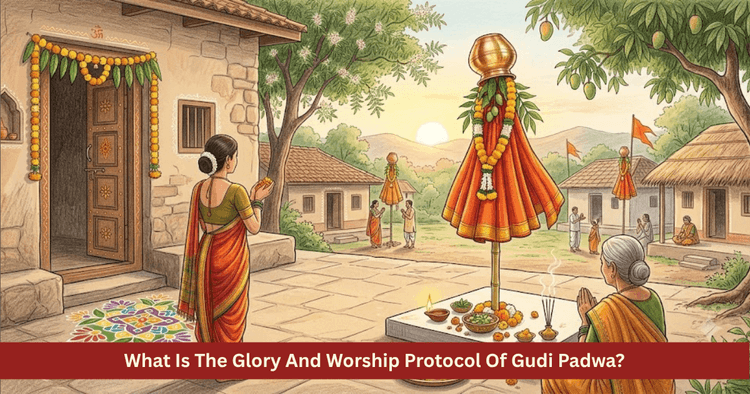
Table of Contents
Panchang Description And The Astronomical Framework Of The Maharashtrian New Year
According to the mathematical cosmology of the classical Vedic calendar, the first lunar day of the bright fortnight of Chaitra (Chaitra Shukla Pratipada) is celebrated across Maharashtra, Goa, Northern Karnataka and the Konkan coastline as the sacred festival of Gudi Padwa. In classical Sanskrit etymology, the word gudi signifies a triumphal standard, an imperial parasol or an auspicious victory pennant, while the term padwa derives from the Prakrit and Marathi designation for the inaugural lunar tithi-Pratipada. Thus, the foundational meaning of Gudi Padwa is: The raising of the cosmic victory standard upon the first lunar day of the New Year.
Astronomically and astrologically, this festival marks the exact celestial junction where Lord Surya Deva departs from the watery realm of Pisces, advancing toward his exaltation coordinate within the sign of Aries (Mesha). The crescent Moon shines forth in conjunction with the Revati or Ashwini asterisms, initiating the computational cycle of both the Shalivahana Shaka Samvat and the Vikram Samvat. Across the Deccan plateau, this day is venerated primarily as the inaugural dawn of the Shalivahana Shaka Era (instituted in 78 CE), founded by King Shalivahana of the Satavahana dynasty following his historic victory over invading forces.
| Astrological and Astronomical Factor | Classical Scriptural and Cultural Description |
|---|---|
| Lunar Phase and Fortnight | Chaitra Month, Bright Fortnight, First Lunar Day (Pratipada) |
| Calendrical Systems | Shalivahana Shaka Samvat (78 CE) and Vikram Samvat (57 BCE) |
| Solar and Lunar Dynamics | Ascending Northern Traversal, Vernal Equinox, Waxing Moon |
| Sovereign Presiding Powers | Lord Sri Rama Chandra, Chhatrapati Shivaji Maharaj, Brahma |
| Foundational Sacred Emblem | The Gudi standard adorned with neem, silk and inverted copper urn |
| Sacramental Offering (Prasad) | Tender neem shoots, raw jaggery, tamarind, carom seeds (Shadrasa) |
| Bestowed Spiritual Fruit | Dissolution of Strife, Victory, Immunity, Warding Off Negativity |
To welcome divine protection, physical immunity and prosperity into the domestic sanctuary on Gudi Padwa, household members must observe rigorous scriptural conduct from dawn onward.
- Awakening before sunrise during Brahma Muhurta, performing Abhyanga Snana (massaging the physical frame with consecrated sesame oil followed by a warm bath infused with neem extract and sacred river drops).
- Dressing in clean traditional unstitched or festive attire (such as the traditional kurta-dhoti for men and the nine-yard nauvari silk sari for women).
- Cleansing the household threshold with pure water, coating the entryway with cow dung or turmeric paste and drawing geometric rangoli designs.
- Pouring three continuous water oblations to Surya Deva from an unblemished copper vessel mixed with kumkum, unbroken rice and scarlet flowers.
- Consecrating and raising the auspicious Gudi standard upon the right side of the main entryway, eastern balcony or roofline during the auspicious morning muhurta.
- Sitting with the family to consume the medicinal offering formulated from fresh neem shoots, jaggery, tamarind and carom seeds upon an empty stomach.
- Performing the sixteenfold adoration (Shodashopachara) of Lord Sri Rama and family lineage deities in the domestic shrine, reciting the Sri Rama Raksha Stotra.
- Partaking of festive dishes-primarily puran poli, saffron shrikhand and basundi-offering the foremost portions to ascetics and guests.
Historical And Puranic Chronicle: From Rama Victory To Chhatrapati Shivaji
Gudi Padwa represents far more than an astrological threshold; it is a living symbol of civilizational sovereignty and spiritual courage. Three monumental historical and puranic events are commemorated through this observance:
1. Triumph of Lord Sri Rama and Liberation of Kishkindha
According to the Ramayana, Lord Sri Rama eliminated the tyrannical monkey king Vali on Chaitra Shukla Pratipada, liberating Sugriva and the citizens of Kishkindha from oppression. Celebrating their freedom and the restoration of dharma, the populace raised colorful standards outside their homes.
Furthermore, when Lord Sri Rama returned to Ayodhya alongside Mother Sita and Lakshmana following his victory over Ravana and fourteen years of exile, citizens across the land welcomed the Lord by raising victory standards outside every dwelling.
2. King Shalivahana And The Miraculous Clay Legion
During the first century of the common era (78 CE), Central Asian invaders (the Shakas) raided western and southern India. Confronting this existential threat, Shalivahana, born to a humble potter in Paithan (Pratishthanapura) organized a popular resistance.
Lacking an imperial mercenary army, Shalivahana molded thousands of soldiers, warhorses and elephants out of riverbed clay. Infusing these figures with collective resolve and divine mantras, he led his forces into battle. Shalivahana's army drove the invaders beyond the Narmada river. Commemorating this liberation, the Shalivahana Shaka Era was established on Chaitra Shukla Pratipada, serving today as the official civil calendar of India.
3. Chhatrapati Shivaji Maharaj And Hindavi Swarajya
In the seventeenth century, when the Deccan plateau groaned under Mughal hegemony and the Adilshahi Sultanate, Chhatrapati Shivaji Maharaj laid the foundations of 'Hindavi Swarajya' across the Sahyadri ranges. To instill national pride, Shivaji Maharaj mandated that every fort, rampart and domestic household raise the saffron flag and the Gudi standard on Chaitra Shukla Pratipada. The Gudi became an enduring emblem of unyielding resistance and civilizational sovereignty.
| Historical Event | Era and Chronology | Primary Historical Figures | Metaphysical and Social Message |
|---|---|---|---|
| Elimination of Vali | Treta Yuga (Ramayana) | Lord Sri Rama and Sugriva | Victory of Dharma over Autocracy |
| Defeat of Foreign Invaders | 78 CE (Historical Era) | King Shalivahana (Satavahana) | Liberation from Bondage via People's Will |
| Inception of Hindavi Swarajya | 17th Century (Medieval) | Chhatrapati Shivaji Maharaj | Self-Determination and Cultural Sovereignty |
| First Dawn of Manifestation | Dawn of Satya Yuga | Lord Brahma (The Creator) | Cosmic Journey from Darkness to Light |
Architectural Geometry: Copper Urn, Neem Foliage And Silk Fabrics
The Gudi standard raised outside Maharashtrian households functions as an energetic receiver and bio-energetic conductor designed in accordance with Vastu Shastra.
Every material component incorporated into the Gudi holds specific symbolic and practical significance:
- The Straight Bamboo Staff: The foundation of the Gudi is a straight, clean bamboo pole measuring five to eight feet in length. In sacred architecture, bamboo symbolizes the spinal axis (Sushumna Nadi), grounding terrestrial energy while channeling cosmic prana from above.
- Silk or Brocade Fabric: A fresh silk cloth of golden-yellow, saffron, crimson or emerald-green is secured to the upper tip. These colors embody solar radiance, sacrifice, valor and the creative renewal of spring.
- Fresh Neem Twigs and Leaves: Tender neem branches are bound alongside the silk fabric. Neem acts as a potent antimicrobial shield, purifying ambient air currents entering the doorway and neutralizing seasonal airborne pathogens.
- Mango Leaves and Garland of Red Flowers: Fresh mango leaves, alongside a garland of marigolds or scarlet roses, are bound to the staff. Mango foliage emits oxygen steadily, while fragrant blossoms establish positive vibrations.
- Gathi (Sugar Candy Garland): A garland of crystalline sugar disks, known locally as gathi, is suspended around the neck of the staff. It symbolizes domestic sweetness, unity and shared joy.
- The Inverted Copper or Silver Urn (Tambya): An unblemished copper, bronze or silver vessel is placed inverted over the apex. Copper is an optimal conductor of subtle electrical and thermal energy. Positioned inverted, this vessel absorbs cosmic solar radiation and reflects purified vitality into the home.
| Structural Component | Material and Chemical Nature | Vastu and Energetic Function | Spiritual and Puranic Symbolism |
|---|---|---|---|
| Straight Bamboo Staff | Resilient, fibrous wood | Aligns spinal axis and Muladhara | Stability, perseverance, ascension |
| Saffron/Yellow Silk Cloth | Natural silk, thermal conductor | Radiates solar luster and warmth | Solar rays, victory pennant of Rama |
| Fresh Neem Foliage | Bitter, antiviral, medicinal | Neutralizes airborne pathogens | Bodily health, warding off misfortune |
| Sugar Candy Garland (Gathi) | Pure sucrose, sweet confection | Sustains positive psychological mood | Domestic affection and unity |
| Mango Leaves and Blossoms | Oxygenating botanical foliage | Generates pleasant ambient aura | Auspiciousness, spiritual attraction |
| Inverted Copper Vessel | Electromagnetic metal conductor | Deflects negativity, reflects prana | Cosmic crown, divine protection |
Classical Consecration Protocol And Auspicious Timing
The consecration and raising of the Gudi must occur during the auspicious morning hours immediately following sunrise. Raising the standard at midday or sunset is prohibited by scriptural tradition.
Step-by-Step Liturgical Installation
- Purification of the Threshold: Select a clean space on the right side of the main doorway (facing outward), an eastern balcony or the terrace. Wash the ground with clean water, apply a wash of cow dung or turmeric and draw an auspicious Swastika or eight-petaled lotus utilizing rice flour.
- Setting the Low Wooden Pedestal: Position a clean wooden pedestal (pat) over the rangoli. Scatter unbroken rice grains and red sandalwood powder upon its surface.
- Adorning the Gudi: Wash and dry the bamboo staff. Fasten the new silk cloth securely to its upper tip utilizing sacred red cotton thread (mouli). Bind the fresh neem branches, mango leaves, flower garland and sugar candy gathi around the cloth. Draw an auspicious Swastika with vermilion upon the polished copper vessel, inverting it firmly over the apex.
- Raising the Standard: Erect the assembled Gudi upon the pedestal, securing it against a wall, railing or doorframe. Offer turmeric, kumkum, unbroken rice and incense at the base and upon the copper vessel. Wave an unadulterated clarified butter lamp before the standard.
- Invocation Formula: Folding both hands, meditate upon the Cosmic Standard (Brahma Dhwaja) and Lord Sri Rama, intoning:
Brahmadhyaja namastestu sarvabhishta phalaprada.
Prapte-asmin vatsare nityam madgrihe mangalam kuru.
(Meaning: O Cosmic Standard, bestower of all righteous desires, I bow before you. Throughout this newly arrived year, establish unbroken auspiciousness, peace and welfare within my home.)
The Gudi remains raised throughout the day. At sunset during the Pradosha window, household members perform a brief light-waving ceremony with incense and a lamp, dismantle the standard with reverence and distribute the sanctified sugar candies (gathi) among family members as prasad.
The Medicinal Neem-Jaggery Offering: Philosophy And Ayurvedic Science
The most profound element of Gudi Padwa is the sacramental offering consumed after morning prayers, known in Marathi as 'Kadulimbacha Prasad'.
This preparation integrates six ingredients corresponding to the six classical tastes (Shadrasa):
- Bitter Taste: Fresh, tender shoots of the neem tree
- Sweet Taste: Fresh jaggery or crystalline rock sugar
- Sour Taste: Soaked tamarind pulp or raw green mango
- Astringent Taste: Soaked split chickpeas (chana dal)
- Pungent Taste: Crushed black peppercorns or dry ginger powder
- Salty Taste: Unrefined rock salt and carom seeds
| Constituent Botanical | Dominant Classical Taste | Ayurvedic and Somatic Action | Philosophical Life Reflection |
|---|---|---|---|
| Tender Neem Shoots | Bitter (Tikta) | Pacifies kapha, cleanses blood | Acceptance of inevitable life struggles |
| Fresh Jaggery / Sugar | Sweet (Madhura) | Ignites digestion, pacifies pitta | Celebration of joy, affection and success |
| Tamarind / Raw Mango | Sour (Amla) | Stimulates gastric secretions | Navigating unpredictable life turns |
| Unrefined Rock Salt | Salty (Lavana) | Balances cellular electrolytes | Sustaining zest, courage and vitality |
| Black Pepper / Ginger | Pungent (Katu) | Eliminates metabolic toxins (ama) | Inner fortitude in facing challenges |
| Soaked Split Chickpeas | Astringent (Kashaya) | Tones tissues, clears loose bowels | Balance, equanimity and detachment |
Philosophical Reflection
This bitter-sweet preparation teaches an essential truth of Sanatana spiritual philosophy: Mortal life is an alloy of diverse experiences. Just as life brings sweet joys, worldly triumphs and affection (jaggery), so does it bring trials, grief and testing setbacks (neem). An individual who remains grounded in success and resilient in adversity attains spiritual balance. Consuming this preparation at the dawn of the New Year prepares the consciousness to welcome every experience with equanimity.
Cultural Celebrations, Community Processions And Traditional Cuisine
Gudi Padwa unites communities in shared joy, cultural renewal and festive celebrations across villages and cities alike:
- Shobha Yatras (New Year Processions): At dawn, vibrant cultural processions (Swagat Yatras) move through towns and cities. Youth and elders dress in traditional attire, wearing saffron turbans (pheta) while dancing with lejim percussion instruments to the rhythm of dhol-tasha drums. Floats depicting scenes from the lives of Chhatrapati Shivaji Maharaj, Jijabai and ancient seers inspire cultural pride.
- Puran Poli: The culinary highlight of Gudi Padwa is puran poli. Split chickpeas are simmered with jaggery, nutmeg and cardamom to create a sweet filling (puran), folded inside whole wheat dough and griddled with pure cow clarified butter. It is served alongside hot milk, ghee or spicy katachi amti (a savory lentil curry).
- Saffron Shrikhand and Fresh Puris: Hung curd blended with saffron strands, crushed pistachios, almonds and cardamom produces shrikhand, served alongside warm, crisp puris.
The Resolution Of The New Year And The Path Of Victory
Gudi Padwa reminds humanity that every dawn presents an opportunity to renew our journey. The elevated copper vessel atop the Gudi inspires human beings to maintain noble ideals, broaden intellectual perspectives and uphold righteousness amidst life's challenges.
The bitterness of neem purges internal impurities, while the sweetness of jaggery enriches our relationships with love. When we welcome the sacred New Year anchored in ancient traditions, Ayurvedic wisdom and national dignity, daily life transforms into a celebration of purpose.
Let us raise the standard of truth, righteousness and courage within our hearts on Gudi Padwa, resolving to dedicate our efforts to the upliftment of our families, our culture and our society: 'May the sacred Gudi of the New Year bestow enduring peace, health and spiritual abundance upon all creation.'
FAQ
In which regions of India is Gudi Padwa primarily celebrated?
Gudi Padwa is celebrated with devotion across Maharashtra, Goa, Northern Karnataka and the Konkan coast as the inaugural day of the sacred New Year.
Why is an inverted copper vessel placed atop the Gudi staff?
Copper is an optimal energetic conductor; inverted, the vessel absorbs cosmic solar radiation and reflects purified vitality into the living space.
Why is consuming the neem and jaggery preparation mandatory on Gudi Padwa?
Ayurvedically, it balances kapha and purifies the blood; philosophically, it trains the mind to embrace life's joys and sorrows with equanimity.
Where is the most auspicious location to install the Gudi at home?
Installing the Gudi on the right side of the primary entrance, on an eastern balcony or upon the roofline facing east aligns with Vastu principles.
Which traditional delicacy is prepared across Maharashtrian homes on this day?
Puran poli, a sweet flatbread stuffed with spiced lentils and jaggery, alongside saffron shrikhand and crisp puris, is the central culinary dish.
Get your accurate Kundali
Generate KundaliDid you like it?
Author

Pt. Nilesh Sharma (63)
Experience: 20
Consults About: Family Planning, Career
Clients In: Punjab, Haryana, Delhi
Share this article with friends and family
WELCOME TO
ZODIAQ
Right Decisions at the right time with ZODIAQ
