What Is The Glory Of Hanuman Jayanti On Chaitra Purnima?
By Pt. Narendra Sharma
Advent Of The 11th Rudra, Science Of Vermilion Chola, Ashta Siddhis And Saturn Relief
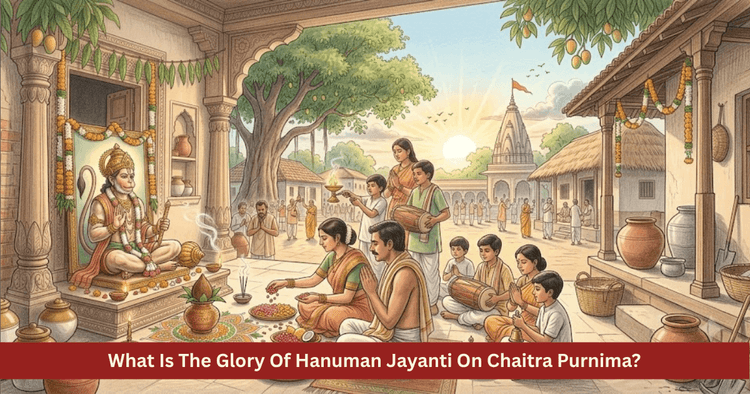
Table of Contents
Panchang Description And The Astrological Dimensions Of Hanuman Jayanti
Within the mathematical cosmology of the classical Vedic calendar and the esoteric Agamic traditions, the full moon day (Purnima) of the bright fortnight (Shukla Paksha) of the month of Chaitra is celebrated across the universe as Hanuman Jayanti-the transcendental advent day of the living immortal (Chiranjivi), the Eleventh Rudra incarnation of Lord Shiva, Mahaprabhu Sri Hanuman. Falling as the culminating nocturnal station of the month of Chaitra, this sacred date seals the spiritual disciplines of the vernal New Year fortnight, celebrating the arrival of the ultimate embodiment of courage, selfless service and celibate vitality.
From an astronomical and astrological perspective, Chaitra Purnima marks the supreme energetic equilibrium bridging elemental fire and cosmic water. Lord Surya Deva occupies the initial degrees of his exaltation sign of Aries (Mesha), infusing the terrestrial atmosphere with solar vitality. Concurrently, the Moon shines in its full sixteen lunar phases (Purna Chandra) within the constellation of Chitra Nakshatra. Chitra Nakshatra is presided over directly by the planet Mars (Mangala), the cosmic governor of physical courage, bone marrow, muscular vigor and executive vitality. According to classical scriptural digests, Lord Hanuman manifested on Chaitra Purnima during Chitra asterism under Aries ascendant (Mesha Lagna) on a Tuesday precisely at the dawn twilight (Arunodaya). In predictive astrology, seeking refuge at the lotus feet of Lord Hanuman is celebrated as the sovereign remedy for neutralizing the afflictions of Saturn (Shani), Mars (Mangala) and the shadow nodes Rahu and Ketu.
| Astrological and Astronomical Factor | Classical Scriptural and Metaphysical Description |
|---|---|
| Lunar Month and Fortnight | Chaitra Month, Shukla Paksha (Bright Fortnight) |
| Lunar Tithi | Purnima (The First Full Moon of the Vedic Calendar) |
| Canonical Liturgical Titles | Hanuman Jayanti, Advent of the 11th Rudra, Chaitri Poonam |
| Historical Era of Advent | Treta Yuga (Concurrent with the advent of Lord Sri Rama) |
| Ascendant and Asterism | Aries Ascendant (Mesha Lagna), Chitra Nakshatra (Mars-ruled) |
| Exact Hour of Advent | Arunodaya Kala (Dawn Twilight, preceding sunrise) |
| Sovereign Presiding Divinity | The Eleventh Rudra Incarnation, Lord Hanuman (Pavanaputra) |
| Celestial Lineage | Mother: Anjana, Father: Vanara King Kesari (Spiritual Father: Vayu) |
| Governing Astrological Planets | Mars (Valor), Saturn (Karma) and Rahu-Ketu (Obstacle Relief) |
| Prescribed Food Offerings | Sweet Boondi, Imarti, Panchameva, Sweetened Betel (Tambula) |
| Bestowed Spiritual Fruit | Absolute Fearlessness, Dissolution of Planetary Maleficence, Moksha |
To secure the protective and transcendental blessings of Lord Hanuman on this auspicious advent day, a seeker must observe disciplined scriptural decorum from early dawn:
- Awaken before sunrise during Brahma Muhurta (Arunodaya), bathing in ambient fresh water consecrated with sacred river drops and red sandalwood powder.
- Dress in clean, unstitched cotton vestments of deep vermilion-red, bright orange or golden-yellow hues.
- Install an altar draped in red silk fabric facing eastward or southward, seating icons or portraits of Lord Rama, Mother Sita and Lord Hanuman.
- Kindle an unbroken four-wick lamp fueled by pure indigenous cow clarified butter or fragrant jasmine oil (Chameli oil) before the altar.
- Offer the sacred orange vermilion paste (Sindoor mixed with pure jasmine oil) over the deity, adorning the form with silver leaf.
- Present fresh red calotropis (Aak/Madar) flowers, red roses and a garland crafted of 108 fresh tulsi leaves inscribed with the holy name of Rama.
- Recite the Sundara Kanda, Hanuman Chalisa, Bajrang Baan or the Sankatmochan Hanumanashtaka with focused resonance.
- Maintain a satvic fast throughout the day; partake exclusively of milk, fruits or a single salt-free meal, maintaining unbroken celibacy and mental stillness.
- Consecrate a triangular crimson banner inscribed with the sacred name of Sri Rama at a local temple, offering roasted chickpeas and raw jaggery to monkeys.
Puranic Lore: The Metaphysics Of The Eleventh Rudra And The Cosmic Breath
The Uttara Kanda of the Valmiki Ramayana, the Satarudra Samhita of the Shiva Purana, the Skanda Purana and the Parashara Samhita preserve the authentic narrative of the manifestation of the Eleventh Rudra.
During the Treta Yuga, when the demon king Ravana terrorized the cosmos after securing boons from Lord Brahma, Lord Vishnu resolved to descend in human form as Lord Sri Rama. Perceptive of his beloved Lord's mission, Lord Mahadeva Shiva resolved to accompany him, assuming the form of an humble servant:
Anjanagarbha-sambhooto Vayuputro mahabalah.
Rameshtah sarvalokanam sankatapaharo Harih.
The Mystery of the Sacrificial Sweet Porridge (Payasa)
In Ayodhya, when King Dasharatha concluded the Putrakameshti sacrifice under Sage Rishyashringa, Agni Deva emerged from the sacrificial altar bearing a golden bowl of celestial porridge (Payasa). As the queens received their portions, an eagle (guided by divine will) seized a small morsel of the sacred food and soared into the sky.
At that moment, Mother Anjana-an apsara named Punjiksthala born as a vanara princess under a celestial redemption-was engaged in intense austerities on Mount Sumeru to obtain Lord Shiva as her son. Guided by Lord Shiva, Vayu Deva (the Wind God) carried the descending morsel through the atmosphere, placing it directly into the open palms of Mother Anjana. Reverently consuming the ambrosial offering as a boon from Shiva, she conceived the divine child. On Chaitra Purnima, the Eleventh Rudra took physical birth as an effulgent vanara child.
| Phase of Advent | Puranic and Metaphysical Detail | Philosophical Meaning |
|---|---|---|
| Shiva's Intention | Assuming the role of an eternal servant to Sri Rama | Supreme consciousness delighting in humble, selfless love |
| Anjana's Penance | Austerities performed upon Mount Sumeru | Maternal purity and tapasya calling forth divine energy |
| The Floating Payasa | The sacred porridge linked to Ayodhya's sacrifice | Rama and Hanuman sharing an identical celestial source |
| Intervention of Vayu | The Wind God directing the vital cosmic spark | The universal breath (Prana) as the sustainer of life |
| The Eleventh Rudra | Incarnating as the master of the eleven senses | Complete mastery over the mind and sensory impulses |
| The Solar Leap | Leaping toward the rising sun as a divine fruit | Assimilating supreme cosmic wisdom and light into awareness |
The Disciple Of The Sun: The Master Of Grammar And Ninefold Wisdom
Mistaking the rising crimson orb of Surya Deva for a ripe fruit, child Hanuman leaped toward the solar sphere across millions of leagues. Coinciding with the day of a solar eclipse, the celestial node Rahu arrived to seize the sun but fled in terror upon encountering the child. King Indra rushed forward on his elephant Airavata, striking the child with his thunderbolt (Vajra).
The impact fractured the child's left jaw (Hanu), casting him unconscious to the earth. Enraged by the injury inflicted upon his spiritual son, Vayu Deva withdrew the circulation of air across the universe. Choking in agony, gods, sages and mortals fell to their knees.
Lord Brahma intervened, reviving the child with a gentle touch. Because his jaw (Hanu) was fractured, Brahma declared his permanent name to be Hanuman. The celestial host showered the child with divine benedictions:
- Lord Brahma: Immunity from all celestial weapons, the Brahmastra and the power of changing form at will.
- King Indra: Complete invulnerability to the thunderbolt, granting him the title Vajranga (Bajarang-possessing a diamond body).
- Varuna and Agni: Total immunity from death by water and eternal protection from burning flames.
- Yamaraja and Kubera: Complete freedom from the rod of death and unyielding victory in battle.
Universal Scholarship Under Surya Deva
Later, seeking instruction in sacred knowledge, Hanuman chose Surya Deva as his guru. Because the sun moves continuously across the celestial vault, Hanuman flew backward before the solar chariot, maintaining eye contact while mastering the four Vedas, six Vedangas, eighteen Puranas and the entirety of Sanskrit grammar within days. Sage Valmiki remarks in the Ramayana that in the entire cosmos, there exists no speaker as refined, truthful, articulate and grammatically impeccable as Hanuman.
The Alchemy Of Vermilion: The Science Of Sindoor And Jasmine Oil
The tradition of coating the icon of Lord Hanuman with orange vermilion (Sindoor) blended with pure jasmine oil (Chameli oil) is an ancient, esoteric practice grounded in profound devotional lore.
1. The Disarming Devotion of the Vermilion Body
The Valmiki Ramayana records that following the coronation in Ayodhya, Hanuman noticed Mother Sita applying a pinch of vermilion along the parting of her hair. Curious, he inquired about the purpose of the red powder.
Mother Sita smiled and replied: "O beloved son! Applying this sacred red powder pleases your Lord Sri Rama, securing his long life, protection and boundless favor."
Hanuman reflected: "If a mere pinch of vermilion brings such longevity and joy to my Lord, then I shall coat my entire frame in it!" Purchasing massive quantities of vermilion, he smeared the powder from head to toe, entering the royal court. Beholding this innocent, pure surrender, Lord Rama embraced Hanuman with tears of joy, declaring:
"Whosoever offers orange vermilion mixed with jasmine oil to your form on Tuesdays or Chaitra Purnima shall be immediately delivered from the fear of untimely mortality, planetary afflictions and insurmountable grief."
2. The Bio-Energetic Science of Vermilion and Jasmine Oil
- Orange Sindoor (Lead Tetroxide): Possesses an exceptional capacity to absorb, retain and project high-frequency electromagnetic bio-fields, stimulating the third-eye (Ajna) and throat (Vishuddha) energy centers of the worshiper.
- Jasmine Oil (Chameli Oil): A cooling botanical essence that calms neurological excitement and lowers stress. As Hanuman embodies dynamic martial fire and Rudra energy, blending vermilion with cooling jasmine oil forms an auric shield that dispels malefic astral frequencies and psychic distress.
Predictive Astrology: Pacifying Saturn, Mars and The Nodal Shadow Planets
In classical Vedic astrology, Lord Hanuman is celebrated as the sovereign protector whose remembrance calms even the most volatile planetary alignments.
1. The Unbreakable Promise of Saturn (Shani Deva)
During the burning of Lanka, Hanuman discovered the nine planetary deities imprisoned beneath the throne of Ravana. Breaking their iron chains, Hanuman liberated them.
Overwhelmed with gratitude, Shani Deva pledged: "O mighty son of Vayu! You have freed me from humiliation. I solemnly promise that whoever takes refuge in your name, recites the Hanuman Chalisa or offers prayers on your sacred days shall never suffer from my Sade Sati, Dhaiya or harsh transits."
2. Pacification of Mars (Mangala Dosha)
Mars governs physical bravery, the blood tissue, executive action and landed property. Lord Hanuman embodies the refined, spiritualized energy of Mars. Individuals afflicted by severe Manglik Dosha find relief by offering a triangular crimson flag, vermilion and unrefined jaggery on Chaitra Purnima, transforming aggressive impulses into spiritual discipline.
| Astrological Maleficence | Observable Life Challenge | Prescribed Liturgy on Hanuman Jayanti |
|---|---|---|
| Shani Sade Sati / Dhaiya | Prolonged depression, financial stagnation | Smearing vermilion-jasmine paste; offering 108 tulsi leaves with 'Rama' |
| Severe Manglik Dosha | Delayed marriage, blood disorders, hot anger | Installing a crimson triangular banner at a temple; chanting the Sundara Kanda |
| Rahu-Ketu Psychic Distress | Night terrors, chronic phobias, delusions | 11 rounds of Om Ham Hanumate Namah; reciting the Panchamukhi Kavacha |
| Kaal Sarp and Chronic Accidents | Repeated setbacks, existential dread | Kindling a four-wick jasmine oil lamp facing south before Hanuman |
The Eight Mystic Perfections (Ashta Siddhis) And Nine Treasures
In the Hanuman Chalisa, Goswami Tulsidas sings: Ashta siddhi nava nidhi ke data, asa bara deena Janaki Mata-Mother Sita bestowed upon Hanuman the authority to dispense the eight classical yogic perfections and nine celestial treasures.
The Eight Classical Siddhis
- Anima: The capacity to reduce the physical form to the size of a subatomic particle (entering Lanka unnoticed: Masaka samana rupa kapi dhari).
- Mahima: The power to expand the body into a cosmic mountain of infinite proportions (confronting Surasa and setting Lanka ablaze).
- Garima: The ability to become infinitely dense and heavy, unmovable by cosmic forces (the episode of Angada's foot and testing Bhima in the Mahabharata).
- Laghima: The perfection of becoming as weightless as air, traversing skies and waters without physical friction.
- Prapti: The power of instant traversal, reaching any station across the cosmos at will (fetching the Sanjeevani herb from the Himalayas).
- Prakamya: The unhindered capacity to move through earth, water or subterranean realms without resistance (entering Patala to vanquish Ahiravana).
- Ishitva: Supreme sovereign command over elemental nature and divine forces.
- Vashitva: Complete mastery and magnetic influence over all beings, animals and cosmic entities.
Despite possessing these supreme powers, Hanuman identifies purely as Ramaduta-the humble servant of Lord Rama. He demonstrates that spiritual powers are not meant for personal vanity but for selfless service to the Divine.
Step-By-Step Liturgical Protocol For Hanuman Jayanti
To conduct the traditional adoration of Lord Hanuman on Chaitra Purnima, observe the following liturgy:
- Morning Purification and Sacred Intention: Awaken before dawn, bathing in ambient water consecrated with holy drops. Dress in clean red or yellow cotton garments. Seat yourself facing eastward or southward, taking water, red blossoms, unbroken rice and a coin in the right palm:
Om Vishnave Namah. Adya Chaitra mase shukla pakshe Purnimayam tithau, Chitra nakshtre, Hanumat prakatyotsave, mama sakala graha-peeda, shatru-badha, bhuta-preta bhaya nivaranartham, atma-bala samvardhanartham, Sri Hanuman preetaye pujanam aham karishye.
- Altar Setup and Deity Installation: Drape a wooden table in unblemished red silk. Seat icons of Lord Rama, Mother Sita and Lord Hanuman upon the platform. Sketch an eight-petaled lotus design using vermilion-colored raw rice grains.
- Panchamrita Abhisheka: Bathe the metallic icon with raw cow milk, yogurt, ghee, honey and sacred water. For clay or stone icons, offer symbolic sprinkling with consecrated water droplets.
- Smearing the Vermilion Chola: Blend pure orange vermilion into fragrant jasmine oil. Using unbleached cotton or a silver applicator, coat the icon from the lotus feet upward to the brow. Adorn the form with fine silver leaf.
- Sacred Vestments and Sacred Thread: Present a red cotton loincloth (Langot), a saffron sash and an unblemished sacred cotton thread (Yajnopavita).
- Floral and Tulsi Offerings: Present garlands of fresh red hibiscus, scarlet roses and a garland of 108 fresh tulsi leaves, each inscribed with the holy name of Rama in white sandalwood paste.
- Incense, Lamps and Sacramental Foods: Kindle a four-wick lamp fueled by cow ghee or pure jasmine oil. Burn natural guggul incense. Present sweet boondi, chickpea-flour laddoos, fried imarti, roasted chickpeas with jaggery and sweet betel leaves garnished with cloves and cardamom.
- Hymn Recitation and Sacred Chanting: Focus awareness and recite the following in sequence:
- Sri Hanuman Chalisa (at least 7 or 11 times)
- Bajrang Baan (for overcoming fear and negative entities)
- Sankatmochan Hanumanashtaka (for relief from chronic worldly distress)
- Sundara Kanda (for achieving noble life aspirations)
- Camphor Arati and Prostrations: Wave burning camphor before the altar, singing the classical arati:
Arati keejai Hanuman lala ki. Dushta dalana Raghunatha kala ki.
Circumambulate the altar three times clockwise, touching your forehead to the earth and anointing your brow with a pinch of vermilion from the Lord's feet.
Philosophical Essence: The Synthesis Of Strength And Humility
The life of Lord Hanuman imparts the timeless truth that strength finds its true dignity in humility and wisdom proves its worth through selfless service.
In the modern world, a slight acquisition of wealth, authority or knowledge often inflates human pride. Yet Hanuman, possessing infinite strength, all eight yogic perfections and mastery over the Vedas, introduced himself in Ravana's opulent court with absolute simplicity: Ramaduta main matu Janaki-I am simply the messenger of Lord Rama.
Hanuman teaches that when an individual dissolves personal vanity and surrenders their talents to a higher purpose, crossing vast oceans, subduing demonic tendencies and carrying the mountain of life's burdens becomes effortless. Where there is pure devotion, the impossible becomes natural.
On this sacred Chaitra Purnima, let us bow before the lotus feet of Mahaprabhu Hanuman, incinerating our internal lethargy, fear and ego, praying with sincere hearts: "O mighty son of Vayu! Bless our minds with wisdom, strength and unwavering devotion at the lotus feet of the Divine."
FAQ
On which specific lunar date and asterism is Hanuman Jayanti observed?
Hanuman Jayanti is celebrated on the full moon day (Purnima) of the bright fortnight of Chaitra during the Chitra asterism under Aries ascendant.
Who is Lord Hanuman according to Vedic scriptural treatises?
Lord Hanuman is revered as the Eleventh Rudra incarnation of Lord Mahadeva Shiva, born to assist Lord Sri Rama.
Why is orange vermilion mixed with jasmine oil offered to Lord Hanuman?
Inspired by Mother Sita applying sindoor for Lord Rama's welfare, Hanuman smeared his entire body with it to express his love for his Lord; hence, vermilion mixed with jasmine oil remains his favorite offering.
Which botanical oil is prescribed for kindling lamps before Lord Hanuman?
Pure unadulterated jasmine oil (Chameli oil) or pure indigenous cow clarified butter is scripturally prescribed.
Why does worshiping Lord Hanuman neutralize the malefic effects of Saturn?
After Hanuman rescued Saturn from Ravana's imprisonment, Shani Deva vowed that he would never afflict those who take refuge in Hanuman's devotion.
Get your accurate Kundali
Generate KundaliDid you like it?
Author
Pt. Narendra Sharma (63)
Experience: 20
Consults About: Family Planning, Career
Clients In: Punjab, Haryana, Delhi
Share this article with friends and family
WELCOME TO
ZODIAQ
Right Decisions at the right time with ZODIAQ
