What Is The Glory Of Kamada Ekadashi In Chaitra?
By Pt. Abhishek Sharma
First Ekadashi Of New Year, Lore Of Gandharva Lalita And Curse Redemption
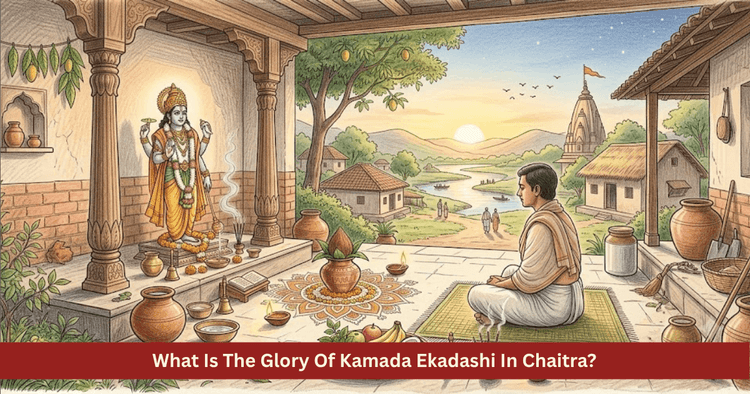
Table of Contents
Panchang Description And The Astrological Framework Of Kamada Ekadashi
Within the mathematical and metaphysical chronology of the classical Vedic calendar, the eleventh lunar day (Ekadashi) of the bright fortnight (Shukla Paksha) of the month of Chaitra is celebrated across the cosmos as Kamada Ekadashi-also revered in ancient scriptural digests as Phalada Ekadashi. Occurring in the immediate wake of the cosmic festivities of Vasanti Navratri and Sri Rama Navami, this sacred date represents the very first Ekadashi of the entire Vedic New Year (Vikram Samvat cycle). In classical Sanskrit etymology, the word Kamada signifies: 'The divine potency that fulfills all noble aspirations and righteous desires'.
From an astronomical and astrological perspective, Chaitra Shukla Ekadashi marks a sensitive solar-lunar transition. Lord Surya Deva traverses the final degrees of watery Pisces, preparing for the fiery ingress into his exaltation sign of Aries (Mesha). Concurrently, the Moon traverses the stellar constellations of Leo or Virgo (Magha or Purva Phalguni asterisms), grounding the emotional and intuitive faculties of human consciousness. In Vedic metaphysics, Ekadashi tithi is presided over directly by Lord Sri Hari Vishnu, the cosmic sustainer. Observing an unbroken fast upon this day purifies bodily tissues, eliminates accumulated metabolic endotoxins (Ama) and cleanses the subconscious mind of past-life curses, spiritual inertia and deep-seated guilt.
| Astrological and Astronomical Factor | Classical Scriptural and Metaphysical Description |
|---|---|
| Lunar Month and Fortnight | Chaitra Month, Shukla Paksha (Bright Fortnight) |
| Lunar Tithi | Ekadashi (The Inaugural Ekadashi of the New Year Cycle) |
| Canonical Liturgical Titles | Kamada Ekadashi, The Granter of Wishes, Curse-Dispelling Vrata |
| Sovereign Presiding Divinity | Lord Vasudeva (Four-Armed Lord Sri Hari Vishnu) |
| Solar Movement & Direction | Pisces-Aries Ingress Junction, Uttarayana (Northern Traversal) |
| Biological and Subtle Detox | Harmonizing Fire and Water Elements, Somatic Reset |
| Prescribed Food Offerings | Panchamrita, Holy Tulsi Leaves, Yellow Fruits, Makhana Kheer |
| Bestowed Spiritual Fruit | Fulfillment of Righteous Aspirations, Relief from Curses, Moksha |
To secure the spiritual merits of this sacred vrata and dissolve inherited karmic bondages, an aspirant must maintain disciplined scriptural decorum from Dashami evening through the Dvadashi fast-breaking window:
- Beginning on the sunset of Dashami, consume a single, light satvic meal; eliminate red lentils, chickpeas, honey, mustard oil and non-vegetarian foods completely.
- Awaken during Brahma Muhurta on Ekadashi, bathing in cool spring or ambient water consecrated with drops from the holy Ganga and black sesame seeds.
- Dress in clean, unstitched yellow cotton vestments, seating oneself facing eastward before the domestic altar.
- Kindle an unbroken lamp fueled by pure indigenous cow clarified butter before the icon of Lord Vishnu or the sacred Shaligram stone.
- Declare a formal vow (Sankalpa) while holding water, sesame seeds, unbroken rice and tulsi leaves, dedicating the day to spiritual elevation and curse-relief.
- Offer fragrant yellow blossoms (marigold or yellow oleander), yellow sandalwood paste and unbroken tulsi garlands at the feet of the Lord.
- Maintain inward recitation of the twelve-syllable mantra Om Namo Bhagavate Vasudevaya or the Vishnu Sahasranama throughout the day.
- Observe an unbroken fast (either complete dry fasting or moderate intake of water and seasonal fruits); avoid cereal grains, beans and table salt.
- Maintain a nocturnal vigil (Jagarana) instead of sleep, engaging in devotional chanting, sacred reading and silent contemplation.
- Break the fast on Dvadashi morning during the prescribed astrological window after offering food, vestments and charity to ascetics or the underprivileged.
Puranic Lore: The Mahabharata Narrative Of Gandharva Lalita And Lalit
In the Shanti Parva of the Mahabharata and the Varaha Purana, an instructional and sacred narrative of Kamada Ekadashi is recorded through a divine dialogue between Lord Sri Krishna and King Yudhishthira.
In ancient times, there flourished a prosperous kingdom known as Ratnapura, ruled by King Pundarika. Within this realm dwelled Gandharvas, Kinnaras and celestial nymphs. Among them lived an accomplished Gandharva musician named Lalit and his devoted, virtuous wife Lalita. The couple shared such deep affection that they could not bear to be separated even for a single moment.
One day, in the royal assembly of King Pundarika, a grand musical performance was underway, with Lalit singing as the principal court vocalist. While singing, Lalit's mind drifted toward his beloved wife Lalita. Distracted by intense emotional longing, his vocal rhythm faltered, causing a noticeable error in the melody and musical meter.
| Narrative Milestone | Puranic and Metaphysical Detail | Philosophical Meaning |
|---|---|---|
| Conjugal Infatuation | Lalit's wandering attention during royal duty | Attachment during duty leads to moral and professional ruin |
| The Musical Discord | Faltering rhythm in King Pundarika's court | Loss of sensory mastery produces immediate consequence |
| The Monarch's Curse | Lalit transformed into a man-eating demon | Sensual obsession degrades subtle consciousness into primal animalism |
| The Anguish of Lalita | Wandering the deep forests of Mount Vindhya | The enduring strength of unconditional love in adversity |
| Sage Shringi's Hermitage | Seeking counsel from an enlightened master | Saintly guidance is the true portal to spiritual redemption |
| Transfer of Merit | Lalita dedicating her fast to her husband | Selfless dedication can transmute the karmic destiny of another |
| Complete Redemption | Lalit regaining his radiant Gandharva form | Divine grace dissolves the heaviest inherited curses |
A serpent courtier named Karkota detected the cause of the vocal lapse and reported it to the monarch. Enraged by the perceived disrespect, King Pundarika pronounced a severe curse: "O foolish singer! You have dishonored the dignity of my royal assembly by daydreaming of your wife. therefore instantly become a grotesque, giant, flesh-devouring demon (Rakshasa)!"
Instantly, Lalit's form distorted into a monster. His mouth stretched into a cavern, his eyes burned like embers and his hair stood up like iron spikes. Overwhelmed by demonic hunger, he wandered the dense forests, terrifying travelers.
Heartbroken, Lalita followed her monstrous husband through the rugged wilderness of the Vindhya mountains. One morning, she reached the hermitage of Sage Shringi. Falling at the sage's feet in tears, she pleaded: "O compassionate master! My husband has been turned into a man-eating demon by a monarch's curse. Instruct me in a penance that can liberate him from this suffering."
Sage Shringi replied with compassion: "O noble lady! In the bright fortnight of Chaitra falls the sacred day of Kamada Ekadashi. It possesses the power to neutralize the heaviest curses. Observe this fast with unbroken devotion and surrender the accrued spiritual merit to your husband."
Lalita followed the sage's instructions. She observed a complete fast on Chaitra Shukla Ekadashi, maintained an unbroken nocturnal vigil and meditated upon Lord Vasudeva. On Dvadashi morning, she prayed before the deity: "O Lord! Whatever spiritual merit I have earned through this observance, I offer entirely to my husband, that he may be freed from this curse."
As she spoke, the demonic body disintegrated. Lalit emerged in his radiant celestial form, unblemished and shining with spiritual luster. Bowing before Sage Shringi and Lord Vishnu, the couple mounted a celestial aerial craft and returned to the higher realms.
Step-By-Step Liturgical Protocol For Kamada Ekadashi
To conduct the traditional adoration of Lord Sri Hari Vishnu on Chaitra Shukla Ekadashi, observe the following liturgical sequence:
- Morning Purification and Sacred Intention: Awaken before sunrise, bathing in ambient water consecrated with holy drops. Dress in clean yellow cotton garments. Sit facing eastward before the altar, taking water, yellow flowers, unbroken rice and a coin in the right palm:
Om Vishnave Namah. Adya Chaitra mase shukla pakshe Kamada Ekadashi tithau, mama sakala shapa-dosha nivaranartham, sarva-manoratha siddhyartham, Sri Vasudeva preetaye Ekadashi vratam aham karishye.
- Consecrating the Altar and Deities: Cover a wooden table with yellow silk fabric. Position the sacred Shaligram stone or icons of Lord Vishnu and Mother Lakshmi upon a copper vessel. Sketch an eight-petaled lotus design upon the platform using raw rice grains.
- Panchamrita Abhisheka: Bathe the deity with Panchamrita (raw cow milk, yogurt, ghee, honey and rock sugar) poured from a Dakshinavarti conch shell while reciting the Purusha Sukta, followed by a final rinse with pure Ganga water.
- Sacred Offerings: Dry the icon gently, anointing it with fragrant yellow sandalwood paste and unbroken rice. Present garlands of yellow marigolds and fresh tulsi leaves. Lord Vishnu accepts no offering without the sacred tulsi leaf.
- Incense, Lamps and Foods: Kindle a lamp fueled by cow ghee and natural guggul incense. Offer seasonal fruits (bananas, papayas, melons), foxnut pudding (kheer), churned butter mixed with rock sugar and assorted nuts.
- Scriptural Study and Mantra Japa: Sit before the lamp and read or listen to the narrative of Lalit and Lalita from the Mahabharata, followed by chanting the sovereign formula upon a tulsi rosary at least 108 times:
Om Namo Bhagavate Vasudevaya.
or
Om Narayanaya Vidmahe Vasudevaya Dheemahi Tanno Vishnuh Prachodayaat. - Camphor Arati and Nocturnal Vigil: Wave burning camphor before the altar. Avoid sleep during the night, spending the four nocturnal quarters chanting hymns and studying the 12th or 15th chapter of the Bhagavad Gita.
The Metaphysics Of Curse Relief And Karmic Transmutation
Vedic philosophy categorizes mortal actions into three primary streams: Sanchita (accumulated past impressions), Kriyamana (actions performed in the present) and Prarabdha (karmic debts that have ripened into current life circumstances). Unexplained crises, persistent chronic ailments or sudden downfalls often reflect the ripening of deep negative impressions or ancestral curses.
Kamada Ekadashi operates as a structured technology for untying these karmic knots:
- The Principle of Transferred Merit: Lalita surrendering her accrued spiritual merit to her husband demonstrates that selfless love and disciplined sadhana generate tangible spiritual energy that can uplift another soul.
- Purging Rajas and Tamas through Fasting: Abstaining from grains subdues the primal, reactive instincts governed by the gut. The mind calms, clearing the emotional field to receive higher spiritual impressions.
- The Transcendent Power of Forgiveness: Lord Vishnu is the ultimate redeemer (Shapa-Vimochana). When a sincere seeker acknowledges past errors and undertakes penance with humility, divine grace burns away karmic residue like the morning sun dispersing a dense fog.
| Category of Karma | Manifestation in Worldly Life | Remedial Action via Kamada Ekadashi |
|---|---|---|
| Sanchita Impressions | Subconscious dread, chronic unworthiness | Complete dietary fasting, chanting the Vishnu Sahasranama |
| Prarabdha Curses | Incurable illness, sudden loss, domestic discord | Observing the full vow, listening to the Lalita-Lalit lore |
| Kriyamana Errors | Daily lapses in speech, impulsive anger | Sincere repentance, offering tulsi leaves to the Lord |
Dvadashi Fast-Breaking Protocols (Parana)
The spiritual fruits of Ekadashi stabilize only when the fast is broken correctly during the prescribed astrological window upon Dvadashi:
| Fast-Breaking Element | Scriptural Rule | Prohibited Conduct |
|---|---|---|
| Parana Time Window | Prior to the expiration of Dvadashi tithi | Breaking the fast during Hari Vasara |
| Hari Vasara Duration | The first one-fourth (1/4) duration of Dvadashi | Consuming food during Hari Vasara nullifies the fast |
| First Sacramental Intake | Sacred tulsi leaf, charanamrita or amla | Heavy, fried or overly spicy dishes |
| Mandatory Philanthropy | Donating grain, clothing, sesame or water urns | Breaking the fast without offering charity |
Procedure for Breaking the Fast
On Dvadashi morning, bathe and perform a brief morning worship of Lord Vishnu. Present wholesome food, uncooked grain provisions (flour, lentils, ghee, salt) and a charitable gift to a worthy teacher or the underprivileged. Conclude the fast by consuming a drop of consecrated water and a sacred tulsi leaf, followed by a light satvic meal.
Philosophical Essence: Refining Worldly Desires Into Spiritual Freedom
Kamada Ekadashi imparts the realization that desire is not inherently corrupt; it is uncontrolled, unrighteous desire that degrades human consciousness.
Lalit's transformation into a demon demonstrates that when an individual abandons duty and ethical boundaries for sensory indulgence, consciousness descends into animalistic selfishness. Conversely, Lalita's devotion proves that when personal affection is transmuted into selfless penance, it has the power to redeem even a fallen soul.
The title Kamada promises not merely the satisfaction of transient worldly wishes but the refinement of desire itself-transforming petty craving into an aspiration for righteousness, inner peace and ultimate spiritual liberation.
FAQ
In which month and fortnight does Kamada Ekadashi occur?
Kamada Ekadashi occurs during the bright fortnight (Shukla Paksha) of the month of Chaitra, serving as the first Ekadashi of the classical Vedic New Year.
What is the literal meaning of 'Kamada'?
'Kama' denotes noble wishes and righteous aspirations, while 'Da' signifies the bestower; thus, Kamada is the observance that fulfills legitimate desires and cleanses the soul of curses.
Which monarch cursed the Gandharva Lalit to become a demon?
King Pundarika of Ratnapura cursed Lalit after he lost his musical rhythm during a court performance due to infatuation with his wife.
Who counseled Lalita to observe Kamada Ekadashi?
Sage Shringi instructed Lalita to observe Kamada Ekadashi on Mount Vindhya and dedicate the spiritual merit to liberate her husband.
What charitable offerings are most auspicious upon concluding this fast?
Donating yellow clothing, raw grains, seasonal fruits, water pots and modest dakshina to the needy on Dvadashi morning stabilizes the spiritual merits of the fast.
Get your accurate Kundali
Generate KundaliDid you like it?
Author

Pt. Abhishek Sharma (63)
Experience: 20
Consults About: Family Planning, Career
Clients In: Punjab, Haryana, Delhi
Share this article with friends and family
WELCOME TO
ZODIAQ
Right Decisions at the right time with ZODIAQ
