What Is The Complete Classical Protocol Of Kanya Pujan In Chaitra Navratri?
By Aparna Patni
Nine Forms Of Maidens (Aged 2-10), Batuk Bhairava And Authentic Offerings
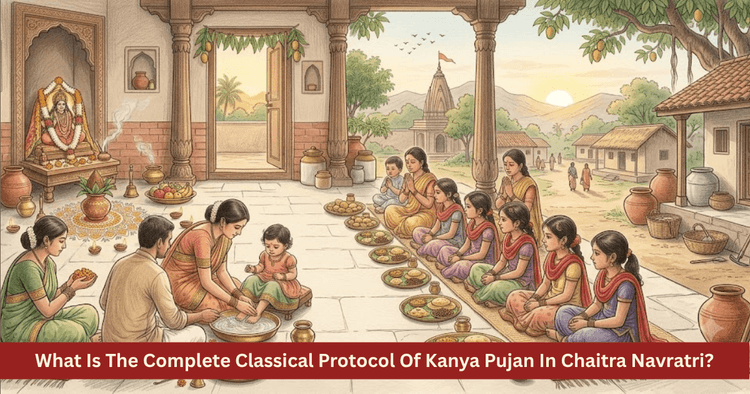
Table of Contents
Panchang Description And The Astrological Dimensions Of Kanya Pujan
Within the mathematical and metaphysical framework of classical Vedic Tantra and Puranic digests, Kanya Pujan (also venerated as Kumari Puja or Kanjak Pujan)-performed upon Maha Ashtami or Maha Navami during the bright fortnight of Chaitra-represents the supreme, non-negotiable culmination of the nine-day Vasanti Navratri sadhana. It is a foundational axiom of Vedic philosophy that when unmanifest, nondual cosmic consciousness (Parabrahma) and dynamic nature (Adishakti) are to be experienced in physical form, the unblemished, innocent consciousness of young maidens serves as the purest living conductor.
Astronomically, Maha Ashtami and Maha Navami mark the intense seasonal apex of early spring. Lord Surya Deva approaches his exaltation coordinate within Aries, bathing the northern hemisphere in refined solar prana. Authoritative scriptural treatises-including the Devi Bhagavata Mahapurana, the Rudrayamala Tantra and the Nirnayasindhu-mandate that nine days of fasting, Kalash installation, fire oblations and mantra recitations bear spiritual fruit only when the seeker worships young maidens aged two to ten years as the living embodiments of the Navadurgas. In the absence of Kanya Pujan, the entire liturgical sadhana is deemed incomplete.
| Astrological and Liturgical Factor | Classical Scriptural and Metaphysical Detail |
|---|---|
| Prescribed Lunar Dates | Chaitra Month, Shukla Paksha, Ashtami (Maha Ashtami) or Navami |
| Canonical Liturgical Titles | Kumari Puja, Kanya Pujan, Direct Adoration of Navadurga |
| Prescribed Age Span | Two to Ten Years of Age (Nine Distinct Names based on age) |
| Mandatory Auxiliary Divinity | One Young Boy (Venerated as Batuk Bhairava / Languriya) |
| Sovereign Presiding Power | Supreme Mother Adishakti Durga (Dwelling within the maidens) |
| Traditional Sacramental Foods | Semolina Halwa (fried in cow ghee), Puffed Puris, Black Chickpeas |
| Sacred Liturgical Gifts | Red Silk Scarves, Ribbons, Fresh Fruits, Books, Modest Dakshina |
| Bestowed Spiritual Fruit | Planetary Pacification, Debt Relief, Lineage Protection, Grace |
To welcome these living embodiments of divine power into the home and secure their blessings, the practitioner must observe disciplined scriptural decorum from early dawn:
- Awaken before sunrise during Brahma Muhurta, bathing in spring or ambient water consecrated with holy river drops and dressing in clean, unstitched garments.
- Cleanse the domestic sanctuary and dining area with sacred water and cow dung/milk wash prior to the arrival of the children.
- Formally invite the maidens and the young boy through their parents on the preceding evening with humility.
- Wash the feet of the children upon the entrance threshold within a broad copper or bronze platter using clean water and raw milk.
- Dry their feet with a clean, unbleached cotton towel, seating them upon clean white or red mats facing eastward.
- Apply an auspicious mark of vermilion, ashtagandha and unbroken rice upon their foreheads, tying a sacred red thread (mouli) around their wrists.
- Serve the freshly prepared sacramental feast of halwa, puris and seasoned black chickpeas with reverence and patience.
- Provide clean water for hand-washing and mouth-rinsing following the meal, presenting seasonal fruits, educational stationery and modest dakshina.
- Conclude with all family members prostrating before the maidens, touching their feet to seek their blessings.
The Nine Manifestations Of Maidens (Aged 2 To 10) And Their Metaphysics
The third skandha of the Devi Bhagavata Mahapurana and the Rudrayamala Tantra classify young maidens from two to ten years into nine distinct forms, detailing the precise spiritual fruits bestowed by each age:
1. Two-Year-Old Maiden: 'Kumarika'
A maiden of two years is venerated as Kumarika.
- Metaphysical Reality: This form embodies the absolute destruction of poverty, domestic grief and past karmic debts.
- Spiritual Fruit: Worshiping Kumarika protects family assets, clears chronic financial scarcity and dispels subconscious fear.
2. Three-Year-Old Maiden: 'Trimurti'
A maiden of three years is worshiped as Trimurti.
- Metaphysical Reality: Embodies the unified creative, preservative and transformative energies of Brahma, Vishnu and Shiva.
- Spiritual Fruit: Grants longevity, intellectual brilliance, family expansion and physical vitality across generations.
3. Four-Year-Old Maiden: 'Kalyani'
A maiden of four years is celebrated as Kalyani.
- Metaphysical Reality: Personifies cosmic benevolence, auspiciousness and righteous wisdom.
- Spiritual Fruit: Bestows academic excellence, commercial success, social honor and the removal of obstacles in secular undertakings.
4. Five-Year-Old Maiden: 'Rohini'
A maiden of five years is hailed as Rohini.
- Metaphysical Reality: Represents biological regeneration, healing botanicals and systemic immunity.
- Spiritual Fruit: Cures chronic somatic illnesses, protects against seasonal epidemics and averts the threat of untimely mortality.
5. Six-Year-Old Maiden: 'Kalika'
A maiden of six years is revered as Kalika.
- Metaphysical Reality: The fierce aspect that annihilates demonic thoughtforms, adversarial malice and psychic afflictions.
- Spiritual Fruit: Secures triumph over legal entanglements and external adversaries, neutralizing malefic astral energies.
6. Seven-Year-Old Maiden: 'Chandika'
A maiden of seven years is addressed as Chandika.
- Metaphysical Reality: Embodies unyielding valor, radiance and material prosperity.
- Spiritual Fruit: Anchors stable wealth (Sthira Lakshmi) within the home, dissolving inferiority complexes and family discord.
7. Eight-Year-Old Maiden: 'Shambhavi'
A maiden of eight years is worshiped as Shambhavi.
- Metaphysical Reality: Represents the transcendent grace of Lord Shiva and absolute emotional peace.
- Spiritual Fruit: Reconciles severe interpersonal disputes, calms litigation and grants eloquence and social respect.
8. Nine-Year-Old Maiden: 'Durga'
A maiden of nine years is revered directly as Durga.
- Metaphysical Reality: The sovereign deliverer who guides human consciousness across seemingly insurmountable crises.
- Spiritual Fruit: Accomplishes difficult life endeavors, protects against catastrophic setbacks and elevates spiritual consciousness.
9. Ten-Year-Old Maiden: 'Subhadra'
A maiden of ten years is venerated as Subhadra.
- Metaphysical Reality: The all-auspicious, benevolent mother who fulfills noble aspirations.
- Spiritual Fruit: Fulfills worldly and spiritual desires, providing emotional peace and spiritual liberation.
| Maiden's Age | Manifested Form | Presiding Element | Core Sonic Beeja | Bestowed Spiritual Realization |
|---|---|---|---|---|
| 2 Years | Kumarika | Earth (Grounding) | Om Kumarikayai Namah | Dissolution of poverty, protection |
| 3 Years | Trimurti | Trinity (Creation) | Om Trimurtyai Namah | Expansion of lifespan, family growth |
| 4 Years | Kalyani | Dharma & Wisdom | Om Kalyanai Namah | Academic success, commercial prestige |
| 5 Years | Rohini | Water (Healing) | Om Rohinyai Namah | Healing chronic diseases, immunity |
| 6 Years | Kalika | Fire (Subduing Ego) | Om Kalikayai Namah | Triumph over adversaries, courage |
| 7 Years | Chandika | Radiant Opulence | Om Chandikayai Namah | Abundant wealth, sovereign authority |
| 8 Years | Shambhavi | Space (Shiva Peace) | Om Shambhavyai Namah | Settling disputes, mental tranquility |
| 9 Years | Durga | Transcendental Shakti | Om Durgayai Namah | Overcoming crises, spiritual grace |
| 10 Years | Subhadra | Absolute Fulfillment | Om Subhadrayai Namah | Fulfillment of desires, liberation |
The Role Of Batuk Bhairava (Languriya) In Tantric Protection
In classical Shakta liturgy, seating and worshiping one young boy as Batuk Bhairava alongside the nine maidens is an indispensable requirement. Tantric treatises affirm that Shakti worship remains incomplete without the presence of Bhairava.
- Guardian of the Shakti Peethas: When Lord Shiva consecrated the 51 Shakti Peethas across the terrestrial plane, he appointed manifestations of Bhairava as their regional guardians (Kshetrapalas). In Kanya Pujan, the nine maidens embody nine living Shakti shrines and the young boy serves as their guardian.
- Spiritual Shield: Just as Lord Rama is attended by Hanuman and Mother Durga is accompanied by Bhairava, seating a young boy protects the ritual space from disruptive astral influences.
- Protocol for Batuk: The boy's feet are washed with the same reverence, his brow is marked with sandalwood and he receives the same sacramental meal, gifts and dakshina as the maidens.
Step-By-Step Liturgical Protocol For Kanya Pujan
To conduct Kanya Pujan on Maha Ashtami or Maha Navami, observe the following liturgical sequence:
- Formal Invitation: Invite nine young maidens and one boy respectfully on the previous evening. Welcome them at the threshold with flower petals and the sounding of conch shells.
- Washing the Feet (Pada Prakshalana): Fill a copper or bronze platter with clean spring water and raw milk. Seat each child upon a raised platform, washing their feet gently with your hands. Dry their feet with a clean towel and sprinkle drops of the wash-water upon your head as blessing.
- Seating and Anointing: Seat the children facing eastward upon clean mats. Apply a tilak of vermilion, ashtagandha and unbroken rice upon their foreheads. Bind a sacred red thread around their right wrists and drape floral garlands around their necks.
- Light-Waving Ceremony (Arati): Wave a lamp fueled by cow ghee and burning natural camphor before the assembled children.
- Serving the Sacramental Feast: Present freshly prepared semolina halwa, puffed puris and seasoned black chickpeas upon clean platters, accompanied by fresh fruits. Serve the children with patience and humility.
- Cleansing and Sipping: Provide warm, clean water for hand-washing and rinsing after the feast.
- Gifts and Dakshina: Drape an embroidered red silk scarf (Chunri) over the shoulders of each maiden. Present practical gifts-such as notebooks, pencils, educational materials and seasonal fruits-alongside a modest monetary gift.
- Touching the Feet (Charan Sparsh): Every member of the household must prostrate before the children, touching their feet to seek blessings. Collect a pinch of dust from where their feet rested, placing it upon your brow and within the household vault.
Nutritional Science: The Ayurvedic Value Of Halwa, Puri and Black Chickpeas
The traditional menu of halwa, puris and seasoned black chickpeas carries specific Ayurvedic benefits tailored to the conclusion of a nine-day fast:
- Semolina Halwa (Sweet Taste - Madhura): Combining semolina, pure cow ghee and raw sugar nourishes depleted bodily tissues, soothing gastric pitta and promoting mental satisfaction.
- Black Chickpeas (Astringent Taste - Kashaya): Packed with clean plant proteins and dietary fiber, black chickpeas possess astringent properties that absorb excess liquefied kapha, stabilizing intestinal digestion.
- Puffed Puris (Unctuous Sustenance): Fried whole wheat flatbreads deliver calories and lipids, gently re-engaging digestive fires after prolonged fasting.
Harmonizing sweet and astringent tastes aligns with Ayurvedic principles, restoring somatic equilibrium following dietary restriction.
Philosophical And Social Dimension: Reverence For Feminine Consciousness
Kanya Pujan embodies the classical Vedic declaration: Yatra naryastu poojyante ramante tatra devatah-where women are revered, there the divine forces reside.
The ritual delivers a clear social directive: no amount of severe fasting, costly temple construction or mantra chanting pleases the Divine if a society mistreats, devalues or abuses women.
Kanya Pujan is not a transactional, once-a-year ritual. It is a spiritual commitment to honor, educate, protect and cherish the feminine principle every day of the year, recognizing every maiden and woman as a manifestation of the Divine Mother.
FAQ
Should Kanya Pujan be performed on Maha Ashtami or Maha Navami?
Both days are scripturally valid and auspicious; households observe the ritual according to their ancestral family traditions.
Why must the maidens be between two and ten years of age?
A child under two cannot consciously receive offerings, while those above ten enter adolescence; the span between two and ten represents unblemished, innocent consciousness.
Why is it mandatory to include a young boy alongside the maidens?
The boy represents Batuk Bhairava, the guardian of the divine feminine; in Shakta tradition, Shakti worship is completed by the presence of Bhairava.
What alternative exists if nine maidens cannot be assembled?
If nine maidens are unavailable, worship as many as possible (at least two, five or seven), offering the remaining food portions and gifts at a local temple or cow sanctuary.
What is the significance of the foot-dust (Charan-Raj) collected after the ritual?
Applying the dust from the maidens' feet to one's brow is believed to clear karmic obstacles and attract domestic prosperity.
Get your accurate Kundali
Generate KundaliDid you like it?
Author

Aparna Patni (63)
Experience: 20
Consults About: Family Planning, Career
Clients In: Punjab, Haryana, Delhi
Share this article with friends and family
WELCOME TO
ZODIAQ
Right Decisions at the right time with ZODIAQ
