What Is The Spiritual Essence Of Mahavira Jayanti And The Five Vows?
By Pt. Nilesh Sharma
Advent Of The 24th Tirthankara, Sixteen Prophetic Dreams, Five Great Vows And Anekantavada
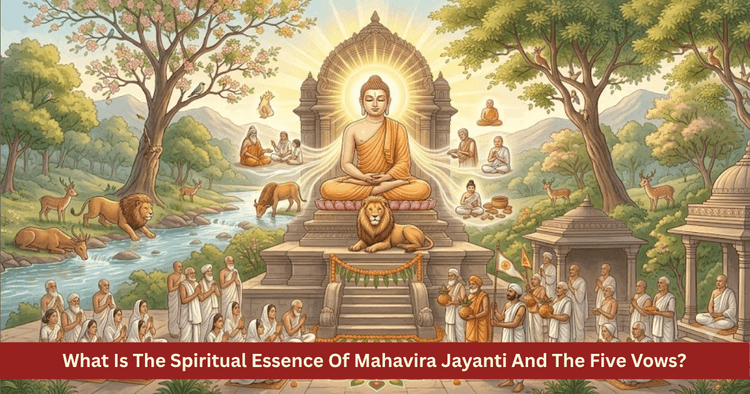
Table of Contents
Panchang Description And The Astrological Dimensions Of Mahavira Jayanti
Within the classical computational systems of the Vedic calendar, the Agamic treatises of Jainism and the Shramana ascetic traditions of ancient India, the thirteenth lunar day (Trayodashi) of the bright fortnight (Shukla Paksha) of the month of Chaitra is celebrated globally as Mahavira Jayanti-specifically revered as the Janma Kalyanak of the 24th Tirthankara, Bhagavan Mahavira. Jain metaphysics outlines five monumental, sanctified milestones in the lifetime of every Ford-Maker (Tirthankara), canonically termed the Pancha Kalyanaka: Conception (Garbha), Advent (Janma), Renunciation (Diksha), Omniscience (Kevalajnana) and Liberation (Moksha). The thirteenth lunar station of Chaitra marks the glorious second milestone: the Advent of the Conqueror.
From an astronomical perspective, Chaitra Shukla Trayodashi marks the balanced equinoctial apex where spring culminates and radiant summer begins. Lord Surya Deva approaches his maximum exaltation coordinate within Aries, while the Moon transits the asterism of Uttara Phalguni, governed by the Sun-symbolizing spiritual sovereignty, truth and ascetic radiance. Bhagavan Mahavira was born in 599 BCE into the royal Ikshvaku lineage of the ancient Licchavi Republic in Kundalpur (near Vaishali, modern-day Bihar) to King Siddhartha and Queen Trishala (Priyakarini). His royal birth brought peace, agricultural abundance and prosperity to the kingdom, earning him his birth name Vardhamana-"The Ever-Increasing One."
| Astrological Factor | Scriptural, Historical and Philosophical Detail |
|---|---|
| Lunar Month and Fortnight | Chaitra Month, Shukla Paksha (Bright Fortnight) |
| Lunar Tithi | Trayodashi (The Thirteenth Station / Janma Kalyanak) |
| Historical Advent Chronology | 599 BCE (The Epochal Foundation of the Vira Nirvana Era) |
| Consecrated Sanctuary of Birth | Kundalpur / Kshatriyakunda (Vaishali Republic, Bihar) |
| Sovereign Lineage | King Siddhartha and Queen Trishala (Ikshvaku Royal Dynasty) |
| Natal Asterism | Uttara Phalguni Nakshatra (Solar-ruled, Sovereign Asceticism) |
| Canonical Titles | Vardhamana, Mahavira, Sanmati, Vira, Jina, Kevali |
| Foundational Philosophical Pillars | The Five Great Vows (Mahavratas) and Anekantavada (Non-Absolutism) |
| Primary Liturgical Rite | Consecration (Abhisheka) with 108 Sacred Pitchers, Shanti Dhara |
| Bestowed Spiritual Fruit | Purification of Passions (Kashayas), Non-Violence, Liberation |
To assimilate the non-violent and ascetic virtues of Bhagavan Mahavira on this sacred day, an aspirant should observe disciplined scriptural decorum from early dawn:
- Awaken before sunrise during Brahma Muhurta, bathing in boiled, pure water with a peaceful and reverent mindset.
- Dress in clean, unstitched white cotton vestments, symbolizing inner purity and non-possession (Aparigraha).
- Visit a nearby Jinalaya (Jain temple), offering the traditional eightfold sacramental substances (Ashtadravya: pure water, sandalwood, unbroken rice, flowers, sweets, lamps, incense and fresh fruits) while reciting the sacred Navkar Mantra.
- Perform the ritual abhisheka and peace libation (Shanti Dhara) over the icon of the Tirthankara using 108 silver or golden pitchers of purified water.
- Observe strict dietary non-violence throughout the day; avoid root vegetables (potatoes, onions, garlic), refrain from eating after sunset and avoid harming living beings.
- Chant the sacred Navkar Mantra (Namo Arihantanam, Namo Siddhanam...) for at least nine or twenty-seven complete rounds of a rosary.
- Practice universal forgiveness, seeking reconciliation with all living beings for past unmindful actions, words and thoughts.
- Practice the fourfold charity (Chaturvidha Dana): offering food (Ahara), medicine (Aushadha), education (Jnana) and protection (Abhaya) to all beings.
- Attend the evening light-waving ceremony (Maha Arati) with twenty-four lamps in the temple, participating in the peaceful chariot procession (Rath Yatra).
Queen Trishala's Sixteen Auspicious Dreams Before The Advent
Both Digambara and Shvetambara traditions document that prior to the birth of a Tirthankara, the mother experiences an extraordinary sequence of prophetic dreams. The Digambara tradition enumerates sixteen auspicious visions seen by Queen Trishala during the final watch of the night:
- Airavata Elephant: A magnificent four-tusked white elephant, symbolizing structural stability, dignity and wisdom.
- The White Bull (Vrishabha): A noble white bull bearing the yoke, representing steadfast patience and moral duty.
- The Lion: A white lion with flowing mane, signifying fearless courage and victory over internal passions.
- Goddess Lakshmi Anointed: The goddess of auspiciousness seated on lotuses, showered with water from golden pitchers by celestial elephants.
- Two Floral Garlands: Radiant, fragrant garlands of celestial blossoms, heralding universal renown.
- The Full Moon: A silver full moon in an unclouded sky, dispelling the heat of ignorance and sorrow.
- The Rising Sun: A brilliant golden sun piercing the morning mist, heralding the light of omniscience (Kevalajnana).
- Two Golden Urns: Golden pitchers filled with clear water, indicating emotional depth and wisdom.
- A Pair of Fish: Playful fish swimming in clear water, symbolizing unobstructed spiritual joy.
- A Lake of Lotuses: A tranquil lake filled with open lotuses, representing detachment from worldly impurities.
- An Ocean of Surging Waves: Ocean waves rising toward the sky, signifying vast insight and perception.
- A Golden Throne: A gem-encrusted royal seat, representing spiritual sovereignty over the three realms.
- A Celestial Chariot (Vimana): A luminous aerial palace descending from the heavens, honoring the arrival of a divine soul.
- The Abode of the Nagendra: A radiant palace in the subterranean realms, showing reverence across all dimensions.
- A Mound of Jewels: Radiant heaps of uncut gems, representing boundless inner virtues and spiritual wealth.
- A Smokeless Fire: A clean, golden flame burning without smoke, representing the fire of austerity burning away karma.
| Dream Vision | Symbolic Meaning | Metaphysical Reality | Manifestation in Mahavira's Life |
|---|---|---|---|
| 1 to 4 | Elephant, Bull, Lion, Lakshmi | Valor, Endurance, Courage, Spiritual Wealth | Twelve years of silent meditation and steadfast resolve |
| 5 to 8 | Garlands, Moon, Sun, Urns | Renown, Compassion, Omniscience, Purity | Attainment of Kevalajnana, establishing the Fourfold Sangha |
| 9 to 12 | Fish, Lake, Ocean, Throne | Joy, Detachment, Infinite Depth, Spiritual Rule | Transcending the four passions (Kashayas), spiritual sovereignty |
| 13 to 16 | Vimana, Naga Abode, Gems, Fire | Universal Honor, Integrity, Three Jewels, Tapas | Liberation at Pavapuri, burning away residual karmas |
When King Siddhartha consulted the royal astrologers and sages regarding the dreams, they proclaimed with one voice: "O King, your household welcomes not an ordinary prince but a Tirthankara who will illuminate the three worlds with the torch of non-violence and truth."
On the thirteenth lunar day of Chaitra, Vardhamana was born. The celestial king Indra descended from the heavens, carrying the newborn child to the summit of Mount Meru to perform the grand celestial abhisheka using 1,008 pitchers of ambrosial water.
From Palace To Asceticism: Twelve Years Of Unbroken Tapasya
Prince Vardhamana was raised amidst royal luxury, education and refinement. He married Princess Yashoda and had a daughter named Priyadarshana (the Digambara tradition maintains he observed lifelong celibacy). Yet the pleasures of courtly life could not captivate his contemplative spirit.
At the age of thirty, following the passing of his parents, Vardhamana sought permission from his elder brother Nandivardhana to renounce the world. After waiting an additional two years to comfort his family, he formally renounced his wealth, garments and royal titles, stepping into the wilderness as a solitary wandering mendicant.
The Twelve Years of Silence and Endurance
For the next twelve years, five months and fifteen days, Vardhamana practiced an unprecedented level of ascetic discipline:
- Complete Renunciation of Possessions: He cast aside all material goods, adopting the sky-clad state (Digambaratva) as an expression of total non-possession.
- Vow of Silence: Throughout these years, he maintained deep silence, avoiding ideological arguments and turning his awareness completely inward.
- Enduring Trials Without Anger: He met hostility from bandits, wild animals and aggressive locals with gentle equanimity. When the venomous serpent Chandakaushika struck his foot, the ascetic responded with pure goodwill, causing white milk to flow from the wound instead of blood and transforming the creature's anger. When villagers drove iron spikes into his ears, he showed neither resentment nor pain, responding only with compassion.
On the banks of the Rijuvalika River, beneath a Sal tree in deep meditation, Vardhamana attained Kevalajnana (infinite, unobstructed omniscience) on the tenth day of the bright fortnight of Vaishakha. He had conquered anger, pride, deceit and greed, becoming a Jina (the Conqueror) and Mahavira (the Great Hero).
The Five Great Vows (Pancha Mahavratas): Ethical Foundation Of Jainism
Having attained omniscience, Bhagavan Mahavira shared his insights through structured ethical principles, formulating the Pancha Mahavratas (Five Great Vows for monks) and Anuvratas (Five Minor Vows for householders):
1. Ahimsa (Non-Violence)
Ahimsa paramo dharmah.
- Meaning: Non-violence extends far beyond avoiding physical harm. It means refraining from causing injury to any living being through thought, speech or action.
- Ecological Dimension: Mahavira was the first to emphasize that life exists within earth, water, fire, air and plant life (single-sensed organisms). therefore environmental protection and mindful consumption are essential expressions of Ahimsa.
2. Satya (Truthfulness)
- Meaning: Speaking truth that is harmless, gentle and beneficial. Truth weaponized to injure, humiliate or destroy another is not authentic truth; it is violence disguised as honesty.
3. Asteya (Non-Stealing)
- Meaning: Taking nothing that has not been freely and consciously offered. This includes respecting intellectual property, practicing fair commerce, avoiding tax evasion and refusing to profit unfairly at another's expense.
4. Brahmacharya (Purity of Conduct)
- Meaning: Exercising conscious restraint over the senses and romantic desires. For householders, it means absolute mutual fidelity within marriage (Svadhara-Santosha) and viewing other beings with familial respect.
5. Aparigraha (Non-Possessiveness)
- Meaning: Limiting physical acquisitions, wealth, land and material possessions to what is reasonably needed. Mahavira identified hoarding as the root of economic inequality, social strife and imperialist aggression.
| The Vow | Ascetic Expression (Mahavrata) | Householder Practice (Anuvrata) | Modern Global Value |
|---|---|---|---|
| Ahimsa | Absolute avoidance of harm to all life forms | Vegetarianism, non-violent trade, animal care | Resolution of war, ecological preservation |
| Satya | Pure, harmless truth in every utterance | Honesty in business, fair accounting | Combating disinformation, corporate ethics |
| Asteya | Taking nothing unoffered, down to a straw | Fair wages, transparent trade, no bribery | Ending corruption and predatory exploitation |
| Brahmacharya | Complete, unbroken celibacy | Marital fidelity, mental purity | Healthy family stability, ending abuse |
| Aparigraha | Owning nothing; complete voluntary poverty | Capping personal wealth; regular philanthropy | Resolving economic disparity, sustainability |
Anekantavada And Syadvada: The Philosophy Of Intellectual Tolerance
Mahavira's intellectual legacy centers on Anekantavada (Non-Absolutism) and Syadvada (The Doctrine of Qualified Assertion).
The Parable of the Blind Men and the Elephant
Mahavira taught that reality is complex and multifaceted. When six blind men touch different parts of an elephant-the ear, tusk, trunk, leg, belly and tail-they argue that the creature resembles a winnowing fan, spear, snake, pillar, wall and rope. Each man possesses a partial truth, yet errs in declaring his limited perspective to be the whole truth.
- Anekantavada: Affirms that every entity possesses infinite attributes (Ananta-dharmatmakam vastu). A single individual is simultaneously a child, parent, spouse and professional, depending on the perspective of the observer.
- Syadvada: A linguistic discipline of qualifying statements with "from a certain perspective" (Syat), cultivating humility and openness in dialogue.
This philosophy provides a framework for modern diplomacy, interfaith harmony and constructive debate, offering a path away from dogma and fundamentalism toward mutual understanding.
"Live And Let Live" And The Spirit Of Forgiveness
Bhagavan Mahavira encapsulated the heart of his teaching in a simple principle: Jivesu payamam ma kareha-Exercise compassion toward all living beings, commonly expressed as "Live and Let Live."
He taught that the smallest insect values its life just as much as an emperor values his crown. Just as we cherish our breath and fear pain, every living creature shares that same desire for life and peace. No being holds the moral right to destroy another for food, sport or vanity.
The Universal Prayer of Forgiveness: Michhami Dukkadam
On Mahavira Jayanti and during annual reflections, practitioners recite the ancient Prakrit verse of universal reconciliation:
Khamemi savva-jive savve jiva khamantu me.
Mitti me savva-bhuesu veram majjham na kenai.
Meaning: "I ask forgiveness from all living beings; may all living beings forgive me. I share friendship with all creatures; I hold malice and enmity toward none."
Step-By-Step Liturgical Protocol For Mahavira Jayanti
To celebrate Mahavira Jayanti at home and in the community, observe the following liturgical sequence:
- Morning Procession (Prabhat Pheri): Gather before dawn dressed in white attire, carrying the five-colored Jain flag through neighborhood lanes, singing devotional hymns on non-violence.
- Temple Rites and Abhisheka: Seat the metallic icon of Bhagavan Mahavira upon the replica of Mount Meru in the temple sanctum. Perform ceremonial bathing using pure water, saffron and sandalwood paste poured from 108 pitchers.
- Offering the Eightfold Substances (Ashtadravya Puja): Create geometric mandalas using raw unbroken rice grains, offering the eight traditional substances:
- Water (Jala): For freedom from birth, aging and death.
- Sandalwood (Chandana): To cool the fires of worldly anxiety.
- Unbroken Rice (Akshata): For attaining the indestructible state of liberation.
- Flowers (Pushpa): To overcome the arrows of sensory attachment.
- Sacred Sweets (Naivedya): To conquer physical hunger and craving.
- Lamps (Dipa): To disperse the darkness of spiritual ignorance.
- Incense (Dhupa): To burn away the residue of past karmas.
- Fruit (Phala): To attain the ultimate fruit of liberation (Moksha).
- Scriptural Study (Svadhyaya): Gather in the afternoon to study the Tattvartha Sutra or the Uttaradhyayana Sutra, reflecting on ethical self-restraint.
- The Peaceful Chariot Procession (Rath Yatra): Accompany the consecrated icon of Mahavira on an ornate chariot through the city, with participants walking barefoot to share the message of non-violence.
- Active Compassion (Jiva Daya): Conclude the day by feeding working cattle, supplying grains to wild birds, supporting animal shelters and providing food and educational supplies to underprivileged families.
Philosophical Essence: Awakening The Divine Within
Mahavira Jayanti imparts an empowering spiritual truth: Mahavira was not an avatar descending from another realm; he was a human being who, through earnest effort, self-discipline and compassion, refined his consciousness to become a conqueror of passions.
Jain philosophy affirms: Appa so parmappa-Every soul possesses the inherent capacity to attain spiritual perfection. When an individual subdues internal anger through forgiveness, pride through humility, deceit through honesty and greed through contentment, their soul reflects the same serene light as Mahavira.
In an era challenged by geopolitical conflict, environmental degradation and commercial excess, Bhagavan Mahavira's teachings offer a practical guide for peace. Let us welcome this sacred day by embodying the Five Vows in daily life, living with gentle consideration for all beings and transforming our world into a sanctuary of mutual respect and compassion.
FAQ
On which specific lunar date is Mahavira Jayanti celebrated?
Mahavira Jayanti is observed annually on the thirteenth lunar day (Trayodashi) of the bright fortnight of the month of Chaitra.
Where was Bhagavan Mahavira born and into which dynasty?
He was born in Kundalpur (near Vaishali, modern-day Bihar) into the royal Ikshvaku dynasty to King Siddhartha and Queen Trishala in 599 BCE.
What was Bhagavan Mahavira's childhood name and why was he called 'Mahavira'?
His childhood name was Vardhamana ("the prosperous one"). He was named Mahavira ("the great hero") by celestial beings after displaying calm courage when subduing a wild elephant and an enraged serpent without violence.
What are the Five Great Vows (Pancha Mahavratas) established by Mahavira?
The Five Great Vows are Ahimsa (Non-Violence), Satya (Truthfulness), Asteya (Non-Stealing), Brahmacharya (Sensory Restraint) and Aparigraha (Non-Possessiveness).
What is the meaning of the traditional phrase 'Michhami Dukkadam'?
It is a sacred Prakrit phrase meaning: "May all my unmindful actions, harsh words and negative thoughts toward any living being be dissolved; I sincerely seek your forgiveness."
Get your accurate Kundali
Generate KundaliDid you like it?
Author

Pt. Nilesh Sharma (63)
Experience: 20
Consults About: Family Planning, Career
Clients In: Punjab, Haryana, Delhi
Share this article with friends and family
WELCOME TO
ZODIAQ
Right Decisions at the right time with ZODIAQ
