What Is The Science Of Sattu, Earthen Urn and Fan Donation On Mesha Sankranti?
By Aparna Patni
Satuani Traditions, Earthen Pot Thermodynamics, Sattu Nutrition And Planetary Charities
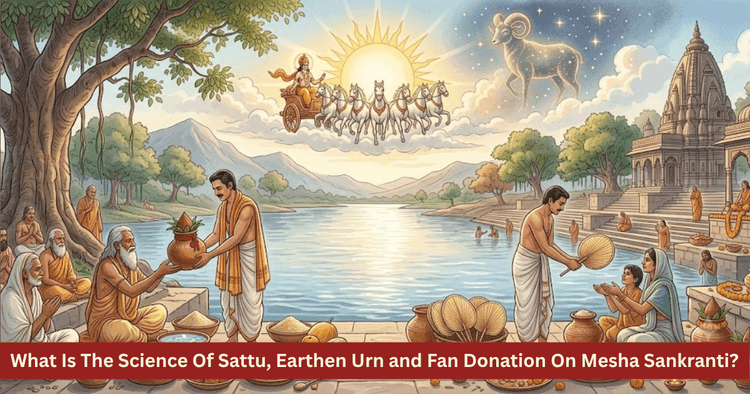
Table of Contents
Panchang Description And The Astrological Dimensions Of Satuani
Within the computational cosmology of the classical Vedic calendar and the regional socio-spiritual traditions of northern India-particularly across Bihar, eastern Uttar Pradesh, Jharkhand and the Terai belt of Nepal-the solar ingress of Mesha Sankranti is celebrated as Satuani or Sattu Sankranti. This astronomical junction is far more than an abstract solar calculation; it represents the definitive meteorological threshold where the temperate breezes of spring (Vasanta) yield to the dry heat of radiant summer (Grishma).
Astronomically, when Lord Surya Deva departs from the watery sign of Pisces (Meena) to enter the cardinal fiery sign of Aries (Mesha), solar thermal radiation, environmental dryness and atmospheric temperatures increase. Sanatana Dharma has systematically integrated this astronomical reality with biological dietetics, somatic healthcare and liturgical charity. On this sacred date, the mandatory custom of donating an unglazed earthenware urn filled with fresh water, a traditional hand fan, roasted gram/barley flour (sattu), raw jaggery, cucumbers and sweet melons is observed as a foundational health and spiritual practice.
| Astrological and Astronomical Factor | Classical Scriptural and Metaphysical Detail |
|---|---|
| Solar Planetary Ingress | Transit from Pisces (Meena) to Aries (Mesha) / Solar New Year |
| Regional Festive Titles | Mesha Sankranti, Satuani, Sattu Sankranti, Jur Sital Eve |
| Presiding Sovereign Divinities | Lord Surya Narayana (Sun God) and Lord Varuna (Regent of Waters) |
| Core Elemental Ingress | Shift from Mutable Water to Cardinal Fire (Solar Exaltation) |
| Consecrated Donative Materials | Fresh Earthen Urn (filled with water), Sattu, Jaggery, Hand Fan, Melons |
| Prescribed Sacramental Diet | Roasted Barley/Gram Sattu, Raw Mango Panna, Mint Chutney, Jaggery |
| Associated Planetary Alignments | Sun (Heat), Moon (Urn & Water), Mars (Gram), Jupiter (Barley), Mercury (Fan) |
| Bestowed Physiological Benefit | Immunity against Heatstroke, Bile Pacification, Ancestral Peace |
To welcome the summer season safely, prevent seasonal somatic disorders and secure divine and ancestral blessings on Mesha Sankranti, a practitioner must observe disciplined scriptural decorum from early dawn:
- Awaken before sunrise during Brahma Muhurta, bathing in a sacred river or in ambient water infused with holy Ganga drops and red sandalwood powder.
- Stand facing eastward after ablutions, pouring three continuous water oblations to Surya Deva from a copper vessel enriched with vermilion, unbroken rice, red blossoms and raw jaggery.
- Arrange the donation materials-a fresh terracotta water pot, a pouch of roasted sattu, raw jaggery, a woven hand fan and seasonal melons-upon the domestic altar.
- Cleanse the earthen urn, fill it with pure spring water, mark an auspicious vermilion swastika upon its surface and wind sacred red cotton thread (mouli) around its neck.
- Place a shallow clay or copper bowl filled with sattu upon the mouth of the vessel, accompanied by raw jaggery and the hand fan.
- Chant the solar formula Om Ghrinih Suryaya Namah 108 times, sprinkling sacred water over the offerings to formalize the intention (Sankalpa).
- Offer the first portion of water and sattu to ancestral lineage guardians and family deities before presenting the gifts to a respected teacher or the underprivileged.
- Consume the sacramental meal of sattu dissolved in cool water, seasoned with raw jaggery or rock salt, roasted cumin and raw mango relish during the midday hour.
- Establish a public drinking water station (Piyau) along streets or thoroughfares to serve travelers throughout the hot months.
Nutritional And Ayurvedic Science: Pacifying Pitta And Preventing Heatstroke
Satuani is a practical application of the classical Ayurvedic principle of Ritucharya (seasonal lifestyle guidelines). The Charaka Samhita and the Sushruta Samhita document that the onset of summer weakens digestive metabolic fire (Jatharagni) while promoting the accumulation of systemic bile (Pitta). Consuming and donating sattu on Mesha Sankranti provides the physiology with an internal defense against the rising heat.
1. The Therapeutics of Sattu (Roasted Flour)
Sattu is crafted by dry-roasting whole barley grains (Yava) and Bengal gram chickpeas (Chana) over hot sand before grinding them into a fine flour:
- The Cooling Power of Barley (Sheetala Veerya): Barley is naturally cooling, diuretic and pacifies both kapha and pitta. It soothes internal burning sensations and quenches excessive thirst (Trishna).
- The Astringency of Bengal Gram (Kashaya Rasa): Roasted gram absorbs excess gastric acidity in the stomach lining. It is light, easy to digest and cleanses the intestinal tract.
- Instant Hydration and Electrolyte Replenishment: Sattu is dense in bio-available plant proteins, insoluble dietary fiber, magnesium, manganese and iron. When whisked into water with raw unrefined jaggery or rock salt and roasted cumin, it forms a natural electrolyte beverage superior to synthetic rehydration formulas, replenishing minerals lost through perspiration.
2. Raw Mango Panna and Fresh Mint
Consuming sattu alongside raw green mango drink (Aam Panna) and wild mint chutney provides targeted botanical protection:
- Green mangoes supply vitamin C and pectin, which shield somatic cells from thermal stress and oxidative damage.
- Mint relaxes smooth gastrointestinal muscles, dispelling internal abdominal heat and preventing summer digestive disorders, diarrhea and nausea.
| Dietary Ingredient | Classical Ayurvedic Quality | Bio-Chemical Composition | Physiological & Health Benefit |
|---|---|---|---|
| Barley & Gram Sattu | Astringent-Sweet, Light, Cooling | Insoluble fiber, plant protein, iron | Stabilizes digestion, slakes thirst, sustains energy |
| Earthen Pot Water | Naturally Alkaline, Soothing | Micro-mineral enrichment, bio-available | Neutralizes gastric acid, protects throat tissue |
| Raw Unrefined Jaggery | Sweet Taste, Gentle Digestive Action | Sucrose, glucose, potassium, iron | Rapid energy release, liver support, nerve calm |
| Raw Mango Drink (Panna) | Sour Taste, Balances Vata-Pitta | Vitamin C, pectin, malic/citric acids | Shields against heatstroke, cleanses blood |
| Woven Hand Fan (Vyajana) | Air Element Circulator | Evaporative cooling, thermal balance | Regulates body temperature, calms the mind |
The Earthen Water Urn: Evaporative Physics And Water Alkalinity
Mesha Sankranti mandates the donation and domestic adoption of unglazed terracotta water urns over metallic or plastic storage containers due to sound environmental physics:
- Evaporative Cooling: An unglazed earthenware pot features thousands of microscopic pores. Water seeps through these channels to the outer surface, absorbing heat from the vessel as it evaporates into ambient air. This natural evaporative process cools the remaining water inside by 10 to 15 degrees Celsius. Unlike refrigerated water, this naturally cooled water does not shock the respiratory tract, inflame the vocal cords or disrupt the digestive fire.
- Natural Mineral Alkalinity: Natural clay is alkaline, whereas municipal or stagnant water often carries mild acidity. Resting within porous clay over several hours neutralizes acidic compounds in the water. Drinking this balanced water regulates systemic pH, preventing acid reflux and gastric inflammation during summer.
- Revitalized Living Water: The porous clay releases trace minerals-such as silica, magnesium and calcium-into the water, enriching its bio-energetic structure.
Predictive Astrology: Elemental Balancing And Planetary Pacification
In classical Vedic predictive astrology, the donations performed on Mesha Sankranti function as a method for pacifying difficult planetary influences and balancing the five primal elements (Pancha Mahabhutas) in the human body:
- Pacifying the Moon (Earthen Pot and Water): The water-filled clay vessel represents the Moon (Chandra), governor of the emotional mind and bodily fluids. Donating a full water urn on Sankranti strengthens an afflicted natal Moon, soothing emotional anxiety, chronic depression and insomnia.
- Harmonizing the Sun and Mars (Sattu and Jaggery): Roasted gram and raw jaggery are governed by Mars and the Sun. Donating sattu transmutes the aggressive thermal energy of the exalted Sun into steady vitality and courage.
- Balancing Mercury and the Air Element (The Hand Fan): The woven hand fan made of bamboo, palm fronds or vetiver (Khus) represents Mercury and the air element (Vayu). Presenting a fan calms skin irritations, respiratory issues and nervous fatigue.
- Honoring Jupiter (Barley Grain): Barley is celebrated in the Vedas as the primordial grain, governed by Jupiter (Brihaspati). Donating barley sattu secures wisdom, intellect and ethical clarity for the household.
| Donative Article | Astrological Planetary Governor | Associated Tissue / Chakra | Astrological and Karmic Fruit |
|---|---|---|---|
| Water-Filled Terracotta Urn | The Moon and Lord Varuna | Plasma (Rasa) / Swadhishthana | Mental peace, relief from maternal debts, calm |
| Barley and Gram Sattu | Jupiter and Mars | Fat/Marrow / Manipura Chakra | Intellectual focus, digestive health, courage |
| Woven Hand Fan (Vyajana) | Mercury and the Air Element | Skin & Nerves / Anahata Chakra | Commercial success, refined speech, cooling |
| Seasonal Fruits (Melons) | Venus (Shukra Deva) | Reproductive Tissue (Shukra) | Marital harmony, aesthetic grace, vitality |
| Raw Unrefined Jaggery | Lord Surya Narayana | Blood (Rakta) and Bone Tissue | Willpower, ancestral peace, social authority |
Step-By-Step Liturgical Protocol For Satuani Donations
To conduct the traditional worship and donations on Mesha Sankranti, observe the following liturgy:
- Morning Purification and Sacred Intention: Awaken before sunrise, bathing in ambient water infused with holy river drops. Dress in clean cotton garments. Sit facing eastward before the domestic altar, taking water, unbroken rice, a copper coin and kusha grass in the right palm:
Om Vishnave Namah. Adya Mesha Sankranti punya-kale, Grishma ritu praveshe, mama sakala kayika-vachika-manasika tapa nivaranartham, pitru-triptyartham, Sri Surya-Varuna preetaye sattu-ghata-vyajana danam aham karishye.
- Consecrating the Water Urn: Cleanse the new terracotta pot. Draw an auspicious swastika upon its outer wall using vermilion paste, winding sacred red thread three times around its neck. Fill the pot with clean spring water.
- Arranging the Sattu and Produce: Place a portion of roasted sattu upon a clean earthenware lid, crowning it with a block of raw jaggery. Set fresh sweet melons, crisp cucumbers and a woven hand fan beside the urn.
- Solar and Ancestral Libations: Pour three continuous water oblations to Surya Deva facing eastward. Turn toward the south, pouring three oblations of water mixed with black sesame seeds to honor ancestral lineage guardians.
- Sacramental Food Offering (Naivedya): Offer portions of sattu, jaggery, raw mango drink and seasonal fruits before the altar of Lord Surya Narayana and family deities.
- Executing the Charitable Gift: Present the consecrated urn, sattu, jaggery, melons, fan and modest dakshina to a respected teacher, ascetic or impoverished family with reverence.
- The Sacramental Meal: The family sits together to partake of the sattu prasad-dissolved into water and seasoned with jaggery or rock salt, roasted cumin and raw mango relish.
Cultural Traditions: The Festival Of Jur Sital
Across Mithila, northern Bihar and the plains of Nepal, Mesha Sankranti is followed the next morning by the folk festival of Jur Sital, which deepens the environmental message of Satuani:
- The Morning Anointing with Stale Water: At dawn on Jur Sital, elders collect cold water stored overnight in the earthen urn, gently patting it onto the crowns of younger family members while offering the traditional blessing: "Jurael rahu" (May your head, heart and life remain forever cool, peaceful and content).
- Watering Trees and Gardens: Households pour pots of water at the roots of domestic Tulsi altars, sacred Peepal trees, banyans and flowering garden plants. Water is also splashed across thatched roofs and courtyards to shield the living environment from the summer heat.
- The Cooling Diet: Kitchen hearths remain unlit in many households; families consume cold dishes cooked the previous evening (such as seasoned dumplings, fermented rice and yogurt curry), mirroring the digestive rest observed during Sheetala Ashtami.
Philosophical Essence: Compassion, Stewardship and Service
Mesha Sankranti imparts an enduring truth of Sanatana Dharma: Humanity is not the exploitative master of nature but an interdependent steward of the living earth.
The festival reminds us that as the seasons turn harsh, our primary moral duty is to extend protection to those who lack shelter, clean water and sustenance. Supplying a traveler with a cup of cool water from a clay pot or offering the breeze of a hand fan to an exhausted worker holds greater spiritual merit than complex, self-serving rituals.
Satuani calls on us to live with simplicity, seasonal awareness and active compassion. On this Mesha Sankranti, let us not only donate water and cooling grains but also extinguish the fires of anger, vanity and greed within our minds, sharing peace, kindness and relief with all living beings.
FAQ
Why is roasted sattu consumed and donated on Mesha Sankranti?
Mesha Sankranti marks the start of summer; sattu is naturally cooling, astringent and easy to digest, protecting the body from heatstroke, dehydration and seasonal fatigue.
What is the spiritual significance of donating an earthenware water pot?
The earthen pot represents the Moon and the water element; offering it quenches the thirst of travelers, satisfies ancestral spirits and brings mental tranquility.
Which astrological planetary energies correspond to the woven hand fan?
The hand fan corresponds to Mercury and the air element; donating it calms respiratory imbalances, soothes skin irritations and dispels internal heat.
What is the Jur Sital festival celebrated in Mithila on the day following Satuani?
Jur Sital is a seasonal folk festival where elders pat cool water onto the heads of younger family members to bless them with peace, while households water trees and roofs.
Is it scripturally recommended to offer ancestral libations (Tarpan) on Satuani?
Yes. The astrological ingress of Sankranti is an auspicious time for ancestral offerings; libations of cool water and sattu bring peace to ancestral lineages.
Get your accurate Kundali
Generate KundaliDid you like it?
Author

Aparna Patni (63)
Experience: 20
Consults About: Family Planning, Career
Clients In: Punjab, Haryana, Delhi
Share this article with friends and family
WELCOME TO
ZODIAQ
Right Decisions at the right time with ZODIAQ
