What Is The Science Of Neem And Jaggery Ingestion On Chaitra Pratipada?
By Pt. Sanjeev Sharma
Neem-Jaggery Prashana, Six Tastes Equilibrium, Ugadi Pachadi And Biomedical Science
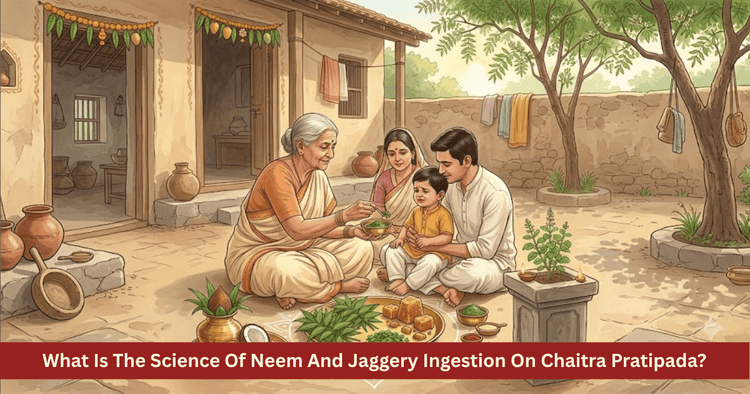
Table of Contents
Panchang Description And The Astrological Dimensions Of The Pratipada Ingestion
Within the mathematical and liturgical structure of the classical Vedic calendar, the first lunar day (Pratipada) of the bright fortnight (Shukla Paksha) of the month of Chaitra marks the grand celebration of the Vedic New Year (Nav Samvatsara), celebrated as Gudi Padwa in Maharashtra and Ugadi in Karnataka andhra Pradesh and Telangana. On the inaugural dawn of the New Year, immediately following morning ablutions, all family members partake of a consecrated medicinal and spiritual preparation consisting of fresh tender neem shoots/blossoms combined with aged jaggery, black peppercorns, rock salt and cumin seeds on an empty stomach.
Astronomically, Chaitra Shukla Pratipada represents the precise equinoctial junction where the Sun crosses into the northern celestial hemisphere. This marks the transition from cold winter to the radiant heat of summer. As ambient temperatures rise, accumulated kapha within bodily tissues begins to liquefy, while systemic pitta starts its seasonal rise. During this seasonal junction (Ritu Sandhi), biological immunity drops to its lowest annual threshold, making human physiology vulnerable to seasonal fevers, viral infections, skin eruptions and gastrointestinal imbalances. Consuming this traditional mixture on the first morning of the year establishes a natural biological shield for the approaching summer.
| Astrological and Botanical Factor | Scriptural, Ayurvedic and Philosophical Detail |
|---|---|
| Lunar Month and Fortnight | Chaitra Month, Shukla Paksha (Bright Fortnight) |
| Lunar Tithi | Pratipada (First Station of the New Samvatsara / Ugadi / Gudi Padwa) |
| Canonical Liturgical Titles | Nimba-Kusuma Bhakshana, Nimba Prashana, Ugadi Pachadi Ingestion |
| Primary Botanical Agents | Fresh Tender Neem Leaves/Shoots (Bitter) & Aged Jaggery (Sweet) |
| Supporting Botanical Ingredients | Black Peppercorns (Pungent), Rock Salt (Salty), Raw Mango/Tamarind (Sour) |
| Rasa Theory Alignment | Balancing the Six Tastes (Tikta, Madhura, Amla, Lavana, Katu, Kashaya) |
| Ayurvedic Tridosha Action | Liquefying Kapha, Pacifying Pitta, Cleansing Blood, Kindling Agni |
| Bestowed Health Benefit | Seasonal Immunity, Dermatological Health, Parasitic Defense, Equanimity |
To assimilate the physiological and spiritual benefits of this sacred seasonal ingestion, a practitioner should observe disciplined scriptural decorum from early dawn:
- Awaken before sunrise during Brahma Muhurta, bathing in ambient fresh water infused with holy Ganga drops and fresh neem extract.
- Dress in clean, unstitched festive cotton vestments, offering three water oblations to Surya Deva from a copper vessel.
- Approach a neem tree with reverence, offering a prayer of gratitude before harvesting its tender, reddish-green shoots and fragrant white blossoms.
- Grind the tender neem leaves alongside aged organic jaggery, whole black peppercorns, cumin seeds and a pinch of rock salt using a clean stone mortar.
- In southern traditions, prepare the multifaceted 'Ugadi Pachadi' by integrating raw green mango slivers and tamarind pulp to balance all six tastes.
- Offer the preparation before Lord Ganesha, family deities and Lord Dhanvantari in the domestic shrine.
- Administer this consecrated medicine to all family members on an empty stomach immediately following morning dental purification.
- Reflect upon the commitment to meet both life's joys (jaggery) and hardships (neem) with steady psychological poise.
- Maintain a satvic, nourishing diet throughout the day, refraining from stale, fried or overly unctuous foods.
Puranic Lore: Nectar Drops And The Wand Of Goddess Sheetala
The classical Ayurvedic texts, the Brahma Purana and the Garuda Purana record the divine origin and therapeutic properties of the neem tree.
During the cosmic churning of the ocean (Samudra Manthana), when Lord Dhanvantari emerged carrying the vessel of celestial ambrosia (Amrita Kalasha), Garuda took flight to safeguard the nectar from demonic forces. During the airborne passage, drops of ambrosia fell onto the earth. Wherever these drops touched the soil, the Neem tree (Azadirachta indica) took root. Consequently, classical Sanskrit lexicons revere the neem tree as Amrita (embodiment of nectar) and Arishta (destroyer of illness and adversity).
| Narrative Milestone | Puranic and Metaphysical Detail | Philosophical Meaning |
|---|---|---|
| Churning of the Ocean | Manifestation of Lord Dhanvantari with Amrita | Vibrant health is the supreme nectar of life |
| Falling Drops of Nectar | Transformation of celestial fluid into the Neem tree | Bitter medicines often hold true life-preserving power |
| Regalia of Goddess Sheetala | Holding a broom of neem twigs to dispel disease | Natural emblem of somatic cooling and pathogen defense |
| Chaitra Pratipada Decree | Mandatory ingestion on the dawn of the New Year | Commencing the year with internal physiological purification |
The Kashi Khanda of the Skanda Purana notes that Goddess Sheetala-the presiding deity of fevers, eruptions and internal heat-carries a sprig of neem leaves in her hand. The touch of neem calms burning skin and viral inflammations. Ingesting neem on Chaitra Pratipada honors this maternal protection, aligning the body with natural defenses.
Ayurvedic Science: Six Tastes, Blood Purification and Parasitic Defense
Classical Ayurveda explains that physical health depends on the harmonious interaction of the six tastes (Shad-Rasas): sweet (madhura), sour (amla), salty (lavana), pungent (katu), bitter (tikta) and astringent (kashaya). Modern dietary habits skew heavily toward sweet and salty profiles, largely neglecting bitter and astringent tastes.
Ingesting neem and jaggery on Chaitra Pratipada restores this dietary balance:
1. The Therapeutic Action of the Bitter Taste (Tikta Rasa)
- Blood Cleansing (Rakta Shodhana): The bitter taste of neem activates hepatic detox pathways, filtering impurities through the liver and kidneys.
- Clearing Liquefied Kapha: As the spring sun warms the body, winter-accumulated kapha in the respiratory tract begins to liquefy. Neem's bitter astringency dries this excess fluid, protecting against seasonal asthma, allergies and congestion.
- Parasitic Cleansing (Krimighna): Heavy winter eating can encourage intestinal parasites and microbial overgrowth. Neem's bitter compounds eliminate unwanted parasites, resetting gut health.
2. The Balancing Support of Aged Jaggery
Neem is cold and dry. Consuming it alone can aggravate systemic vata.
- Aged Jaggery provides natural sweetness and warmth, counteracting neem's drying qualities.
- High in bioavailable iron, potassium and magnesium, jaggery supports liver function and provides clean energy.
| Botanical Ingredient | Dominant Taste | Ayurvedic Energy | Bioactive Chemistry | Primary Somatic Benefit |
|---|---|---|---|---|
| Tender Neem Shoots | Bitter & Astringent | Light, Cooling Energy | Nimbin, nimbidin, azadirachtin | Purifies blood, antimicrobial, antiviral |
| Aged Jaggery | Sweet | Unctuous, Balanced | Iron, magnesium, natural sucrose | Liver support, pacifies vata, sustained energy |
| Black Peppercorns | Pungent | Piercing, Heating Energy | Piperine | Kinds digestive agni, dispels kapha |
| Rock Salt (Saindhava) | Salty | Subtle, Tridoshic Balancer | Sodium chloride, 84 trace minerals | Restores electrolytes, supports digestion |
| Cumin Seeds | Pungent-Bitter | Digestive Stimulant | Thymol, cuminaldehyde | Relieves abdominal gas, balances pitta |
Ugadi Pachadi: The Six Flavors Of Living Wisdom
In southern India, the New Year ingestion expands into Ugadi Pachadi, combining six distinct ingredients into a single preparation that mirrors the varied textures of life:
- Bitter (Neem Blossoms) = Sorrow and Adversity: Symbolizing trials, unexpected setbacks and personal grief.
- Sweet (Jaggery) = Joy and Contentment: Symbolizing success, loving relationships and joyous milestones.
- Pungent (Black Pepper / Green Chili) = Anger and Intensity: Symbolizing moments of friction, tension and passion.
- Sour (Raw Mango / Tamarind) = Caution and Surprise: Symbolizing unforeseen hurdles and the need for vigilance.
- Salty (Sea Salt) = Zest and Vitality: Symbolizing enthusiasm, seasoning and appreciation for life.
- Astringent (Raw Plantain Slivers) = Wonder and Awe: Symbolizing novel, unexpected transitions in personal growth.
This dish delivers a practical lesson: The incoming year will bring a mix of joy and sorrow, sweetness and trial. A wise individual welcomes every experience with equanimity, understanding that each has a purposeful role in human development.
Modern Biomedical Insights
Contemporary pharmacological research confirms the clinical wisdom embedded in this ancient practice:
- Immune Regulation: Polysaccharides and limonoids in neem stimulate white blood cell and T-cell activity, boosting resistance to seasonal pathogens.
- Blood Sugar Regulation: During seasonal metabolic shifts, neem supports healthy insulin sensitivity and helps stabilize fasting blood glucose levels.
- Antioxidant Protection: Combining aged jaggery and neem provides phenolic antioxidants that protect cells from seasonal oxidative stress, supporting healthy tissue maintenance.
Step-By-Step Protocol For Preparing And Ingesting The Remedy
To prepare and ingest this seasonal remedy on Chaitra Shukla Pratipada, observe the following procedure:
- Selecting the Botanicals: Harvest tender, reddish-green young shoots or fragrant white blossoms from a healthy neem tree at dawn. Avoid fibrous, mature leaves.
- Ingredient Proportions:
- 1 part fresh tender neem shoots (approximately 10-15 young leaves)
- 2 parts aged unrefined organic jaggery
- 2 whole black peppercorns
- A pinch of cumin seeds and a pinch of pure rock salt
- Preparation: Grind the ingredients into a fine paste or smooth pill using a clean stone mortar, reciting Om Dhanvantaraye Namah.
- Chanting the Ingestion Verse: Sit facing eastward on an empty stomach. Take the small preparation and recite the classical Sanskrit verse before chewing and swallowing:
Shatayur vajradehaya sarvasampatkaraya cha.
Sarvarishta vinashaya nimba kandala bhakshanam.
(For a lifespan of one hundred years, a resilient diamond-like frame, the arrival of all noble blessings and the destruction of every illness and affliction, I partake of this tender neem.) - Aftercare: Sip a small amount of ambient water. Refrain from consuming tea, milk or heavy foods for forty-five minutes to allow the botanical compounds to assimilate.
Philosophical Essence: Poise Amidst Contrasting Experiences
This simple morning tradition embodies the core teaching of the Bhagavad Gita: Samatvam yoga uchyate-Equanimity amidst opposites is authentic yoga.
Human nature tends to cling to comfort, praise and sweetness (jaggery), while recoiling from criticism, failure and bitterness (neem).
Tasting bitter neem and sweet jaggery together on the first morning of the year reminds us that authentic living integrates both. Bitterness tempers our vanity and builds resilience, while sweetness softens the heart with compassion. One who meets joy without arrogance and adversity without despair walks into the New Year grounded in wisdom and peace.
FAQ
At what time of day should the neem and jaggery preparation be consumed?
It should be consumed on an empty stomach at sunrise on Chaitra Shukla Pratipada, immediately following morning ablutions.
Why is it necessary to combine jaggery with neem?
Neem is cold, dry and bitter, which can aggravate vata if taken alone; jaggery balances this dryness with natural warmth and sweetness, ensuring systemic harmony.
What is Ugadi Pachadi and what do its six tastes represent?
Ugadi Pachadi is a southern preparation combining six tastes (sweet, bitter, sour, pungent, salty and astringent), symbolizing that life's diverse experiences should be met with equanimity.
Is this preparation safe for children and elders?
Yes. Consumed in small quantities (the size of a chickpea), this natural preparation is safe, easily digested and beneficial across age groups.
What is the primary Sanskrit verse chanted during this ingestion?
Shatayur vajradehaya sarvasampatkaraya cha. Sarvarishta vinashaya nimba kandala bhakshanam.
Get your accurate Kundali
Generate KundaliDid you like it?
Author

Pt. Sanjeev Sharma (63)
Experience: 20
Consults About: Family Planning, Career
Clients In: Punjab, Haryana, Delhi
Share this article with friends and family
WELCOME TO
ZODIAQ
Right Decisions at the right time with ZODIAQ
