What Is The Glory Of Papmochini Ekadashi In Chaitra?
By Pt. Nilesh Sharma
Medhavi Muni Lore, Mind Cleansing And Parana Protocols
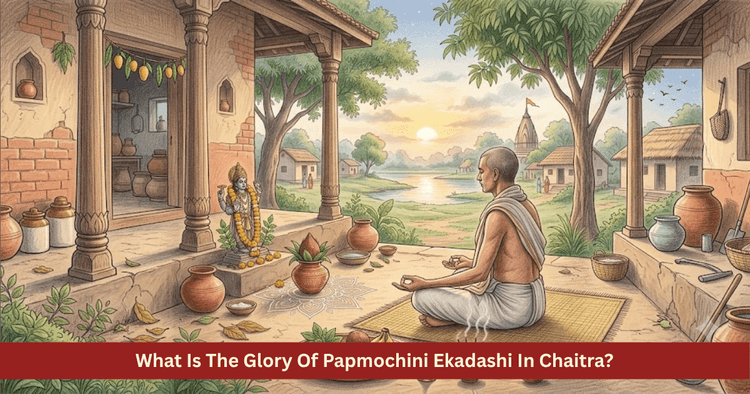
Table of Contents
Panchang Description And The Astrological Dimensions Of Chaitra Krishna Ekadashi
Within the mathematical cosmology of the classical Vedic calendar, the eleventh lunar day (Ekadashi) of the dark fortnight (Krishna Paksha) of the month of Chaitra is designated as Papmochini Ekadashi. Across the vast annual cycle of twenty-four (or twenty-six in leap years) Ekadashis, this observance represents the concluding Ekadashi of the entire Vedic lunar year. Following this date, the annual cycle closes with Chaitra Amavasya, paving the way for the emergence of the new Vikram Samvat on Chaitra Shukla Pratipada. Thus, in the science of temporal consciousness, Papmochini Ekadashi functions as the ultimate spiritual station for purging physical, verbal and mental karmic residue accumulated across the departing year.
From an astronomical perspective, Lord Surya Deva navigates the terminal degrees of Pisces, while the Moon transits through the air-dominated asterisms of Uttarashadha, Shravana or Shatabhisha. This celestial transit stirs the subtle water and air elements within human neuro-anatomy, stimulating emotional memory. Classical scriptural digests assign Ekadashi to the sovereign jurisdiction of Lord Sri Hari Vishnu, the sustainer of cosmic order. Observing this fast cleanses physiological tissues, draws vital prana along the central spinal axis and dissolves deep subconscious guilt (karmic knots) from the mind.
| Astrological and Astronomical Factor | Classical Scriptural and Metaphysical Description |
|---|---|
| Lunar Month and Fortnight | Chaitra Month, Krishna Paksha (Dark Fortnight) |
| Lunar Tithi | Ekadashi (Concluding Ekadashi of the Annual Cycle) |
| Canonical Liturgical Titles | Papmochini Ekadashi, The Dissolver of Sins |
| Sovereign Presiding Divinity | Four-Armed Lord Sri Hari Vishnu (Narayana) |
| Astrological Ingress & Asterism | Shatabhisha / Shravana, Solar Transition in Pisces |
| Dominant Elemental Cleansing | Purification of Water and Air Elements, Ama Purge |
| Prescribed Food Offerings | Yellow blossoms, holy tulsi leaves, seasonal fruits, panchamrita |
| Bestowed Spiritual Realization | Dissolution of Heinous Transgressions, Mental Clarity |
To secure the spiritual merits of this sacred vrata and cleanse subconscious impressions, the practitioner must observe strict scriptural decorum extending from Dashami evening through the Dvadashi fast-breaking window:
- Commencing on Dashami evening, consume a single, light satvic meal; eliminate red lentils, onions, garlic and non-vegetarian foods completely.
- Awaken during Brahma Muhurta on Ekadashi, bathing in cool spring or river water mixed with drops from the holy Ganga and black sesame seeds.
- Dress in clean, unstitched yellow cotton vestments, offering three water oblations to Surya Deva from an unblemished copper vessel.
- Kindle an unbroken lamp fueled by indigenous cow clarified butter before the consecrated icon of Lord Vishnu or the sacred Shaligram stone.
- Declare a formal vow (Sankalpa) while holding water, sesame seeds, unbroken rice and kusha grass, dedicating the day to spiritual purification.
- Maintain inward recitation of the twelve-syllable mantra Om Namo Bhagavate Vasudevaya or study the Vishnu Sahasranama throughout the day.
- Observe an unbroken fast (either complete dry fasting or moderate intake of water and seasonal fruits); avoid all cereal grains, beans and table salt.
- Maintain a nocturnal vigil (Jagarana) instead of sleep, engaging in spiritual contemplation, sacred chanting and honest self-inquiry.
- Break the fast on Dvadashi morning during the prescribed astrological window after offering food, vestments and charity to ascetics or the underprivileged.
The Puranic Narrative: Sage Medhavi And The Nymph Manjughosha
The Bhavishyottara Purana and the Brahmavaivarta Purana preserve the authentic narrative of Papmochini Ekadashi through a divine dialogue between Lord Sri Krishna and King Yudhishthira.
In ancient times, there existed an idyllic celestial forest known as Chaitraratha, where celestial nymphs (apsaras) and Gandharvas sported amidst fragrant groves. Within that hermitage lived a young ascetic named Medhavi Muni, the radiant son of Sage Chyavana. Devoted to Lord Shiva, Medhavi practiced rigorous sensory mastery and intense penance. His spiritual radiance perturbed King Indra, who feared the ascetic might claim the celestial realm. Seeking to disrupt his concentration, Indra dispatched the nymph Manjughosha to earth.
Arriving near the hermitage, Manjughosha began singing and dancing gracefully to the melody of her veena, aided by Kamadeva (the god of desire). Distracted by the music and the fragrances of spring, Medhavi Muni opened his eyes. Overwhelmed by sensory enchantment, his ascetic resolve broke and he became entangled in worldly infatuation with the nymph.
| Narrative Milestone | Puranic and Metaphysical Detail | Philosophical Reflection |
|---|---|---|
| Accumulation of Tapas | Medhavi Muni performing unbroken penance | Spiritual radiance earned through sensory mastery |
| Advent of Desire | Manjughosha introducing music and beauty | Vulnerability born of spiritual pride |
| Temporal Disorientation | Fifty-seven years passing like a fleeting moment | Sensory indulgence warps temporal perception |
| Re-emergence of Consciousness | Muni recognizing his fall; cursing the nymph | Unchecked anger compounding spiritual error |
| Spiritual Redemption | Observing Papmochini Ekadashi per Chyavana's counsel | Divine grace restoring lost spiritual status |
After fifty-seven years, nine months and three days had passed, Manjughosha sought permission to return to the heavenly spheres. Her request shattered the sage's infatuation. Calculating his lost time, Medhavi realized that decades of spiritual credit had been squandered in sensory indulgence. Overcome by shame and anger, he cursed her: "You have robbed me of my sacred penance; therefore assume the hideous form of a wandering ghoul (Pishachini)!"
Transformed instantly into an agonizing spectral form, Manjughosha wept at his feet, pleading for mercy: "O holy sage! I acted under divine command and mortal desire; prescribe a remedy to free me from this torment."
Calming his anger, Medhavi replied: "My spiritual luster is broken, yet my father, Sage Chyavana, is a master of universal dharma. I shall seek his refuge."
Approaching his father with downcast eyes, Medhavi recounted his fall. Sage Chyavana spoke with gentle sternness: "My son, your sensory control was mere suppression, not true enlightenment. By cursing this woman, you have compounded your karmic debt. Now, there is only one sovereign remedy to dissolve this heavy burden-the sacred observance of Papmochini Ekadashi during the dark fortnight of Chaitra."
Instructed by the sage, both Medhavi Muni and Manjughosha observed the fast with complete devotion and repentance. They maintained an unbroken nocturnal vigil, meditating upon Lord Sri Hari Vishnu. Through the merits of this observance, Manjughosha was liberated from the spectral curse, regaining her celestial form, while Medhavi Muni's subconscious impressions were purified, restoring his spiritual focus and inner peace.
Neuro-Psychological Healing: Resolving Deep Guilt Through Spiritual Fasting
Modern psychology confirms that unaddressed guilt, past moral failures and subconscious remorse drain an enormous amount of mental energy. When an individual violates their own ethical compass, the mind constructs rigid neuro-emotional patterns (karmic impressions). Left unresolved, these subconscious impressions manifest as chronic anxiety, self-sabotaging behavior, sleep disorders and physical inflammation.
The scriptural science of Papmochini Ekadashi offers a structured methodology for untying these subconscious knots:
- Radical Self-Acceptance and Confession: The liturgical vow requires the seeker to acknowledge past transgressions before the Divine without excuses. Surrendering personal ego initiates the healing process.
- Autophagy and Cognitive Recalibration: Fasting for twenty-four to thirty-six hours stimulates cellular autophagy and elevates Brain-Derived Neurotrophic Factor (BDNF), breaking compulsive rumination patterns and facilitating mental clarity.
- Purification of Subtle Bodily Fluids: Renouncing heavy grains and salt prevents fluid retention and lethargy, subduing emotional volatility and cultivating mental tranquility.
- Sonic Mantra Resonance: Reciting Om Namo Bhagavate Vasudevaya sends calming acoustic frequencies through the heart and crown centers, clearing emotional burdens and restoring inner equilibrium.
Step-By-Step Liturgical Protocol For Papmochini Ekadashi
To conduct the traditional adoration of Lord Sri Hari Vishnu on Chaitra Krishna Ekadashi, observe the following liturgical sequence:
- Morning Purification and Sacred Intention: Awaken before sunrise, bathing in spring or river water consecrated with holy drops. Dress in clean yellow cotton garments. Sit facing eastward before the altar, taking water, yellow flowers and unbroken rice in the right palm:
Om Vishnave Namah. Adya Chaitra mase krishna pakshe Papmochini Ekadashi tithau, mama sakala papa kshayartham, chitta shuddhyartham, Sri Vishnu-preeti-kamanaya Ekadashi vratam aham karishye.
- Consecrating the Altar and Icons: Cover a low wooden table with unblemished yellow silk. Seat the sacred Shaligram stone or icons of Lord Vishnu and Mother Lakshmi upon a copper vessel. Bathe the deity with Panchamrita (raw cow milk, yogurt, ghee, honey and crystalline sugar) while reciting the Purusha Sukta.
- Sacred Offerings: Dry the icon gently, anointing it with fragrant yellow sandalwood paste and unbroken rice. Present garlands of yellow marigolds and fresh tulsi leaves. Lord Vishnu accepts no offering without the sacred tulsi leaf.
- Incense, Lamps and Foods: Kindle a lamp fueled by cow ghee and natural guggul incense. Offer seasonal harvest fruits (papaya, bananas, cucumbers), foxnut pudding and rock sugar.
- Scriptural Study: Sit before the lamp and read or listen to the narrative of Medhavi Muni from the Bhavishyottara Purana, followed by reciting the Vishnu Sahasranama or Narayana Kavacha.
- Nocturnal Vigil (Jagarana): Refrain from sleep during the night. Dedicate the four nocturnal quarters to singing devotional hymns and engaging in silent contemplation.
Dvadashi Fast-Breaking Protocols (Parana)
The spiritual fruits of Ekadashi are stabilized only when the fast is broken correctly during the prescribed astrological window upon Dvadashi:
| Fast-Breaking Element | Scriptural Rule | Prohibited Conduct |
|---|---|---|
| Parana Time Window | Prior to the expiration of Dvadashi tithi | Breaking the fast during Hari Vasara |
| Hari Vasara Duration | The first one-fourth (1/4) duration of Dvadashi | Consuming food during Hari Vasara nullifies the fast |
| First Sacramental Intake | Sacred tulsi leaf, panchamrita or amla | Heavy, fried or overly spicy dishes |
| Mandatory Philanthropy | Donating grain, clothing, sesame or water urns | Breaking the fast without offering charity |
Procedure for Breaking the Fast
On Dvadashi morning, bathe and perform a brief morning worship of Lord Vishnu. Present wholesome food, uncooked grain provisions (flour, lentils, ghee, salt) and a charitable gift to a worthy teacher or the underprivileged. Conclude the fast by consuming a drop of consecrated water and a sacred tulsi leaf, followed by a light satvic meal.
Philosophical Essence: Transmuting The Past Through Grace
Papmochini Ekadashi reveals the timeless truth that while moral errors are an inevitable part of the human journey, genuine repentance and spiritual realignment awaken divine grace.
No soul walks the material plane entirely untouched by mistakes. Yet remaining chained to past failures ruins both present purpose and future potential. The Divine is an ocean of unconditional compassion. When a seeker surrenders personal pride, acknowledges past missteps and observes Papmochini Ekadashi with a sincere heart, accumulated karmic debts dissolve like dry grass consumed by a spark of fire.
Closing the old lunar year through this observance provides a fresh start. By emptying our consciousness of guilt, bitterness and spiritual torpor, we prepare the soul to step across the threshold of the incoming New Year with clarity, joy and renewed purpose.
FAQ
In which month and fortnight does Papmochini Ekadashi occur?
Papmochini Ekadashi occurs during the dark fortnight (Krishna Paksha) of Chaitra, serving as the final Ekadashi of the classical Vedic lunar year.
What is the literal meaning of 'Papmochini'?
'Papa' denotes moral errors and karmic blemishes, while 'Mochini' signifies that which liberates; thus, Papmochini is the observance that frees the soul from guilt and sin.
Which celestial nymph caused the distraction of Sage Medhavi?
The celestial nymph Manjughosha was sent by King Indra to disrupt Medhavi Muni's ascetic penance in the forest of Chaitraratha.
What charitable offerings are most auspicious upon concluding this fast?
Donating yellow clothing, raw grains, sesame seeds, water urns, seasonal fruits and copper vessels to the needy brings enduring spiritual merit.
What is Hari Vasara and why must fast-breaking be avoided during its span?
Hari Vasara comprises the first one-fourth duration of Dvadashi tithi. The subtle influence of Ekadashi remains active during this phase, so partaking of food while it is active breaks liturgical rules.
Get your accurate Kundali
Generate KundaliDid you like it?
Author
Pt. Nilesh Sharma (63)
Experience: 20
Consults About: Family Planning, Career
Clients In: Punjab, Haryana, Delhi
Share this article with friends and family
WELCOME TO
ZODIAQ
Right Decisions at the right time with ZODIAQ
