What Is The Glory And Cultural Essence Of Ugadi?
By Pt. Sanjeev Sharma
The Deccan New Year And The Living Philosophy Of Ugadi Pachadi
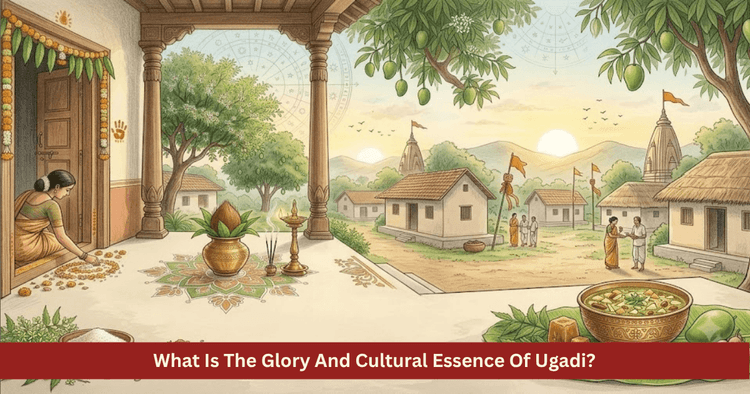
Table of Contents
Panchang Description And The Astrological Genesis Of The Deccan New Year
Within the mathematical and metaphysical cosmology of the classical Vedic calendar, the first lunar day of the bright fortnight of Chaitra (Chaitra Shukla Pratipada) is celebrated across the southern states of Andhra Pradesh, Telangana and Karnataka as the sacred festival of Ugadi (or Yugadi). Classical Sanskrit etymology reveals that the term derives from the union of two foundational concepts: Yuga (an epoch or temporal era) + Adi (the inception point or dawn). Thus, the foundational meaning of Ugadi is: The genesis of a new cosmic era and the awakening of the sacred annual cycle.
From an astronomical perspective, this festival marks the celestial junction where Lord Surya Deva completes his passage through the watery sign of Pisces, advancing toward his exaltation sign of Aries (Mesha). Diurnal hours begin expanding over the Deccan plateau, while the waxing crescent Moon shines forth in conjunction with the Ashwini or Revati asterisms, initiating a fresh year among the continuous sixty-year Samvatsara cycle. The liturgical heritage of South India follows the classical Luni-Solar calendar (Chandramana), which synchronizes the gravitational cycles of the Moon with the solar seasons.
| Astrological and Astronomical Factor | Classical Scriptural and Cultural Description |
|---|---|
| Lunar Phase and Fortnight | Chaitra Month, Bright Fortnight, First Lunar Day (Pratipada) |
| Primary Geographic Regions | Andhra Pradesh, Telangana, Karnataka (Deccan Plateau) |
| Chronological System | Shalivahana Shaka Samvat (Chandramana Luni-Solar Calculation) |
| Astronomical Solar Transition | Solar passage from Pisces into Aries, Vernal Equinox |
| Sovereign Presiding Powers | Lord Brahma (The Creator), Lord Surya Deva, Lord Sri Hari Vishnu |
| Sovereign Liturgical Offering | 'Ugadi Pachadi' / 'Bevu-Bella' (The Sixfold Nectar of Life) |
| Primary Cultural Observances | Oil massage bath, mango leaf toranas, Panchanga Shravanam |
| Bestowed Spiritual Fruit | Emotional equanimity, pacification of planets, vitality, peace |
To welcome spiritual vitality, physical immunity and prosperity into the domestic sanctuary on Ugadi, seekers must observe disciplined scriptural decorum from dawn onward.
- Awakening before sunrise during Brahma Muhurta, gazing upon both open palms while reciting the Karagre Vasate Lakshmi verse.
- Undergoing an Abhyanga Snana (massaging the physical body with pure unrefined sesame oil followed by a warm bath infused with sacred river drops and boiled neem foliage).
- Dressing in fresh traditional unstitched vestments (such as the traditional silk panche/dhoti for men and silk saris for women).
- Washing the household threshold with clean water, drawing geometric rice flour patterns (Muggu/Rangoli) and suspending fresh mango leaf garlands (Torana) above the entryway.
- Pouring three continuous water oblations to Surya Deva from an unblemished copper vessel mixed with kumkum, unbroken rice and scarlet flowers.
- Performing the sixteenfold adoration (Shodashopachara) of Lord Sri Satyanarayana or lineage deities in the domestic shrine.
- Partaking of the sacred preparation Ugadi Pachadi alongside family members upon an empty stomach.
- Visiting the local temple or community square to listen to a qualified scholar recite the annual astrological forecast (Panchanga Shravanam).
- Participating in literary gatherings, poetry symposiums (Kavi Sammelanam) and seeking blessings from elders at dusk.
Ugadi Pachadi: The Living Philosophy Of The Six Sacred Tastes (Shadrasa)
The defining spiritual and cultural centerpiece of Ugadi is the ceremonial sacramental offering known as Ugadi Pachadi (celebrated in Karnataka as Bevu-Bella). This preparation is far more than a culinary tradition; it represents a profound allegory of human existence, designed to train human consciousness for the unpredictable nature of mortal life.
Ugadi Pachadi is formulated by integrating six distinct natural ingredients corresponding to the six classical tastes (Shadrasa). Within classical Ayurveda and philosophical treatises, these six flavors correspond directly to six fundamental human emotions:
| Botanical Ingredient | Classical Taste (Rasa) | Psychological and Emotional Symbolism | Physiological and Ayurvedic Action |
|---|---|---|---|
| Fresh Neem Buds (Bevu) | Bitter (Tikta) | Sorrow, grief, adversity and inevitable hardships | Pacifies kapha, purifies blood, destroys pathogens |
| Fresh Jaggery / Cane (Bella) | Sweet (Madhura) | Happiness, prosperity, affection and worldly triumphs | Reignites digestive fire, delivers energy, balances pitta |
| Raw Green Mango (Mangai) | Sour (Amla) | Surprise, novelty, unpredictable turns of fate | Stimulates gastric secretions, activates the liver |
| Green / Black Pepper | Pungent (Katu) | Anger, friction, challenges and intense courage | Burns metabolic ama, clears bronchial channels |
| Unrefined Rock Salt | Salty (Lavana) | Apprehension, fear, vigilance and the zest of life | Balances electrolytes, shields against dehydration |
| Steeped Tamarind Pulp | Astringent (Kashaya) | Dispassion, detachment, boredom and restraint | Tones bodily tissues, purifies dermal pores |
The Core Philosophical Message of Ugadi Pachadi
Sanatana Dharma does not preach escapism; it trains humanity to embrace the complete spectrum of existence. When an aspirant places this bitter, sweet, sour, salty, pungent and astringent preparation upon the tongue on the morning of Ugadi, the soul internalizes an essential realization:
"The incoming year will not bring unbroken pleasure (jaggery); it will also bring trials and adversity (neem). It will deliver moments of righteous struggle (pepper) alongside unforeseen surprises (mango). It will hold anxiety (salt) and quiet detachment (tamarind). I resolve to welcome every one of these experiences with an unshakeable mind, receiving all circumstances as the divine will of the Supreme."
In the second chapter of the Bhagavad Gita, Lord Sri Krishna expounds the ideal of the Sthitaprajna-the enlightened soul who neither rejoices excessively in prosperity nor collapses into despair during calamity. Ugadi Pachadi acts as a practical yearly reminder to cultivate that state of equanimity.
Panchanga Shravanam: The Science Of Temporal Forecasting
On the afternoon of Ugadi, communities across southern India gather for Panchanga Shravanam-the public recitation of the astronomical almanac. Listening to the forecast on the New Year is an ancient practice that provides an overview of upcoming agricultural, economic, meteorological and geopolitical trends.
Dressed in traditional attire, citizens assemble within temple courtyards or community squares. The assembly priest consecrates the new almanac with sandalwood and flowers, reciting the merits of its five fundamental limbs:
- Hearing the Tithi: Grants material prosperity, enduring wealth and spiritual grace.
- Hearing the Vara (Weekday): Promotes longevity, physical health and vitality.
- Hearing the Nakshatra (Asterism): Cleanses past-life karmic faults and ancestral debts.
- Hearing the Yoga: Averts tragic separations from loved ones and dissolves chronic physical illnesses.
- Hearing the Karana: Guarantees success in vocational and secular undertakings.
The Nine Planetary Regents of the New Year
A vital component of Panchanga Shravanam is the reading of the Navanayakas-the cosmic cabinet governing the year:
- The Sovereign King (Raja): The planetary ruler of the weekday upon which Chaitra Shukla Pratipada falls becomes the King of the year, governing administration and public morale.
- The Prime Minister (Mantri): The planetary ruler of the weekday on which the Sun enters Aries (Mesha Sankranti) becomes the Minister.
- Agrarian Regents: Planetary positions governing rainfall (Meghesha) and grains (Dhanyesha) guide farmers on optimal crop selections and irrigation planning for the agricultural season.
| Limb of Panchang | Classical Scriptural Fruit | Modern Psychological Benefit |
|---|---|---|
| Tithi (Lunar Phase) | Attainment of Wealth and Grace | Structural clarity in setting personal goals |
| Vara (Weekday) | Expansion of Lifespan and Health | Lifestyle discipline and physical wellness |
| Nakshatra (Constellation) | Dissolution of Past Sins | Mental focus and inward purification |
| Yoga (Angular Relationship) | Healing of Disease and Separation | Emotional equilibrium and relationship harmony |
| Karana (Half Lunar Day) | Completion of Noble Endeavors | Enhanced professional focus and execution |
Liturgical Consecration And Domestic Purification Protocol
To transform the home into a sacred sanctuary on Ugadi, observe the following ritual guidelines:
1. Oil Bath and Doorway Consecration
Awaken before dawn to massage the body from crown to foot utilizing pure sesame oil infused with edible camphor. Bathe in warm water to clear winter sluggishness and stimulate circulation. Wash the main doorway threshold, adorning the lintel with fresh mango leaf garlands (Torana). Mango foliage releases oxygen continuously, purifying incoming air and deflecting discordant subtle vibrations.
2. Kalasha Consecration and New Year Vow
- Spread an unblemished yellow or crimson silk fabric over a wooden altar table facing eastward in the domestic shrine.
- Position a copper or brass urn filled with pure water, river drops, an areca nut, a coin, unbroken rice and mango leaves upon the table.
- Place a coconut with its husk intact over the mouth of the vessel, marking an auspicious Swastika upon its shell utilizing vermilion.
- Take water, rice and flowers in the right palm to make the solemn New Year vow:
Om Vishnur Vishnur Vishnuh... Chaitra mase, shukla pakshe, pratipadyam tithau, mama grihasya sarvavidha kalyanartham, shadrasa samatva siddhyartham Ugadi pujanam aham karishye.
3. Sixteenfold Worship and Sacred Recitations
Bathe altar icons in the five sacred nectars (Panchamrita), presenting fresh garments, sandalwood paste, unbroken rice and fresh jasmine blossoms. Light an unbroken lamp fueled by pure cow clarified butter before Lord Vishnu and Mother Mahalakshmi. Reciting the Vishnu Sahasranama or the Kanakadhara Stotra on this day brings enduring domestic peace.
Cultural Festivities, Poetry Gatherings And Culinary Heritage
Ugadi is celebrated through communal gatherings, artistic expression and regional delicacies:
- Poetry Gatherings (Kavi Sammelanam): In Andhra Pradesh and Telangana, literary assemblies known as Kavi Sammelanam are hosted on Ugadi evening. Poets gather to recite verses welcoming the New Year, focusing on philosophical themes, social unity and devotional literature.
- Traditional Delicacy (Bobbatlu / Obbattu): Across Karnataka and Andhra Pradesh, families prepare Bobbatlu (known as Holige or Obbattu in Kannada). This sweet flatbread is crafted from split chickpeas simmered with fresh jaggery, nutmeg and cardamom, encased in dough and cooked on a griddle with pure cow ghee.
- Pulihora (Tamarind Rice): Steamed rice is tossed with a seasoned tamarind reduction, green chilies, curry leaves, roasted peanuts and mustard seeds to prepare Pulihora, distributed to guests after being offered to the Divine.
The Philosophical Vision: Balance In The Stream Of Time
Ugadi imparts the timeless truth that cosmic time moves in an eternal cycle. What exists today shall dissolve tomorrow; what was yesterday has already merged into memory. Contemplating this cosmic flow dissolves personal arrogance.
Every sip of Ugadi Pachadi reminds us that our duty is not to flee from challenges but to welcome life in its entirety. Sorrow grants us depth; happiness grants us expansion; righteous anger provides vigilance; and divine love brings fulfillment. Embracing these experiences with equanimity is the true celebration of Ugadi.
Let us welcome the dawn of Ugadi by casting aside prejudice, resentment and narrow selfishness. Stepping across the threshold of the sacred New Year anchored in ancient wisdom and ethical duty, let us pray that this cycle brings peace, health and spiritual illumination to all creation.
FAQ
In which regions of India is the festival of Ugadi primarily celebrated?
Ugadi is celebrated with devotion across the southern states of Andhra Pradesh, Telangana and Karnataka as the dawn of the sacred New Year.
What are the six classical tastes integrated into Ugadi Pachadi?
Ugadi Pachadi combines bitter (neem buds), sweet (jaggery), sour (raw green mango), pungent (green chili), salty (rock salt) and astringent (tamarind).
What is the practical significance of Panchanga Shravanam on Ugadi?
Listening to the Panchang reveals meteorological, agrarian and economic forecasts for the year, helping communities plan activities while pacifying challenging planetary transits.
Why are mango leaf garlands hung above doorways on Ugadi?
Mango leaves release oxygen continuously, clear airborne pathogens and ensure that only positive prana crosses the household threshold.
Which traditional sweet flatbread is prepared on Ugadi in Karnataka?
The sweet flatbread Obbattu (also known as Holige or Bobbatlu), stuffed with spiced lentils and jaggery and served with cow ghee, is the central culinary dish.
Get your accurate Kundali
Generate KundaliDid you like it?
Author

Pt. Sanjeev Sharma (63)
Experience: 20
Consults About: Family Planning, Career
Clients In: Punjab, Haryana, Delhi
Share this article with friends and family
WELCOME TO
ZODIAQ
Right Decisions at the right time with ZODIAQ
