Amla Worship in Kartik Month
By Pt. Narendra Sharma
Amla Navami, tree worship and Ayurvedic health meaning
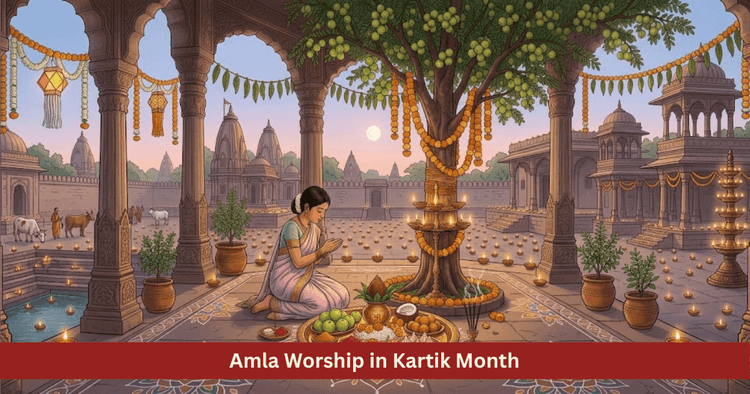
Table of Contents
Health and Gratitude Beneath the Dhatri Tree
Worship of the Amla tree and eating beneath it during Kartik is connected with Amla Navami, Akshaya Navami or Dhatri Navami. In 2026 Amla Navami will be observed on Wednesday, 18 November. It falls on the Navami Tithi of the Kartik Shukla Paksha.
According to available Panchanga calculations the Navami Tithi may begin at about 6:04 in the morning on 18 November and end at about 7:05 in the morning on 19 November. Worship time should be decided according to local sunrise and the Tithi.
In religious tradition the Amla tree is connected with Lord Vishnu, Goddess Lakshmi, Brahma and Shiva principles. Eating under the tree represents gratitude toward family, nature and food. Ayurveda regards Amla as a fruit containing vitamin C and several nutrients. Yet sitting beneath the tree and eating does not scientifically guarantee an increase in immunity. Health depends on nourishing food, cleanliness, sleep, exercise and medical care.
| Detail | Amla Navami 2026 information |
|---|---|
| Festival | Amla Navami, Akshaya Navami, Dhatri Navami |
| Date | Wednesday, 18 November 2026 |
| Paksha | Kartik Shukla Paksha |
| Navami begins | About 6:04 in the morning on 18 November |
| Navami ends | About 7:05 in the morning on 19 November |
| Main worship | Amla tree, Lord Vishnu and Goddess Lakshmi |
| Main offerings | Water, Roli, Akshata, flowers, lamp and Naivedya |
| Special tradition | Circumambulation and eating beneath the tree |
| Core feeling | Health, long life, respect for food and nature service |
| Health rule | Use the fruit cleanly and in suitable quantity |
Basic Rules
• Bathe in the morning and go near the Amla tree
• Offer water at the root without creating waterlogging
• Offer Roli, Akshata, flowers and a lamp
• Perform seven circumambulations according to tradition
• Remember Lord Vishnu and Goddess Lakshmi
• Eat beneath the tree with cleanliness
• Do not damage branches or roots
• Do not treat Amla Navami as a substitute for medical care
Why Is the Amla Tree Called Dhatri?
The Sanskrit name of Amla is Dhatri. Dhatri is connected with the feeling of a nourishing mother or one who supports life. The Amla fruit nourishes the body while the tree supports shade, birds, soil and air.
In religious tradition Amla is regarded as beloved of Lord Vishnu. Some folk stories describe Brahma, Vishnu and Mahesh as present within the tree. This statement connects the tree with the wider cycle of creation, preservation and transformation.
Worship of the Amla tree on Amla Navami expresses the understanding that life is visible not only in temples and idols but also in trees, water, soil and food.
Religious Story of Amla Navami
Several regional stories are associated with Amla Navami. One folk story says that Goddess Lakshmi came to the earth and wished to worship Lord Vishnu and Shiva. Tulsi and Bilva were connected with different deity principles but a tree was needed through which both forms of worship could be held together. Lakshmi worship was performed beneath the Amla tree and it became regarded as beloved of both Vishnu and Shiva.
Another folk tradition calls Amla Navami a day of Akshaya merit. Donation, food and worship performed on this day are considered capable of giving lasting auspicious fruit.
These stories are better understood as cultural traditions that explain the relationship between tree, deity, food and family and not only as historical documents.
Importance of Eating Beneath the Amla Tree
Eating beneath the Amla tree is one of the most beautiful aspects of Amla Navami. The family sits under the shade of the tree and eats together. The meal is treated as Prasada. This awakens gratitude toward food, farmer, soil, water and Sun.
There is no need to pluck and immediately eat fruit from the tree. First respect the tree and then take clean home cooked food.
| Feeling of the meal | Life message |
|---|---|
| Eating with family | Relationship and cooperation |
| Shade of the tree | Protection of nature |
| Gratitude for food | Respect for farmer and land |
| Prasada | Proper use of food |
| Donation | Shared prosperity |
| Silence or Katha | Peace of mind |
Precautions While Eating Beneath the Tree
• Keep the place clean and safe
• Keep food covered
• Protect food from insects and falling leaves
• Do not eat contaminated open food
• Do not put plastic near the root
• Carry waste away after eating
• Keep children safe from fire and the tree
Simple Amla Worship Method
Amla Navami worship is performed in the morning. In many families women worship together. All family members may participate.
Puja Materials
• Amla tree or Amla fruit
• Water or Panchamrita
• Roli and turmeric
• Akshata
• Flowers
• Mauli or raw thread
• Ghee lamp
• Incense
• Fruits and Naivedya
• Image of Vishnu and Lakshmi
• Donation material
Worship Order
- Bathe and wear clean clothes
- Clean the area around the Amla tree
- Offer a small amount of water at the root
- Offer Roli, turmeric, Akshata and flowers
- Light the lamp and incense
- Remember Lord Vishnu and Goddess Lakshmi
- Tie Mauli around the tree if tradition follows it
- Perform seven circumambulations
- Chant Om Namo Bhagavate Vasudevaya
- Read the Amla story or a Vishnu story
- Offer Naivedya
- Eat beneath the tree with family
- Donate food, clothes or fruits to the needy
Do not pull the Mauli tightly around the bark. The thread may become embedded in the growing trunk and harm the tree.
Amla Tree and Lord Vishnu
Kartik is considered special for devotion to Lord Vishnu. Amla Navami worships the tree along with Vishnu. Like Tulsi, Amla becomes a bridge between Vishnu devotion and nature.
Vishnu means preservation. The Amla tree shows this feeling in a natural form. It gives fruit and shade, shelters birds and holds the soil.
Vishnu Mantra
Om Namo Bhagavate Vasudevaya
This means salutations to Lord Vasudeva.
Method of Vishnu Mantra Japa
• Sit before the lamp
• Offer Tulsi or Amla fruit
• Chant the mantra 11, 21 or 108 times
• Pray for health and prosperity of the family
• End with food donation or service
Goddess Lakshmi and Amla Worship
Goddess Lakshmi is regarded as the deity of wealth, food, good fortune and prosperity in the home. The Amla tree gives fruit, shade and medicinal value. It can therefore be understood as a symbol of stable prosperity and health.
Hold the following feelings during Lakshmi worship.
• Use wealth justly
• Do not waste food
• Keep the home clean
• Invest in health
• Support the family
• Protect trees and water
Om Shreem Hreem Shreem Mahalakshmyai Namah
This means salutations to Mahalakshmi. Mantra japa along with service and donation is a complete form of Lakshmi worship.
Ayurvedic Importance of Amla
Amla is well known in Ayurveda as a Rasayana substance. It contains vitamin C, fibre and several bioactive components. It may be included in food and is used in some traditional preparations.
Common forms of Amla use include the following.
• Fresh Amla
• Amla powder
• Amla preserve
• Amla juice
• Chutney
• Dried Amla
Every form does not suit every person. People with acidity, sensitive teeth, diabetes or regular medicine use should seek expert advice. Amla is not a guaranteed treatment for disease. A doctor should be consulted during illness.
The Real Foundation of Immune Health
Amla is a nourishing fruit but resistance is not created by one fruit alone. The following are important.
• Varied and nourishing food
• Adequate protein
• Seasonal fruits and vegetables
• Adequate sleep
• Regular physical activity
• Clean hands and food
• Vaccination where required
• Stress management
• Timely medical checkups
The possible psychological benefit of eating beneath the Amla tree may appear through gratitude toward family, nature and food. It should not be described as a miraculous method for increasing immunity.
Symbolism of Seven Circumambulations
Many families perform seven circumambulations around the Amla tree. The number seven may be connected with seven colours of the Sun, seven days of the week and seven levels of life. This is symbolic meaning and not a universal rule.
A mantra may be chanted during Parikrama.
Om Narayanaya Namah
This means salutations to Lord Narayana.
Walk calmly and peacefully. Maintain distance when the area around the tree is crowded. Do not step on the roots.
Astrological Importance of Amla Navami
Amla Navami comes during the Kartik Shukla Paksha. The bright fortnight symbolises growth and light. Navami is regarded as a Tithi connected with Shakti, completeness and protection.
Sun, Vishnu, Guru, Chandra and Shukra principles may be symbolically connected with Amla worship.
| Planet or principle | Feeling of Amla worship |
|---|---|
| Surya | Health and life force |
| Vishnu principle | Protection and balance |
| Guru | Knowledge, dharma and expansion |
| Chandra | Coolness and mind |
| Shukra | Beauty, fruit and prosperity |
| Earth | Root, stability and nourishment |
Personal planetary afflictions cannot be definitely removed only through tree worship. The birth chart, planetary periods and conduct require integrated consideration.
Donation Beneath the Amla Tree
After worship it is considered auspicious to feed people and donate beneath the tree. A Brahmana, ascetic, girl, elder, worker or needy family may be offered food.
The following may be donated.
• Amla fruit
• Grains
• Fruits
• Clothes
• Books
• Medicine
• Sesame and jaggery
• Warm clothes
Along with donation protect the tree. Cutting a tree after offering one fruit goes against the spirit of dharma.
What to Do and What Not to Do
Do
• Worship the tree
• Take sattvic food
• Chant a Vishnu Mantra
• Eat with family
• Donate food
• Plant trees
• Save water
• Use Amla properly
Do not
• Put nails into the bark
• Tie plastic or wire around the trunk
• Allow excess milk and water to collect near the root
• Leave waste
• Damage health through excessive fruit
• Treat Amla as the only disease treatment
• Turn worship into display
From Tree to Life
Amla Navami reminds people that health is not created only in hospitals. It is also created through food, trees, air, water, sleep and the routine of the family. The Amla tree is a natural form of Vishnu protection. Sitting in its shade is gratitude toward earth. Eating with family strengthens relationships.
Amla fruit may nourish the body. Amla worship may awaken service in the mind. When both are joined this festival becomes a beautiful practice of balance between body and spirit.
The true blessing is not a blind wish for long life. It is a healthy, restrained, compassionate and dharmic life. Amla Navami quietly invites people toward this life.
FAQ
When is Amla Navami in 2026?
Amla Navami will be observed on Wednesday, 18 November 2026. It falls on the Navami Tithi of the Kartik Shukla Paksha.
Why is food eaten beneath the Amla tree?
Eating beneath the Amla tree represents gratitude toward nature, food, family and Lord Vishnu. It is connected with the folk tradition of Akshaya merit.
How should Amla Navami worship be performed?
Offer water, Roli, Akshata, flowers and a lamp at the tree, perform seven circumambulations, chant a Vishnu Mantra and eat sattvic food with family.
Does Amla increase immune health with certainty?
Amla is a nutritious fruit and may be useful in a balanced diet. Immunity does not come from Amla alone. Sleep, food, hygiene and medical care are also necessary.
Which mantra should be recited on Amla Navami?
Om Namo Bhagavate Vasudevaya, Om Narayanaya Namah and Om Shreem Hreem Shreem Mahalakshmyai Namah may be chanted.
Get your accurate Kundali
Generate KundaliDid you like it?
Author

Pt. Narendra Sharma (63)
Experience: 20
Consults About: Family Planning, Career
Clients In: Punjab, Haryana, Delhi
Share this article with friends and family
WELCOME TO
ZODIAQ
Right Decisions at the right time with ZODIAQ
